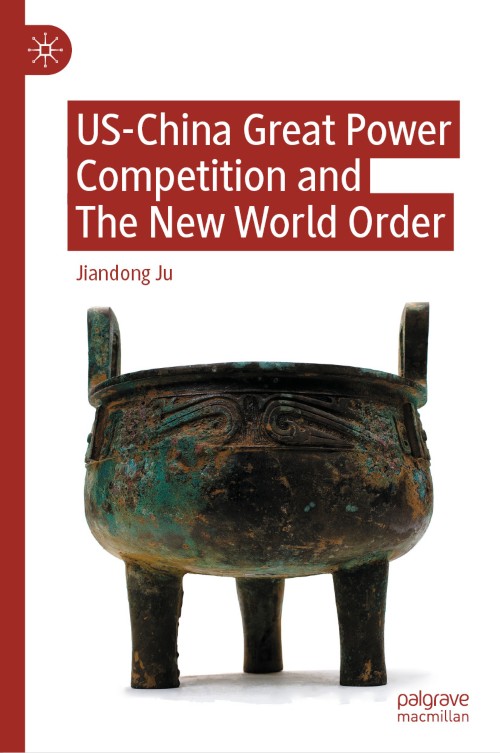
US-China Great Power Competition and The New World Order [electronic resource] / by Jiandong Ju.
Erişim Adresi
ISBN
9789819537624
Dil Kodu
İngilizce
Yer Numarası
DK/16639
Yazar
Basım Bildirimi
1st ed. 2025.
Yayın Bilgisi
Singapore : Springer Nature Singapore : Imprint: Palgrave Macmillan, 2025.
Fiziksel Niteleme
XIX, 303 p. 37 illus., 12 illus. in color. online resource.
İçindekiler Notu
-- Chapter 1 Why Do Trade Conflicts Occur?. -- Chapter 2 How Do Economies Grow?. -- Chapter 3 How Do Great Powers Compete?. -- Chapter 4 Analysis of the US-China Tariff War. -- Chapter 5 Mirror Tactics: How to Avoid Confrontation?. -- Chapter 6 Tripod: Structural Changes in the Global Value Chain. -- Chapter 7 Fundamental Misalignment in the International Monetary System. -- Chapter 8 Fundamental Misalignment in the World Order. -- Chapter 9 What Determines the Future of US-China Great Power Competition?. -- Chapter 10 Technological Competition: The Leader's Dilemma and the Chaser's Trap. -- Chapter 11 International Financial Competition. -- Chapter 12 Competition in the Global Governance System. -- Chapter 13 The Innovative World. -- Chapter 14 China's Competition Strategy for the Next Ten Years (2025–2035).
Özet, vb.
The competition between the U.S. and China, along with the evolving global order, profoundly affects the lives and livelihoods of people worldwide, now and in the future. Why does great power competition emerge? How does it evolve over time? How do great powers compete in critical areas such as industry, trade, technology, finance, security, and global governance? What are China’s strategic goals and policies in this competition, and what actions should be taken? This book offers a reader-friendly yet systematic and professional analysis of nearly all key aspects of contemporary great power competition. It creates a theoretical framework for understanding great power rivalry and provides comprehensive, coherent solutions to the most pressing issues in the competition. Following the outbreak of the U.S.-China trade war in 2018, the author introduced an undergraduate course titled The U.S.-China Trade Disputes and the Re-Architecture of Globalization at Tsinghua University. The course was awarded the National First-Class Undergraduate Course designation by the Chinese Ministry of Education in 2023. The book draws from the author’s teaching materials, alongside decades of professional research, teaching, and personal experience. It therefore serves as an invaluable reference for anyone seeking to understand how Chinese society has responded to and navigated great power competition.
Konu
International relations.
International trade.
International law.
Trade regulation.
International Relations.
International Trade.
International Economic Law, Trade Law.
International trade.
International law.
Trade regulation.
International Relations.
International Trade.
International Economic Law, Trade Law.
Kurum Adı

Eseri Alıntıla
Referansları kullanmadan önce gözden geçirmeniz ve varsa gerekli düzeltmeleri yapmanız önerilir.
Dijital Kaynak
MARC Görünümü
LEADER 05340nam a22006375i 4500
001 815418
003 TR_AnAIT
005 20260130210801
007 cr nn 008mamaa
008 260102s2025 si | s |||| 0|eng d
020 |a9789819537624|9978-981-95-3762-4
024 7 |a10.1007/978-981-95-3762-4|2doi
041 |aeng
049 |aTürk Tarih Kurumu Kütüphanesi
050 4|aJZ2-6530
072 7|aJPS|2bicssc
072 7|aPOL011000|2bisacsh
072 7|aJPS|2thema
082 04|a327|223
090 |aDK/16639
100 1 |aJu, Jiandong.|eauthor.|4aut|4http://id.loc.gov/vocabulary/relators/aut
245 10|aUS-China Great Power Competition and The New World Order|h[electronic resource] /|cby Jiandong Ju.
250 |a1st ed. 2025.
264 1|aSingapore :|bSpringer Nature Singapore :|bImprint: Palgrave Macmillan,|c2025.
300 |aXIX, 303 p. 37 illus., 12 illus. in color.|bonline resource.
336 |atext|btxt|2rdacontent
337 |acomputer|bc|2rdamedia
338 |aonline resource|bcr|2rdacarrier
341 0 |bPDF/UA-1|2onix
341 0 |bTable of contents navigation|2onix
341 0 |bSingle logical reading order|2onix
341 0 |bShort alternative textual descriptions|2onix
341 0 |bUse of color is not sole means of conveying information|2onix
341 0 |bUse of high contrast between text and background color|2onix
341 0 |bNext / Previous structural navigation|2onix
341 0 |bAll non-decorative content supports reading without sight|2onix
347 |atext file|bPDF|2rda
505 0 |a -- Chapter 1 Why Do Trade Conflicts Occur?. -- Chapter 2 How Do Economies Grow?. -- Chapter 3 How Do Great Powers Compete?. -- Chapter 4 Analysis of the US-China Tariff War. -- Chapter 5 Mirror Tactics: How to Avoid Confrontation?. -- Chapter 6 Tripod: Structural Changes in the Global Value Chain. -- Chapter 7 Fundamental Misalignment in the International Monetary System. -- Chapter 8 Fundamental Misalignment in the World Order. -- Chapter 9 What Determines the Future of US-China Great Power Competition?. -- Chapter 10 Technological Competition: The Leader's Dilemma and the Chaser's Trap. -- Chapter 11 International Financial Competition. -- Chapter 12 Competition in the Global Governance System. -- Chapter 13 The Innovative World. -- Chapter 14 China's Competition Strategy for the Next Ten Years (2025–2035).
520 |aThe competition between the U.S. and China, along with the evolving global order, profoundly affects the lives and livelihoods of people worldwide, now and in the future. Why does great power competition emerge? How does it evolve over time? How do great powers compete in critical areas such as industry, trade, technology, finance, security, and global governance? What are China’s strategic goals and policies in this competition, and what actions should be taken? This book offers a reader-friendly yet systematic and professional analysis of nearly all key aspects of contemporary great power competition. It creates a theoretical framework for understanding great power rivalry and provides comprehensive, coherent solutions to the most pressing issues in the competition. Following the outbreak of the U.S.-China trade war in 2018, the author introduced an undergraduate course titled The U.S.-China Trade Disputes and the Re-Architecture of Globalization at Tsinghua University. The course was awarded the National First-Class Undergraduate Course designation by the Chinese Ministry of Education in 2023. The book draws from the author’s teaching materials, alongside decades of professional research, teaching, and personal experience. It therefore serves as an invaluable reference for anyone seeking to understand how Chinese society has responded to and navigated great power competition.
532 8 |aAccessibility summary: This PDF has been created in accordance with the PDF/UA-1 standard to enhance accessibility, including screen reader support, described non-text content (images, graphs), bookmarks for easy navigation, keyboard-friendly links and forms and searchable, selectable text. We recognize the importance of accessibility, and we welcome queries about accessibility for any of our products. If you have a question or an access need, please get in touch with us at accessibilitysupport@springernature.com. Please note that a more accessible version of this eBook is available as ePub.
532 8 |aNo reading system accessibility options actively disabled
532 8 |aPublisher contact for further accessibility information: accessibilitysupport@springernature.com
650 0|aInternational relations.
650 0|aInternational trade.
650 0|aInternational law.
650 0|aTrade regulation.
650 14|aInternational Relations.
650 24|aInternational Trade.
650 24|aInternational Economic Law, Trade Law.
710 2 |aSpringerLink (Online service)
773 0 |tSpringer Nature eBook
776 08|iPrinted edition:|z9789819537617
776 08|iPrinted edition:|z9789819537631
776 08|iPrinted edition:|z9789819537648
856 40|uhttps://doi.org/10.1007/978-981-95-3762-4
912 |aZDB-2-POS
912 |aZDB-2-SXPI
950 |aPolitical Science and International Studies (SpringerNature-41174)
950 |aPolitical Science and International Studies (R0) (SpringerNature-43724)
001 815418
003 TR_AnAIT
005 20260130210801
007 cr nn 008mamaa
008 260102s2025 si | s |||| 0|eng d
020 |a9789819537624|9978-981-95-3762-4
024 7 |a10.1007/978-981-95-3762-4|2doi
041 |aeng
049 |aTürk Tarih Kurumu Kütüphanesi
050 4|aJZ2-6530
072 7|aJPS|2bicssc
072 7|aPOL011000|2bisacsh
072 7|aJPS|2thema
082 04|a327|223
090 |aDK/16639
100 1 |aJu, Jiandong.|eauthor.|4aut|4http://id.loc.gov/vocabulary/relators/aut
245 10|aUS-China Great Power Competition and The New World Order|h[electronic resource] /|cby Jiandong Ju.
250 |a1st ed. 2025.
264 1|aSingapore :|bSpringer Nature Singapore :|bImprint: Palgrave Macmillan,|c2025.
300 |aXIX, 303 p. 37 illus., 12 illus. in color.|bonline resource.
336 |atext|btxt|2rdacontent
337 |acomputer|bc|2rdamedia
338 |aonline resource|bcr|2rdacarrier
341 0 |bPDF/UA-1|2onix
341 0 |bTable of contents navigation|2onix
341 0 |bSingle logical reading order|2onix
341 0 |bShort alternative textual descriptions|2onix
341 0 |bUse of color is not sole means of conveying information|2onix
341 0 |bUse of high contrast between text and background color|2onix
341 0 |bNext / Previous structural navigation|2onix
341 0 |bAll non-decorative content supports reading without sight|2onix
347 |atext file|bPDF|2rda
505 0 |a -- Chapter 1 Why Do Trade Conflicts Occur?. -- Chapter 2 How Do Economies Grow?. -- Chapter 3 How Do Great Powers Compete?. -- Chapter 4 Analysis of the US-China Tariff War. -- Chapter 5 Mirror Tactics: How to Avoid Confrontation?. -- Chapter 6 Tripod: Structural Changes in the Global Value Chain. -- Chapter 7 Fundamental Misalignment in the International Monetary System. -- Chapter 8 Fundamental Misalignment in the World Order. -- Chapter 9 What Determines the Future of US-China Great Power Competition?. -- Chapter 10 Technological Competition: The Leader's Dilemma and the Chaser's Trap. -- Chapter 11 International Financial Competition. -- Chapter 12 Competition in the Global Governance System. -- Chapter 13 The Innovative World. -- Chapter 14 China's Competition Strategy for the Next Ten Years (2025–2035).
520 |aThe competition between the U.S. and China, along with the evolving global order, profoundly affects the lives and livelihoods of people worldwide, now and in the future. Why does great power competition emerge? How does it evolve over time? How do great powers compete in critical areas such as industry, trade, technology, finance, security, and global governance? What are China’s strategic goals and policies in this competition, and what actions should be taken? This book offers a reader-friendly yet systematic and professional analysis of nearly all key aspects of contemporary great power competition. It creates a theoretical framework for understanding great power rivalry and provides comprehensive, coherent solutions to the most pressing issues in the competition. Following the outbreak of the U.S.-China trade war in 2018, the author introduced an undergraduate course titled The U.S.-China Trade Disputes and the Re-Architecture of Globalization at Tsinghua University. The course was awarded the National First-Class Undergraduate Course designation by the Chinese Ministry of Education in 2023. The book draws from the author’s teaching materials, alongside decades of professional research, teaching, and personal experience. It therefore serves as an invaluable reference for anyone seeking to understand how Chinese society has responded to and navigated great power competition.
532 8 |aAccessibility summary: This PDF has been created in accordance with the PDF/UA-1 standard to enhance accessibility, including screen reader support, described non-text content (images, graphs), bookmarks for easy navigation, keyboard-friendly links and forms and searchable, selectable text. We recognize the importance of accessibility, and we welcome queries about accessibility for any of our products. If you have a question or an access need, please get in touch with us at accessibilitysupport@springernature.com. Please note that a more accessible version of this eBook is available as ePub.
532 8 |aNo reading system accessibility options actively disabled
532 8 |aPublisher contact for further accessibility information: accessibilitysupport@springernature.com
650 0|aInternational relations.
650 0|aInternational trade.
650 0|aInternational law.
650 0|aTrade regulation.
650 14|aInternational Relations.
650 24|aInternational Trade.
650 24|aInternational Economic Law, Trade Law.
710 2 |aSpringerLink (Online service)
773 0 |tSpringer Nature eBook
776 08|iPrinted edition:|z9789819537617
776 08|iPrinted edition:|z9789819537631
776 08|iPrinted edition:|z9789819537648
856 40|uhttps://doi.org/10.1007/978-981-95-3762-4
912 |aZDB-2-POS
912 |aZDB-2-SXPI
950 |aPolitical Science and International Studies (SpringerNature-41174)
950 |aPolitical Science and International Studies (R0) (SpringerNature-43724)
Materyaller
Depodan talep edilen materyal sadece kütüphane içerisinde kullanılmaktadır.
Materyal dışarıya ödünç verilmemektedir.
