

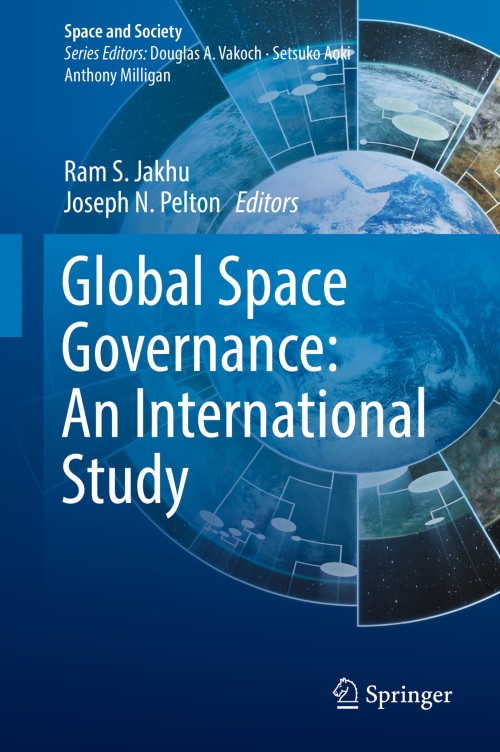
Global Space Governance: An International Study [electronic resource] / edited by Ram S. Jakhu, Joseph N. Pelton.
Erişim Adresi
ISBN
9783319543642
Dil Kodu
İngilizce
Yer Numarası
DK/16644
Basım Bildirimi
1st ed. 2017.
Yayın Bilgisi
Cham : Springer International Publishing : Imprint: Springer, 2017.
Fiziksel Niteleme
XXXVI, 767 p. 13 illus., 12 illus. in color. online resource.
Dizi
Space and Society, 2199-3890
Özet, vb.
This book is based on the findings, conclusions and recommendations of the Global Space Governance study commissioned by the 2014 Montreal Declaration that called upon civil society, academics, governments, the private sector, and other stakeholders to undertake an international interdisciplinary study. The study took three years to complete. It examines the drivers of space regulations and standards, key regulatory problems, and especially addresses possible improvements in global space governance. The world's leading experts led the drafting of chapters, with input from academics and knowledgeable professionals in the public and private sectors, intergovernmental organizations, and nongovernmental organizations from all the regions of the world with over 80 total participants. This book and areas identified for priority action are to be presented to the UN Committee on the Peaceful Uses of Outer Space and it is hoped will be considered directly or indirectly at the UNISPACE+50 event in Vienna, Austria, in 2018. The report, a collective work of all the contributors, includes objective analysis and frank statements expressed without pressure of political, national, and occupational concerns or interest. It is peer-reviewed and carefully edited to ensure its accuracy, preciseness, and readability. It is expected that the study and derivative recommendations will form the basis for deliberations and decisions at international conferences and meetings around the world on the theme of global space governance. This will hopefully include future discussion at the UN Committee on the Peaceful Uses of Outer Space.
Konu
International organization.
Law of the sea.
International law.
Aeronautics __ Law and legislation.
Aerospace engineering.
Astronautics.
Solar system.
International Organization.
Law of the Sea, Air and Outer Space.
Aerospace Technology and Astronautics.
Space Physics.
Law of the sea.
International law.
Aeronautics __ Law and legislation.
Aerospace engineering.
Astronautics.
Solar system.
International Organization.
Law of the Sea, Air and Outer Space.
Aerospace Technology and Astronautics.
Space Physics.
Diğer Yazarlar
Kurum Adı
