

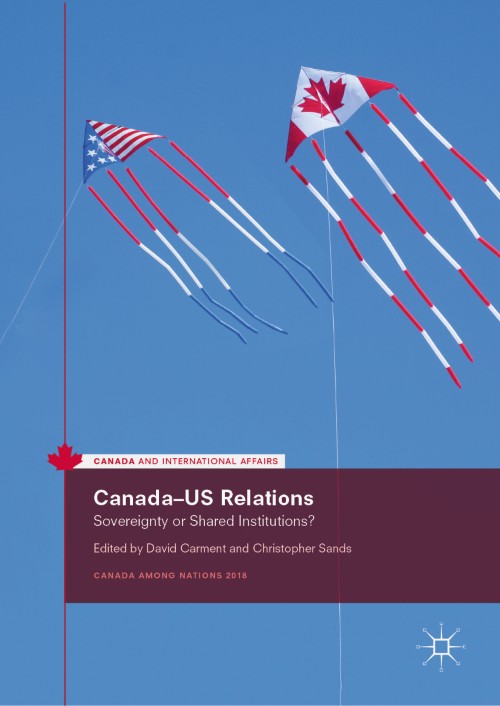
Canada–US Relations [electronic resource] : Sovereignty or Shared Institutions? / edited by David Carment, Christopher Sands.
Erişim Adresi
ISBN
9783030050368
Dil Kodu
İngilizce
Yer Numarası
DK/16661
Basım Bildirimi
1st ed. 2019.
Yayın Bilgisi
Cham : Springer International Publishing : Imprint: Palgrave Macmillan, 2019.
Fiziksel Niteleme
XXI, 294 p. 8 illus., 7 illus. in color. online resource.
Dizi
Canada and International Affairs, 2523-7195
İçindekiler Notu
1. Introduction -- 2. The United States and Canada: In Search of a Partnership -- 3. Where is the Relationship Going? The View from Canada -- 4. “America First” and U.S. – Canadian Relations -- 5. Canada-United States Security Cooperation: Interests, Institutions, Identity and Ideas -- 6. Fairweather Friends? Canada-United States Environmental Relations in the Days of Trump and the Era of Climate Change -- 7. Finding Commonalities Amidst Increasing Differences in Canadian and U.S. Immigration Policies -- 8. Canada’s Global Trade Options – Is there a Plan B? -- 9. Cross-border Energy Infrastructure: The Politics of Intermesticity -- 10. Upsetting the Apple Cart? Implications of the NAFTA renegotiations for Canada-US Relations -- 11. Drug Policy and Canada-US Relations: The Evidence and its (Ir)relevance -- 12. Whither CanadianClimate Policy in the Trump Era? -- 13. Corruption in North America: Canada and the United States -- 14. Conclusion.
Özet, vb.
This book, the 32nd volume in the Canada Among Nations series, looks to the wide array of foreign policy challenges, choices and priorities that Canada confronts in relations with the US where the line between international and domestic affairs is increasingly blurred. In the context of the Canada-US relationship, this blurring is manifest as a cooperative effort by officials to manage aspects of the relationship in which bilateral institutional cooperation goes on largely unnoticed. Chapters in this volume focus on longstanding issues reflecting some degree of Canada-US coordination, if not integration, such as trade, the environment and energy. Other chapters focus on emerging issues such as drug policies, energy, corruption and immigration within the context of these institutional arrangements. David Carment is Professor of International Affairs at Carleton University, Canada, and Editor of Canadian Foreign Policy Journal. He is Series Editor of Palgrave Macmillan’s Canada and International Affairs. Christopher Sands is Senior Research Professor and Director of the Center for Canadian Studies at Johns Hopkins University’s Paul H. Nitze School of Advanced International Studies in Washington, DC, USA. .
Konu
Political science.
International relations.
Political planning.
Comparative government.
America __ Politics and government.
International economic relations.
Politics and International Studies.
Foreign Policy.
Public Policy.
Comparative Politics.
American Politics.
International Political Economy’.
International relations.
Political planning.
Comparative government.
America __ Politics and government.
International economic relations.
Politics and International Studies.
Foreign Policy.
Public Policy.
Comparative Politics.
American Politics.
International Political Economy’.
Diğer Yazarlar
Kurum Adı
Eseri Alıntıla
Referansları kullanmadan önce gözden geçirmeniz ve varsa gerekli düzeltmeleri yapmanız önerilir.
Dijital Kaynak
MARC Görünümü
LEADER 05641nam a22007095i 4500
001 815440
003 TR_AnAIT
005 20260130210647
007 cr nn 008mamaa
008 190117s2019 sz | s |||| 0|eng d
020 |a9783030050368|9978-3-030-05036-8
024 7 |a10.1007/978-3-030-05036-8|2doi
041 |aeng
049 |aTürk Tarih Kurumu Kütüphanesi
050 4|aJA1-92
072 7|aJP|2bicssc
072 7|aPOL000000|2bisacsh
072 7|aJP|2thema
082 04|a320|223
090 |aDK/16661
245 10|aCanada–US Relations|h[electronic resource] :|bSovereignty or Shared Institutions? /|cedited by David Carment, Christopher Sands.
250 |a1st ed. 2019.
264 1|aCham :|bSpringer International Publishing :|bImprint: Palgrave Macmillan,|c2019.
300 |aXXI, 294 p. 8 illus., 7 illus. in color.|bonline resource.
336 |atext|btxt|2rdacontent
337 |acomputer|bc|2rdamedia
338 |aonline resource|bcr|2rdacarrier
341 0 |bTable of contents navigation|2onix
341 0 |bSingle logical reading order|2onix
341 0 |bShort alternative textual descriptions|2onix
341 0 |bUse of color is not sole means of conveying information|2onix
341 0 |bUse of high contrast between text and background color|2onix
341 0 |bNext / Previous structural navigation|2onix
341 0 |bAll non-decorative content supports reading without sight|2onix
347 |atext file|bPDF|2rda
490 1 |aCanada and International Affairs,|x2523-7195
505 0 |a1. Introduction -- 2. The United States and Canada: In Search of a Partnership -- 3. Where is the Relationship Going? The View from Canada -- 4. “America First” and U.S. – Canadian Relations -- 5. Canada-United States Security Cooperation: Interests, Institutions, Identity and Ideas -- 6. Fairweather Friends? Canada-United States Environmental Relations in the Days of Trump and the Era of Climate Change -- 7. Finding Commonalities Amidst Increasing Differences in Canadian and U.S. Immigration Policies -- 8. Canada’s Global Trade Options – Is there a Plan B? -- 9. Cross-border Energy Infrastructure: The Politics of Intermesticity -- 10. Upsetting the Apple Cart? Implications of the NAFTA renegotiations for Canada-US Relations -- 11. Drug Policy and Canada-US Relations: The Evidence and its (Ir)relevance -- 12. Whither CanadianClimate Policy in the Trump Era? -- 13. Corruption in North America: Canada and the United States -- 14. Conclusion.
520 |aThis book, the 32nd volume in the Canada Among Nations series, looks to the wide array of foreign policy challenges, choices and priorities that Canada confronts in relations with the US where the line between international and domestic affairs is increasingly blurred. In the context of the Canada-US relationship, this blurring is manifest as a cooperative effort by officials to manage aspects of the relationship in which bilateral institutional cooperation goes on largely unnoticed. Chapters in this volume focus on longstanding issues reflecting some degree of Canada-US coordination, if not integration, such as trade, the environment and energy. Other chapters focus on emerging issues such as drug policies, energy, corruption and immigration within the context of these institutional arrangements. David Carment is Professor of International Affairs at Carleton University, Canada, and Editor of Canadian Foreign Policy Journal. He is Series Editor of Palgrave Macmillan’s Canada and International Affairs. Christopher Sands is Senior Research Professor and Director of the Center for Canadian Studies at Johns Hopkins University’s Paul H. Nitze School of Advanced International Studies in Washington, DC, USA. .
532 8 |aAccessibility summary: This PDF does not fully comply with PDF/UA standards, but does feature limited screen reader support, described non-text content (images, graphs), bookmarks for easy navigation and searchable, selectable text. Users of assistive technologies may experience difficulty navigating or interpreting content in this document. We recognize the importance of accessibility, and we welcome queries about accessibility for any of our products. If you have a question or an access need, please get in touch with us at accessibilitysupport@springernature.com.
532 8 |aNo reading system accessibility options actively disabled
532 8 |aPublisher contact for further accessibility information: accessibilitysupport@springernature.com
650 0|aPolitical science.
650 0|aInternational relations.
650 0|aPolitical planning.
650 0|aComparative government.
650 0|aAmerica|xPolitics and government.
650 0|aInternational economic relations.
650 14|aPolitics and International Studies.
650 24|aForeign Policy.
650 24|aPublic Policy.
650 24|aComparative Politics.
650 24|aAmerican Politics.
650 24|aInternational Political Economy’.
700 1 |aCarment, David.|eeditor.|4edt|4http://id.loc.gov/vocabulary/relators/edt
700 1 |aSands, Christopher.|eeditor.|4edt|4http://id.loc.gov/vocabulary/relators/edt
710 2 |aSpringerLink (Online service)
773 0 |tSpringer Nature eBook
776 08|iPrinted edition:|z9783030050351
776 08|iPrinted edition:|z9783030050375
830 0|aCanada and International Affairs,|x2523-7195
856 40|uhttps://doi.org/10.1007/978-3-030-05036-8
912 |aZDB-2-POS
912 |aZDB-2-SXPI
950 |aPolitical Science and International Studies (SpringerNature-41174)
950 |aPolitical Science and International Studies (R0) (SpringerNature-43724)
001 815440
003 TR_AnAIT
005 20260130210647
007 cr nn 008mamaa
008 190117s2019 sz | s |||| 0|eng d
020 |a9783030050368|9978-3-030-05036-8
024 7 |a10.1007/978-3-030-05036-8|2doi
041 |aeng
049 |aTürk Tarih Kurumu Kütüphanesi
050 4|aJA1-92
072 7|aJP|2bicssc
072 7|aPOL000000|2bisacsh
072 7|aJP|2thema
082 04|a320|223
090 |aDK/16661
245 10|aCanada–US Relations|h[electronic resource] :|bSovereignty or Shared Institutions? /|cedited by David Carment, Christopher Sands.
250 |a1st ed. 2019.
264 1|aCham :|bSpringer International Publishing :|bImprint: Palgrave Macmillan,|c2019.
300 |aXXI, 294 p. 8 illus., 7 illus. in color.|bonline resource.
336 |atext|btxt|2rdacontent
337 |acomputer|bc|2rdamedia
338 |aonline resource|bcr|2rdacarrier
341 0 |bTable of contents navigation|2onix
341 0 |bSingle logical reading order|2onix
341 0 |bShort alternative textual descriptions|2onix
341 0 |bUse of color is not sole means of conveying information|2onix
341 0 |bUse of high contrast between text and background color|2onix
341 0 |bNext / Previous structural navigation|2onix
341 0 |bAll non-decorative content supports reading without sight|2onix
347 |atext file|bPDF|2rda
490 1 |aCanada and International Affairs,|x2523-7195
505 0 |a1. Introduction -- 2. The United States and Canada: In Search of a Partnership -- 3. Where is the Relationship Going? The View from Canada -- 4. “America First” and U.S. – Canadian Relations -- 5. Canada-United States Security Cooperation: Interests, Institutions, Identity and Ideas -- 6. Fairweather Friends? Canada-United States Environmental Relations in the Days of Trump and the Era of Climate Change -- 7. Finding Commonalities Amidst Increasing Differences in Canadian and U.S. Immigration Policies -- 8. Canada’s Global Trade Options – Is there a Plan B? -- 9. Cross-border Energy Infrastructure: The Politics of Intermesticity -- 10. Upsetting the Apple Cart? Implications of the NAFTA renegotiations for Canada-US Relations -- 11. Drug Policy and Canada-US Relations: The Evidence and its (Ir)relevance -- 12. Whither CanadianClimate Policy in the Trump Era? -- 13. Corruption in North America: Canada and the United States -- 14. Conclusion.
520 |aThis book, the 32nd volume in the Canada Among Nations series, looks to the wide array of foreign policy challenges, choices and priorities that Canada confronts in relations with the US where the line between international and domestic affairs is increasingly blurred. In the context of the Canada-US relationship, this blurring is manifest as a cooperative effort by officials to manage aspects of the relationship in which bilateral institutional cooperation goes on largely unnoticed. Chapters in this volume focus on longstanding issues reflecting some degree of Canada-US coordination, if not integration, such as trade, the environment and energy. Other chapters focus on emerging issues such as drug policies, energy, corruption and immigration within the context of these institutional arrangements. David Carment is Professor of International Affairs at Carleton University, Canada, and Editor of Canadian Foreign Policy Journal. He is Series Editor of Palgrave Macmillan’s Canada and International Affairs. Christopher Sands is Senior Research Professor and Director of the Center for Canadian Studies at Johns Hopkins University’s Paul H. Nitze School of Advanced International Studies in Washington, DC, USA. .
532 8 |aAccessibility summary: This PDF does not fully comply with PDF/UA standards, but does feature limited screen reader support, described non-text content (images, graphs), bookmarks for easy navigation and searchable, selectable text. Users of assistive technologies may experience difficulty navigating or interpreting content in this document. We recognize the importance of accessibility, and we welcome queries about accessibility for any of our products. If you have a question or an access need, please get in touch with us at accessibilitysupport@springernature.com.
532 8 |aNo reading system accessibility options actively disabled
532 8 |aPublisher contact for further accessibility information: accessibilitysupport@springernature.com
650 0|aPolitical science.
650 0|aInternational relations.
650 0|aPolitical planning.
650 0|aComparative government.
650 0|aAmerica|xPolitics and government.
650 0|aInternational economic relations.
650 14|aPolitics and International Studies.
650 24|aForeign Policy.
650 24|aPublic Policy.
650 24|aComparative Politics.
650 24|aAmerican Politics.
650 24|aInternational Political Economy’.
700 1 |aCarment, David.|eeditor.|4edt|4http://id.loc.gov/vocabulary/relators/edt
700 1 |aSands, Christopher.|eeditor.|4edt|4http://id.loc.gov/vocabulary/relators/edt
710 2 |aSpringerLink (Online service)
773 0 |tSpringer Nature eBook
776 08|iPrinted edition:|z9783030050351
776 08|iPrinted edition:|z9783030050375
830 0|aCanada and International Affairs,|x2523-7195
856 40|uhttps://doi.org/10.1007/978-3-030-05036-8
912 |aZDB-2-POS
912 |aZDB-2-SXPI
950 |aPolitical Science and International Studies (SpringerNature-41174)
950 |aPolitical Science and International Studies (R0) (SpringerNature-43724)
Materyaller
Depodan talep edilen materyal sadece kütüphane içerisinde kullanılmaktadır.
Materyal dışarıya ödünç verilmemektedir.
Materyal dışarıya ödünç verilmemektedir.
