

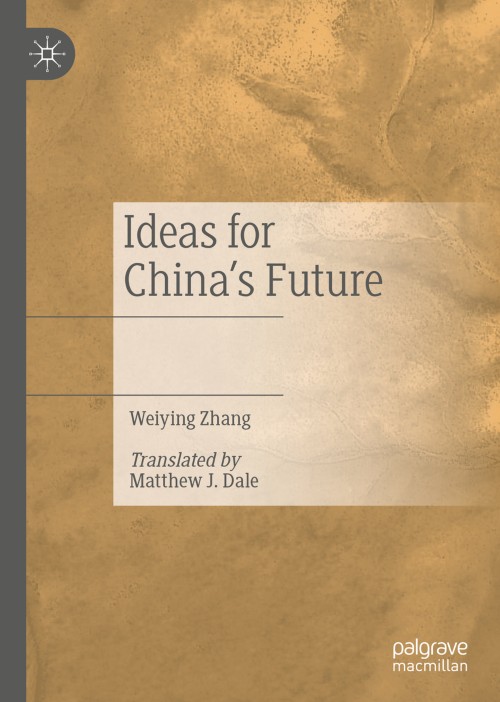
Ideas for China’s Future [electronic resource] / by Weiying Zhang.
Erişim Adresi
ISBN
9789811543043
Dil Kodu
İngilizce
Yer Numarası
DK/16811
Yazar
Basım Bildirimi
1st ed. 2020.
Yayın Bilgisi
Singapore : Springer Nature Singapore : Imprint: Palgrave Macmillan, 2020.
Fiziksel Niteleme
XI, 275 p. online resource.
İçindekiler Notu
1. Interests and Ideas in Economics -- 2. The Institutional Foundation of Human Cooperation -- 3. The Market as the Most Effective System of Cooperation -- 4. The Logic of the Market and the Way of Virtue -- 5. What is a Good Market Theory? -- 6. The Fallacy of Market Failure Theory -- 7. What did China Obtain from Globalization? -- 8. Entrepreneurs and Capitalists in the Market -- 9. Future Economic Growth Depends on Innovation Entrepreneurs -- 10. Entrepreneurship Depends on Culture and the Rule of Law -- 11. Innovation Requires Good Institutions -- 12. The Law of God and Law of the King -- 13. Establishing a Market Economy Requires Constitutionalism -- 14. Implementation is the Life of the Constitution -- 15. The Evolutionary Nature of China’s Reform -- 16. Deng Xiaoping Knew What He did not Know -- 17. Can Vested Interests Become Reformers? -- 18. Reform Stagnation is the Source of Intensified Social Conflicts -- 19. Ideas and Leadership Determines China’s Future -- 20. Constitutionalism and Democratization in the Next Thirty Years of Reform -- 21. China Needs Institutional Entrepreneurs -- 22. China Must Get Rid of Six Idea Traps -- 23. Will Economic Freedom Lead to Political Freedom? -- 24. The Anti-Corruption Dilemma -- 25. There is No China Model -- 26. China Needs to Overcome its Resentment Complex -- 27. Reform Philosophy Must Transition from Utilitarianism to Rights-Priority -- 28. Pursuit of Liberty is a Duty -- 29. Without a Market for Ideas, China has No Future.
Özet, vb.
This book attempts to convey that ideas matter and China needs right ideas to defeat wrong ideas and to guide its future reform. The successes that China has accomplished over the last 40 years of reform and opening were the result of ideas defeating interests. After the end of the “Cultural Revolution,” Deng Xiaoping initiated market-oriented Reform and Opening because he had new ideas. While China has made great progress in both economic and social development since the beginning of reform and opening, there is still a long way to go to become a liberal society. Although the ideas of political leaders are crucial in the short term for social transformation to take place, the ideas of the common people play a more important role in the long term. The types of new ideas that China needs are proposed in this book. Weiying Zhang is Boya Chair Professor of Economics at National School of Development, Peking University, China, and the chief economist of the China Entrepreneurs Forum. He received bachelor and master degrees in economics from the Northwest University, China, and D. Phil in economics from Oxford University, UK. He has published a variety of academic books and papers. As a leading market liberal in China, his insightful and provocative opinions about China’s reforms and development have been widely reported both in Chinese and the international media. In 2011, he received the China Economic Theory Innovation Award for his pioneering contribution to the dual-track price reform.
Konu
Asia __ Politics and government.
Asia __ Economic conditions.
Globalization.
Asian Politics.
Asian Economics.
Globalization.
Asia __ Economic conditions.
Globalization.
Asian Politics.
Asian Economics.
Globalization.
Kurum Adı
Eseri Alıntıla
Referansları kullanmadan önce gözden geçirmeniz ve varsa gerekli düzeltmeleri yapmanız önerilir.
Dijital Kaynak
MARC Görünümü
LEADER 04739nam a22005055i 4500
001 815591
003 TR_AnAIT
005 20260130205836
007 cr nn 008mamaa
008 200713s2020 si | s |||| 0|eng d
020 |a9789811543043|9978-981-15-4304-3
024 7 |a10.1007/978-981-15-4304-3|2doi
041 |aeng
049 |aTürk Tarih Kurumu Kütüphanesi
050 4|aJQ1-1852
072 7|aJP|2bicssc
072 7|a1F|2bicssc
072 7|aPOL054000|2bisacsh
072 7|aJP|x1F|2thema
082 04|a320.95|223
090 |aDK/16811
100 1 |aZhang, Weiying.|eauthor.|4aut|4http://id.loc.gov/vocabulary/relators/aut
245 10|aIdeas for China’s Future|h[electronic resource] /|cby Weiying Zhang.
250 |a1st ed. 2020.
264 1|aSingapore :|bSpringer Nature Singapore :|bImprint: Palgrave Macmillan,|c2020.
300 |aXI, 275 p.|bonline resource.
336 |atext|btxt|2rdacontent
337 |acomputer|bc|2rdamedia
338 |aonline resource|bcr|2rdacarrier
347 |atext file|bPDF|2rda
505 0 |a1. Interests and Ideas in Economics -- 2. The Institutional Foundation of Human Cooperation -- 3. The Market as the Most Effective System of Cooperation -- 4. The Logic of the Market and the Way of Virtue -- 5. What is a Good Market Theory? -- 6. The Fallacy of Market Failure Theory -- 7. What did China Obtain from Globalization? -- 8. Entrepreneurs and Capitalists in the Market -- 9. Future Economic Growth Depends on Innovation Entrepreneurs -- 10. Entrepreneurship Depends on Culture and the Rule of Law -- 11. Innovation Requires Good Institutions -- 12. The Law of God and Law of the King -- 13. Establishing a Market Economy Requires Constitutionalism -- 14. Implementation is the Life of the Constitution -- 15. The Evolutionary Nature of China’s Reform -- 16. Deng Xiaoping Knew What He did not Know -- 17. Can Vested Interests Become Reformers? -- 18. Reform Stagnation is the Source of Intensified Social Conflicts -- 19. Ideas and Leadership Determines China’s Future -- 20. Constitutionalism and Democratization in the Next Thirty Years of Reform -- 21. China Needs Institutional Entrepreneurs -- 22. China Must Get Rid of Six Idea Traps -- 23. Will Economic Freedom Lead to Political Freedom? -- 24. The Anti-Corruption Dilemma -- 25. There is No China Model -- 26. China Needs to Overcome its Resentment Complex -- 27. Reform Philosophy Must Transition from Utilitarianism to Rights-Priority -- 28. Pursuit of Liberty is a Duty -- 29. Without a Market for Ideas, China has No Future.
520 |aThis book attempts to convey that ideas matter and China needs right ideas to defeat wrong ideas and to guide its future reform. The successes that China has accomplished over the last 40 years of reform and opening were the result of ideas defeating interests. After the end of the “Cultural Revolution,” Deng Xiaoping initiated market-oriented Reform and Opening because he had new ideas. While China has made great progress in both economic and social development since the beginning of reform and opening, there is still a long way to go to become a liberal society. Although the ideas of political leaders are crucial in the short term for social transformation to take place, the ideas of the common people play a more important role in the long term. The types of new ideas that China needs are proposed in this book. Weiying Zhang is Boya Chair Professor of Economics at National School of Development, Peking University, China, and the chief economist of the China Entrepreneurs Forum. He received bachelor and master degrees in economics from the Northwest University, China, and D. Phil in economics from Oxford University, UK. He has published a variety of academic books and papers. As a leading market liberal in China, his insightful and provocative opinions about China’s reforms and development have been widely reported both in Chinese and the international media. In 2011, he received the China Economic Theory Innovation Award for his pioneering contribution to the dual-track price reform.
650 0|aAsia|xPolitics and government.
650 0|aAsia|xEconomic conditions.
650 0|aGlobalization.
650 14|aAsian Politics.
650 24|aAsian Economics.
650 24|aGlobalization.
710 2 |aSpringerLink (Online service)
773 0 |tSpringer Nature eBook
776 08|iPrinted edition:|z9789811543036
776 08|iPrinted edition:|z9789811543050
776 08|iPrinted edition:|z9789811543067
856 40|uhttps://doi.org/10.1007/978-981-15-4304-3
912 |aZDB-2-POS
912 |aZDB-2-SXPI
950 |aPolitical Science and International Studies (SpringerNature-41174)
950 |aPolitical Science and International Studies (R0) (SpringerNature-43724)
001 815591
003 TR_AnAIT
005 20260130205836
007 cr nn 008mamaa
008 200713s2020 si | s |||| 0|eng d
020 |a9789811543043|9978-981-15-4304-3
024 7 |a10.1007/978-981-15-4304-3|2doi
041 |aeng
049 |aTürk Tarih Kurumu Kütüphanesi
050 4|aJQ1-1852
072 7|aJP|2bicssc
072 7|a1F|2bicssc
072 7|aPOL054000|2bisacsh
072 7|aJP|x1F|2thema
082 04|a320.95|223
090 |aDK/16811
100 1 |aZhang, Weiying.|eauthor.|4aut|4http://id.loc.gov/vocabulary/relators/aut
245 10|aIdeas for China’s Future|h[electronic resource] /|cby Weiying Zhang.
250 |a1st ed. 2020.
264 1|aSingapore :|bSpringer Nature Singapore :|bImprint: Palgrave Macmillan,|c2020.
300 |aXI, 275 p.|bonline resource.
336 |atext|btxt|2rdacontent
337 |acomputer|bc|2rdamedia
338 |aonline resource|bcr|2rdacarrier
347 |atext file|bPDF|2rda
505 0 |a1. Interests and Ideas in Economics -- 2. The Institutional Foundation of Human Cooperation -- 3. The Market as the Most Effective System of Cooperation -- 4. The Logic of the Market and the Way of Virtue -- 5. What is a Good Market Theory? -- 6. The Fallacy of Market Failure Theory -- 7. What did China Obtain from Globalization? -- 8. Entrepreneurs and Capitalists in the Market -- 9. Future Economic Growth Depends on Innovation Entrepreneurs -- 10. Entrepreneurship Depends on Culture and the Rule of Law -- 11. Innovation Requires Good Institutions -- 12. The Law of God and Law of the King -- 13. Establishing a Market Economy Requires Constitutionalism -- 14. Implementation is the Life of the Constitution -- 15. The Evolutionary Nature of China’s Reform -- 16. Deng Xiaoping Knew What He did not Know -- 17. Can Vested Interests Become Reformers? -- 18. Reform Stagnation is the Source of Intensified Social Conflicts -- 19. Ideas and Leadership Determines China’s Future -- 20. Constitutionalism and Democratization in the Next Thirty Years of Reform -- 21. China Needs Institutional Entrepreneurs -- 22. China Must Get Rid of Six Idea Traps -- 23. Will Economic Freedom Lead to Political Freedom? -- 24. The Anti-Corruption Dilemma -- 25. There is No China Model -- 26. China Needs to Overcome its Resentment Complex -- 27. Reform Philosophy Must Transition from Utilitarianism to Rights-Priority -- 28. Pursuit of Liberty is a Duty -- 29. Without a Market for Ideas, China has No Future.
520 |aThis book attempts to convey that ideas matter and China needs right ideas to defeat wrong ideas and to guide its future reform. The successes that China has accomplished over the last 40 years of reform and opening were the result of ideas defeating interests. After the end of the “Cultural Revolution,” Deng Xiaoping initiated market-oriented Reform and Opening because he had new ideas. While China has made great progress in both economic and social development since the beginning of reform and opening, there is still a long way to go to become a liberal society. Although the ideas of political leaders are crucial in the short term for social transformation to take place, the ideas of the common people play a more important role in the long term. The types of new ideas that China needs are proposed in this book. Weiying Zhang is Boya Chair Professor of Economics at National School of Development, Peking University, China, and the chief economist of the China Entrepreneurs Forum. He received bachelor and master degrees in economics from the Northwest University, China, and D. Phil in economics from Oxford University, UK. He has published a variety of academic books and papers. As a leading market liberal in China, his insightful and provocative opinions about China’s reforms and development have been widely reported both in Chinese and the international media. In 2011, he received the China Economic Theory Innovation Award for his pioneering contribution to the dual-track price reform.
650 0|aAsia|xPolitics and government.
650 0|aAsia|xEconomic conditions.
650 0|aGlobalization.
650 14|aAsian Politics.
650 24|aAsian Economics.
650 24|aGlobalization.
710 2 |aSpringerLink (Online service)
773 0 |tSpringer Nature eBook
776 08|iPrinted edition:|z9789811543036
776 08|iPrinted edition:|z9789811543050
776 08|iPrinted edition:|z9789811543067
856 40|uhttps://doi.org/10.1007/978-981-15-4304-3
912 |aZDB-2-POS
912 |aZDB-2-SXPI
950 |aPolitical Science and International Studies (SpringerNature-41174)
950 |aPolitical Science and International Studies (R0) (SpringerNature-43724)
Materyaller
Depodan talep edilen materyal sadece kütüphane içerisinde kullanılmaktadır.
Materyal dışarıya ödünç verilmemektedir.
Materyal dışarıya ödünç verilmemektedir.
