

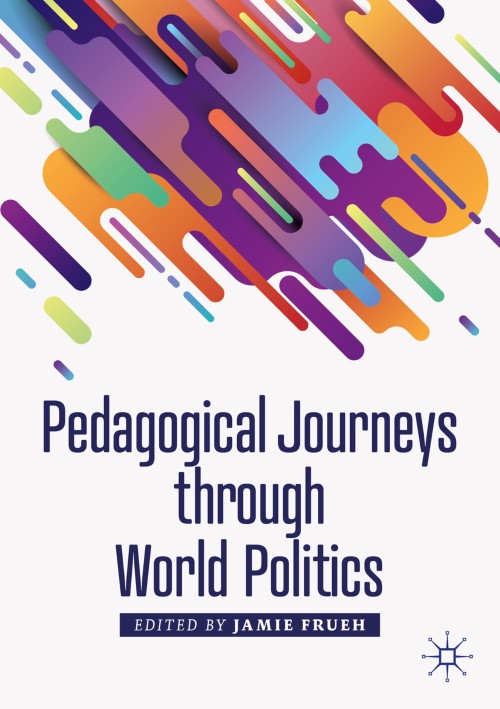
Pedagogical Journeys through World Politics [electronic resource] / edited by Jamie Frueh.
Erişim Adresi
ISBN
9783030203054
Dil Kodu
İngilizce
Yer Numarası
DK/16838
Basım Bildirimi
1st ed. 2020.
Yayın Bilgisi
Cham : Springer International Publishing : Imprint: Palgrave Macmillan, 2020.
Fiziksel Niteleme
XLII, 296 p. online resource.
Dizi
Political Pedagogies, 2662-7817
İçindekiler Notu
1. Introduction -- 2. Teaching Is Impossible: A Polemic -- 3. Pedagogical Micro-communities: Sites of Relationality, Sites of Transformation -- 4. Time for Class -- 5. Things I’ve Learned from Failure and Friends -- 6. Teaching as Service: Losing and Finding My Identity in Global Classrooms -- 7. Confessions of a Teaching Malcontent: Learning to Like What You Do.-8. Teaching in Capitalist Ruins -- 9. Pedagogies of Discomfort: Teaching International Relations as Humanitas in Times of Brexit -- 10. I Love Teaching: It Is Fun! -- 11. “Come on Down!” Pedagogical Approaches from The Price is Right -- 12. From Two-Time College Dropout to Full Professor: The Non-traditional Route to Teacher and Mentor -- 13. Teaching Writing as Social Justice -- 14. Learning to Teach IR: An Active Learning Approach -- 15. My Metamorphoses as an International Relations Teacher -- 16. Oh Yeah, There’s Always Community College -- 17.An Individual Odyssey in Teaching International Relations -- 18. Disciplinary Dungeon Master -- 19. Swimming, Not Sinking: Pedagogical Creativity and the Road to Becoming an Effective IR Teacher -- 20. Strategies of a Boring Teacher -- 21. The Unexpected Gift: “Oh, and You’ll be Responsible for the Model UN Program” -- 22. Better Than Before: My Pedagogical Journey -- 23. “Love’s Labor’s Lost”: Teaching IR in Germany -- 24. Journey to the Unknown: Survival, Re-awakening, Renewal, and Reformation.
Özet, vb.
This edited volume is a collection of twenty-three autobiographical narratives by successful teachers of global politics and international relations. The diverse contributors (from a variety of institutional contexts, sub-disciplines, and countries) describe their development as teachers, articulate mission statements for their teaching, and link both to pedagogical practices that exemplify their teaching philosophies. Rather than provide specific recipes for authoritative techniques, the essays empower readers as creative developers of their own approaches to teaching global politics. They demonstrate the multiple ways that instructors have grounded deliberate pedagogical designs in a variety of deeper philosophical commitments, and resources are provided to facilitate discussion and collaborative deliberation between groups of readers. Jamie Frueh is Professor of History and Political Science at Bridgewater College, USA. As Director of the Center for EngagedLearning, he oversees Bridgewater’s interdisciplinary academic programs and four endowed institutes. He runs pedagogy workshops at home and abroad, and is the 2019 recipient of the International Studies Association’s Deborah Gerner Innovative Teaching Award.
Konu
Political science.
International relations.
Teachers __ Training of.
Comparative government.
Politics and International Studies.
International Relations Theory.
Teaching and Teacher Education.
Comparative Politics.
International relations.
Teachers __ Training of.
Comparative government.
Politics and International Studies.
International Relations Theory.
Teaching and Teacher Education.
Comparative Politics.
Diğer Yazarlar
Kurum Adı
Eseri Alıntıla
Referansları kullanmadan önce gözden geçirmeniz ve varsa gerekli düzeltmeleri yapmanız önerilir.
Dijital Kaynak
MARC Görünümü
LEADER 04561nam a22005295i 4500
001 815619
003 TR_AnAIT
005 20260130205707
007 cr nn 008mamaa
008 190716s2020 sz | s |||| 0|eng d
020 |a9783030203054|9978-3-030-20305-4
024 7 |a10.1007/978-3-030-20305-4|2doi
041 |aeng
049 |aTürk Tarih Kurumu Kütüphanesi
050 4|aJA1-92
072 7|aJP|2bicssc
072 7|aPOL000000|2bisacsh
072 7|aJP|2thema
082 04|a320|223
090 |aDK/16838
245 10|aPedagogical Journeys through World Politics|h[electronic resource] /|cedited by Jamie Frueh.
250 |a1st ed. 2020.
264 1|aCham :|bSpringer International Publishing :|bImprint: Palgrave Macmillan,|c2020.
300 |aXLII, 296 p.|bonline resource.
336 |atext|btxt|2rdacontent
337 |acomputer|bc|2rdamedia
338 |aonline resource|bcr|2rdacarrier
347 |atext file|bPDF|2rda
490 1 |aPolitical Pedagogies,|x2662-7817
505 0 |a1. Introduction -- 2. Teaching Is Impossible: A Polemic -- 3. Pedagogical Micro-communities: Sites of Relationality, Sites of Transformation -- 4. Time for Class -- 5. Things I’ve Learned from Failure and Friends -- 6. Teaching as Service: Losing and Finding My Identity in Global Classrooms -- 7. Confessions of a Teaching Malcontent: Learning to Like What You Do.-8. Teaching in Capitalist Ruins -- 9. Pedagogies of Discomfort: Teaching International Relations as Humanitas in Times of Brexit -- 10. I Love Teaching: It Is Fun! -- 11. “Come on Down!” Pedagogical Approaches from The Price is Right -- 12. From Two-Time College Dropout to Full Professor: The Non-traditional Route to Teacher and Mentor -- 13. Teaching Writing as Social Justice -- 14. Learning to Teach IR: An Active Learning Approach -- 15. My Metamorphoses as an International Relations Teacher -- 16. Oh Yeah, There’s Always Community College -- 17.An Individual Odyssey in Teaching International Relations -- 18. Disciplinary Dungeon Master -- 19. Swimming, Not Sinking: Pedagogical Creativity and the Road to Becoming an Effective IR Teacher -- 20. Strategies of a Boring Teacher -- 21. The Unexpected Gift: “Oh, and You’ll be Responsible for the Model UN Program” -- 22. Better Than Before: My Pedagogical Journey -- 23. “Love’s Labor’s Lost”: Teaching IR in Germany -- 24. Journey to the Unknown: Survival, Re-awakening, Renewal, and Reformation.
520 |aThis edited volume is a collection of twenty-three autobiographical narratives by successful teachers of global politics and international relations. The diverse contributors (from a variety of institutional contexts, sub-disciplines, and countries) describe their development as teachers, articulate mission statements for their teaching, and link both to pedagogical practices that exemplify their teaching philosophies. Rather than provide specific recipes for authoritative techniques, the essays empower readers as creative developers of their own approaches to teaching global politics. They demonstrate the multiple ways that instructors have grounded deliberate pedagogical designs in a variety of deeper philosophical commitments, and resources are provided to facilitate discussion and collaborative deliberation between groups of readers. Jamie Frueh is Professor of History and Political Science at Bridgewater College, USA. As Director of the Center for EngagedLearning, he oversees Bridgewater’s interdisciplinary academic programs and four endowed institutes. He runs pedagogy workshops at home and abroad, and is the 2019 recipient of the International Studies Association’s Deborah Gerner Innovative Teaching Award.
650 0|aPolitical science.
650 0|aInternational relations.
650 0|aTeachers|xTraining of.
650 0|aComparative government.
650 14|aPolitics and International Studies.
650 24|aInternational Relations Theory.
650 24|aTeaching and Teacher Education.
650 24|aComparative Politics.
700 1 |aFrueh, Jamie.|eeditor.|4edt|4http://id.loc.gov/vocabulary/relators/edt
710 2 |aSpringerLink (Online service)
773 0 |tSpringer Nature eBook
776 08|iPrinted edition:|z9783030203047
776 08|iPrinted edition:|z9783030203061
830 0|aPolitical Pedagogies,|x2662-7817
856 40|uhttps://doi.org/10.1007/978-3-030-20305-4
912 |aZDB-2-POS
912 |aZDB-2-SXPI
950 |aPolitical Science and International Studies (SpringerNature-41174)
950 |aPolitical Science and International Studies (R0) (SpringerNature-43724)
001 815619
003 TR_AnAIT
005 20260130205707
007 cr nn 008mamaa
008 190716s2020 sz | s |||| 0|eng d
020 |a9783030203054|9978-3-030-20305-4
024 7 |a10.1007/978-3-030-20305-4|2doi
041 |aeng
049 |aTürk Tarih Kurumu Kütüphanesi
050 4|aJA1-92
072 7|aJP|2bicssc
072 7|aPOL000000|2bisacsh
072 7|aJP|2thema
082 04|a320|223
090 |aDK/16838
245 10|aPedagogical Journeys through World Politics|h[electronic resource] /|cedited by Jamie Frueh.
250 |a1st ed. 2020.
264 1|aCham :|bSpringer International Publishing :|bImprint: Palgrave Macmillan,|c2020.
300 |aXLII, 296 p.|bonline resource.
336 |atext|btxt|2rdacontent
337 |acomputer|bc|2rdamedia
338 |aonline resource|bcr|2rdacarrier
347 |atext file|bPDF|2rda
490 1 |aPolitical Pedagogies,|x2662-7817
505 0 |a1. Introduction -- 2. Teaching Is Impossible: A Polemic -- 3. Pedagogical Micro-communities: Sites of Relationality, Sites of Transformation -- 4. Time for Class -- 5. Things I’ve Learned from Failure and Friends -- 6. Teaching as Service: Losing and Finding My Identity in Global Classrooms -- 7. Confessions of a Teaching Malcontent: Learning to Like What You Do.-8. Teaching in Capitalist Ruins -- 9. Pedagogies of Discomfort: Teaching International Relations as Humanitas in Times of Brexit -- 10. I Love Teaching: It Is Fun! -- 11. “Come on Down!” Pedagogical Approaches from The Price is Right -- 12. From Two-Time College Dropout to Full Professor: The Non-traditional Route to Teacher and Mentor -- 13. Teaching Writing as Social Justice -- 14. Learning to Teach IR: An Active Learning Approach -- 15. My Metamorphoses as an International Relations Teacher -- 16. Oh Yeah, There’s Always Community College -- 17.An Individual Odyssey in Teaching International Relations -- 18. Disciplinary Dungeon Master -- 19. Swimming, Not Sinking: Pedagogical Creativity and the Road to Becoming an Effective IR Teacher -- 20. Strategies of a Boring Teacher -- 21. The Unexpected Gift: “Oh, and You’ll be Responsible for the Model UN Program” -- 22. Better Than Before: My Pedagogical Journey -- 23. “Love’s Labor’s Lost”: Teaching IR in Germany -- 24. Journey to the Unknown: Survival, Re-awakening, Renewal, and Reformation.
520 |aThis edited volume is a collection of twenty-three autobiographical narratives by successful teachers of global politics and international relations. The diverse contributors (from a variety of institutional contexts, sub-disciplines, and countries) describe their development as teachers, articulate mission statements for their teaching, and link both to pedagogical practices that exemplify their teaching philosophies. Rather than provide specific recipes for authoritative techniques, the essays empower readers as creative developers of their own approaches to teaching global politics. They demonstrate the multiple ways that instructors have grounded deliberate pedagogical designs in a variety of deeper philosophical commitments, and resources are provided to facilitate discussion and collaborative deliberation between groups of readers. Jamie Frueh is Professor of History and Political Science at Bridgewater College, USA. As Director of the Center for EngagedLearning, he oversees Bridgewater’s interdisciplinary academic programs and four endowed institutes. He runs pedagogy workshops at home and abroad, and is the 2019 recipient of the International Studies Association’s Deborah Gerner Innovative Teaching Award.
650 0|aPolitical science.
650 0|aInternational relations.
650 0|aTeachers|xTraining of.
650 0|aComparative government.
650 14|aPolitics and International Studies.
650 24|aInternational Relations Theory.
650 24|aTeaching and Teacher Education.
650 24|aComparative Politics.
700 1 |aFrueh, Jamie.|eeditor.|4edt|4http://id.loc.gov/vocabulary/relators/edt
710 2 |aSpringerLink (Online service)
773 0 |tSpringer Nature eBook
776 08|iPrinted edition:|z9783030203047
776 08|iPrinted edition:|z9783030203061
830 0|aPolitical Pedagogies,|x2662-7817
856 40|uhttps://doi.org/10.1007/978-3-030-20305-4
912 |aZDB-2-POS
912 |aZDB-2-SXPI
950 |aPolitical Science and International Studies (SpringerNature-41174)
950 |aPolitical Science and International Studies (R0) (SpringerNature-43724)
Materyaller
Depodan talep edilen materyal sadece kütüphane içerisinde kullanılmaktadır.
Materyal dışarıya ödünç verilmemektedir.
Materyal dışarıya ödünç verilmemektedir.
