LEADER 03875nam a22005415i 4500
001 815660
003 TR_AnAIT
005 20260130205450
007 cr nn 008mamaa
008 190427s2020 sz | s |||| 0|eng d
020 |a9783030160845|9978-3-030-16084-5
024 7 |a10.1007/978-3-030-16084-5|2doi
041 |aeng
049 |aTürk Tarih Kurumu Kütüphanesi
050 4|aJQ1758-1852
072 7|aJP|2bicssc
072 7|a1FB|2bicssc
072 7|aPOL059000|2bisacsh
072 7|aJP|x1FB|2thema
082 04|a320.956|223
090 |aDK/16879
100 1 |aAskari, Hossein.|eauthor.|4aut|4http://id.loc.gov/vocabulary/relators/aut
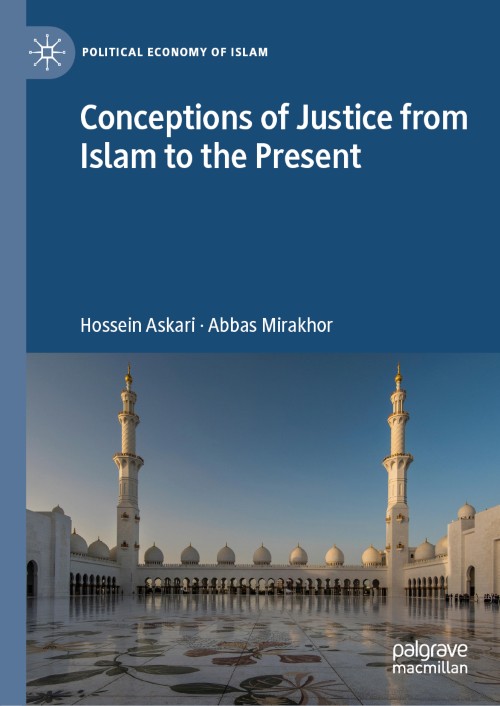
245 10|aConceptions of Justice from Islam to the Present|h[electronic resource] /|cby Hossein Askari, Abbas Mirakhor.
250 |a1st ed. 2020.
264 1|aCham :|bSpringer International Publishing :|bImprint: Palgrave Macmillan,|c2020.
300 |aXXI, 292 p. 6 illus., 5 illus. in color.|bonline resource.
336 |atext|btxt|2rdacontent
337 |acomputer|bc|2rdamedia
338 |aonline resource|bcr|2rdacarrier
347 |atext file|bPDF|2rda
490 1 |aPolitical Economy of Islam,|x2945-6487
505 0 |a1. Chapter 1: Introduction and Summary of the Conception of Justice in Islam -- 2. Chapter 2: Contemporary Muslim Scholars and Philosophers on Justice in Islam -- 3. Chapter 3: Conception of Justice in the Age of Enlightenment -- 4. Chapter 4: The Utilitarian Conception of Justice and its Critics (Bentham to Hayek) -- 5. Chapter 5: Conception of Justice from Rawls to Sen to the Present -- 6. Chapter 6: The State of Justice and Impediments to a More Just Muslim World -- 7. Chapter 7: Concluding Remarks.
520 |aThis book explains a perspective on the system of justice that emerges in Islam if rules are followed and how the Islamic system is differentiated from the conventional thinking on justice. It examines conceptions of justice from the Enlightenment to Bentham to Rawls to contemporary philosophers including Sen, Cohen, Nussbaum, and Pogge. The authors present the views of twentieth century Muslim thinkers on justice who see Muslims upholding rituals but not living according to Qur’anic rules. It provides empirical surveys of the current state of justice in Muslim countries analyzing the economic, social, and political state of affairs. The authors conclude by assessing the state of justice-injustice in Muslim countries and highlighting areas in need of attention for justice to prevail. Hossein Askari is former Assistant Professor at Tufts University, Professor of Business and Middle East Studies at the University of Texas at Austin. Previously, he was the Iran Professor of Business and International Affairs at The George Washington University, becoming Emeritus in 2019. Abbas Mirakhor is former Executive Director and Dean of the Executive Board of the International Monetary Fund. Previously, he taught at universities in Iran and in the US and was the First Holder of the INCEIF Chair in Islamic Finance at INCEIF in Malaysia.
650 0|aMiddle East|xPolitics and government.
650 0|aPolitical science.
650 0|aReligion and politics.
650 14|aMiddle Eastern Politics.
650 24|aPolitical Theory.
650 24|aPolitics and Religion.
700 1 |aMirakhor, Abbas.|eauthor.|4aut|4http://id.loc.gov/vocabulary/relators/aut
710 2 |aSpringerLink (Online service)
773 0 |tSpringer Nature eBook
776 08|iPrinted edition:|z9783030160838
776 08|iPrinted edition:|z9783030160852
776 08|iPrinted edition:|z9783030160869
830 0|aPolitical Economy of Islam,|x2945-6487
856 40|uhttps://doi.org/10.1007/978-3-030-16084-5
912 |aZDB-2-POS
912 |aZDB-2-SXPI
950 |aPolitical Science and International Studies (SpringerNature-41174)
950 |aPolitical Science and International Studies (R0) (SpringerNature-43724)