

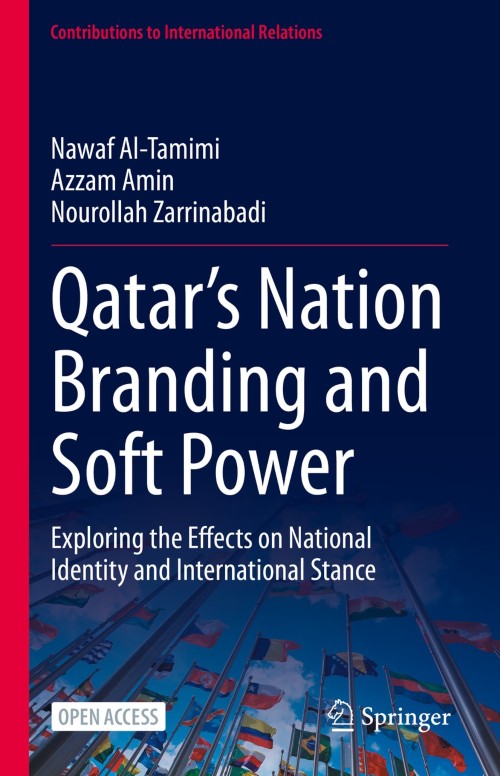
Qatar’s Nation Branding and Soft Power [electronic resource] : Exploring the Effects on National Identity and International Stance / by Nawaf Al-Tamimi, Azzam Amin, Nourollah Zarrinabadi.
Erişim Adresi
ISBN
9783031246517
Dil Kodu
İngilizce
Yer Numarası
DK/16929
Yazar
Basım Bildirimi
1st ed. 2023.
Yayın Bilgisi
Cham : Springer Nature Switzerland : Imprint: Springer, 2023.
Fiziksel Niteleme
XI, 92 p. 1 illus. online resource.
Dizi
Contributions to International Relations, 2731-507X
İçindekiler Notu
Chapter 1. Introduction -- Chapter 2. Terminological Definitions -- Chapter 3. Describing Qatar -- Chapter 4. Creating Nation Brand: The Model of Qatar -- Chapter 5. The Blockade, Social Media, and National Identity -- Chapter 6. Conclusion.
Özet, vb.
This open access book examines how creating a national brand assisted Qatar in absorbing the shock and awe following the outburst of the crisis with Saudi Arabia, Bahrain, Egypt, and the United Arab Emirates in May 2017. The authors discuss the country's diplomatic performance, which was characterized by five main factors that helped Qatar to deal with the crisis successfully. These factors include the failure of the element of surprise, years of building Qatar’s national brand, Qatar's arsenal of soft power, international alliances, and the opponents’ quandary. This book further scrutinizes Qatar’s role in the region and all questions related to this role through the lenses of its nation brand. The book provides explanations for the success of Qatar in absorbing the “shock and awe” in the early stage of the last Gulf crisis, presenting various arguments on how establishing a nation brand helped Qatar to deal with the crisis successfully. The book follows an original approach that views the Qatari case from a scientific perspective, investigating the art of nation branding. It will appeal to students, researchers, and scholars of international relations, psychology, political science, and journalism, as well as policy-makers interested in a better understanding of soft power, nation branding, Middle East studies, and diplomacy.
Konu
International relations.
Diplomacy.
Peace.
Foreign Policy.
Diplomacy.
Peace and Conflict Studies.
International Relations Theory.
Diplomacy.
Peace.
Foreign Policy.
Diplomacy.
Peace and Conflict Studies.
International Relations Theory.
Kurum Adı
Eseri Alıntıla
Referansları kullanmadan önce gözden geçirmeniz ve varsa gerekli düzeltmeleri yapmanız önerilir.
Dijital Kaynak
MARC Görünümü
LEADER 05108nam a22006975i 4500
001 815710
003 TR_AnAIT
005 20260130205243
007 cr nn 008mamaa
008 230131s2023 sz | s |||| 0|eng d
020 |a9783031246517|9978-3-031-24651-7
024 7 |a10.1007/978-3-031-24651-7|2doi
041 |aeng
049 |aTürk Tarih Kurumu Kütüphanesi
050 4|aJZ2-6530
072 7|aJPS|2bicssc
072 7|aPOL028000|2bisacsh
072 7|aJPS|2thema
082 04|a327.1|223
090 |aDK/16929
100 1 |aAl-Tamimi, Nawaf.|eauthor.|4aut|4http://id.loc.gov/vocabulary/relators/aut
245 10|aQatar’s Nation Branding and Soft Power|h[electronic resource] :|bExploring the Effects on National Identity and International Stance /|cby Nawaf Al-Tamimi, Azzam Amin, Nourollah Zarrinabadi.
250 |a1st ed. 2023.
264 1|aCham :|bSpringer Nature Switzerland :|bImprint: Springer,|c2023.
300 |aXI, 92 p. 1 illus.|bonline resource.
336 |atext|btxt|2rdacontent
337 |acomputer|bc|2rdamedia
338 |aonline resource|bcr|2rdacarrier
341 0 |bTable of contents navigation|2onix
341 0 |bSingle logical reading order|2onix
341 0 |bShort alternative textual descriptions|2onix
341 0 |bUse of color is not sole means of conveying information|2onix
341 0 |bUse of high contrast between text and background color|2onix
341 0 |bNext / Previous structural navigation|2onix
341 0 |bAll non-decorative content supports reading without sight|2onix
347 |atext file|bPDF|2rda
490 1 |aContributions to International Relations,|x2731-507X
505 0 |aChapter 1. Introduction -- Chapter 2. Terminological Definitions -- Chapter 3. Describing Qatar -- Chapter 4. Creating Nation Brand: The Model of Qatar -- Chapter 5. The Blockade, Social Media, and National Identity -- Chapter 6. Conclusion.
506 0 |aOpen Access
520 |aThis open access book examines how creating a national brand assisted Qatar in absorbing the shock and awe following the outburst of the crisis with Saudi Arabia, Bahrain, Egypt, and the United Arab Emirates in May 2017. The authors discuss the country's diplomatic performance, which was characterized by five main factors that helped Qatar to deal with the crisis successfully. These factors include the failure of the element of surprise, years of building Qatar’s national brand, Qatar's arsenal of soft power, international alliances, and the opponents’ quandary. This book further scrutinizes Qatar’s role in the region and all questions related to this role through the lenses of its nation brand. The book provides explanations for the success of Qatar in absorbing the “shock and awe” in the early stage of the last Gulf crisis, presenting various arguments on how establishing a nation brand helped Qatar to deal with the crisis successfully. The book follows an original approach that views the Qatari case from a scientific perspective, investigating the art of nation branding. It will appeal to students, researchers, and scholars of international relations, psychology, political science, and journalism, as well as policy-makers interested in a better understanding of soft power, nation branding, Middle East studies, and diplomacy.
532 8 |aAccessibility summary: This PDF does not fully comply with PDF/UA standards, but does feature limited screen reader support, described non-text content (images, graphs), bookmarks for easy navigation and searchable, selectable text. Users of assistive technologies may experience difficulty navigating or interpreting content in this document. We recognize the importance of accessibility, and we welcome queries about accessibility for any of our products. If you have a question or an access need, please get in touch with us at accessibilitysupport@springernature.com.
532 8 |aNo reading system accessibility options actively disabled
532 8 |aPublisher contact for further accessibility information: accessibilitysupport@springernature.com
650 0|aInternational relations.
650 0|aDiplomacy.
650 0|aPeace.
650 14|aForeign Policy.
650 24|aDiplomacy.
650 24|aPeace and Conflict Studies.
650 24|aInternational Relations Theory.
700 1 |aAmin, Azzam.|eauthor.|0(orcid)0000-0002-9220-8831|1https://orcid.org/0000-0002-9220-8831|4aut|4http://id.loc.gov/vocabulary/relators/aut
700 1 |aZarrinabadi, Nourollah.|eauthor.|4aut|4http://id.loc.gov/vocabulary/relators/aut
710 2 |aSpringerLink (Online service)
773 0 |tSpringer Nature eBook
776 08|iPrinted edition:|z9783031246500
776 08|iPrinted edition:|z9783031246524
776 08|iPrinted edition:|z9783031246531
830 0|aContributions to International Relations,|x2731-507X
856 40|uhttps://doi.org/10.1007/978-3-031-24651-7
912 |aZDB-2-POS
912 |aZDB-2-SXPI
912 |aZDB-2-SOB
950 |aPolitical Science and International Studies (SpringerNature-41174)
950 |aPolitical Science and International Studies (R0) (SpringerNature-43724)
001 815710
003 TR_AnAIT
005 20260130205243
007 cr nn 008mamaa
008 230131s2023 sz | s |||| 0|eng d
020 |a9783031246517|9978-3-031-24651-7
024 7 |a10.1007/978-3-031-24651-7|2doi
041 |aeng
049 |aTürk Tarih Kurumu Kütüphanesi
050 4|aJZ2-6530
072 7|aJPS|2bicssc
072 7|aPOL028000|2bisacsh
072 7|aJPS|2thema
082 04|a327.1|223
090 |aDK/16929
100 1 |aAl-Tamimi, Nawaf.|eauthor.|4aut|4http://id.loc.gov/vocabulary/relators/aut
245 10|aQatar’s Nation Branding and Soft Power|h[electronic resource] :|bExploring the Effects on National Identity and International Stance /|cby Nawaf Al-Tamimi, Azzam Amin, Nourollah Zarrinabadi.
250 |a1st ed. 2023.
264 1|aCham :|bSpringer Nature Switzerland :|bImprint: Springer,|c2023.
300 |aXI, 92 p. 1 illus.|bonline resource.
336 |atext|btxt|2rdacontent
337 |acomputer|bc|2rdamedia
338 |aonline resource|bcr|2rdacarrier
341 0 |bTable of contents navigation|2onix
341 0 |bSingle logical reading order|2onix
341 0 |bShort alternative textual descriptions|2onix
341 0 |bUse of color is not sole means of conveying information|2onix
341 0 |bUse of high contrast between text and background color|2onix
341 0 |bNext / Previous structural navigation|2onix
341 0 |bAll non-decorative content supports reading without sight|2onix
347 |atext file|bPDF|2rda
490 1 |aContributions to International Relations,|x2731-507X
505 0 |aChapter 1. Introduction -- Chapter 2. Terminological Definitions -- Chapter 3. Describing Qatar -- Chapter 4. Creating Nation Brand: The Model of Qatar -- Chapter 5. The Blockade, Social Media, and National Identity -- Chapter 6. Conclusion.
506 0 |aOpen Access
520 |aThis open access book examines how creating a national brand assisted Qatar in absorbing the shock and awe following the outburst of the crisis with Saudi Arabia, Bahrain, Egypt, and the United Arab Emirates in May 2017. The authors discuss the country's diplomatic performance, which was characterized by five main factors that helped Qatar to deal with the crisis successfully. These factors include the failure of the element of surprise, years of building Qatar’s national brand, Qatar's arsenal of soft power, international alliances, and the opponents’ quandary. This book further scrutinizes Qatar’s role in the region and all questions related to this role through the lenses of its nation brand. The book provides explanations for the success of Qatar in absorbing the “shock and awe” in the early stage of the last Gulf crisis, presenting various arguments on how establishing a nation brand helped Qatar to deal with the crisis successfully. The book follows an original approach that views the Qatari case from a scientific perspective, investigating the art of nation branding. It will appeal to students, researchers, and scholars of international relations, psychology, political science, and journalism, as well as policy-makers interested in a better understanding of soft power, nation branding, Middle East studies, and diplomacy.
532 8 |aAccessibility summary: This PDF does not fully comply with PDF/UA standards, but does feature limited screen reader support, described non-text content (images, graphs), bookmarks for easy navigation and searchable, selectable text. Users of assistive technologies may experience difficulty navigating or interpreting content in this document. We recognize the importance of accessibility, and we welcome queries about accessibility for any of our products. If you have a question or an access need, please get in touch with us at accessibilitysupport@springernature.com.
532 8 |aNo reading system accessibility options actively disabled
532 8 |aPublisher contact for further accessibility information: accessibilitysupport@springernature.com
650 0|aInternational relations.
650 0|aDiplomacy.
650 0|aPeace.
650 14|aForeign Policy.
650 24|aDiplomacy.
650 24|aPeace and Conflict Studies.
650 24|aInternational Relations Theory.
700 1 |aAmin, Azzam.|eauthor.|0(orcid)0000-0002-9220-8831|1https://orcid.org/0000-0002-9220-8831|4aut|4http://id.loc.gov/vocabulary/relators/aut
700 1 |aZarrinabadi, Nourollah.|eauthor.|4aut|4http://id.loc.gov/vocabulary/relators/aut
710 2 |aSpringerLink (Online service)
773 0 |tSpringer Nature eBook
776 08|iPrinted edition:|z9783031246500
776 08|iPrinted edition:|z9783031246524
776 08|iPrinted edition:|z9783031246531
830 0|aContributions to International Relations,|x2731-507X
856 40|uhttps://doi.org/10.1007/978-3-031-24651-7
912 |aZDB-2-POS
912 |aZDB-2-SXPI
912 |aZDB-2-SOB
950 |aPolitical Science and International Studies (SpringerNature-41174)
950 |aPolitical Science and International Studies (R0) (SpringerNature-43724)
Materyaller
Depodan talep edilen materyal sadece kütüphane içerisinde kullanılmaktadır.
Materyal dışarıya ödünç verilmemektedir.
Materyal dışarıya ödünç verilmemektedir.
