LEADER 04404nam a22006255i 4500
001 815726
003 TR_AnAIT
005 20260130205140
007 cr nn 008mamaa
008 160506s2016 xxk| s |||| 0|eng d
020 |a9781137397676|9978-1-137-39767-6
024 7 |a10.1057/978-1-137-39767-6|2doi
041 |aeng
049 |aTürk Tarih Kurumu Kütüphanesi
050 4|aJC328.6-.65
072 7|aJPWL|2bicssc
072 7|aPOL037000|2bisacsh
072 7|aJPWL|2thema
082 04|a327.117|223
082 04|a363.325|223
090 |aDK/16945
100 1 |aBrett, Roddy.|eauthor.|4aut|4http://id.loc.gov/vocabulary/relators/aut
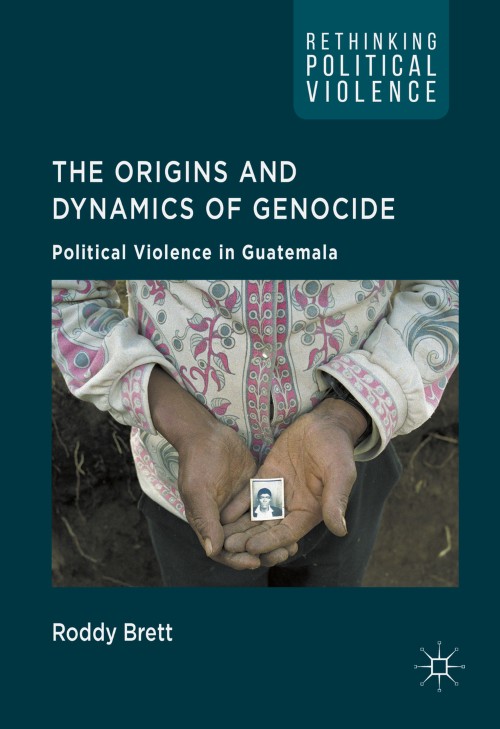
245 14|aThe Origins and Dynamics of Genocide:|h[electronic resource] :|bPolitical Violence in Guatemala /|cby Roddy Brett.
250 |a1st ed. 2016.
264 1|aLondon :|bPalgrave Macmillan UK :|bImprint: Palgrave Macmillan,|c2016.
300 |aXV, 249 p.|bonline resource.
336 |atext|btxt|2rdacontent
337 |acomputer|bc|2rdamedia
338 |aonline resource|bcr|2rdacarrier
347 |atext file|bPDF|2rda
490 1 |aRethinking Political Violence,|x2752-8596
505 0 |aAcknowledgements -- Introduction -- Chapter 1: Understanding the Violence -- Chapter 2: Civilian Experience of Violence in Civil War and Armed Conflict -- Chapter 3: The EGP: Insurgent Strategies in the Ixcán and the Ixil -- Chapter 4: The Counterinsurgent Response -- Chapter 5: War in the Rebel Heartlands -- Chapter 6: Displacement and Exile -- Conclusions: And History Shall not be Unwritten.
520 |aThis book rigorously documents and explains the genocide perpetrated by the Guatemalan state against indigenous Maya populations within the context of its counterinsurgency campaign against leftist guerrillas between 1981 and 1983. In doing so it brings to light a genocide that has remained largely invisible within both academic disciplines and the practitioner sphere. In May 2013, former de facto president of Guatemala, General Efrain Rios Montt, was for ten days indicted for genocide and crimes against humanity within Guatemala’s domestic courts. Based upon over a decade of ethnographic research, including in survivors’ communities in Guatemala, this book documents the historical processes shaping the genocide by analysing the evolution of both counterinsurgent and insurgent violence and strategy, focusing above all on its impact upon the civilian population. The research clearly evidences the impact of political violence upon non-combatants; how military and insurgent strategies gradually implicate civilians in conflict and the strategies civilians may adopt in order to survive them. Convincingly framed within key theoretical scholarship from genocide studies and comparative politics it speaks to a broad audience beyond Latin Americanists.
532 8 |aAccessibility summary: This PDF was produced prior to the implementation of current accessibility best practices. It supports searchable and selectable text. It may or may not include elements such as described non-text content (images, graphs etc), reflowable text or screen reader compatibility. Users with accessibility needs may experience limitations. Please contact us at accessibilitysupport@springernature.com if you require assistance or an alternative format.
532 8 |aNo reading system accessibility options actively disabled
532 8 |aPublisher contact for further accessibility information: accessibilitysupport@springernature.com
650 0|aTerrorism.
650 0|aPolitical violence.
650 0|aComparative government.
650 0|aWorld politics.
650 0|aAmerica|xPolitics and government.
650 0|aPeace.
650 14|aTerrorism and Political Violence.
650 24|aComparative Politics.
650 24|aPolitical History.
650 24|aAmerican Politics.
650 24|aPeace and Conflict Studies.
710 2 |aSpringerLink (Online service)
773 0 |tSpringer Nature eBook
776 08|iPrinted edition:|z9781137397669
776 08|iPrinted edition:|z9781349679614
776 08|iPrinted edition:|z9781349679621
830 0|aRethinking Political Violence,|x2752-8596
856 40|uhttps://doi.org/10.1057/978-1-137-39767-6
912 |aZDB-2-POS
912 |aZDB-2-SXPI
950 |aPolitical Science and International Studies (SpringerNature-41174)
950 |aPolitical Science and International Studies (R0) (SpringerNature-43724)