LEADER 03583nam a22005295i 4500
001 815767
003 TR_AnAIT
005 20260130204840
007 cr nn 008mamaa
008 180929s2019 si | s |||| 0|eng d
020 |a9789811307942|9978-981-13-0794-2
024 7 |a10.1007/978-981-13-0794-2|2doi
041 |aeng
049 |aTürk Tarih Kurumu Kütüphanesi
050 4|aJZ2-6530
072 7|aJPS|2bicssc
072 7|aPOL028000|2bisacsh
072 7|aJPS|2thema
082 04|a327.1|223
090 |aDK/16986
100 1 |aKumaraswamy, P. R.|eauthor.|4aut|4http://id.loc.gov/vocabulary/relators/aut
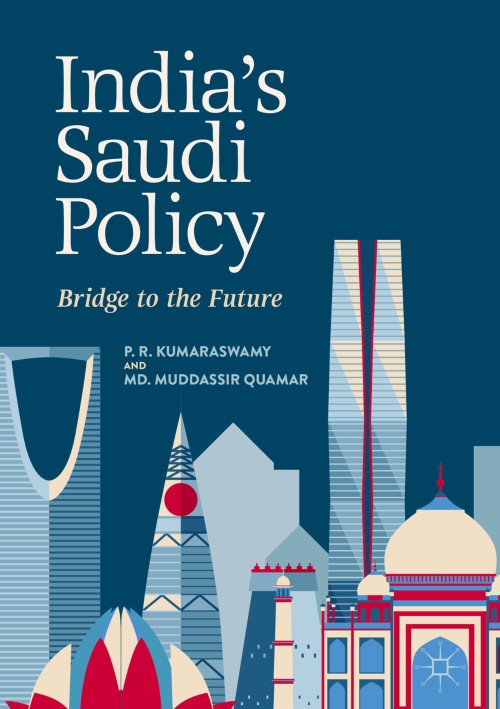
245 10|aIndia's Saudi Policy|h[electronic resource] :|bBridge to the Future /|cby P. R. Kumaraswamy, Md. Muddassir Quamar.
250 |a1st ed. 2019.
264 1|aSingapore :|bSpringer Nature Singapore :|bImprint: Palgrave Macmillan,|c2019.
300 |aXVII, 327 p. 5 illus.|bonline resource.
336 |atext|btxt|2rdacontent
337 |acomputer|bc|2rdamedia
338 |aonline resource|bcr|2rdacarrier
347 |atext file|bPDF|2rda
505 0 |aIntroduction -- Nehru Era -- Cold War Years -- Post-Cold War Challenges -- Palestine Factor -- Economic Relations -- Islamic Dimension -- Political Engagements -- De-hyphenating Pakistan Factor -- International Dynamics -- Challenges -- Conclusion.
520 |aThe book traces India’s Saudi Policy and locates the current state of bilateral relations and the challenges it faces. It argues that during the Cold War the relations were largely shaped by the Pakistan factor which in turn inhibited both sides from exploring the importance and value of one another. As a result, the relations were largely transactional and marginal. The end of the Cold War coincided with two interesting developments, namely, significant growth in India’s economic power and influence and the de-hyphenation of Pakistan from its Middle East policy. This resulted in greater political engagements between India and Saudi Arabia and was strengthened by the growing energy trade ties. For long expatiate population and haj have been the backbone of the relations, and they have been new instruments as India looks to enhance its engagements with the Kingdom through investments opportunities, political contacts, shared security concerns and strategic cooperation. India’s Saudi policy, however, face many challenges most importantly the regional instability, the Iran factor, low oil price and the international dynamics. The book will be the first comprehensive work on the India-Saudi relations. Though targeting a wider audience, it will be academically grounded and based on primary sources collected from India and Saudi Arabia. .
650 0|aInternational relations.
650 0|aMiddle East|xPolitics and government.
650 0|aAsia|xPolitics and government.
650 0|aInternational economic relations.
650 14|aForeign Policy.
650 24|aMiddle Eastern Politics.
650 24|aAsian Politics.
650 24|aInternational Political Economy’.
700 1 |aQuamar, Md. Muddassir.|eauthor.|4aut|4http://id.loc.gov/vocabulary/relators/aut
710 2 |aSpringerLink (Online service)
773 0 |tSpringer Nature eBook
776 08|iPrinted edition:|z9789811307935
776 08|iPrinted edition:|z9789811307959
776 08|iPrinted edition:|z9789811345029
856 40|uhttps://doi.org/10.1007/978-981-13-0794-2
912 |aZDB-2-POS
912 |aZDB-2-SXPI
950 |aPolitical Science and International Studies (SpringerNature-41174)
950 |aPolitical Science and International Studies (R0) (SpringerNature-43724)