LEADER 03489nam a22006255i 4500
001 815843
003 TR_AnAIT
005 20260130204549
007 cr nn 008mamaa
008 170811s2017 xxu| s |||| 0|eng d
020 |a9781137537270|9978-1-137-53727-0
024 7 |a10.1057/978-1-137-53727-0|2doi
041 |aeng
049 |aTürk Tarih Kurumu Kütüphanesi
050 4|aJZ1252
072 7|aJPS|2bicssc
072 7|aKCP|2bicssc
072 7|aPOL011020|2bisacsh
072 7|aJPS|2thema
072 7|aKCP|2thema
082 04|a327.111|223
090 |aDK/17062
100 1 |aMirakhor, Abbas.|eauthor.|4aut|4http://id.loc.gov/vocabulary/relators/aut
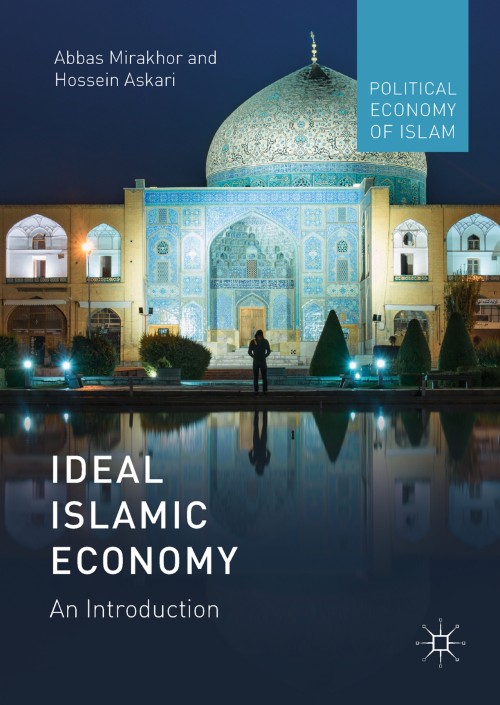
245 10|aIdeal Islamic Economy|h[electronic resource] :|bAn Introduction /|cby Abbas Mirakhor, Hossein Askari.
250 |a1st ed. 2017.
264 1|aNew York :|bPalgrave Macmillan US :|bImprint: Palgrave Macmillan,|c2017.
300 |aXXI, 255 p.|bonline resource.
336 |atext|btxt|2rdacontent
337 |acomputer|bc|2rdamedia
338 |aonline resource|bcr|2rdacarrier
347 |atext file|bPDF|2rda
490 1 |aPolitical Economy of Islam,|x2945-6487
505 0 |aChapter 1: Introduction -- Chapter 2: Capitalism and the Islamic Economic System -- Chapter 3: Overview of an Ideal Islamic System.- Chapter 4: Institutional Structure of a Sound Economy -- Chapter 5: Rules Governing an Islamic Economy -- Chapter 6: The Operational Features of an Islamic Economy.- Chapter 7: Contemporary Muslim Economies and Rule Compliance.- Chapter 8: Towards Achieving the Ideal Islamic Economy.- Chapter 9: Conclusions. .
520 |aThis book provides an introduction to the vision of an economic system based completely on the Holy Qur’an—a system defined as a collection of institutions, representing rules of behavior, prescribed by Allah for humans, and the traditions of the Messenger. The authors argue that the main reason for the economic underperformance of Muslim countries and their economies has been non-compliance with the prescribed rules of behavior. Rule non-compliance has been chiefly due to the failure of Muslims to comprehend the Metaframework of the Qur’an and the Archetype Model of the Prophet Mohammad and interpret them in ways compatible with their own generation and time. Askari and Mirakhor believe these rules (institutions), properly adapted to prevailing conditions present what they consider as an ideal economic system.
650 0|aInternational economic relations.
650 0|aFinancial services industry.
650 0|aIslam.
650 0|aReligion and politics.
650 0|aReligion and sociology.
650 0|aPolitical planning.
650 14|aInternational Political Economy’.
650 24|aFinancial Services.
650 24|aIslam.
650 24|aPolitics and Religion.
650 24|aSociology of Religion.
650 24|aPublic Policy.
700 1 |aAskari, Hossein.|eauthor.|4aut|4http://id.loc.gov/vocabulary/relators/aut
710 2 |aSpringerLink (Online service)
773 0 |tSpringer Nature eBook
776 08|iPrinted edition:|z9781137540355
776 08|iPrinted edition:|z9781349712212
776 08|iPrinted edition:|z9781349712205
830 0|aPolitical Economy of Islam,|x2945-6487
856 40|uhttps://doi.org/10.1057/978-1-137-53727-0
912 |aZDB-2-POS
912 |aZDB-2-SXPI
950 |aPolitical Science and International Studies (SpringerNature-41174)
950 |aPolitical Science and International Studies (R0) (SpringerNature-43724)