

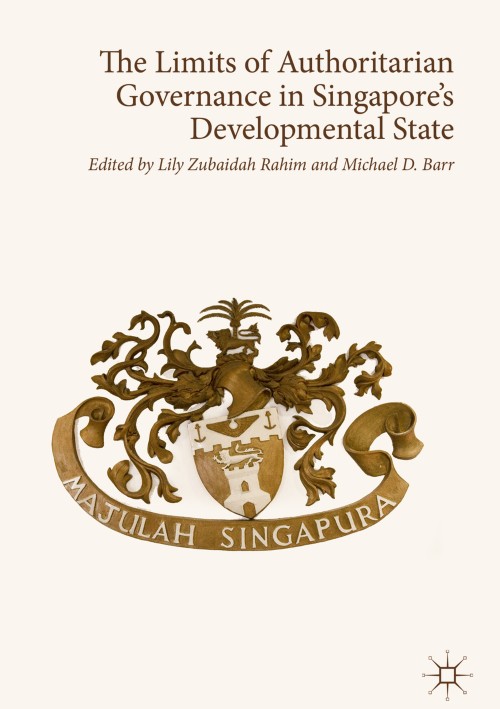
The Limits of Authoritarian Governance in Singapore's Developmental State [electronic resource] / edited by Lily Zubaidah Rahim, Michael D. Barr.
Erişim Adresi
ISBN
9789811315565
Dil Kodu
İngilizce
Yer Numarası
DK/17103
Basım Bildirimi
1st ed. 2019.
Yayın Bilgisi
Singapore : Springer Nature Singapore : Imprint: Palgrave Macmillan, 2019.
Fiziksel Niteleme
XXIII, 329 p. 3 illus. online resource.
İçindekiler Notu
1. Introduction: Authoritarian Governance in Singapore’s Developmental State -- 2. Singapore and the Lineages of Authoritarian Modernity in East Asia -- 3. Independence: The Further Stage of Colonialism in Singapore -- 4. Albert Winsemius and the Transnational Origins of High Modernist Governance in Singapore -- 5. Social Policy Reform and Rigidity in Singapore’s Authoritarian Developmental State -- 6. New Politics and Old Managerialism: Welcome to the New Normal -- 7. Intra-Party Dynamics in the People’s Action Party: Party Structure, Continuity and Hegemony -- 8. The Growing Challenge of Pluralism and Political Activism: Shifts in the Hegemonic Discourse in Singapore -- 9. PAP Vulnerability and the Singapore Governance Model: Findings from the Asian Barometer Survey -- 10. Aligning Media Policy with Executive Dominance -- 11. Pragmatic Competence and Communication Governance in Singapore -- 12. Legislating Dominance: Parliament and theMaking of Singapore’s Governance Model -- 13. Governing Authoritarian Law: Law as Security -- 14. Conclusion: Democratising Singapore’s Developmental State.
Özet, vb.
This book delves into the limitations of Singapore’s authoritarian governance model. In doing so, the relevance of the Singapore governance model for other industrialising economies is systematically examined. Research in this book examines the challenges for an integrated governance model that has proven durable over four to five decades. The editors argue that established socio-political and economic formulae are now facing unprecedented challenges. Structural pressures associated with Singapore’s particular locus within globalised capitalism have fostered heightened social and material inequalities, compounded by the ruling party’s ideological resistance to substantive redistribution. As ‘growth with equity’ becomes more elusive, the rationale for power by a ruling party dominated by technocratic elite and state institutions crafted and controlled by the ruling party and its bureaucratic allies is open to more critical scrutiny. Lily Zubaidah Rahim is an Associate Professor of Government & International Relations at the University of Sydney and a specialist in authoritarian governance, democratisation, ethnicity and political Islam. Her books include The Singapore Dilemma: The Political and Educational Marginality of the Malay Community, (1998) and Singapore in the Malay World: Building and Breaching Regional Bridges (2010), Muslim Secular Democracy (2013) and The Politics of Islamism (2018). Lily Zubaidah is currently President of the Malaysia and Singapore Society of Australia (MASSA) and Vice-President of the Australian Association of Islamic and Muslim Studies. Michael D. Barr is an Associate Professor of International Relations at Flinders University. His books include Lee Kuan Yew: The Beliefs behind the Man (2000), The Ruling Elite of Singapore (2014) and Singapore: A Modern History (2018). He was Editor-in-Chief of Asian Studies Review from 2012-2017. .
Konu
Asia __ Politics and government.
Asia __ Economic conditions.
Political science.
Economic development.
Asian Politics.
Asian Economics.
Political Science.
Development Studies.
Asia __ Economic conditions.
Political science.
Economic development.
Asian Politics.
Asian Economics.
Political Science.
Development Studies.
Diğer Yazarlar
Kurum Adı
Eseri Alıntıla
Referansları kullanmadan önce gözden geçirmeniz ve varsa gerekli düzeltmeleri yapmanız önerilir.
Dijital Kaynak
MARC Görünümü
LEADER 06195nam a22006495i 4500
001 815884
003 TR_AnAIT
005 20260130204436
007 cr nn 008mamaa
008 190206s2019 si | s |||| 0|eng d
020 |a9789811315565|9978-981-13-1556-5
024 7 |a10.1007/978-981-13-1556-5|2doi
041 |aeng
049 |aTürk Tarih Kurumu Kütüphanesi
050 4|aJQ1-1852
072 7|aJP|2bicssc
072 7|a1F|2bicssc
072 7|aPOL054000|2bisacsh
072 7|aJP|x1F|2thema
082 04|a320.95|223
090 |aDK/17103
245 14|aThe Limits of Authoritarian Governance in Singapore's Developmental State|h[electronic resource] /|cedited by Lily Zubaidah Rahim, Michael D. Barr.
250 |a1st ed. 2019.
264 1|aSingapore :|bSpringer Nature Singapore :|bImprint: Palgrave Macmillan,|c2019.
300 |aXXIII, 329 p. 3 illus.|bonline resource.
336 |atext|btxt|2rdacontent
337 |acomputer|bc|2rdamedia
338 |aonline resource|bcr|2rdacarrier
341 0 |bTable of contents navigation|2onix
341 0 |bSingle logical reading order|2onix
341 0 |bShort alternative textual descriptions|2onix
341 0 |bUse of color is not sole means of conveying information|2onix
341 0 |bUse of high contrast between text and background color|2onix
341 0 |bNext / Previous structural navigation|2onix
341 0 |bAll non-decorative content supports reading without sight|2onix
347 |atext file|bPDF|2rda
505 0 |a1. Introduction: Authoritarian Governance in Singapore’s Developmental State -- 2. Singapore and the Lineages of Authoritarian Modernity in East Asia -- 3. Independence: The Further Stage of Colonialism in Singapore -- 4. Albert Winsemius and the Transnational Origins of High Modernist Governance in Singapore -- 5. Social Policy Reform and Rigidity in Singapore’s Authoritarian Developmental State -- 6. New Politics and Old Managerialism: Welcome to the New Normal -- 7. Intra-Party Dynamics in the People’s Action Party: Party Structure, Continuity and Hegemony -- 8. The Growing Challenge of Pluralism and Political Activism: Shifts in the Hegemonic Discourse in Singapore -- 9. PAP Vulnerability and the Singapore Governance Model: Findings from the Asian Barometer Survey -- 10. Aligning Media Policy with Executive Dominance -- 11. Pragmatic Competence and Communication Governance in Singapore -- 12. Legislating Dominance: Parliament and theMaking of Singapore’s Governance Model -- 13. Governing Authoritarian Law: Law as Security -- 14. Conclusion: Democratising Singapore’s Developmental State.
520 |aThis book delves into the limitations of Singapore’s authoritarian governance model. In doing so, the relevance of the Singapore governance model for other industrialising economies is systematically examined. Research in this book examines the challenges for an integrated governance model that has proven durable over four to five decades. The editors argue that established socio-political and economic formulae are now facing unprecedented challenges. Structural pressures associated with Singapore’s particular locus within globalised capitalism have fostered heightened social and material inequalities, compounded by the ruling party’s ideological resistance to substantive redistribution. As ‘growth with equity’ becomes more elusive, the rationale for power by a ruling party dominated by technocratic elite and state institutions crafted and controlled by the ruling party and its bureaucratic allies is open to more critical scrutiny. Lily Zubaidah Rahim is an Associate Professor of Government & International Relations at the University of Sydney and a specialist in authoritarian governance, democratisation, ethnicity and political Islam. Her books include The Singapore Dilemma: The Political and Educational Marginality of the Malay Community, (1998) and Singapore in the Malay World: Building and Breaching Regional Bridges (2010), Muslim Secular Democracy (2013) and The Politics of Islamism (2018). Lily Zubaidah is currently President of the Malaysia and Singapore Society of Australia (MASSA) and Vice-President of the Australian Association of Islamic and Muslim Studies. Michael D. Barr is an Associate Professor of International Relations at Flinders University. His books include Lee Kuan Yew: The Beliefs behind the Man (2000), The Ruling Elite of Singapore (2014) and Singapore: A Modern History (2018). He was Editor-in-Chief of Asian Studies Review from 2012-2017. .
532 8 |aAccessibility summary: This PDF does not fully comply with PDF/UA standards, but does feature limited screen reader support, described non-text content (images, graphs), bookmarks for easy navigation and searchable, selectable text. Users of assistive technologies may experience difficulty navigating or interpreting content in this document. We recognize the importance of accessibility, and we welcome queries about accessibility for any of our products. If you have a question or an access need, please get in touch with us at accessibilitysupport@springernature.com.
532 8 |aNo reading system accessibility options actively disabled
532 8 |aPublisher contact for further accessibility information: accessibilitysupport@springernature.com
650 0|aAsia|xPolitics and government.
650 0|aAsia|xEconomic conditions.
650 0|aPolitical science.
650 0|aEconomic development.
650 14|aAsian Politics.
650 24|aAsian Economics.
650 24|aPolitical Science.
650 24|aDevelopment Studies.
700 1 |aRahim, Lily Zubaidah.|eeditor.|4edt|4http://id.loc.gov/vocabulary/relators/edt
700 1 |aBarr, Michael D.|eeditor.|4edt|4http://id.loc.gov/vocabulary/relators/edt
710 2 |aSpringerLink (Online service)
773 0 |tSpringer Nature eBook
776 08|iPrinted edition:|z9789811315558
776 08|iPrinted edition:|z9789811315572
856 40|uhttps://doi.org/10.1007/978-981-13-1556-5
912 |aZDB-2-POS
912 |aZDB-2-SXPI
950 |aPolitical Science and International Studies (SpringerNature-41174)
950 |aPolitical Science and International Studies (R0) (SpringerNature-43724)
001 815884
003 TR_AnAIT
005 20260130204436
007 cr nn 008mamaa
008 190206s2019 si | s |||| 0|eng d
020 |a9789811315565|9978-981-13-1556-5
024 7 |a10.1007/978-981-13-1556-5|2doi
041 |aeng
049 |aTürk Tarih Kurumu Kütüphanesi
050 4|aJQ1-1852
072 7|aJP|2bicssc
072 7|a1F|2bicssc
072 7|aPOL054000|2bisacsh
072 7|aJP|x1F|2thema
082 04|a320.95|223
090 |aDK/17103
245 14|aThe Limits of Authoritarian Governance in Singapore's Developmental State|h[electronic resource] /|cedited by Lily Zubaidah Rahim, Michael D. Barr.
250 |a1st ed. 2019.
264 1|aSingapore :|bSpringer Nature Singapore :|bImprint: Palgrave Macmillan,|c2019.
300 |aXXIII, 329 p. 3 illus.|bonline resource.
336 |atext|btxt|2rdacontent
337 |acomputer|bc|2rdamedia
338 |aonline resource|bcr|2rdacarrier
341 0 |bTable of contents navigation|2onix
341 0 |bSingle logical reading order|2onix
341 0 |bShort alternative textual descriptions|2onix
341 0 |bUse of color is not sole means of conveying information|2onix
341 0 |bUse of high contrast between text and background color|2onix
341 0 |bNext / Previous structural navigation|2onix
341 0 |bAll non-decorative content supports reading without sight|2onix
347 |atext file|bPDF|2rda
505 0 |a1. Introduction: Authoritarian Governance in Singapore’s Developmental State -- 2. Singapore and the Lineages of Authoritarian Modernity in East Asia -- 3. Independence: The Further Stage of Colonialism in Singapore -- 4. Albert Winsemius and the Transnational Origins of High Modernist Governance in Singapore -- 5. Social Policy Reform and Rigidity in Singapore’s Authoritarian Developmental State -- 6. New Politics and Old Managerialism: Welcome to the New Normal -- 7. Intra-Party Dynamics in the People’s Action Party: Party Structure, Continuity and Hegemony -- 8. The Growing Challenge of Pluralism and Political Activism: Shifts in the Hegemonic Discourse in Singapore -- 9. PAP Vulnerability and the Singapore Governance Model: Findings from the Asian Barometer Survey -- 10. Aligning Media Policy with Executive Dominance -- 11. Pragmatic Competence and Communication Governance in Singapore -- 12. Legislating Dominance: Parliament and theMaking of Singapore’s Governance Model -- 13. Governing Authoritarian Law: Law as Security -- 14. Conclusion: Democratising Singapore’s Developmental State.
520 |aThis book delves into the limitations of Singapore’s authoritarian governance model. In doing so, the relevance of the Singapore governance model for other industrialising economies is systematically examined. Research in this book examines the challenges for an integrated governance model that has proven durable over four to five decades. The editors argue that established socio-political and economic formulae are now facing unprecedented challenges. Structural pressures associated with Singapore’s particular locus within globalised capitalism have fostered heightened social and material inequalities, compounded by the ruling party’s ideological resistance to substantive redistribution. As ‘growth with equity’ becomes more elusive, the rationale for power by a ruling party dominated by technocratic elite and state institutions crafted and controlled by the ruling party and its bureaucratic allies is open to more critical scrutiny. Lily Zubaidah Rahim is an Associate Professor of Government & International Relations at the University of Sydney and a specialist in authoritarian governance, democratisation, ethnicity and political Islam. Her books include The Singapore Dilemma: The Political and Educational Marginality of the Malay Community, (1998) and Singapore in the Malay World: Building and Breaching Regional Bridges (2010), Muslim Secular Democracy (2013) and The Politics of Islamism (2018). Lily Zubaidah is currently President of the Malaysia and Singapore Society of Australia (MASSA) and Vice-President of the Australian Association of Islamic and Muslim Studies. Michael D. Barr is an Associate Professor of International Relations at Flinders University. His books include Lee Kuan Yew: The Beliefs behind the Man (2000), The Ruling Elite of Singapore (2014) and Singapore: A Modern History (2018). He was Editor-in-Chief of Asian Studies Review from 2012-2017. .
532 8 |aAccessibility summary: This PDF does not fully comply with PDF/UA standards, but does feature limited screen reader support, described non-text content (images, graphs), bookmarks for easy navigation and searchable, selectable text. Users of assistive technologies may experience difficulty navigating or interpreting content in this document. We recognize the importance of accessibility, and we welcome queries about accessibility for any of our products. If you have a question or an access need, please get in touch with us at accessibilitysupport@springernature.com.
532 8 |aNo reading system accessibility options actively disabled
532 8 |aPublisher contact for further accessibility information: accessibilitysupport@springernature.com
650 0|aAsia|xPolitics and government.
650 0|aAsia|xEconomic conditions.
650 0|aPolitical science.
650 0|aEconomic development.
650 14|aAsian Politics.
650 24|aAsian Economics.
650 24|aPolitical Science.
650 24|aDevelopment Studies.
700 1 |aRahim, Lily Zubaidah.|eeditor.|4edt|4http://id.loc.gov/vocabulary/relators/edt
700 1 |aBarr, Michael D.|eeditor.|4edt|4http://id.loc.gov/vocabulary/relators/edt
710 2 |aSpringerLink (Online service)
773 0 |tSpringer Nature eBook
776 08|iPrinted edition:|z9789811315558
776 08|iPrinted edition:|z9789811315572
856 40|uhttps://doi.org/10.1007/978-981-13-1556-5
912 |aZDB-2-POS
912 |aZDB-2-SXPI
950 |aPolitical Science and International Studies (SpringerNature-41174)
950 |aPolitical Science and International Studies (R0) (SpringerNature-43724)
Materyaller
Depodan talep edilen materyal sadece kütüphane içerisinde kullanılmaktadır.
Materyal dışarıya ödünç verilmemektedir.
Materyal dışarıya ödünç verilmemektedir.
