LEADER 03673nam a22004935i 4500
001 815885
003 TR_AnAIT
005 20260130204435
007 cr nn 008mamaa
008 190207s2019 sz | s |||| 0|eng d
020 |a9783030016234|9978-3-030-01623-4
024 7 |a10.1007/978-3-030-01623-4|2doi
041 |aeng
049 |aTürk Tarih Kurumu Kütüphanesi
050 4|aHD72-88
072 7|aGTF|2bicssc
072 7|aSOC042000|2bisacsh
072 7|aGTP|2thema
082 04|a338.9|223
090 |aDK/17104
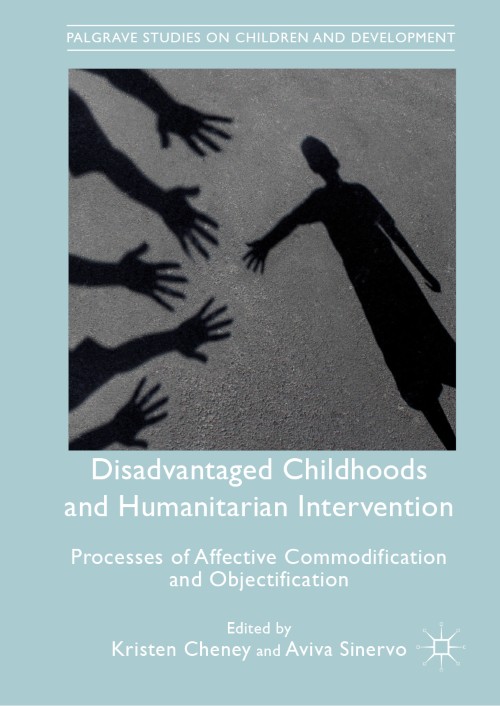
245 10|aDisadvantaged Childhoods and Humanitarian Intervention|h[electronic resource] :|bProcesses of Affective Commodification and Objectification /|cedited by Kristen Cheney, Aviva Sinervo.
250 |a1st ed. 2019.
264 1|aCham :|bSpringer International Publishing :|bImprint: Palgrave Macmillan,|c2019.
300 |aXIII, 232 p. 7 illus., 4 illus. in color.|bonline resource.
336 |atext|btxt|2rdacontent
337 |acomputer|bc|2rdamedia
338 |aonline resource|bcr|2rdacarrier
347 |atext file|bPDF|2rda
490 1 |aPalgrave Studies on Children and Development,|x2947-5732
505 0 |a1. Introduction: NGO Economies of Affect: Humanitarianism and Childhood in Contemporary and Historical Perspective -- 2.The Orphan Industrial Complex: The Charitable Commodification of Children and its Consequences for Child Protection -- 3. Letting Girls Learn, Letting Girls Rise: Commodifying Girlhoods in Humanitarian Campaigns -- 4. Commodification in Multiple Registers: Child Workers, Child Consumers and Child Labor NGOs in India -- 5. A Tale of Two NGO Discourses: NGO Stories of Suffering Qur’anic School Children in Senegal -- 6. The Right to Play versus the Right to War? Vulnerable Childhood in Lebanon’s NGOization -- 7. Need Saving?/Saving Need: Intersecting Discourses on Urban Children, Families, and Need in a U.S. Faith-based Organization -- 8. Flattening Need and Steepening Responsibility: Navigating Access to Islands of Care for Children Living with HIV in Uganda -- 9. Forming a Humanitarian Brand: Childhood and Affect in Central Australia. .
520 |aThis book explores how humanitarian interventions for children in difficult circumstances engage in affective commodification of disadvantaged childhoods. The chapters consider how transnational charitable industries are created and mobilized around childhood need—highlighting children in situations of war and poverty, and with indeterminate access to health and education—to redirect global resource flows and sentiments in order to address concerns of child suffering. The authors discuss examples from around the world to show how, as much as these processes can help achieve the goals of aid organizations, such practices can also perpetuate the conditions that organizations seek to alleviate and thereby endanger the very children they intend to help.
650 0|aEconomic development.
650 0|aRegionalism.
650 14|aDevelopment Studies.
650 24|aRegionalism.
700 1 |aCheney, Kristen.|eeditor.|4edt|4http://id.loc.gov/vocabulary/relators/edt
700 1 |aSinervo, Aviva.|eeditor.|4edt|4http://id.loc.gov/vocabulary/relators/edt
710 2 |aSpringerLink (Online service)
773 0 |tSpringer Nature eBook
776 08|iPrinted edition:|z9783030016227
776 08|iPrinted edition:|z9783030016241
830 0|aPalgrave Studies on Children and Development,|x2947-5732
856 40|uhttps://doi.org/10.1007/978-3-030-01623-4
912 |aZDB-2-POS
912 |aZDB-2-SXPI
950 |aPolitical Science and International Studies (SpringerNature-41174)
950 |aPolitical Science and International Studies (R0) (SpringerNature-43724)