

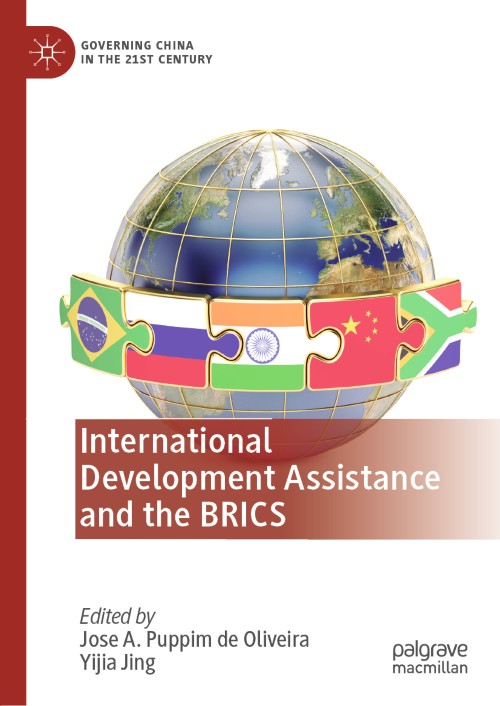
International Development Assistance and the BRICS [electronic resource] / edited by Jose A. Puppim de Oliveira, Yijia Jing.
Erişim Adresi
ISBN
9789813296442
Dil Kodu
İngilizce
Yer Numarası
DK/17116
Basım Bildirimi
1st ed. 2020.
Yayın Bilgisi
Singapore : Springer Nature Singapore : Imprint: Palgrave Macmillan, 2020.
Fiziksel Niteleme
XVII, 205 p. 6 illus., 2 illus. in color. online resource.
Dizi
Governing China in the 21st Century, 2730-6976
İçindekiler Notu
1. The BRICS and International Development Assistance: Between the Old and the New -- 2. The ‘End of ‘Development Assistance’ and the BRICS -- 3. Locating BRICS Development Strategies in Global Development Policy Narratives -- 4. International Development Assistance: A case study of Brazil, a member of the BRICS -- 5. The New Development Bank (NDB) vs The Asian Infrastructure Investment Bank (AIIB):An analytical comparison from a critical perspective -- 6. Sustainable Development and the New Development (BRICS) Bank: A Forward-Looking Assessment -- 7. The BRICS’ New Development Bank at the Crossroads: Challenges of Building Development Cooperation in the 21st Century -- 8. BRICS Banking and the Demise of New Developmentalist Alternatives to the IMF and World Bank.
Özet, vb.
This book aims to bring together a series of analyses on international development assistance in the BRICS, the group of countries that includes Brazil, Russia, India, China and South Africa. The BRICS states comprise approximately 3 billion people (~40% of the World’s population) and in terms of GDP account for 16.8 trillion dollars (~22% of the World’s economy). Over the last decade the loose coalition has evolved to become a formal partnership on both economic and political fronts. The first formal meeting of the then-four BRIC countries took place in 2006 during the United Nations General Assembly. This was followed in 2009 by the first summit of BRICS' heads of state, an event which has been convened annually ever since. On 3-5 September 2017, the ninth BRICS Summit was hosted in Xiamen, China. This book, an anthology of scholars based in BRICS countries, provides invaluable insights into the emerging global south coalition, and will be of interest to scholars, employees of NGOs,and China watchers. Jose A. Puppim de Oliveira is a faculty member at Fundação Getulio Vargas (FGV/EAESP and FGV/EBAPE), Brazil. He also teaches at the Fudan University, China, and the Universidad Andina Simon Bolivar, Ecuador. Jose holds a Ph.D. in Planning from the Massachusetts Institute of Technology (MIT), USA. Yijia Jing is Seaker Chan Chair Professor of Public Management and Associate Dean at the School of International Relations and Public Affairs, Fudan University, China. He is editor-in-chief of Fudan Public Administration Review, associate editor of Public Administration Review, and co-editor of International Public Management Journal. He is the founding co-editor of the Palgrave Macmillan book series, Governing China in the 21 Century. He serves as a Vice- President of International Research Society for Public Management.
Konu
Asia __ Politics and government.
Economic development.
Asia __ Economic conditions.
Asian Politics.
Development Studies.
Asian Economics.
Economic development.
Asia __ Economic conditions.
Asian Politics.
Development Studies.
Asian Economics.
Diğer Yazarlar
Kurum Adı
Eseri Alıntıla
Referansları kullanmadan önce gözden geçirmeniz ve varsa gerekli düzeltmeleri yapmanız önerilir.
Dijital Kaynak
MARC Görünümü
LEADER 04677nam a22005415i 4500
001 815898
003 TR_AnAIT
005 20260130204407
007 cr nn 008mamaa
008 191005s2020 si | s |||| 0|eng d
020 |a9789813296442|9978-981-32-9644-2
024 7 |a10.1007/978-981-32-9644-2|2doi
041 |aeng
049 |aTürk Tarih Kurumu Kütüphanesi
050 4|aJQ1-1852
072 7|aJP|2bicssc
072 7|a1F|2bicssc
072 7|aPOL054000|2bisacsh
072 7|aJP|x1F|2thema
082 04|a320.95|223
090 |aDK/17116
245 10|aInternational Development Assistance and the BRICS|h[electronic resource] /|cedited by Jose A. Puppim de Oliveira, Yijia Jing.
250 |a1st ed. 2020.
264 1|aSingapore :|bSpringer Nature Singapore :|bImprint: Palgrave Macmillan,|c2020.
300 |aXVII, 205 p. 6 illus., 2 illus. in color.|bonline resource.
336 |atext|btxt|2rdacontent
337 |acomputer|bc|2rdamedia
338 |aonline resource|bcr|2rdacarrier
347 |atext file|bPDF|2rda
490 1 |aGoverning China in the 21st Century,|x2730-6976
505 0 |a1. The BRICS and International Development Assistance: Between the Old and the New -- 2. The ‘End of ‘Development Assistance’ and the BRICS -- 3. Locating BRICS Development Strategies in Global Development Policy Narratives -- 4. International Development Assistance: A case study of Brazil, a member of the BRICS -- 5. The New Development Bank (NDB) vs The Asian Infrastructure Investment Bank (AIIB):An analytical comparison from a critical perspective -- 6. Sustainable Development and the New Development (BRICS) Bank: A Forward-Looking Assessment -- 7. The BRICS’ New Development Bank at the Crossroads: Challenges of Building Development Cooperation in the 21st Century -- 8. BRICS Banking and the Demise of New Developmentalist Alternatives to the IMF and World Bank.
520 |aThis book aims to bring together a series of analyses on international development assistance in the BRICS, the group of countries that includes Brazil, Russia, India, China and South Africa. The BRICS states comprise approximately 3 billion people (~40% of the World’s population) and in terms of GDP account for 16.8 trillion dollars (~22% of the World’s economy). Over the last decade the loose coalition has evolved to become a formal partnership on both economic and political fronts. The first formal meeting of the then-four BRIC countries took place in 2006 during the United Nations General Assembly. This was followed in 2009 by the first summit of BRICS' heads of state, an event which has been convened annually ever since. On 3-5 September 2017, the ninth BRICS Summit was hosted in Xiamen, China. This book, an anthology of scholars based in BRICS countries, provides invaluable insights into the emerging global south coalition, and will be of interest to scholars, employees of NGOs,and China watchers. Jose A. Puppim de Oliveira is a faculty member at Fundação Getulio Vargas (FGV/EAESP and FGV/EBAPE), Brazil. He also teaches at the Fudan University, China, and the Universidad Andina Simon Bolivar, Ecuador. Jose holds a Ph.D. in Planning from the Massachusetts Institute of Technology (MIT), USA. Yijia Jing is Seaker Chan Chair Professor of Public Management and Associate Dean at the School of International Relations and Public Affairs, Fudan University, China. He is editor-in-chief of Fudan Public Administration Review, associate editor of Public Administration Review, and co-editor of International Public Management Journal. He is the founding co-editor of the Palgrave Macmillan book series, Governing China in the 21 Century. He serves as a Vice- President of International Research Society for Public Management.
650 0|aAsia|xPolitics and government.
650 0|aEconomic development.
650 0|aAsia|xEconomic conditions.
650 14|aAsian Politics.
650 24|aDevelopment Studies.
650 24|aAsian Economics.
700 1 |aPuppim de Oliveira, Jose A.|eeditor.|4edt|4http://id.loc.gov/vocabulary/relators/edt
700 1 |aJing, Yijia.|eeditor.|4edt|4http://id.loc.gov/vocabulary/relators/edt
710 2 |aSpringerLink (Online service)
773 0 |tSpringer Nature eBook
776 08|iPrinted edition:|z9789813296435
776 08|iPrinted edition:|z9789813296459
776 08|iPrinted edition:|z9789813296466
830 0|aGoverning China in the 21st Century,|x2730-6976
856 40|uhttps://doi.org/10.1007/978-981-32-9644-2
912 |aZDB-2-POS
912 |aZDB-2-SXPI
950 |aPolitical Science and International Studies (SpringerNature-41174)
950 |aPolitical Science and International Studies (R0) (SpringerNature-43724)
001 815898
003 TR_AnAIT
005 20260130204407
007 cr nn 008mamaa
008 191005s2020 si | s |||| 0|eng d
020 |a9789813296442|9978-981-32-9644-2
024 7 |a10.1007/978-981-32-9644-2|2doi
041 |aeng
049 |aTürk Tarih Kurumu Kütüphanesi
050 4|aJQ1-1852
072 7|aJP|2bicssc
072 7|a1F|2bicssc
072 7|aPOL054000|2bisacsh
072 7|aJP|x1F|2thema
082 04|a320.95|223
090 |aDK/17116
245 10|aInternational Development Assistance and the BRICS|h[electronic resource] /|cedited by Jose A. Puppim de Oliveira, Yijia Jing.
250 |a1st ed. 2020.
264 1|aSingapore :|bSpringer Nature Singapore :|bImprint: Palgrave Macmillan,|c2020.
300 |aXVII, 205 p. 6 illus., 2 illus. in color.|bonline resource.
336 |atext|btxt|2rdacontent
337 |acomputer|bc|2rdamedia
338 |aonline resource|bcr|2rdacarrier
347 |atext file|bPDF|2rda
490 1 |aGoverning China in the 21st Century,|x2730-6976
505 0 |a1. The BRICS and International Development Assistance: Between the Old and the New -- 2. The ‘End of ‘Development Assistance’ and the BRICS -- 3. Locating BRICS Development Strategies in Global Development Policy Narratives -- 4. International Development Assistance: A case study of Brazil, a member of the BRICS -- 5. The New Development Bank (NDB) vs The Asian Infrastructure Investment Bank (AIIB):An analytical comparison from a critical perspective -- 6. Sustainable Development and the New Development (BRICS) Bank: A Forward-Looking Assessment -- 7. The BRICS’ New Development Bank at the Crossroads: Challenges of Building Development Cooperation in the 21st Century -- 8. BRICS Banking and the Demise of New Developmentalist Alternatives to the IMF and World Bank.
520 |aThis book aims to bring together a series of analyses on international development assistance in the BRICS, the group of countries that includes Brazil, Russia, India, China and South Africa. The BRICS states comprise approximately 3 billion people (~40% of the World’s population) and in terms of GDP account for 16.8 trillion dollars (~22% of the World’s economy). Over the last decade the loose coalition has evolved to become a formal partnership on both economic and political fronts. The first formal meeting of the then-four BRIC countries took place in 2006 during the United Nations General Assembly. This was followed in 2009 by the first summit of BRICS' heads of state, an event which has been convened annually ever since. On 3-5 September 2017, the ninth BRICS Summit was hosted in Xiamen, China. This book, an anthology of scholars based in BRICS countries, provides invaluable insights into the emerging global south coalition, and will be of interest to scholars, employees of NGOs,and China watchers. Jose A. Puppim de Oliveira is a faculty member at Fundação Getulio Vargas (FGV/EAESP and FGV/EBAPE), Brazil. He also teaches at the Fudan University, China, and the Universidad Andina Simon Bolivar, Ecuador. Jose holds a Ph.D. in Planning from the Massachusetts Institute of Technology (MIT), USA. Yijia Jing is Seaker Chan Chair Professor of Public Management and Associate Dean at the School of International Relations and Public Affairs, Fudan University, China. He is editor-in-chief of Fudan Public Administration Review, associate editor of Public Administration Review, and co-editor of International Public Management Journal. He is the founding co-editor of the Palgrave Macmillan book series, Governing China in the 21 Century. He serves as a Vice- President of International Research Society for Public Management.
650 0|aAsia|xPolitics and government.
650 0|aEconomic development.
650 0|aAsia|xEconomic conditions.
650 14|aAsian Politics.
650 24|aDevelopment Studies.
650 24|aAsian Economics.
700 1 |aPuppim de Oliveira, Jose A.|eeditor.|4edt|4http://id.loc.gov/vocabulary/relators/edt
700 1 |aJing, Yijia.|eeditor.|4edt|4http://id.loc.gov/vocabulary/relators/edt
710 2 |aSpringerLink (Online service)
773 0 |tSpringer Nature eBook
776 08|iPrinted edition:|z9789813296435
776 08|iPrinted edition:|z9789813296459
776 08|iPrinted edition:|z9789813296466
830 0|aGoverning China in the 21st Century,|x2730-6976
856 40|uhttps://doi.org/10.1007/978-981-32-9644-2
912 |aZDB-2-POS
912 |aZDB-2-SXPI
950 |aPolitical Science and International Studies (SpringerNature-41174)
950 |aPolitical Science and International Studies (R0) (SpringerNature-43724)
Materyaller
Depodan talep edilen materyal sadece kütüphane içerisinde kullanılmaktadır.
Materyal dışarıya ödünç verilmemektedir.
Materyal dışarıya ödünç verilmemektedir.
