

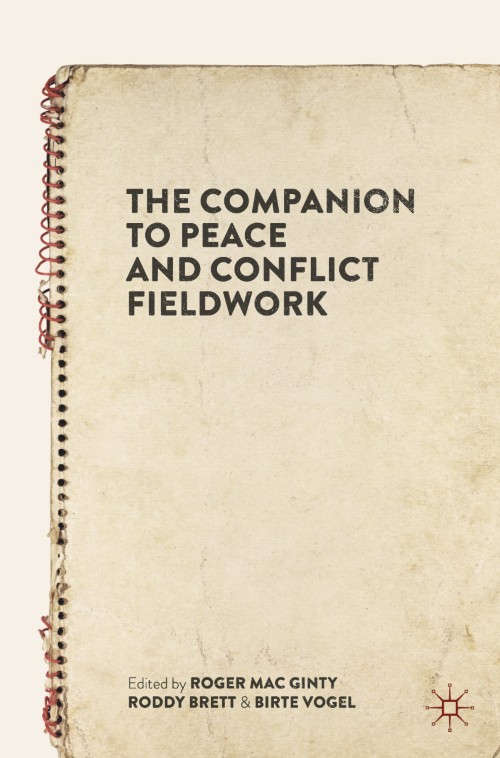
The Companion to Peace and Conflict Fieldwork [electronic resource] / edited by Roger Mac Ginty, Roddy Brett, Birte Vogel.
Erişim Adresi
ISBN
9783030464332
Dil Kodu
İngilizce
Yer Numarası
DK/17125
Basım Bildirimi
1st ed. 2021.
Yayın Bilgisi
Cham : Springer International Publishing : Imprint: Palgrave Macmillan, 2021.
Fiziksel Niteleme
XVII, 493 p. 6 illus., 4 illus. in color. online resource.
İçindekiler Notu
Chapter 1 Introduction (Roger Mac Ginty, Roddy Brett, Birte Vogel) -- Chapter 2 How I dealt with my ethics committee, and survived (Jonathan Fisher). Chapter 3 When Humans Become Data (Roxani Krystalli) -- Chapter 4 Researching Over-Researched Societies (Grainne Kelly) -- Chapter 5 Preparing for fieldwork interviews (Berit Bliesemann de Guevara & Birgit Poopuu) -- Chapter 6 Being Indiana Jones in IR: The pressure to do ‘real’ fieldwork (Laura Routley and Katharine Wright) -- Chapter 7 Interview locations (Paul Jackson) -- Chapter 8 From risk aversion to risk management (Sophie Roborgh) -- Chapter 9 Researching ‘militant groups’ (James W. McAuley) -- Chapter 10 The Ethics of Ethnographic Peace and Conflict Research (Gearoid Millar) -- Chapter 11 Solitary Decision-Making and Fieldwork Safety (Max Gallien) -- Chapter 12 Making Contact: Interviewing Rebels in Sierra Leone (Kieran Mitton) -- Chapter 13 Participatory Action Research: Challenges and rewards in fifteen field lessons (Georgina McAllister) -- Chapter 14 Conflict ethnography goes online: Chatnography of the Ukrainian volunteer battalions (Ilmari Käihkö) -- Chapter 15 Negotiating relationships with vulnerable communities (Nick Morgan) -- Chapter 16 Gatekeepers (Gyda M. Sindre) -- Chapter 17 Working with Translators: Implications of the Translator’s Positionality for the Research Process and Knowledge Production (Kristina Tschunkert) -- Chapter 18 Facing Violence in the Field (Roddy Brett) -- Chapter 19 Interviewing Perpetrators of Genocide (Manolo E. Vela Castañeda) -- Chapter 20 Interviewing Elites (Christine Wade) -- Chapter 21 (Secrecy and silence in fieldwork: reflections on feminist research on violence in Latin America (Mo Hume) -- Chapter 22 Read the Room: Side-by-Side methodology in a Belfast ice hockey arena (Eric Lepp) -- Chapter 23 Traversing Fieldwork with Imperfect Language Skills (Simon Philpott) -- Chapter 24 Confessions of a Local Researcher (Nemanja Džuverović) -- Chapter 25 Gendered challenges to fieldwork in conflict-affected areas (Kathleen M. Jennings) -- Chapter 26 Race, positionality and the researcher (Sarah Njeri) -- Chapter 27 Fixers and friends – local and international researchers (Morten Bøås) -- Chapter 28 “Mummy I want to go home”: Children and Parenthood in the Field (Jenna Murray de López) -- Chapter 29 Privilege (Stefanie Kappler) -- Chapter 30 From the field back to academia (Malgorzata Polanska) -- Chapter 31 The Politics and Practicalities of Writing (Birte Vogel and Roger Mac Ginty) -- Chapter 32 Writing and the Ethics of Representation (Angela J. Lederach) -- Chapter 33 Giving back: A conversation between researcher and refugee (Jessica Field and Ali Johar).
Özet, vb.
This unique companion is a much-needed guide for those who are embarking on field research in conflict-affected countries. In a break with academic tradition, the chapters are mainly written in the first person and contain personal accounts of the ethical and practical challenges of fieldwork. In the book, over thirty scholars reflect on the complexity of dealing with human subjects in conflict-affected contexts. This indispensable book provides insider knowledge and gives confidence to researchers - both those at the very start of their careers or during their studies, and experienced researchers who want to consider positionality, responsibility and the moral obligation of the researcher in new ways. Essential reading for students and scholars embarking upon fieldwork in International Relations, Politics, Sociology, Political Geography and Anthropology. Roger Mac Ginty is Professor at the School of Government and International Affairs, and Director of the Global Security Institute, both at Durham University, UK. He has conducted field research in Georgia, Lebanon, Uganda, Northern Ireland, Kosovo, Bosnia-Herzegovina, Sri Lanka, and the US. Roddy Brett is Senior Lecturer in Politics and International Relations at the University of Bristol, UK. During thirteen years living in Latin America, he acted as Advisor to the UNDP and the UNHCHR and as Advisor on Indigenous Affairs to the Norwegian Embassy. In 2015, he led a UN investigation into the role of the delegations of victims in the Santos-FACRC-EP peace process. Birte Vogel is Lecturer in Humanitarianism, Peace and Conflict Studies at the University of Manchester, UK. She has conducted fieldwork in Colombia, Cyprus, Bosnia-Herzegovina, India and Sri Lanka.
Konu
International relations.
Terrorism.
Political violence.
Education __ Research.
International Relations.
Terrorism and Political Violence.
Research Methods in Education.
Terrorism.
Political violence.
Education __ Research.
International Relations.
Terrorism and Political Violence.
Research Methods in Education.
Diğer Yazarlar
Kurum Adı
Eseri Alıntıla
Referansları kullanmadan önce gözden geçirmeniz ve varsa gerekli düzeltmeleri yapmanız önerilir.
Dijital Kaynak
MARC Görünümü
LEADER 06424nam a22005175i 4500
001 815907
003 TR_AnAIT
005 20260130204346
007 cr nn 008mamaa
008 200826s2021 sz | s |||| 0|eng d
020 |a9783030464332|9978-3-030-46433-2
024 7 |a10.1007/978-3-030-46433-2|2doi
041 |aeng
049 |aTürk Tarih Kurumu Kütüphanesi
050 4|aJZ2-6530
072 7|aJPS|2bicssc
072 7|aPOL011000|2bisacsh
072 7|aJPS|2thema
082 04|a327|223
090 |aDK/17125
245 14|aThe Companion to Peace and Conflict Fieldwork|h[electronic resource] /|cedited by Roger Mac Ginty, Roddy Brett, Birte Vogel.
250 |a1st ed. 2021.
264 1|aCham :|bSpringer International Publishing :|bImprint: Palgrave Macmillan,|c2021.
300 |aXVII, 493 p. 6 illus., 4 illus. in color.|bonline resource.
336 |atext|btxt|2rdacontent
337 |acomputer|bc|2rdamedia
338 |aonline resource|bcr|2rdacarrier
347 |atext file|bPDF|2rda
505 0 |aChapter 1 Introduction (Roger Mac Ginty, Roddy Brett, Birte Vogel) -- Chapter 2 How I dealt with my ethics committee, and survived (Jonathan Fisher). Chapter 3 When Humans Become Data (Roxani Krystalli) -- Chapter 4 Researching Over-Researched Societies (Grainne Kelly) -- Chapter 5 Preparing for fieldwork interviews (Berit Bliesemann de Guevara & Birgit Poopuu) -- Chapter 6 Being Indiana Jones in IR: The pressure to do ‘real’ fieldwork (Laura Routley and Katharine Wright) -- Chapter 7 Interview locations (Paul Jackson) -- Chapter 8 From risk aversion to risk management (Sophie Roborgh) -- Chapter 9 Researching ‘militant groups’ (James W. McAuley) -- Chapter 10 The Ethics of Ethnographic Peace and Conflict Research (Gearoid Millar) -- Chapter 11 Solitary Decision-Making and Fieldwork Safety (Max Gallien) -- Chapter 12 Making Contact: Interviewing Rebels in Sierra Leone (Kieran Mitton) -- Chapter 13 Participatory Action Research: Challenges and rewards in fifteen field lessons (Georgina McAllister) -- Chapter 14 Conflict ethnography goes online: Chatnography of the Ukrainian volunteer battalions (Ilmari Käihkö) -- Chapter 15 Negotiating relationships with vulnerable communities (Nick Morgan) -- Chapter 16 Gatekeepers (Gyda M. Sindre) -- Chapter 17 Working with Translators: Implications of the Translator’s Positionality for the Research Process and Knowledge Production (Kristina Tschunkert) -- Chapter 18 Facing Violence in the Field (Roddy Brett) -- Chapter 19 Interviewing Perpetrators of Genocide (Manolo E. Vela Castañeda) -- Chapter 20 Interviewing Elites (Christine Wade) -- Chapter 21 (Secrecy and silence in fieldwork: reflections on feminist research on violence in Latin America (Mo Hume) -- Chapter 22 Read the Room: Side-by-Side methodology in a Belfast ice hockey arena (Eric Lepp) -- Chapter 23 Traversing Fieldwork with Imperfect Language Skills (Simon Philpott) -- Chapter 24 Confessions of a Local Researcher (Nemanja Džuverović) -- Chapter 25 Gendered challenges to fieldwork in conflict-affected areas (Kathleen M. Jennings) -- Chapter 26 Race, positionality and the researcher (Sarah Njeri) -- Chapter 27 Fixers and friends – local and international researchers (Morten Bøås) -- Chapter 28 “Mummy I want to go home”: Children and Parenthood in the Field (Jenna Murray de López) -- Chapter 29 Privilege (Stefanie Kappler) -- Chapter 30 From the field back to academia (Malgorzata Polanska) -- Chapter 31 The Politics and Practicalities of Writing (Birte Vogel and Roger Mac Ginty) -- Chapter 32 Writing and the Ethics of Representation (Angela J. Lederach) -- Chapter 33 Giving back: A conversation between researcher and refugee (Jessica Field and Ali Johar).
520 |aThis unique companion is a much-needed guide for those who are embarking on field research in conflict-affected countries. In a break with academic tradition, the chapters are mainly written in the first person and contain personal accounts of the ethical and practical challenges of fieldwork. In the book, over thirty scholars reflect on the complexity of dealing with human subjects in conflict-affected contexts. This indispensable book provides insider knowledge and gives confidence to researchers - both those at the very start of their careers or during their studies, and experienced researchers who want to consider positionality, responsibility and the moral obligation of the researcher in new ways. Essential reading for students and scholars embarking upon fieldwork in International Relations, Politics, Sociology, Political Geography and Anthropology. Roger Mac Ginty is Professor at the School of Government and International Affairs, and Director of the Global Security Institute, both at Durham University, UK. He has conducted field research in Georgia, Lebanon, Uganda, Northern Ireland, Kosovo, Bosnia-Herzegovina, Sri Lanka, and the US. Roddy Brett is Senior Lecturer in Politics and International Relations at the University of Bristol, UK. During thirteen years living in Latin America, he acted as Advisor to the UNDP and the UNHCHR and as Advisor on Indigenous Affairs to the Norwegian Embassy. In 2015, he led a UN investigation into the role of the delegations of victims in the Santos-FACRC-EP peace process. Birte Vogel is Lecturer in Humanitarianism, Peace and Conflict Studies at the University of Manchester, UK. She has conducted fieldwork in Colombia, Cyprus, Bosnia-Herzegovina, India and Sri Lanka.
650 0|aInternational relations.
650 0|aTerrorism.
650 0|aPolitical violence.
650 0|aEducation|xResearch.
650 14|aInternational Relations.
650 24|aTerrorism and Political Violence.
650 24|aResearch Methods in Education.
700 1 |aMac Ginty, Roger.|eeditor.|4edt|4http://id.loc.gov/vocabulary/relators/edt
700 1 |aBrett, Roddy.|eeditor.|4edt|4http://id.loc.gov/vocabulary/relators/edt
700 1 |aVogel, Birte.|eeditor.|4edt|4http://id.loc.gov/vocabulary/relators/edt
710 2 |aSpringerLink (Online service)
773 0 |tSpringer Nature eBook
776 08|iPrinted edition:|z9783030464325
776 08|iPrinted edition:|z9783030464349
856 40|uhttps://doi.org/10.1007/978-3-030-46433-2
912 |aZDB-2-POS
912 |aZDB-2-SXPI
950 |aPolitical Science and International Studies (SpringerNature-41174)
950 |aPolitical Science and International Studies (R0) (SpringerNature-43724)
001 815907
003 TR_AnAIT
005 20260130204346
007 cr nn 008mamaa
008 200826s2021 sz | s |||| 0|eng d
020 |a9783030464332|9978-3-030-46433-2
024 7 |a10.1007/978-3-030-46433-2|2doi
041 |aeng
049 |aTürk Tarih Kurumu Kütüphanesi
050 4|aJZ2-6530
072 7|aJPS|2bicssc
072 7|aPOL011000|2bisacsh
072 7|aJPS|2thema
082 04|a327|223
090 |aDK/17125
245 14|aThe Companion to Peace and Conflict Fieldwork|h[electronic resource] /|cedited by Roger Mac Ginty, Roddy Brett, Birte Vogel.
250 |a1st ed. 2021.
264 1|aCham :|bSpringer International Publishing :|bImprint: Palgrave Macmillan,|c2021.
300 |aXVII, 493 p. 6 illus., 4 illus. in color.|bonline resource.
336 |atext|btxt|2rdacontent
337 |acomputer|bc|2rdamedia
338 |aonline resource|bcr|2rdacarrier
347 |atext file|bPDF|2rda
505 0 |aChapter 1 Introduction (Roger Mac Ginty, Roddy Brett, Birte Vogel) -- Chapter 2 How I dealt with my ethics committee, and survived (Jonathan Fisher). Chapter 3 When Humans Become Data (Roxani Krystalli) -- Chapter 4 Researching Over-Researched Societies (Grainne Kelly) -- Chapter 5 Preparing for fieldwork interviews (Berit Bliesemann de Guevara & Birgit Poopuu) -- Chapter 6 Being Indiana Jones in IR: The pressure to do ‘real’ fieldwork (Laura Routley and Katharine Wright) -- Chapter 7 Interview locations (Paul Jackson) -- Chapter 8 From risk aversion to risk management (Sophie Roborgh) -- Chapter 9 Researching ‘militant groups’ (James W. McAuley) -- Chapter 10 The Ethics of Ethnographic Peace and Conflict Research (Gearoid Millar) -- Chapter 11 Solitary Decision-Making and Fieldwork Safety (Max Gallien) -- Chapter 12 Making Contact: Interviewing Rebels in Sierra Leone (Kieran Mitton) -- Chapter 13 Participatory Action Research: Challenges and rewards in fifteen field lessons (Georgina McAllister) -- Chapter 14 Conflict ethnography goes online: Chatnography of the Ukrainian volunteer battalions (Ilmari Käihkö) -- Chapter 15 Negotiating relationships with vulnerable communities (Nick Morgan) -- Chapter 16 Gatekeepers (Gyda M. Sindre) -- Chapter 17 Working with Translators: Implications of the Translator’s Positionality for the Research Process and Knowledge Production (Kristina Tschunkert) -- Chapter 18 Facing Violence in the Field (Roddy Brett) -- Chapter 19 Interviewing Perpetrators of Genocide (Manolo E. Vela Castañeda) -- Chapter 20 Interviewing Elites (Christine Wade) -- Chapter 21 (Secrecy and silence in fieldwork: reflections on feminist research on violence in Latin America (Mo Hume) -- Chapter 22 Read the Room: Side-by-Side methodology in a Belfast ice hockey arena (Eric Lepp) -- Chapter 23 Traversing Fieldwork with Imperfect Language Skills (Simon Philpott) -- Chapter 24 Confessions of a Local Researcher (Nemanja Džuverović) -- Chapter 25 Gendered challenges to fieldwork in conflict-affected areas (Kathleen M. Jennings) -- Chapter 26 Race, positionality and the researcher (Sarah Njeri) -- Chapter 27 Fixers and friends – local and international researchers (Morten Bøås) -- Chapter 28 “Mummy I want to go home”: Children and Parenthood in the Field (Jenna Murray de López) -- Chapter 29 Privilege (Stefanie Kappler) -- Chapter 30 From the field back to academia (Malgorzata Polanska) -- Chapter 31 The Politics and Practicalities of Writing (Birte Vogel and Roger Mac Ginty) -- Chapter 32 Writing and the Ethics of Representation (Angela J. Lederach) -- Chapter 33 Giving back: A conversation between researcher and refugee (Jessica Field and Ali Johar).
520 |aThis unique companion is a much-needed guide for those who are embarking on field research in conflict-affected countries. In a break with academic tradition, the chapters are mainly written in the first person and contain personal accounts of the ethical and practical challenges of fieldwork. In the book, over thirty scholars reflect on the complexity of dealing with human subjects in conflict-affected contexts. This indispensable book provides insider knowledge and gives confidence to researchers - both those at the very start of their careers or during their studies, and experienced researchers who want to consider positionality, responsibility and the moral obligation of the researcher in new ways. Essential reading for students and scholars embarking upon fieldwork in International Relations, Politics, Sociology, Political Geography and Anthropology. Roger Mac Ginty is Professor at the School of Government and International Affairs, and Director of the Global Security Institute, both at Durham University, UK. He has conducted field research in Georgia, Lebanon, Uganda, Northern Ireland, Kosovo, Bosnia-Herzegovina, Sri Lanka, and the US. Roddy Brett is Senior Lecturer in Politics and International Relations at the University of Bristol, UK. During thirteen years living in Latin America, he acted as Advisor to the UNDP and the UNHCHR and as Advisor on Indigenous Affairs to the Norwegian Embassy. In 2015, he led a UN investigation into the role of the delegations of victims in the Santos-FACRC-EP peace process. Birte Vogel is Lecturer in Humanitarianism, Peace and Conflict Studies at the University of Manchester, UK. She has conducted fieldwork in Colombia, Cyprus, Bosnia-Herzegovina, India and Sri Lanka.
650 0|aInternational relations.
650 0|aTerrorism.
650 0|aPolitical violence.
650 0|aEducation|xResearch.
650 14|aInternational Relations.
650 24|aTerrorism and Political Violence.
650 24|aResearch Methods in Education.
700 1 |aMac Ginty, Roger.|eeditor.|4edt|4http://id.loc.gov/vocabulary/relators/edt
700 1 |aBrett, Roddy.|eeditor.|4edt|4http://id.loc.gov/vocabulary/relators/edt
700 1 |aVogel, Birte.|eeditor.|4edt|4http://id.loc.gov/vocabulary/relators/edt
710 2 |aSpringerLink (Online service)
773 0 |tSpringer Nature eBook
776 08|iPrinted edition:|z9783030464325
776 08|iPrinted edition:|z9783030464349
856 40|uhttps://doi.org/10.1007/978-3-030-46433-2
912 |aZDB-2-POS
912 |aZDB-2-SXPI
950 |aPolitical Science and International Studies (SpringerNature-41174)
950 |aPolitical Science and International Studies (R0) (SpringerNature-43724)
Materyaller
Depodan talep edilen materyal sadece kütüphane içerisinde kullanılmaktadır.
Materyal dışarıya ödünç verilmemektedir.
Materyal dışarıya ödünç verilmemektedir.
