LEADER 03570nam a22005655i 4500
001 815952
003 TR_AnAIT
005 20260130204022
007 cr nn 008mamaa
008 180917s2019 sz | s |||| 0|eng d
020 |a9783319969084|9978-3-319-96908-4
024 7 |a10.1007/978-3-319-96908-4|2doi
041 |aeng
049 |aTürk Tarih Kurumu Kütüphanesi
050 4|aJZ5587-6009
072 7|aJPS|2bicssc
072 7|aPOL012000|2bisacsh
072 7|aJPS|2thema
082 04|a327.116|223
090 |aDK/17170
100 1 |aLynch, Moira.|eauthor.|4aut|4http://id.loc.gov/vocabulary/relators/aut
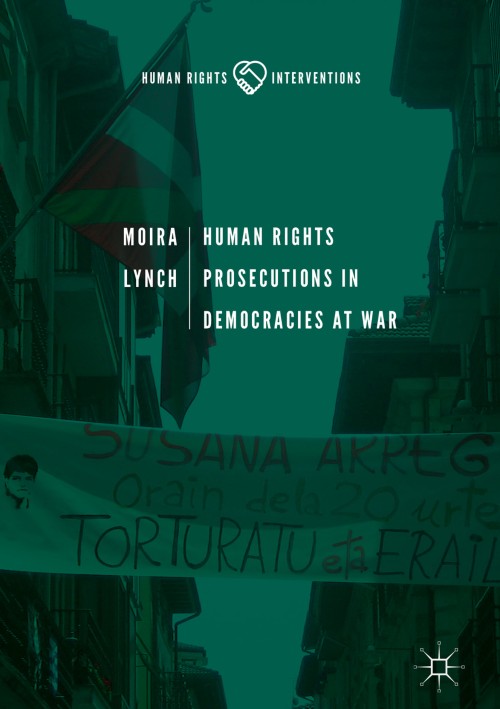
245 10|aHuman Rights Prosecutions in Democracies at War|h[electronic resource] /|cby Moira Lynch.
250 |a1st ed. 2019.
264 1|aCham :|bSpringer International Publishing :|bImprint: Palgrave Macmillan,|c2019.
300 |aXVII, 226 p. 7 illus. in color.|bonline resource.
336 |atext|btxt|2rdacontent
337 |acomputer|bc|2rdamedia
338 |aonline resource|bcr|2rdacarrier
347 |atext file|bPDF|2rda
490 1 |aHuman Rights Interventions,|x2946-5125
505 0 |a1. Introduction -- 2. Human Rights Prosecutions and Institutional Continuity in Sri Lanka -- 3. Conversion, Layering and Human Rights Prosecutions in Northern Ireland -- 4. “Resorting to Authoritarian Habits”: Anti-Terrorism Laws, State Violence and Human Rights Prosecutions in Democratic Spain -- 5. The Constitutional Court, Military Jurisdiction and Human Rights Prosecutions in Colombia -- 6. Human Rights Prosecutions and Democracies at War in Comparative Perspective.
520 |aThough many of the longest and most devastating internal armed conflicts have been fought within the boundaries of democratic states, these countries employ some of the highest numbers of human rights prosecutions. What conditions prompt this outcome and what explains the variable patterns of prosecutions in democracies at war? Prosecutions may be enabled by existing democratic norms and institutions, but given their role in a violent conflict, democratic governments may go to great lengths to avoid judicial accountability. Through qualitative and quantitative research of four cases, Sri Lanka, Northern Ireland, Spain and Colombia, this book argues that emergency and anti-terrorism laws issued during the conflict created barriers to the investigation and prosecution of state human rights violations. The extent to which state actors were held accountable was shaped by citizens, NGOs and political actors who challenged or upheld impunity provisions within emergency legislation. Moira Lynch is Assistant Professor in the Department of Political Science at Loyola University Maryland, USA.
650 0|aSecurity, International.
650 0|aPeace.
650 0|aComparative government.
650 0|aHuman rights.
650 0|aPolitical science.
650 14|aInternational Security Studies.
650 24|aPeace and Conflict Studies.
650 24|aComparative Politics.
650 24|aHuman Rights.
650 24|aPolitical Science.
710 2 |aSpringerLink (Online service)
773 0 |tSpringer Nature eBook
776 08|iPrinted edition:|z9783319969077
776 08|iPrinted edition:|z9783319969091
776 08|iPrinted edition:|z9783030072681
830 0|aHuman Rights Interventions,|x2946-5125
856 40|uhttps://doi.org/10.1007/978-3-319-96908-4
912 |aZDB-2-POS
912 |aZDB-2-SXPI
950 |aPolitical Science and International Studies (SpringerNature-41174)
950 |aPolitical Science and International Studies (R0) (SpringerNature-43724)