

New Opposition in the Middle East [electronic resource] / edited by Dara Conduit, Shahram Akbarzadeh.
Erişim Adresi
ISBN
9789811088216
Dil Kodu
İngilizce
Yer Numarası
DK/17177
Basım Bildirimi
1st ed. 2018.
Yayın Bilgisi
Singapore : Springer Nature Singapore : Imprint: Palgrave Macmillan, 2018.
Fiziksel Niteleme
XI, 216 p. 1 illus. online resource.
İçindekiler Notu
1. Contentious Politics and Middle Eastern Oppositions After the Uprisings -- 2. The Women’s Movement and State Responses to Contentious Campaigns in Iran -- 3. Pulling and Gouging: The Sadrist Line’s Adaptable and Evolving Repertoire of Contention -- 4. Opposition Party Political Dynamics in Egypt from the 2011 Revolution to Sisi -- 5. The Rise and Fall of Bahrain’s Al-Wefaq Society: De-democratisation and Crackdown in a Troubled Gulf State -- 6. The Iranian Reform Movement Since 2009 -- 7. Surviving the Syrian Uprising: The Syrian Muslim Brotherhood -- 8. Nahda and Tunisian Islamic Activism -- 9. Conclusion.
Özet, vb.
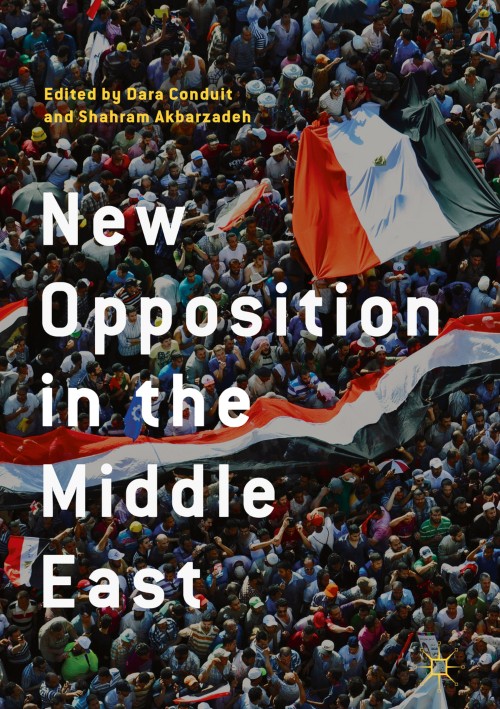
This book uses a Contentious Politics lens to examine patterns of political contestation since 2009 and 2011 among the Middle East’s most important actors. The chapters ask questions in relation to the responsiveness of opposition groups to their political environments, the longterm legacies of authoritarianism, and whether the post-2009/2011 political environment is better or worse for Middle Eastern oppositions. It interrogates the ways in which oppositions have morphed in relation to this changed operating environment, subjectively interpreting the costs and benefits of contestation in order to maximise political opportunities. To some oppositions, changes in the power balance between regime structures and opposition agents led to unprecedented opportunity for political action, while for others, structures were galvanised to restrict activity. In total, the volume shows that even though the Arab Uprisings and Green Movement achieved few of their overt goals, the events unleashed smaller shifts across the region that have led to a fundamental change in the politics of contestation amongst the region’s oppositions. Dara Conduit is an Associate Research Fellow at the Alfred Deakin Institute for Citizenship and Globalisation, Deakin University. Her work has been published in Studies in Conflict & Terrorism, the Middle East Journal, the British Journal of Middle Eastern Studies and International Community Law Review. Dr. Conduit holds a PhD from Monash University, an M. Litt from the University of St. Andrews, was a Visiting Scholar at the University of Cambridge in 2015 and has provided advice to the UN OHCHR’s Working Group on Mercenaries. Shahram Akbarzadeh is Professor of Middle East & Central Asian Politics at the Alfred Deakin Institute for Citizenship and Globalisation, Deakin University, Australia. Prof. Akbarzadeh is author of Uzbekistan and the United States (2005), US Foreign Policy in the Middle East (2008 with Kylie Baxter) and Muslim Active Citizenship in the West (2014 with Mario Peucker). He is the founding Editor of the Islamic Studies Series and a regular public commentator.
Konu
Middle East __ Politics and government.
Middle Eastern Politics.
Middle Eastern Politics.
Diğer Yazarlar
Kurum Adı
Eseri Alıntıla
Referansları kullanmadan önce gözden geçirmeniz ve varsa gerekli düzeltmeleri yapmanız önerilir.
Dijital Kaynak
MARC Görünümü
LEADER 04495nam a22004695i 4500
001 815959
003 TR_AnAIT
005 20260130204009
007 cr nn 008mamaa
008 180927s2018 si | s |||| 0|eng d
020 |a9789811088216|9978-981-10-8821-6
024 7 |a10.1007/978-981-10-8821-6|2doi
041 |aeng
049 |aTürk Tarih Kurumu Kütüphanesi
050 4|aJQ1758-1852
072 7|aJP|2bicssc
072 7|a1FB|2bicssc
072 7|aPOL059000|2bisacsh
072 7|aJP|x1FB|2thema
082 04|a320.956|223
090 |aDK/17177
245 10|aNew Opposition in the Middle East|h[electronic resource] /|cedited by Dara Conduit, Shahram Akbarzadeh.
250 |a1st ed. 2018.
264 1|aSingapore :|bSpringer Nature Singapore :|bImprint: Palgrave Macmillan,|c2018.
300 |aXI, 216 p. 1 illus.|bonline resource.
336 |atext|btxt|2rdacontent
337 |acomputer|bc|2rdamedia
338 |aonline resource|bcr|2rdacarrier
347 |atext file|bPDF|2rda
505 0 |a1. Contentious Politics and Middle Eastern Oppositions After the Uprisings -- 2. The Women’s Movement and State Responses to Contentious Campaigns in Iran -- 3. Pulling and Gouging: The Sadrist Line’s Adaptable and Evolving Repertoire of Contention -- 4. Opposition Party Political Dynamics in Egypt from the 2011 Revolution to Sisi -- 5. The Rise and Fall of Bahrain’s Al-Wefaq Society: De-democratisation and Crackdown in a Troubled Gulf State -- 6. The Iranian Reform Movement Since 2009 -- 7. Surviving the Syrian Uprising: The Syrian Muslim Brotherhood -- 8. Nahda and Tunisian Islamic Activism -- 9. Conclusion.
520 |aThis book uses a Contentious Politics lens to examine patterns of political contestation since 2009 and 2011 among the Middle East’s most important actors. The chapters ask questions in relation to the responsiveness of opposition groups to their political environments, the longterm legacies of authoritarianism, and whether the post-2009/2011 political environment is better or worse for Middle Eastern oppositions. It interrogates the ways in which oppositions have morphed in relation to this changed operating environment, subjectively interpreting the costs and benefits of contestation in order to maximise political opportunities. To some oppositions, changes in the power balance between regime structures and opposition agents led to unprecedented opportunity for political action, while for others, structures were galvanised to restrict activity. In total, the volume shows that even though the Arab Uprisings and Green Movement achieved few of their overt goals, the events unleashed smaller shifts across the region that have led to a fundamental change in the politics of contestation amongst the region’s oppositions. Dara Conduit is an Associate Research Fellow at the Alfred Deakin Institute for Citizenship and Globalisation, Deakin University. Her work has been published in Studies in Conflict & Terrorism, the Middle East Journal, the British Journal of Middle Eastern Studies and International Community Law Review. Dr. Conduit holds a PhD from Monash University, an M. Litt from the University of St. Andrews, was a Visiting Scholar at the University of Cambridge in 2015 and has provided advice to the UN OHCHR’s Working Group on Mercenaries. Shahram Akbarzadeh is Professor of Middle East & Central Asian Politics at the Alfred Deakin Institute for Citizenship and Globalisation, Deakin University, Australia. Prof. Akbarzadeh is author of Uzbekistan and the United States (2005), US Foreign Policy in the Middle East (2008 with Kylie Baxter) and Muslim Active Citizenship in the West (2014 with Mario Peucker). He is the founding Editor of the Islamic Studies Series and a regular public commentator.
650 0|aMiddle East|xPolitics and government.
650 14|aMiddle Eastern Politics.
700 1 |aConduit, Dara.|eeditor.|4edt|4http://id.loc.gov/vocabulary/relators/edt
700 1 |aAkbarzadeh, Shahram.|eeditor.|4edt|4http://id.loc.gov/vocabulary/relators/edt
710 2 |aSpringerLink (Online service)
773 0 |tSpringer Nature eBook
776 08|iPrinted edition:|z9789811088209
776 08|iPrinted edition:|z9789811088223
776 08|iPrinted edition:|z9789811342493
856 40|uhttps://doi.org/10.1007/978-981-10-8821-6
912 |aZDB-2-POS
912 |aZDB-2-SXPI
950 |aPolitical Science and International Studies (SpringerNature-41174)
950 |aPolitical Science and International Studies (R0) (SpringerNature-43724)
001 815959
003 TR_AnAIT
005 20260130204009
007 cr nn 008mamaa
008 180927s2018 si | s |||| 0|eng d
020 |a9789811088216|9978-981-10-8821-6
024 7 |a10.1007/978-981-10-8821-6|2doi
041 |aeng
049 |aTürk Tarih Kurumu Kütüphanesi
050 4|aJQ1758-1852
072 7|aJP|2bicssc
072 7|a1FB|2bicssc
072 7|aPOL059000|2bisacsh
072 7|aJP|x1FB|2thema
082 04|a320.956|223
090 |aDK/17177
245 10|aNew Opposition in the Middle East|h[electronic resource] /|cedited by Dara Conduit, Shahram Akbarzadeh.
250 |a1st ed. 2018.
264 1|aSingapore :|bSpringer Nature Singapore :|bImprint: Palgrave Macmillan,|c2018.
300 |aXI, 216 p. 1 illus.|bonline resource.
336 |atext|btxt|2rdacontent
337 |acomputer|bc|2rdamedia
338 |aonline resource|bcr|2rdacarrier
347 |atext file|bPDF|2rda
505 0 |a1. Contentious Politics and Middle Eastern Oppositions After the Uprisings -- 2. The Women’s Movement and State Responses to Contentious Campaigns in Iran -- 3. Pulling and Gouging: The Sadrist Line’s Adaptable and Evolving Repertoire of Contention -- 4. Opposition Party Political Dynamics in Egypt from the 2011 Revolution to Sisi -- 5. The Rise and Fall of Bahrain’s Al-Wefaq Society: De-democratisation and Crackdown in a Troubled Gulf State -- 6. The Iranian Reform Movement Since 2009 -- 7. Surviving the Syrian Uprising: The Syrian Muslim Brotherhood -- 8. Nahda and Tunisian Islamic Activism -- 9. Conclusion.
520 |aThis book uses a Contentious Politics lens to examine patterns of political contestation since 2009 and 2011 among the Middle East’s most important actors. The chapters ask questions in relation to the responsiveness of opposition groups to their political environments, the longterm legacies of authoritarianism, and whether the post-2009/2011 political environment is better or worse for Middle Eastern oppositions. It interrogates the ways in which oppositions have morphed in relation to this changed operating environment, subjectively interpreting the costs and benefits of contestation in order to maximise political opportunities. To some oppositions, changes in the power balance between regime structures and opposition agents led to unprecedented opportunity for political action, while for others, structures were galvanised to restrict activity. In total, the volume shows that even though the Arab Uprisings and Green Movement achieved few of their overt goals, the events unleashed smaller shifts across the region that have led to a fundamental change in the politics of contestation amongst the region’s oppositions. Dara Conduit is an Associate Research Fellow at the Alfred Deakin Institute for Citizenship and Globalisation, Deakin University. Her work has been published in Studies in Conflict & Terrorism, the Middle East Journal, the British Journal of Middle Eastern Studies and International Community Law Review. Dr. Conduit holds a PhD from Monash University, an M. Litt from the University of St. Andrews, was a Visiting Scholar at the University of Cambridge in 2015 and has provided advice to the UN OHCHR’s Working Group on Mercenaries. Shahram Akbarzadeh is Professor of Middle East & Central Asian Politics at the Alfred Deakin Institute for Citizenship and Globalisation, Deakin University, Australia. Prof. Akbarzadeh is author of Uzbekistan and the United States (2005), US Foreign Policy in the Middle East (2008 with Kylie Baxter) and Muslim Active Citizenship in the West (2014 with Mario Peucker). He is the founding Editor of the Islamic Studies Series and a regular public commentator.
650 0|aMiddle East|xPolitics and government.
650 14|aMiddle Eastern Politics.
700 1 |aConduit, Dara.|eeditor.|4edt|4http://id.loc.gov/vocabulary/relators/edt
700 1 |aAkbarzadeh, Shahram.|eeditor.|4edt|4http://id.loc.gov/vocabulary/relators/edt
710 2 |aSpringerLink (Online service)
773 0 |tSpringer Nature eBook
776 08|iPrinted edition:|z9789811088209
776 08|iPrinted edition:|z9789811088223
776 08|iPrinted edition:|z9789811342493
856 40|uhttps://doi.org/10.1007/978-981-10-8821-6
912 |aZDB-2-POS
912 |aZDB-2-SXPI
950 |aPolitical Science and International Studies (SpringerNature-41174)
950 |aPolitical Science and International Studies (R0) (SpringerNature-43724)
Materyaller
Depodan talep edilen materyal sadece kütüphane içerisinde kullanılmaktadır.
Materyal dışarıya ödünç verilmemektedir.
Materyal dışarıya ödünç verilmemektedir.
