

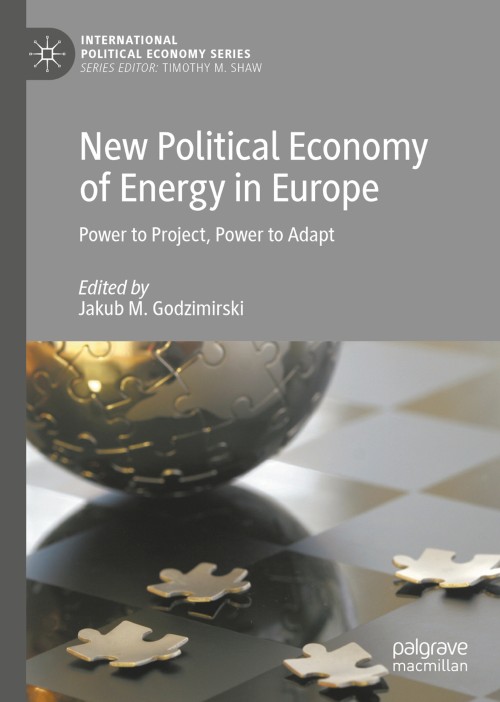
New Political Economy of Energy in Europe [electronic resource] : Power to Project, Power to Adapt / edited by Jakub M. Godzimirski.
Erişim Adresi
ISBN
9783319933603
Dil Kodu
İngilizce
Yer Numarası
DK/17255
Basım Bildirimi
1st ed. 2019.
Yayın Bilgisi
Cham : Springer International Publishing : Imprint: Palgrave Macmillan, 2019.
Fiziksel Niteleme
XXI, 267 p. 10 illus. online resource.
Dizi
International Political Economy Series, 2662-2491
İçindekiler Notu
Chapter 1: Introduction: The Changing (Geo)Politics of Energy in Europe -- Part I: Inside–Out: Projecting EU Rules and Ideas -- Chapter 2: Regulatory Power or Market Power Europe? Leadership and Models for External EU Energy Governance -- Chapter 3: The EU Strategy towards External Gas Suppliers and their Responses: Norway, Russia, Algeria and LNG -- Chapter 4: EU Climate and Energy Policy: New Challenges for Old Energy Suppliers -- Part II: Outside–In: National Adaptations -- Chapter 5: Channels of Influence, or How Non-Members Can Influence EU Energy Policy -- Chapter 6: Norway: A Small State in a Great European Energy Game -- Chapter 7: German Energiewende: Climate Change in Focus, Competitiveness and Energy Security aside? -- Chapter 8: Poland, or How to Cope with Decarbonization and Diversification -- Chapter 9: The Baltics: Between Competition and Cooperation -- Chapter 10 : Conclusions: What the EU Has Achieved and What Is in the Offing?.
Özet, vb.
This edited collection details and analyses the dramatic changes that the international political economy of energy has undergone in the past decade. This change began with the increasing assertiveness of Russia when the oil price rose above the $100 mark in 2008. This, combined with the rise of shale oil and gas, made the USA all but self-sufficient in terms of fossil fuels. The collapse of the oil price in 2014-15, Saudi Arabia’s new strategy of defending its market share and the increasingly tense and controversial relationship between the West and Russia all worked to further strengthen the geopolitical dimension of energy in Europe. The global result is a world in which geopolitics play a bigger part than ever before; the central question the authors of this volume grapple with is how the EU – and European small states – can deal with this. Jakub M. Godzimirski is Research Professor at the Norwegian Institute of International Affairs (NUPI) in Oslo, Norway. He has been working on Russian foreign and security policy issues at NUPI for more than 20 years, paying special attention to the role of energy resources in Russian grand strategy. In addition he has worked on European policy and its impact on developments in Central and Eastern Europe, including Russian-European relations. Chapter 4 of this book is available open access under a CC BY 4.0 license at link.springer.com.
Konu
International economic relations.
Europe __ Politics and government.
Energy policy.
Energy and state.
International Political Economy’.
European Politics.
Energy Policy, Economics and Management.
Europe __ Politics and government.
Energy policy.
Energy and state.
International Political Economy’.
European Politics.
Energy Policy, Economics and Management.
Diğer Yazarlar
Kurum Adı
Eseri Alıntıla
Referansları kullanmadan önce gözden geçirmeniz ve varsa gerekli düzeltmeleri yapmanız önerilir.
Dijital Kaynak
MARC Görünümü
LEADER 04423nam a22005535i 4500
001 816037
003 TR_AnAIT
005 20260130203435
007 cr nn 008mamaa
008 180921s2019 sz | s |||| 0|eng d
020 |a9783319933603|9978-3-319-93360-3
024 7 |a10.1007/978-3-319-93360-3|2doi
041 |aeng
049 |aTürk Tarih Kurumu Kütüphanesi
050 4|aJZ1252
072 7|aJPS|2bicssc
072 7|aKCP|2bicssc
072 7|aPOL011020|2bisacsh
072 7|aJPS|2thema
072 7|aKCP|2thema
082 04|a327.111|223
090 |aDK/17255
245 10|aNew Political Economy of Energy in Europe|h[electronic resource] :|bPower to Project, Power to Adapt /|cedited by Jakub M. Godzimirski.
250 |a1st ed. 2019.
264 1|aCham :|bSpringer International Publishing :|bImprint: Palgrave Macmillan,|c2019.
300 |aXXI, 267 p. 10 illus.|bonline resource.
336 |atext|btxt|2rdacontent
337 |acomputer|bc|2rdamedia
338 |aonline resource|bcr|2rdacarrier
347 |atext file|bPDF|2rda
490 1 |aInternational Political Economy Series,|x2662-2491
505 0 |aChapter 1: Introduction: The Changing (Geo)Politics of Energy in Europe -- Part I: Inside–Out: Projecting EU Rules and Ideas -- Chapter 2: Regulatory Power or Market Power Europe? Leadership and Models for External EU Energy Governance -- Chapter 3: The EU Strategy towards External Gas Suppliers and their Responses: Norway, Russia, Algeria and LNG -- Chapter 4: EU Climate and Energy Policy: New Challenges for Old Energy Suppliers -- Part II: Outside–In: National Adaptations -- Chapter 5: Channels of Influence, or How Non-Members Can Influence EU Energy Policy -- Chapter 6: Norway: A Small State in a Great European Energy Game -- Chapter 7: German Energiewende: Climate Change in Focus, Competitiveness and Energy Security aside? -- Chapter 8: Poland, or How to Cope with Decarbonization and Diversification -- Chapter 9: The Baltics: Between Competition and Cooperation -- Chapter 10 : Conclusions: What the EU Has Achieved and What Is in the Offing?.
520 |aThis edited collection details and analyses the dramatic changes that the international political economy of energy has undergone in the past decade. This change began with the increasing assertiveness of Russia when the oil price rose above the |100 mark in 2008. This, combined with the rise of shale oil and gas, made the USA all but self-sufficient in terms of fossil fuels. The collapse of the oil price in 2014-15, Saudi Arabia’s new strategy of defending its market share and the increasingly tense and controversial relationship between the West and Russia all worked to further strengthen the geopolitical dimension of energy in Europe. The global result is a world in which geopolitics play a bigger part than ever before; the central question the authors of this volume grapple with is how the EU – and European small states – can deal with this. Jakub M. Godzimirski is Research Professor at the Norwegian Institute of International Affairs (NUPI) in Oslo, Norway. He has been working on Russian foreign and security policy issues at NUPI for more than 20 years, paying special attention to the role of energy resources in Russian grand strategy. In addition he has worked on European policy and its impact on developments in Central and Eastern Europe, including Russian-European relations. Chapter 4 of this book is available open access under a CC BY 4.0 license at link.springer.com.
650 0|aInternational economic relations.
650 0|aEurope|xPolitics and government.
650 0|aEnergy policy.
650 0|aEnergy and state.
650 14|aInternational Political Economy’.
650 24|aEuropean Politics.
650 24|aEnergy Policy, Economics and Management.
700 1 |aGodzimirski, Jakub M.|eeditor.|4edt|4http://id.loc.gov/vocabulary/relators/edt
710 2 |aSpringerLink (Online service)
773 0 |tSpringer Nature eBook
776 08|iPrinted edition:|z9783319933597
776 08|iPrinted edition:|z9783319933610
776 08|iPrinted edition:|z9783030066468
830 0|aInternational Political Economy Series,|x2662-2491
856 40|uhttps://doi.org/10.1007/978-3-319-93360-3
912 |aZDB-2-POS
912 |aZDB-2-SXPI
950 |aPolitical Science and International Studies (SpringerNature-41174)
950 |aPolitical Science and International Studies (R0) (SpringerNature-43724)
001 816037
003 TR_AnAIT
005 20260130203435
007 cr nn 008mamaa
008 180921s2019 sz | s |||| 0|eng d
020 |a9783319933603|9978-3-319-93360-3
024 7 |a10.1007/978-3-319-93360-3|2doi
041 |aeng
049 |aTürk Tarih Kurumu Kütüphanesi
050 4|aJZ1252
072 7|aJPS|2bicssc
072 7|aKCP|2bicssc
072 7|aPOL011020|2bisacsh
072 7|aJPS|2thema
072 7|aKCP|2thema
082 04|a327.111|223
090 |aDK/17255
245 10|aNew Political Economy of Energy in Europe|h[electronic resource] :|bPower to Project, Power to Adapt /|cedited by Jakub M. Godzimirski.
250 |a1st ed. 2019.
264 1|aCham :|bSpringer International Publishing :|bImprint: Palgrave Macmillan,|c2019.
300 |aXXI, 267 p. 10 illus.|bonline resource.
336 |atext|btxt|2rdacontent
337 |acomputer|bc|2rdamedia
338 |aonline resource|bcr|2rdacarrier
347 |atext file|bPDF|2rda
490 1 |aInternational Political Economy Series,|x2662-2491
505 0 |aChapter 1: Introduction: The Changing (Geo)Politics of Energy in Europe -- Part I: Inside–Out: Projecting EU Rules and Ideas -- Chapter 2: Regulatory Power or Market Power Europe? Leadership and Models for External EU Energy Governance -- Chapter 3: The EU Strategy towards External Gas Suppliers and their Responses: Norway, Russia, Algeria and LNG -- Chapter 4: EU Climate and Energy Policy: New Challenges for Old Energy Suppliers -- Part II: Outside–In: National Adaptations -- Chapter 5: Channels of Influence, or How Non-Members Can Influence EU Energy Policy -- Chapter 6: Norway: A Small State in a Great European Energy Game -- Chapter 7: German Energiewende: Climate Change in Focus, Competitiveness and Energy Security aside? -- Chapter 8: Poland, or How to Cope with Decarbonization and Diversification -- Chapter 9: The Baltics: Between Competition and Cooperation -- Chapter 10 : Conclusions: What the EU Has Achieved and What Is in the Offing?.
520 |aThis edited collection details and analyses the dramatic changes that the international political economy of energy has undergone in the past decade. This change began with the increasing assertiveness of Russia when the oil price rose above the |100 mark in 2008. This, combined with the rise of shale oil and gas, made the USA all but self-sufficient in terms of fossil fuels. The collapse of the oil price in 2014-15, Saudi Arabia’s new strategy of defending its market share and the increasingly tense and controversial relationship between the West and Russia all worked to further strengthen the geopolitical dimension of energy in Europe. The global result is a world in which geopolitics play a bigger part than ever before; the central question the authors of this volume grapple with is how the EU – and European small states – can deal with this. Jakub M. Godzimirski is Research Professor at the Norwegian Institute of International Affairs (NUPI) in Oslo, Norway. He has been working on Russian foreign and security policy issues at NUPI for more than 20 years, paying special attention to the role of energy resources in Russian grand strategy. In addition he has worked on European policy and its impact on developments in Central and Eastern Europe, including Russian-European relations. Chapter 4 of this book is available open access under a CC BY 4.0 license at link.springer.com.
650 0|aInternational economic relations.
650 0|aEurope|xPolitics and government.
650 0|aEnergy policy.
650 0|aEnergy and state.
650 14|aInternational Political Economy’.
650 24|aEuropean Politics.
650 24|aEnergy Policy, Economics and Management.
700 1 |aGodzimirski, Jakub M.|eeditor.|4edt|4http://id.loc.gov/vocabulary/relators/edt
710 2 |aSpringerLink (Online service)
773 0 |tSpringer Nature eBook
776 08|iPrinted edition:|z9783319933597
776 08|iPrinted edition:|z9783319933610
776 08|iPrinted edition:|z9783030066468
830 0|aInternational Political Economy Series,|x2662-2491
856 40|uhttps://doi.org/10.1007/978-3-319-93360-3
912 |aZDB-2-POS
912 |aZDB-2-SXPI
950 |aPolitical Science and International Studies (SpringerNature-41174)
950 |aPolitical Science and International Studies (R0) (SpringerNature-43724)
Materyaller
Depodan talep edilen materyal sadece kütüphane içerisinde kullanılmaktadır.
Materyal dışarıya ödünç verilmemektedir.
Materyal dışarıya ödünç verilmemektedir.
