

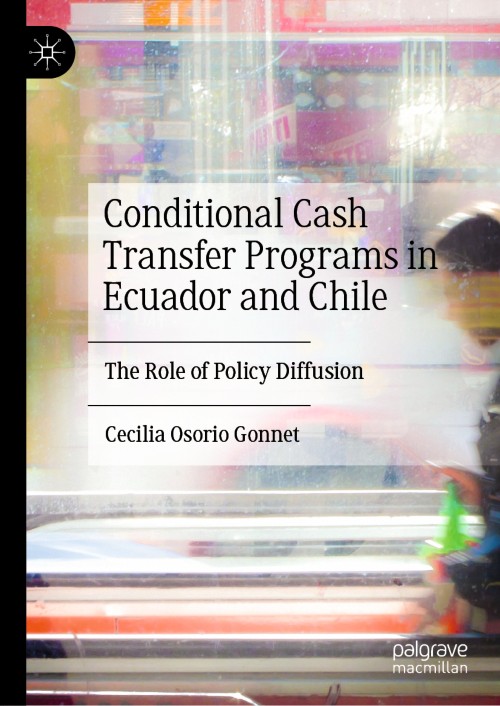
Conditional Cash Transfer Programs in Ecuador and Chile [electronic resource] : The Role of Policy Diffusion / by Cecilia Osorio Gonnet.
Erişim Adresi
ISBN
9783030510084
Dil Kodu
İngilizce
Yer Numarası
DK/17508
Yazar
Basım Bildirimi
1st ed. 2020.
Yayın Bilgisi
Cham : Springer International Publishing : Imprint: Palgrave Macmillan, 2020.
Fiziksel Niteleme
XX, 255 p. 15 illus., 12 illus. in color. online resource.
İçindekiler Notu
Chapter 1. Introduction -- Chapter 2. Social Policies and Conditional Cash Transfer Programs (CCTs) in Latin America -- Chapter 3. Mechanisms and actors in the diffusion of policies. State of the issue and theoretical proposal -- Chapter 4. Quantitative Analysis of the Diffusion of Conditional Cash Transfer Programs in Latin America -- Chapter 5. The Epistemic Community and International Organizations in the Diffusion of CCTs -- Chapter 6. Chile. The Chile Solidario program -- Chapter 7. Ecuador, the Human Development Bond -- Chapter 8. Conclusions.
Özet, vb.
In this book, Cecilia Osorio Gonnet takes the reader on a journey from the rise of Conditional Cash Transfers (CCTs) in Mexico and Brazil though their spread across Latin America over the late 20th and early 21st centuries. What makes this text a must read is how Osorio Gonnet analyses this spread; combining an impressive array of qualitative and quantitative data to show how endogenous and exogenous forces interacted to shape the nature of individual CCT programs, within an underlying set of ‘essential’ elements. Forming the fundamental uniqueness of this investigation was Osorio Gonnet’s notable empirical study of the epistemic community that developed, changed, and acted as the catalyst for the spread and understanding of CCTs amongst the regions policymakers. Osorio Gonnet’s core arguments are illustrated a detailed analysis of the diametrically different cases of Chile’s Solidario program and what became Ecuador’s Bono Desarrollo Humano program. Not only will this text help form the basis of future studies through the question it raises in relation to diffusion, but it will be a must read for anyone interested in Conditional Cash Transfers, Comparative Policy Analysis, Policy Studies, Policy Diffusion and Policy Transfer studies. - David Dolowitz, University of Liverpool, UK This book offers readers a deeper understanding of the diffusion process of the Conditional Cash Transfer (CCT) programs in Latin America and the role played by experts and international organizations. CCTs have been increasingly implemented around the world in recent decades, and by 2010, 17 countries in Latin America had adopted them. The evidence suggests that this concentration is due to a process of policy diffusion. International organizations contribute to this process; however, the book’s main argument is that there was another, more important actor involved: a regional epistemic community that increased the availability ofinformation about CCTs and reinforced their legitimacy, playing a role in the domestic processes of formulation and adoption. This book addresses the diffusion of the programs throughout the region; diffusion mechanisms that can help us understand the programs’ adoption (emulation, learning and coercion); and the impacts of key actors on the process (epistemic community, international organizations and policymakers). Cecilia Osorio Gonnet holds a Ph.D. in tPolitical and Social Sciences from the Universitat Pompeu Fabra. Currently, she is an Assistant Professor at the Politics and Government Department, Universidad Alberto Hurtado, Chile. Her most recent book was “Learning or emulating: how social policies are disseminated in Latin America” (2018).
Konu
Political planning.
Social policy.
Public Policy.
Social Policy.
Social policy.
Public Policy.
Social Policy.
Kurum Adı
Eseri Alıntıla
Referansları kullanmadan önce gözden geçirmeniz ve varsa gerekli düzeltmeleri yapmanız önerilir.
Dijital Kaynak
MARC Görünümü
LEADER 04985nam a22004695i 4500
001 816292
003 TR_AnAIT
005 20260130201334
007 cr nn 008mamaa
008 200825s2020 sz | s |||| 0|eng d
020 |a9783030510084|9978-3-030-51008-4
024 7 |a10.1007/978-3-030-51008-4|2doi
041 |aeng
049 |aTürk Tarih Kurumu Kütüphanesi
050 4|aJF1525.P6
072 7|aJPP|2bicssc
072 7|aPOL028000|2bisacsh
072 7|aJPP|2thema
082 04|a320.6|223
090 |aDK/17508
100 1 |aOsorio Gonnet, Cecilia.|eauthor.|4aut|4http://id.loc.gov/vocabulary/relators/aut
245 10|aConditional Cash Transfer Programs in Ecuador and Chile|h[electronic resource] :|bThe Role of Policy Diffusion /|cby Cecilia Osorio Gonnet.
250 |a1st ed. 2020.
264 1|aCham :|bSpringer International Publishing :|bImprint: Palgrave Macmillan,|c2020.
300 |aXX, 255 p. 15 illus., 12 illus. in color.|bonline resource.
336 |atext|btxt|2rdacontent
337 |acomputer|bc|2rdamedia
338 |aonline resource|bcr|2rdacarrier
347 |atext file|bPDF|2rda
505 0 |aChapter 1. Introduction -- Chapter 2. Social Policies and Conditional Cash Transfer Programs (CCTs) in Latin America -- Chapter 3. Mechanisms and actors in the diffusion of policies. State of the issue and theoretical proposal -- Chapter 4. Quantitative Analysis of the Diffusion of Conditional Cash Transfer Programs in Latin America -- Chapter 5. The Epistemic Community and International Organizations in the Diffusion of CCTs -- Chapter 6. Chile. The Chile Solidario program -- Chapter 7. Ecuador, the Human Development Bond -- Chapter 8. Conclusions.
520 |aIn this book, Cecilia Osorio Gonnet takes the reader on a journey from the rise of Conditional Cash Transfers (CCTs) in Mexico and Brazil though their spread across Latin America over the late 20th and early 21st centuries. What makes this text a must read is how Osorio Gonnet analyses this spread; combining an impressive array of qualitative and quantitative data to show how endogenous and exogenous forces interacted to shape the nature of individual CCT programs, within an underlying set of ‘essential’ elements. Forming the fundamental uniqueness of this investigation was Osorio Gonnet’s notable empirical study of the epistemic community that developed, changed, and acted as the catalyst for the spread and understanding of CCTs amongst the regions policymakers. Osorio Gonnet’s core arguments are illustrated a detailed analysis of the diametrically different cases of Chile’s Solidario program and what became Ecuador’s Bono Desarrollo Humano program. Not only will this text help form the basis of future studies through the question it raises in relation to diffusion, but it will be a must read for anyone interested in Conditional Cash Transfers, Comparative Policy Analysis, Policy Studies, Policy Diffusion and Policy Transfer studies. - David Dolowitz, University of Liverpool, UK This book offers readers a deeper understanding of the diffusion process of the Conditional Cash Transfer (CCT) programs in Latin America and the role played by experts and international organizations. CCTs have been increasingly implemented around the world in recent decades, and by 2010, 17 countries in Latin America had adopted them. The evidence suggests that this concentration is due to a process of policy diffusion. International organizations contribute to this process; however, the book’s main argument is that there was another, more important actor involved: a regional epistemic community that increased the availability ofinformation about CCTs and reinforced their legitimacy, playing a role in the domestic processes of formulation and adoption. This book addresses the diffusion of the programs throughout the region; diffusion mechanisms that can help us understand the programs’ adoption (emulation, learning and coercion); and the impacts of key actors on the process (epistemic community, international organizations and policymakers). Cecilia Osorio Gonnet holds a Ph.D. in tPolitical and Social Sciences from the Universitat Pompeu Fabra. Currently, she is an Assistant Professor at the Politics and Government Department, Universidad Alberto Hurtado, Chile. Her most recent book was “Learning or emulating: how social policies are disseminated in Latin America” (2018).
650 0|aPolitical planning.
650 0|aSocial policy.
650 14|aPublic Policy.
650 24|aSocial Policy.
710 2 |aSpringerLink (Online service)
773 0 |tSpringer Nature eBook
776 08|iPrinted edition:|z9783030510077
776 08|iPrinted edition:|z9783030510091
776 08|iPrinted edition:|z9783030510107
856 40|uhttps://doi.org/10.1007/978-3-030-51008-4
912 |aZDB-2-POS
912 |aZDB-2-SXPI
950 |aPolitical Science and International Studies (SpringerNature-41174)
950 |aPolitical Science and International Studies (R0) (SpringerNature-43724)
001 816292
003 TR_AnAIT
005 20260130201334
007 cr nn 008mamaa
008 200825s2020 sz | s |||| 0|eng d
020 |a9783030510084|9978-3-030-51008-4
024 7 |a10.1007/978-3-030-51008-4|2doi
041 |aeng
049 |aTürk Tarih Kurumu Kütüphanesi
050 4|aJF1525.P6
072 7|aJPP|2bicssc
072 7|aPOL028000|2bisacsh
072 7|aJPP|2thema
082 04|a320.6|223
090 |aDK/17508
100 1 |aOsorio Gonnet, Cecilia.|eauthor.|4aut|4http://id.loc.gov/vocabulary/relators/aut
245 10|aConditional Cash Transfer Programs in Ecuador and Chile|h[electronic resource] :|bThe Role of Policy Diffusion /|cby Cecilia Osorio Gonnet.
250 |a1st ed. 2020.
264 1|aCham :|bSpringer International Publishing :|bImprint: Palgrave Macmillan,|c2020.
300 |aXX, 255 p. 15 illus., 12 illus. in color.|bonline resource.
336 |atext|btxt|2rdacontent
337 |acomputer|bc|2rdamedia
338 |aonline resource|bcr|2rdacarrier
347 |atext file|bPDF|2rda
505 0 |aChapter 1. Introduction -- Chapter 2. Social Policies and Conditional Cash Transfer Programs (CCTs) in Latin America -- Chapter 3. Mechanisms and actors in the diffusion of policies. State of the issue and theoretical proposal -- Chapter 4. Quantitative Analysis of the Diffusion of Conditional Cash Transfer Programs in Latin America -- Chapter 5. The Epistemic Community and International Organizations in the Diffusion of CCTs -- Chapter 6. Chile. The Chile Solidario program -- Chapter 7. Ecuador, the Human Development Bond -- Chapter 8. Conclusions.
520 |aIn this book, Cecilia Osorio Gonnet takes the reader on a journey from the rise of Conditional Cash Transfers (CCTs) in Mexico and Brazil though their spread across Latin America over the late 20th and early 21st centuries. What makes this text a must read is how Osorio Gonnet analyses this spread; combining an impressive array of qualitative and quantitative data to show how endogenous and exogenous forces interacted to shape the nature of individual CCT programs, within an underlying set of ‘essential’ elements. Forming the fundamental uniqueness of this investigation was Osorio Gonnet’s notable empirical study of the epistemic community that developed, changed, and acted as the catalyst for the spread and understanding of CCTs amongst the regions policymakers. Osorio Gonnet’s core arguments are illustrated a detailed analysis of the diametrically different cases of Chile’s Solidario program and what became Ecuador’s Bono Desarrollo Humano program. Not only will this text help form the basis of future studies through the question it raises in relation to diffusion, but it will be a must read for anyone interested in Conditional Cash Transfers, Comparative Policy Analysis, Policy Studies, Policy Diffusion and Policy Transfer studies. - David Dolowitz, University of Liverpool, UK This book offers readers a deeper understanding of the diffusion process of the Conditional Cash Transfer (CCT) programs in Latin America and the role played by experts and international organizations. CCTs have been increasingly implemented around the world in recent decades, and by 2010, 17 countries in Latin America had adopted them. The evidence suggests that this concentration is due to a process of policy diffusion. International organizations contribute to this process; however, the book’s main argument is that there was another, more important actor involved: a regional epistemic community that increased the availability ofinformation about CCTs and reinforced their legitimacy, playing a role in the domestic processes of formulation and adoption. This book addresses the diffusion of the programs throughout the region; diffusion mechanisms that can help us understand the programs’ adoption (emulation, learning and coercion); and the impacts of key actors on the process (epistemic community, international organizations and policymakers). Cecilia Osorio Gonnet holds a Ph.D. in tPolitical and Social Sciences from the Universitat Pompeu Fabra. Currently, she is an Assistant Professor at the Politics and Government Department, Universidad Alberto Hurtado, Chile. Her most recent book was “Learning or emulating: how social policies are disseminated in Latin America” (2018).
650 0|aPolitical planning.
650 0|aSocial policy.
650 14|aPublic Policy.
650 24|aSocial Policy.
710 2 |aSpringerLink (Online service)
773 0 |tSpringer Nature eBook
776 08|iPrinted edition:|z9783030510077
776 08|iPrinted edition:|z9783030510091
776 08|iPrinted edition:|z9783030510107
856 40|uhttps://doi.org/10.1007/978-3-030-51008-4
912 |aZDB-2-POS
912 |aZDB-2-SXPI
950 |aPolitical Science and International Studies (SpringerNature-41174)
950 |aPolitical Science and International Studies (R0) (SpringerNature-43724)
Materyaller
Depodan talep edilen materyal sadece kütüphane içerisinde kullanılmaktadır.
Materyal dışarıya ödünç verilmemektedir.
Materyal dışarıya ödünç verilmemektedir.
