

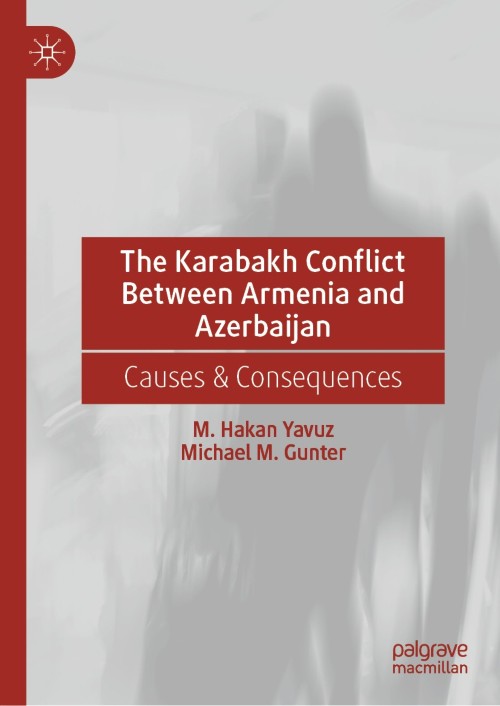
The Karabakh Conflict Between Armenia and Azerbaijan [electronic resource] : Causes & Consequences / by M. Hakan Yavuz, Michael M. Gunter.
Erişim Adresi
ISBN
9783031162626
Dil Kodu
İngilizce
Yer Numarası
DK/17519
Yazar
Basım Bildirimi
1st ed. 2023.
Yayın Bilgisi
Cham : Springer International Publishing : Imprint: Palgrave Macmillan, 2023.
Fiziksel Niteleme
IX, 225 p. 3 illus., 2 illus. in color. online resource.
İçindekiler Notu
Chapter 1 Introduction -- Chapter 2 The Historical Background to the Continuing Conflict over Nagorno-Karabakh -- Chapter 3 The Causes of the First Nagorno-Karabakh War -- Chapter 4 The Consequences of the First War on Armenia and Azerbaijan -- Chapter 5 Failed Negotiations -- Chapter 6 Self-Determination or Territorial Integrity? International Legal/Political Doctrines in Opposition & Their Implications for Karabakh -- Chapter 7 The Second Nagorno-Karabakh War: Causes and Consequences -- Chapter 8 Conclusions.
Özet, vb.
“This is a comprehensive and timely study by two eminent political scientists, Professors Yavuz and Gunter, on the recent war over Nagorno-Karabakh. It is essential reading for anyone interested in ethnic conflict and the failure of the international system of conflict resolution, specifically the so-called OSCE’s Minsk Group. In eight detailed chapters the authors deal with the history, causes and consequences of the war, expertly covering the failed diplomacy. They also approach future peace prospects in a rational and realistic manner.” --Ozay Mehmet, Distinguished Research Professor Emeritus, Carleton University, Ottawa “The Nagorno-Karabakh conflict has significant relevance for ethnic conflict studies in general, post-Soviet conflict studies in particular, and great power struggles involving Russia, Turkey, Iran, and even further afoot the United States and the European Union. Yavuz and Gunter’s cause, event, and consequence methodology eases the difficulty of making sense of a very complex situation. Moreover, their multi-disciplinary narrative includes not just Caucasian history but brings in a deep understanding and explanation of international law, “clash of civilizations” theory, diaspora narratives, great power proxy involvement, and media perception and manipulation. In doing so, they open new avenues for understanding these important events and issues going forward.” --Edward Erickson, Professor of Military History Emeritus, Department of War Studies, U.S. Marine Corps University This project deals with the historical, social and political aspects of the Karabakh issue regarding its origins, development and the current status of the conflict and its precedents and implications for other secessionist wars subsequent to the war in the autumn of 2020. This book also explores the international legal precedents of self-determination versus territorial integrity and the latest successful weapons developments lessons from the recent war involving drones and Azerbaijan’s rich oil reserves. M. Hakan Yavuz is Professor of Political Science at the University of Utah, USA. Michael M. Gunter is Professor of Political Science at Tennessee Technological, University in Cookeville, USA.
Konu
Europe __ Politics and government.
European Politics.
European Politics.
Diğer Yazarlar
Kurum Adı
Eseri Alıntıla
Referansları kullanmadan önce gözden geçirmeniz ve varsa gerekli düzeltmeleri yapmanız önerilir.
Dijital Kaynak
MARC Görünümü
LEADER 05773nam a22005895i 4500
001 816303
003 TR_AnAIT
005 20260130201310
007 cr nn 008mamaa
008 221129s2023 sz | s |||| 0|eng d
020 |a9783031162626|9978-3-031-16262-6
024 7 |a10.1007/978-3-031-16262-6|2doi
041 |aeng
049 |aTürk Tarih Kurumu Kütüphanesi
050 4|aJN1-9692.2
072 7|aJP|2bicssc
072 7|a1D|2bicssc
072 7|aPOL058000|2bisacsh
072 7|aJP|x1D|2thema
082 04|a320.94|223
090 |aDK/17519
100 1 |aYavuz, M. Hakan.|eauthor.|4aut|4http://id.loc.gov/vocabulary/relators/aut
245 14|aThe Karabakh Conflict Between Armenia and Azerbaijan|h[electronic resource] :|bCauses & Consequences /|cby M. Hakan Yavuz, Michael M. Gunter.
250 |a1st ed. 2023.
264 1|aCham :|bSpringer International Publishing :|bImprint: Palgrave Macmillan,|c2023.
300 |aIX, 225 p. 3 illus., 2 illus. in color.|bonline resource.
336 |atext|btxt|2rdacontent
337 |acomputer|bc|2rdamedia
338 |aonline resource|bcr|2rdacarrier
341 0 |bTable of contents navigation|2onix
341 0 |bSingle logical reading order|2onix
341 0 |bShort alternative textual descriptions|2onix
341 0 |bUse of color is not sole means of conveying information|2onix
341 0 |bUse of high contrast between text and background color|2onix
341 0 |bNext / Previous structural navigation|2onix
341 0 |bAll non-decorative content supports reading without sight|2onix
347 |atext file|bPDF|2rda
505 0 |aChapter 1 Introduction -- Chapter 2 The Historical Background to the Continuing Conflict over Nagorno-Karabakh -- Chapter 3 The Causes of the First Nagorno-Karabakh War -- Chapter 4 The Consequences of the First War on Armenia and Azerbaijan -- Chapter 5 Failed Negotiations -- Chapter 6 Self-Determination or Territorial Integrity? International Legal/Political Doctrines in Opposition & Their Implications for Karabakh -- Chapter 7 The Second Nagorno-Karabakh War: Causes and Consequences -- Chapter 8 Conclusions.
520 |a“This is a comprehensive and timely study by two eminent political scientists, Professors Yavuz and Gunter, on the recent war over Nagorno-Karabakh. It is essential reading for anyone interested in ethnic conflict and the failure of the international system of conflict resolution, specifically the so-called OSCE’s Minsk Group. In eight detailed chapters the authors deal with the history, causes and consequences of the war, expertly covering the failed diplomacy. They also approach future peace prospects in a rational and realistic manner.” --Ozay Mehmet, Distinguished Research Professor Emeritus, Carleton University, Ottawa “The Nagorno-Karabakh conflict has significant relevance for ethnic conflict studies in general, post-Soviet conflict studies in particular, and great power struggles involving Russia, Turkey, Iran, and even further afoot the United States and the European Union. Yavuz and Gunter’s cause, event, and consequence methodology eases the difficulty of making sense of a very complex situation. Moreover, their multi-disciplinary narrative includes not just Caucasian history but brings in a deep understanding and explanation of international law, “clash of civilizations” theory, diaspora narratives, great power proxy involvement, and media perception and manipulation. In doing so, they open new avenues for understanding these important events and issues going forward.” --Edward Erickson, Professor of Military History Emeritus, Department of War Studies, U.S. Marine Corps University This project deals with the historical, social and political aspects of the Karabakh issue regarding its origins, development and the current status of the conflict and its precedents and implications for other secessionist wars subsequent to the war in the autumn of 2020. This book also explores the international legal precedents of self-determination versus territorial integrity and the latest successful weapons developments lessons from the recent war involving drones and Azerbaijan’s rich oil reserves. M. Hakan Yavuz is Professor of Political Science at the University of Utah, USA. Michael M. Gunter is Professor of Political Science at Tennessee Technological, University in Cookeville, USA.
532 8 |aAccessibility summary: This PDF does not fully comply with PDF/UA standards, but does feature limited screen reader support, described non-text content (images, graphs), bookmarks for easy navigation and searchable, selectable text. Users of assistive technologies may experience difficulty navigating or interpreting content in this document. We recognize the importance of accessibility, and we welcome queries about accessibility for any of our products. If you have a question or an access need, please get in touch with us at accessibilitysupport@springernature.com.
532 8 |aNo reading system accessibility options actively disabled
532 8 |aPublisher contact for further accessibility information: accessibilitysupport@springernature.com
650 0|aEurope|xPolitics and government.
650 14|aEuropean Politics.
700 1 |aGunter, Michael M.|eauthor.|4aut|4http://id.loc.gov/vocabulary/relators/aut
710 2 |aSpringerLink (Online service)
773 0 |tSpringer Nature eBook
776 08|iPrinted edition:|z9783031162619
776 08|iPrinted edition:|z9783031162633
776 08|iPrinted edition:|z9783031162640
856 40|uhttps://doi.org/10.1007/978-3-031-16262-6
912 |aZDB-2-POS
912 |aZDB-2-SXPI
950 |aPolitical Science and International Studies (SpringerNature-41174)
950 |aPolitical Science and International Studies (R0) (SpringerNature-43724)
001 816303
003 TR_AnAIT
005 20260130201310
007 cr nn 008mamaa
008 221129s2023 sz | s |||| 0|eng d
020 |a9783031162626|9978-3-031-16262-6
024 7 |a10.1007/978-3-031-16262-6|2doi
041 |aeng
049 |aTürk Tarih Kurumu Kütüphanesi
050 4|aJN1-9692.2
072 7|aJP|2bicssc
072 7|a1D|2bicssc
072 7|aPOL058000|2bisacsh
072 7|aJP|x1D|2thema
082 04|a320.94|223
090 |aDK/17519
100 1 |aYavuz, M. Hakan.|eauthor.|4aut|4http://id.loc.gov/vocabulary/relators/aut
245 14|aThe Karabakh Conflict Between Armenia and Azerbaijan|h[electronic resource] :|bCauses & Consequences /|cby M. Hakan Yavuz, Michael M. Gunter.
250 |a1st ed. 2023.
264 1|aCham :|bSpringer International Publishing :|bImprint: Palgrave Macmillan,|c2023.
300 |aIX, 225 p. 3 illus., 2 illus. in color.|bonline resource.
336 |atext|btxt|2rdacontent
337 |acomputer|bc|2rdamedia
338 |aonline resource|bcr|2rdacarrier
341 0 |bTable of contents navigation|2onix
341 0 |bSingle logical reading order|2onix
341 0 |bShort alternative textual descriptions|2onix
341 0 |bUse of color is not sole means of conveying information|2onix
341 0 |bUse of high contrast between text and background color|2onix
341 0 |bNext / Previous structural navigation|2onix
341 0 |bAll non-decorative content supports reading without sight|2onix
347 |atext file|bPDF|2rda
505 0 |aChapter 1 Introduction -- Chapter 2 The Historical Background to the Continuing Conflict over Nagorno-Karabakh -- Chapter 3 The Causes of the First Nagorno-Karabakh War -- Chapter 4 The Consequences of the First War on Armenia and Azerbaijan -- Chapter 5 Failed Negotiations -- Chapter 6 Self-Determination or Territorial Integrity? International Legal/Political Doctrines in Opposition & Their Implications for Karabakh -- Chapter 7 The Second Nagorno-Karabakh War: Causes and Consequences -- Chapter 8 Conclusions.
520 |a“This is a comprehensive and timely study by two eminent political scientists, Professors Yavuz and Gunter, on the recent war over Nagorno-Karabakh. It is essential reading for anyone interested in ethnic conflict and the failure of the international system of conflict resolution, specifically the so-called OSCE’s Minsk Group. In eight detailed chapters the authors deal with the history, causes and consequences of the war, expertly covering the failed diplomacy. They also approach future peace prospects in a rational and realistic manner.” --Ozay Mehmet, Distinguished Research Professor Emeritus, Carleton University, Ottawa “The Nagorno-Karabakh conflict has significant relevance for ethnic conflict studies in general, post-Soviet conflict studies in particular, and great power struggles involving Russia, Turkey, Iran, and even further afoot the United States and the European Union. Yavuz and Gunter’s cause, event, and consequence methodology eases the difficulty of making sense of a very complex situation. Moreover, their multi-disciplinary narrative includes not just Caucasian history but brings in a deep understanding and explanation of international law, “clash of civilizations” theory, diaspora narratives, great power proxy involvement, and media perception and manipulation. In doing so, they open new avenues for understanding these important events and issues going forward.” --Edward Erickson, Professor of Military History Emeritus, Department of War Studies, U.S. Marine Corps University This project deals with the historical, social and political aspects of the Karabakh issue regarding its origins, development and the current status of the conflict and its precedents and implications for other secessionist wars subsequent to the war in the autumn of 2020. This book also explores the international legal precedents of self-determination versus territorial integrity and the latest successful weapons developments lessons from the recent war involving drones and Azerbaijan’s rich oil reserves. M. Hakan Yavuz is Professor of Political Science at the University of Utah, USA. Michael M. Gunter is Professor of Political Science at Tennessee Technological, University in Cookeville, USA.
532 8 |aAccessibility summary: This PDF does not fully comply with PDF/UA standards, but does feature limited screen reader support, described non-text content (images, graphs), bookmarks for easy navigation and searchable, selectable text. Users of assistive technologies may experience difficulty navigating or interpreting content in this document. We recognize the importance of accessibility, and we welcome queries about accessibility for any of our products. If you have a question or an access need, please get in touch with us at accessibilitysupport@springernature.com.
532 8 |aNo reading system accessibility options actively disabled
532 8 |aPublisher contact for further accessibility information: accessibilitysupport@springernature.com
650 0|aEurope|xPolitics and government.
650 14|aEuropean Politics.
700 1 |aGunter, Michael M.|eauthor.|4aut|4http://id.loc.gov/vocabulary/relators/aut
710 2 |aSpringerLink (Online service)
773 0 |tSpringer Nature eBook
776 08|iPrinted edition:|z9783031162619
776 08|iPrinted edition:|z9783031162633
776 08|iPrinted edition:|z9783031162640
856 40|uhttps://doi.org/10.1007/978-3-031-16262-6
912 |aZDB-2-POS
912 |aZDB-2-SXPI
950 |aPolitical Science and International Studies (SpringerNature-41174)
950 |aPolitical Science and International Studies (R0) (SpringerNature-43724)
Materyaller
Depodan talep edilen materyal sadece kütüphane içerisinde kullanılmaktadır.
Materyal dışarıya ödünç verilmemektedir.
Materyal dışarıya ödünç verilmemektedir.
