LEADER 03821nam a22006255i 4500
001 816379
003 TR_AnAIT
005 20260130200744
007 cr nn 008mamaa
008 191121s2020 sz | s |||| 0|eng d
020 |a9783030320614|9978-3-030-32061-4
024 7 |a10.1007/978-3-030-32061-4|2doi
041 |aeng
049 |aTürk Tarih Kurumu Kütüphanesi
050 4|aJA76
072 7|aJP|2bicssc
072 7|aJFSJ|2bicssc
072 7|aPOL000000|2bisacsh
072 7|aJP|2thema
072 7|aJBSF|2thema
082 04|a320.562|223
082 04|a323.33|223
090 |aDK/17594
100 1 |aGhumkhor, Sahar.|eauthor.|0(orcid)0000-0002-7838-3086|1https://orcid.org/0000-0002-7838-3086|4aut|4http://id.loc.gov/vocabulary/relators/aut
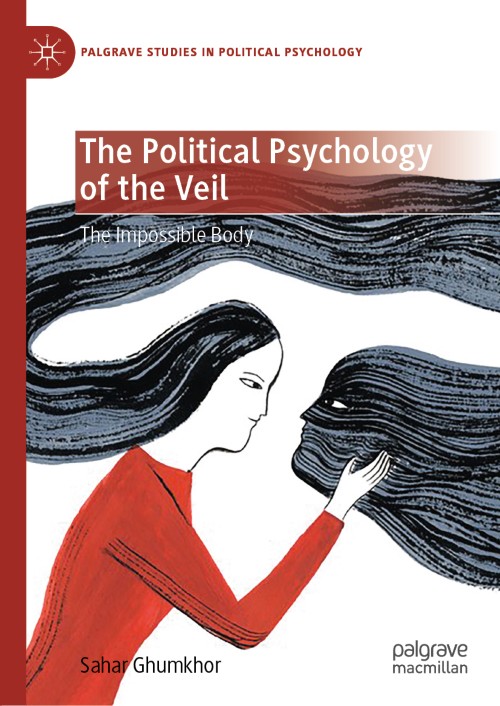
245 14|aThe Political Psychology of the Veil|h[electronic resource] :|bThe Impossible Body /|cby Sahar Ghumkhor.
250 |a1st ed. 2020.
264 1|aCham :|bSpringer International Publishing :|bImprint: Palgrave Macmillan,|c2020.
300 |aXV, 274 p. 5 illus., 4 illus. in color.|bonline resource.
336 |atext|btxt|2rdacontent
337 |acomputer|bc|2rdamedia
338 |aonline resource|bcr|2rdacarrier
347 |atext file|bPDF|2rda
490 1 |aPalgrave Studies in Political Psychology,|x2946-2606
505 0 |a1. Introduction: Bodies without Shadows -- 2 The Unveiling Body -- 3. The 'Pure Defense of the Innocent' and Innocence Lost: Imagining the Veiled Woman in Human Rights -- 4. The Woman Question -- 5. The Postcolonial Veil: Bodies in Contact -- 6. The Confessional Body -- 7. Conclusion.
520 |aVeiled women in the West appear menacing. Their visible invisibility is a cause of obsession. What is beneath the veil more than a woman? This book investigates the preoccupation with the veiled body through the imaging and imagining of Muslim women. It examines the relationship between the body and knowledge through the politics of freedom as grounded in a ‘natural’ body, in the index of flesh. The impulse to unveil is more than a desire to free the Muslim woman. What lies at the heart of the fantasy of saving the Muslim woman is the West’s desire to save itself. The preoccupation with the veiled woman is a defense that preserves neither the object of orientalism nor the difference embodied in women’s bodies, but inversely, insists on the corporeal boundaries of the West’s mode of knowing and truth-making. The book contends that the imagination of unveiling restores the West’s sense of its own power and enables it to intrude where it is ‘other’ – thus making it the centre and the agent by promising universal freedom, all the while stifling the question of what freedom is. Sahar Ghumkhor teaches and researches in the School of Social and Political Sciences at the University of Melbourne, Australia.
650 0|aIdentity politics.
650 0|aPsychoanalysis.
650 0|aPolitical science|xPhilosophy.
650 0|aReligion and politics.
650 0|aLinguistics|xMethodology.
650 0|aPolitical sociology.
650 14|aPolitics and Gender.
650 24|aPsychoanalysis.
650 24|aPolitical Philosophy.
650 24|aPolitics and Religion.
650 24|aResearch Methods in Language and Linguistics.
650 24|aPolitical Sociology.
710 2 |aSpringerLink (Online service)
773 0 |tSpringer Nature eBook
776 08|iPrinted edition:|z9783030320607
776 08|iPrinted edition:|z9783030320621
776 08|iPrinted edition:|z9783030320638
830 0|aPalgrave Studies in Political Psychology,|x2946-2606
856 40|uhttps://doi.org/10.1007/978-3-030-32061-4
912 |aZDB-2-POS
912 |aZDB-2-SXPI
950 |aPolitical Science and International Studies (SpringerNature-41174)
950 |aPolitical Science and International Studies (R0) (SpringerNature-43724)