LEADER 03756nam a22005535i 4500
001 816407
003 TR_AnAIT
005 20260130200516
007 cr nn 008mamaa
008 220524s2022 sz | s |||| 0|eng d
020 |a9783030914639|9978-3-030-91463-9
024 7 |a10.1007/978-3-030-91463-9|2doi
041 |aeng
049 |aTürk Tarih Kurumu Kütüphanesi
050 4|aJZ2-6530
072 7|aJPS|2bicssc
072 7|aPOL011000|2bisacsh
072 7|aJPS|2thema
082 04|a327.101|223
090 |aDK/17622
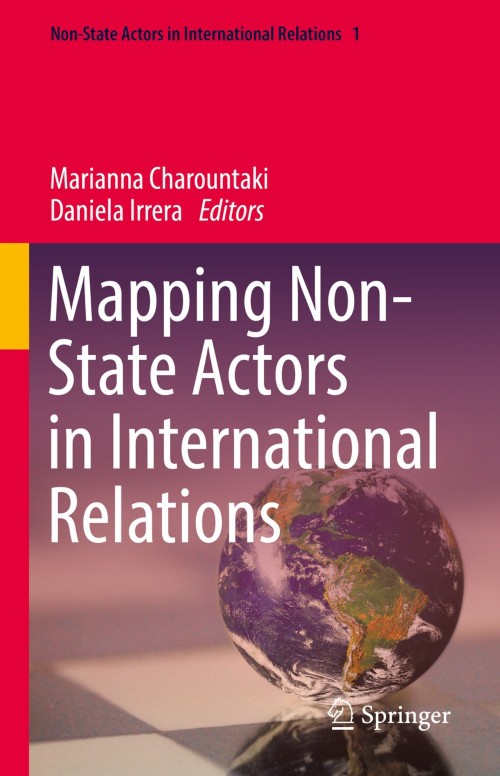
245 10|aMapping Non-State Actors in International Relations|h[electronic resource] /|cedited by Marianna Charountaki, Daniela Irrera.
250 |a1st ed. 2022.
264 1|aCham :|bSpringer International Publishing :|bImprint: Springer,|c2022.
300 |aXX, 124 p.|bonline resource.
336 |atext|btxt|2rdacontent
337 |acomputer|bc|2rdamedia
338 |aonline resource|bcr|2rdacarrier
347 |atext file|bPDF|2rda
490 1 |aNon-State Actors in International Relations,|x2730-9932
505 0 |aChapter 1 - Conceptualising Non-State actors in International Relations -- Chapter 2 The power of institutions in IR: From intergovernmental to non-governmental organizations -- Chapter 3 - Irregular Militaries and Militias in International Relations Theory: The Case of Iraqi Shiite militias -- Chapter 4 - Dilemmas of fundamentalist non-state actors in international relations -- Chapter 5 - The impact of ethnic groups on International Relations -- Chapter 6 - States-to-Be as Foreign Policy Actors -- Chapter 7 - Conclusion. Understanding the role of non-state actors in a mutable global system.
520 |aThis edited volume addresses the role of non-state actors (NSAs) in international relations. From their emergence in the early 20th century, entities of non-state status have played a role of increasing prominence in international politics. Scholarly work has been slow to catch up, approaching NSAs mainly through the scope of legitimacy and international law or limiting focus to NGOs, international organizations, and economic corporations. This volume remedies that, creating a typology of NSAs based on systematic and coherent analysis. Presenting a series of cases of NSAs across the continuum of international relations, the chapters firmly ground NSAs in the ontology of international relations theory. Filling a gap in the current literature, this book will be of interest to students and researchers of international relations theory, international politics, international security, diplomatic history, and European and Middle East politics, as well as policy-makers and practitioners.
650 0|aInternational relations.
650 0|aSecurity, International.
650 0|aTerrorism.
650 0|aPolitical violence.
650 14|aInternational Relations Theory.
650 24|aInternational Security Studies.
650 24|aTerrorism and Political Violence.
650 24|aInternational Relations.
700 1 |aCharountaki, Marianna.|eeditor.|0(orcid)0000-0001-6680-7016|1https://orcid.org/0000-0001-6680-7016|4edt|4http://id.loc.gov/vocabulary/relators/edt
700 1 |aIrrera, Daniela.|eeditor.|4edt|4http://id.loc.gov/vocabulary/relators/edt
710 2 |aSpringerLink (Online service)
773 0 |tSpringer Nature eBook
776 08|iPrinted edition:|z9783030914622
776 08|iPrinted edition:|z9783030914646
776 08|iPrinted edition:|z9783030914653
830 0|aNon-State Actors in International Relations,|x2730-9932
856 40|uhttps://doi.org/10.1007/978-3-030-91463-9
912 |aZDB-2-POS
912 |aZDB-2-SXPI
950 |aPolitical Science and International Studies (SpringerNature-41174)
950 |aPolitical Science and International Studies (R0) (SpringerNature-43724)