LEADER 03600nam a22005055i 4500
001 816454
003 TR_AnAIT
005 20260130200121
007 cr nn 008mamaa
008 190402s2019 sz | s |||| 0|eng d
020 |a9783030041977|9978-3-030-04197-7
024 7 |a10.1007/978-3-030-04197-7|2doi
041 |aeng
049 |aTürk Tarih Kurumu Kütüphanesi
050 4|aJA1-92
072 7|aJPA|2bicssc
072 7|aPOL000000|2bisacsh
072 7|aJPA|2thema
082 04|a320|223
090 |aDK/17669
100 1 |aHollander, Saskia.|eauthor.|4aut|4http://id.loc.gov/vocabulary/relators/aut
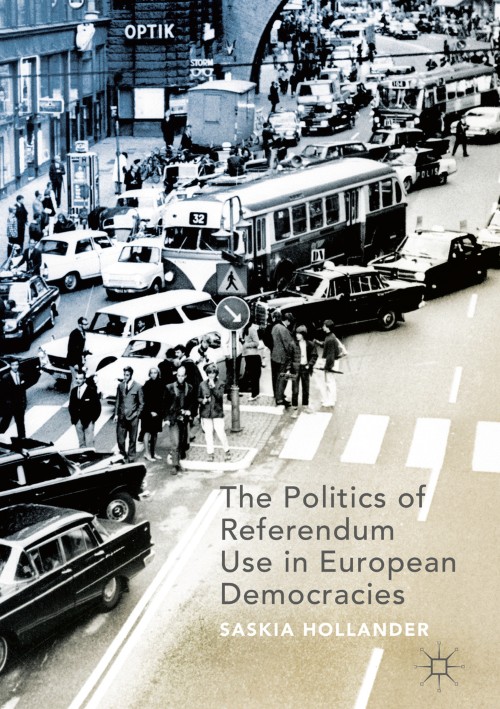
245 14|aThe Politics of Referendum Use in European Democracies|h[electronic resource] /|cby Saskia Hollander.
250 |a1st ed. 2019.
264 1|aCham :|bSpringer International Publishing :|bImprint: Palgrave Macmillan,|c2019.
300 |aXVII, 345 p. 30 illus.|bonline resource.
336 |atext|btxt|2rdacontent
337 |acomputer|bc|2rdamedia
338 |aonline resource|bcr|2rdacarrier
347 |atext file|bPDF|2rda
505 0 |a1 Introduction: The Politics of Referendum Use in Europe -- 2 Referendums and Democratic Theory -- 3 Referendums and Institutional Theory -- 4 Referendum Provisions and Use in 28 Countries -- 5 Referendum Practice in France -- 6 Referendum Practice in Denmark -- 7 Referendum Practice in the United Kingdom -- 8 Referendum Practice in Sweden -- 9 Referendum Practice in the Netherlands -- 10 Conclusions: The Drivers of Referendum Use in Europe.
520 |aThis book demonstrates that the generally assumed dichotomy between referendums and representative democracy does not do justice to the great diversity of referendum types and of how referendums are used in European democracies. Although in all referendums citizens vote directly on issues rather than letting their political representatives do this for them, some referendums are more direct than others. Rather than reflecting the direct power of the People, most referendums in EU countries are held by, and serve the interests of, the political elites, most notably the executive. The book shows that these interests rarely match the justifications given in the public debate. Instead of being driven by the need to compensate for the deficiency of political parties, decision-makers use referendums primarily to protect the position of their party. In unravelling the strategic role played by national referendums in decision-making, this book makes an unconventional contribution to the debateon the impact of referendums on democracy. Saskia Hollander is a political scientist and Director of Knowledge Management at The Broker, a knowledge brokering organisation in the field of inclusive politics and economies, based in The Hague, The Netherlands. Her previous publications include the edited book Creative Crises of Democracy (with J. Gijsenbergh, T. Houwen and W. de Jong, 2012).
650 0|aPolitical science.
650 0|aEurope|xPolitics and government.
650 0|aElections.
650 0|aComparative government.
650 14|aPolitical Science.
650 24|aEuropean Politics.
650 24|aElectoral Politics.
650 24|aComparative Politics.
710 2 |aSpringerLink (Online service)
773 0 |tSpringer Nature eBook
776 08|iPrinted edition:|z9783030041960
776 08|iPrinted edition:|z9783030041984
856 40|uhttps://doi.org/10.1007/978-3-030-04197-7
912 |aZDB-2-POS
912 |aZDB-2-SXPI
950 |aPolitical Science and International Studies (SpringerNature-41174)
950 |aPolitical Science and International Studies (R0) (SpringerNature-43724)