

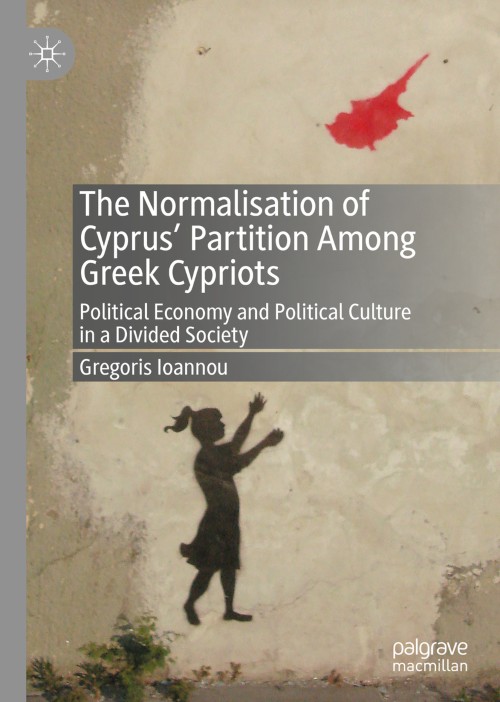
The Normalisation of Cyprus’ Partition Among Greek Cypriots [electronic resource] : Political Economy and Political Culture in a Divided Society / by Gregoris Ioannou.
Erişim Adresi
ISBN
9783030508166
Dil Kodu
İngilizce
Yer Numarası
DK/17708
Yazar
Basım Bildirimi
1st ed. 2020.
Yayın Bilgisi
Cham : Springer International Publishing : Imprint: Palgrave Macmillan, 2020.
Fiziksel Niteleme
X, 220 p. 9 illus. online resource.
İçindekiler Notu
1. Introduction: History, Need and Choices -- 2. From Nationalism to Partition 1950–1975 -- 3. Separation as a Lived Reality, as a Promise and as a Taboo 1975–2003 -- 4. The Opening of the Checkpoints and the Unfulfilled Potential -- 5. Referendum 2004: The End of Innocence -- 6. The Ten-Year Battle Between Federation and Antifederation 2007–2017 -- 7. The Schools and the Universities, the Mass Media and the Deep State of the Republic of Cyprus of Emergent Necessity -- 8. The Shifts in the Greek Cypriot Bourgeoisie and the Equilibria in the Greek Cypriot Community -- 9. Conclusion: History, Responsibility and the Future.
Özet, vb.
‘This book is simultaneously a socio-political analysis of the new generation of the Cyprus problem and an activist / personal account. It constitutes an important contribution, a clear, understandable and comprehensive study that correlates the terms of international relations with the sociology of class and party dynamics.’ –Olga Demetriou, Associate Professor in Post-Conflict Reconstruction and State Building, Durham University, UK ‘From a social movement perspective that is skilfully combined with reflexivity, this book aptly posits the socio-political and class dimensions of this shift, dissolving the worn-out notions about the “romanticism” of the national narrative. Despite the pessimism of the current situation, the author insists that the Cyprus problem remains foremost an issue of social and political struggle.’ –Nicos Trimikliniotis, Professor of Sociology, University of Nicosia, Cyprus ‘With a bold and innovative analysis,Gregoris Ioannou dissects some of the most difficult aspects of the political culture of the Greek Cypriot community, and the Cyprus problem itself, in contemporary times.’ –Theodoros Rakopoulos, Associate Professor in Anthropology, University of Oslo, Norway This book explores the basic dynamics that shaped the Cyprus problem, with a focus on recent decades. The author deals with the periods, nodal points and fields that produced the conditions for the normalisation of partition and also presents the Cyprus problem as viewed from the outside. The chapters approach Cyprus’ division in light of power relations in society, the interaction between the political elite and society, and discuss the political and ideological dynamics as manifested in the public sphere. While analysing primarily the Greek Cypriot community, the book also refers to parallel developments in the Turkish Cypriot and international communities, arguing that the normalisation of Cyprus’ partition is rooted in the political economy and political culture of Greek Cypriots. At the same time, from the perspective of the peace and reunification movement, this is an inherently contradictory and potentially unstable process that can be overturned. Gregoris Ioannou is a research fellow at the University of Glasgow, UK. He previously taught at the University of Cyprus and Frederick University. His research focuses on class conflicts and social movements, contentious politics and the South European crisis, and his work has been published widely, including articles in journals such as Mobilization: An International Quarterly, Capital and Class, and Mediterranean Politics.
Konu
Europe __ Politics and government.
International relations.
Political sociology.
Personality.
Difference (Psychology).
European Politics.
International Relations.
Political Sociology.
Personality and Differential Psychology.
International relations.
Political sociology.
Personality.
Difference (Psychology).
European Politics.
International Relations.
Political Sociology.
Personality and Differential Psychology.
Kurum Adı
Eseri Alıntıla
Referansları kullanmadan önce gözden geçirmeniz ve varsa gerekli düzeltmeleri yapmanız önerilir.
Dijital Kaynak
MARC Görünümü
LEADER 05252nam a22005415i 4500
001 816493
003 TR_AnAIT
005 20260130195844
007 cr nn 008mamaa
008 200831s2020 sz | s |||| 0|eng d
020 |a9783030508166|9978-3-030-50816-6
024 7 |a10.1007/978-3-030-50816-6|2doi
041 |aeng
049 |aTürk Tarih Kurumu Kütüphanesi
050 4|aJN1-9692.2
072 7|aJP|2bicssc
072 7|a1D|2bicssc
072 7|aPOL058000|2bisacsh
072 7|aJP|x1D|2thema
082 04|a320.94|223
090 |aDK/17708
100 1 |aIoannou, Gregoris.|eauthor.|4aut|4http://id.loc.gov/vocabulary/relators/aut
245 14|aThe Normalisation of Cyprus’ Partition Among Greek Cypriots|h[electronic resource] :|bPolitical Economy and Political Culture in a Divided Society /|cby Gregoris Ioannou.
250 |a1st ed. 2020.
264 1|aCham :|bSpringer International Publishing :|bImprint: Palgrave Macmillan,|c2020.
300 |aX, 220 p. 9 illus.|bonline resource.
336 |atext|btxt|2rdacontent
337 |acomputer|bc|2rdamedia
338 |aonline resource|bcr|2rdacarrier
347 |atext file|bPDF|2rda
505 0 |a1. Introduction: History, Need and Choices -- 2. From Nationalism to Partition 1950–1975 -- 3. Separation as a Lived Reality, as a Promise and as a Taboo 1975–2003 -- 4. The Opening of the Checkpoints and the Unfulfilled Potential -- 5. Referendum 2004: The End of Innocence -- 6. The Ten-Year Battle Between Federation and Antifederation 2007–2017 -- 7. The Schools and the Universities, the Mass Media and the Deep State of the Republic of Cyprus of Emergent Necessity -- 8. The Shifts in the Greek Cypriot Bourgeoisie and the Equilibria in the Greek Cypriot Community -- 9. Conclusion: History, Responsibility and the Future.
520 |a‘This book is simultaneously a socio-political analysis of the new generation of the Cyprus problem and an activist / personal account. It constitutes an important contribution, a clear, understandable and comprehensive study that correlates the terms of international relations with the sociology of class and party dynamics.’ –Olga Demetriou, Associate Professor in Post-Conflict Reconstruction and State Building, Durham University, UK ‘From a social movement perspective that is skilfully combined with reflexivity, this book aptly posits the socio-political and class dimensions of this shift, dissolving the worn-out notions about the “romanticism” of the national narrative. Despite the pessimism of the current situation, the author insists that the Cyprus problem remains foremost an issue of social and political struggle.’ –Nicos Trimikliniotis, Professor of Sociology, University of Nicosia, Cyprus ‘With a bold and innovative analysis,Gregoris Ioannou dissects some of the most difficult aspects of the political culture of the Greek Cypriot community, and the Cyprus problem itself, in contemporary times.’ –Theodoros Rakopoulos, Associate Professor in Anthropology, University of Oslo, Norway This book explores the basic dynamics that shaped the Cyprus problem, with a focus on recent decades. The author deals with the periods, nodal points and fields that produced the conditions for the normalisation of partition and also presents the Cyprus problem as viewed from the outside. The chapters approach Cyprus’ division in light of power relations in society, the interaction between the political elite and society, and discuss the political and ideological dynamics as manifested in the public sphere. While analysing primarily the Greek Cypriot community, the book also refers to parallel developments in the Turkish Cypriot and international communities, arguing that the normalisation of Cyprus’ partition is rooted in the political economy and political culture of Greek Cypriots. At the same time, from the perspective of the peace and reunification movement, this is an inherently contradictory and potentially unstable process that can be overturned. Gregoris Ioannou is a research fellow at the University of Glasgow, UK. He previously taught at the University of Cyprus and Frederick University. His research focuses on class conflicts and social movements, contentious politics and the South European crisis, and his work has been published widely, including articles in journals such as Mobilization: An International Quarterly, Capital and Class, and Mediterranean Politics.
650 0|aEurope|xPolitics and government.
650 0|aInternational relations.
650 0|aPolitical sociology.
650 0|aPersonality.
650 0|aDifference (Psychology).
650 14|aEuropean Politics.
650 24|aInternational Relations.
650 24|aPolitical Sociology.
650 24|aPersonality and Differential Psychology.
710 2 |aSpringerLink (Online service)
773 0 |tSpringer Nature eBook
776 08|iPrinted edition:|z9783030508159
776 08|iPrinted edition:|z9783030508173
776 08|iPrinted edition:|z9783030508180
856 40|uhttps://doi.org/10.1007/978-3-030-50816-6
912 |aZDB-2-POS
912 |aZDB-2-SXPI
950 |aPolitical Science and International Studies (SpringerNature-41174)
950 |aPolitical Science and International Studies (R0) (SpringerNature-43724)
001 816493
003 TR_AnAIT
005 20260130195844
007 cr nn 008mamaa
008 200831s2020 sz | s |||| 0|eng d
020 |a9783030508166|9978-3-030-50816-6
024 7 |a10.1007/978-3-030-50816-6|2doi
041 |aeng
049 |aTürk Tarih Kurumu Kütüphanesi
050 4|aJN1-9692.2
072 7|aJP|2bicssc
072 7|a1D|2bicssc
072 7|aPOL058000|2bisacsh
072 7|aJP|x1D|2thema
082 04|a320.94|223
090 |aDK/17708
100 1 |aIoannou, Gregoris.|eauthor.|4aut|4http://id.loc.gov/vocabulary/relators/aut
245 14|aThe Normalisation of Cyprus’ Partition Among Greek Cypriots|h[electronic resource] :|bPolitical Economy and Political Culture in a Divided Society /|cby Gregoris Ioannou.
250 |a1st ed. 2020.
264 1|aCham :|bSpringer International Publishing :|bImprint: Palgrave Macmillan,|c2020.
300 |aX, 220 p. 9 illus.|bonline resource.
336 |atext|btxt|2rdacontent
337 |acomputer|bc|2rdamedia
338 |aonline resource|bcr|2rdacarrier
347 |atext file|bPDF|2rda
505 0 |a1. Introduction: History, Need and Choices -- 2. From Nationalism to Partition 1950–1975 -- 3. Separation as a Lived Reality, as a Promise and as a Taboo 1975–2003 -- 4. The Opening of the Checkpoints and the Unfulfilled Potential -- 5. Referendum 2004: The End of Innocence -- 6. The Ten-Year Battle Between Federation and Antifederation 2007–2017 -- 7. The Schools and the Universities, the Mass Media and the Deep State of the Republic of Cyprus of Emergent Necessity -- 8. The Shifts in the Greek Cypriot Bourgeoisie and the Equilibria in the Greek Cypriot Community -- 9. Conclusion: History, Responsibility and the Future.
520 |a‘This book is simultaneously a socio-political analysis of the new generation of the Cyprus problem and an activist / personal account. It constitutes an important contribution, a clear, understandable and comprehensive study that correlates the terms of international relations with the sociology of class and party dynamics.’ –Olga Demetriou, Associate Professor in Post-Conflict Reconstruction and State Building, Durham University, UK ‘From a social movement perspective that is skilfully combined with reflexivity, this book aptly posits the socio-political and class dimensions of this shift, dissolving the worn-out notions about the “romanticism” of the national narrative. Despite the pessimism of the current situation, the author insists that the Cyprus problem remains foremost an issue of social and political struggle.’ –Nicos Trimikliniotis, Professor of Sociology, University of Nicosia, Cyprus ‘With a bold and innovative analysis,Gregoris Ioannou dissects some of the most difficult aspects of the political culture of the Greek Cypriot community, and the Cyprus problem itself, in contemporary times.’ –Theodoros Rakopoulos, Associate Professor in Anthropology, University of Oslo, Norway This book explores the basic dynamics that shaped the Cyprus problem, with a focus on recent decades. The author deals with the periods, nodal points and fields that produced the conditions for the normalisation of partition and also presents the Cyprus problem as viewed from the outside. The chapters approach Cyprus’ division in light of power relations in society, the interaction between the political elite and society, and discuss the political and ideological dynamics as manifested in the public sphere. While analysing primarily the Greek Cypriot community, the book also refers to parallel developments in the Turkish Cypriot and international communities, arguing that the normalisation of Cyprus’ partition is rooted in the political economy and political culture of Greek Cypriots. At the same time, from the perspective of the peace and reunification movement, this is an inherently contradictory and potentially unstable process that can be overturned. Gregoris Ioannou is a research fellow at the University of Glasgow, UK. He previously taught at the University of Cyprus and Frederick University. His research focuses on class conflicts and social movements, contentious politics and the South European crisis, and his work has been published widely, including articles in journals such as Mobilization: An International Quarterly, Capital and Class, and Mediterranean Politics.
650 0|aEurope|xPolitics and government.
650 0|aInternational relations.
650 0|aPolitical sociology.
650 0|aPersonality.
650 0|aDifference (Psychology).
650 14|aEuropean Politics.
650 24|aInternational Relations.
650 24|aPolitical Sociology.
650 24|aPersonality and Differential Psychology.
710 2 |aSpringerLink (Online service)
773 0 |tSpringer Nature eBook
776 08|iPrinted edition:|z9783030508159
776 08|iPrinted edition:|z9783030508173
776 08|iPrinted edition:|z9783030508180
856 40|uhttps://doi.org/10.1007/978-3-030-50816-6
912 |aZDB-2-POS
912 |aZDB-2-SXPI
950 |aPolitical Science and International Studies (SpringerNature-41174)
950 |aPolitical Science and International Studies (R0) (SpringerNature-43724)
Materyaller
Depodan talep edilen materyal sadece kütüphane içerisinde kullanılmaktadır.
Materyal dışarıya ödünç verilmemektedir.
Materyal dışarıya ödünç verilmemektedir.
