

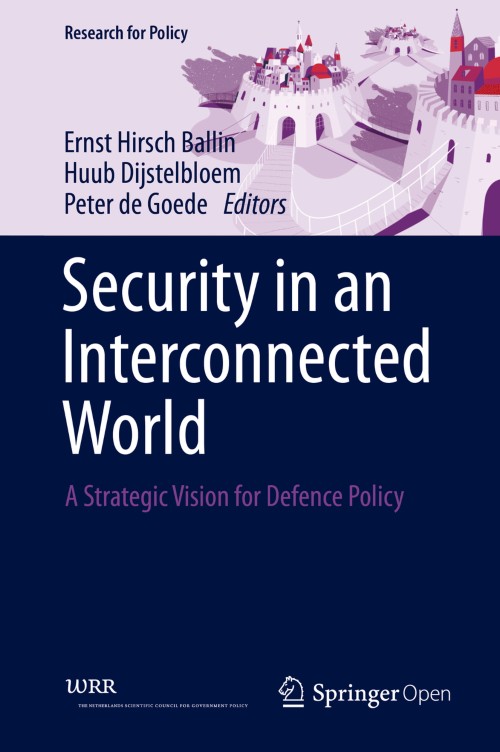
Security in an Interconnected World [electronic resource] : A Strategic Vision for Defence Policy / edited by Ernst Hirsch Ballin, Huub Dijstelbloem, Peter de Goede.
Erişim Adresi
ISBN
9783030376062
Dil Kodu
İngilizce
Yer Numarası
DK/17806
Basım Bildirimi
1st ed. 2020.
Yayın Bilgisi
Cham : Springer International Publishing : Imprint: Springer, 2020.
Fiziksel Niteleme
X, 183 p. 27 illus., 22 illus. in color. online resource.
Dizi
Research for Policy, Studies by the Netherlands Scientific Council for Government Policy, 2662-3692
Özet, vb.
This open access book follows the idea that security policy must be based on strategic analysis. Defence policy and the role of the armed forces can subsequently be determined on the grounds of said analysis. More than ever, internal and external security, and developments both in the Netherlands and abroad are interconnected. The world order is shifting, the cooperation within NATO and the EU is under pressure and the Dutch armed forces are gasping for breath. What is the task of Dutch security and the defence policy? There have been growing calls in the last few years to end the devastating cuts in the defence budget and to invest more in security. The acute threats and conflicts in which the Netherlands are involved have served as a wake-up call. The shooting down of Flight MH17 over Ukraine, the streams of refugees from Syria and other countries, the conflict with Da’esh in Syria and Iraq, and terrorist threats reveal how events in many of the world’s flash-points havea direct or indirect impact on the Netherlands. Conflicts in other countries have a spill-over effect in The Netherlands. This is illustrated by tensions between population groups and the clashes over the Gülen schools after the failed putsch in Turkey on 15 July 2016 and over the constitutional referendum in that country. How do we ensure that any additional funds are not divided amongst the branches of the armed forces without any sense of strategic direction? What should a future-proof security policy that plots the course of defence policy entail? What strategic analyses should lie behind the political choices that are made? This book answers these questions and offers a comprehensive framework addressing among other things human security, national security and flow security.
Konu
International relations.
Human rights.
Security systems.
Europe __ Economic integration.
International Relations.
Human Rights.
Security Science and Technology.
European Economic Integration.
Human rights.
Security systems.
Europe __ Economic integration.
International Relations.
Human Rights.
Security Science and Technology.
European Economic Integration.
Diğer Yazarlar
Kurum Adı
Eseri Alıntıla
Referansları kullanmadan önce gözden geçirmeniz ve varsa gerekli düzeltmeleri yapmanız önerilir.
Dijital Kaynak
MARC Görünümü
LEADER 05384nam a22006975i 4500
001 816592
003 TR_AnAIT
005 20260130195228
007 cr nn 008mamaa
008 200407s2020 sz | s |||| 0|eng d
020 |a9783030376062|9978-3-030-37606-2
024 7 |a10.1007/978-3-030-37606-2|2doi
041 |aeng
049 |aTürk Tarih Kurumu Kütüphanesi
050 4|aJZ2-6530
072 7|aJPS|2bicssc
072 7|aPOL011000|2bisacsh
072 7|aJPS|2thema
082 04|a327|223
090 |aDK/17806
245 10|aSecurity in an Interconnected World|h[electronic resource] :|bA Strategic Vision for Defence Policy /|cedited by Ernst Hirsch Ballin, Huub Dijstelbloem, Peter de Goede.
250 |a1st ed. 2020.
264 1|aCham :|bSpringer International Publishing :|bImprint: Springer,|c2020.
300 |aX, 183 p. 27 illus., 22 illus. in color.|bonline resource.
336 |atext|btxt|2rdacontent
337 |acomputer|bc|2rdamedia
338 |aonline resource|bcr|2rdacarrier
341 0 |bTable of contents navigation|2onix
341 0 |bSingle logical reading order|2onix
341 0 |bShort alternative textual descriptions|2onix
341 0 |bUse of color is not sole means of conveying information|2onix
341 0 |bUse of high contrast between text and background color|2onix
341 0 |bNext / Previous structural navigation|2onix
341 0 |bAll non-decorative content supports reading without sight|2onix
347 |atext file|bPDF|2rda
490 1 |aResearch for Policy, Studies by the Netherlands Scientific Council for Government Policy,|x2662-3692
506 0 |aOpen Access
520 |aThis open access book follows the idea that security policy must be based on strategic analysis. Defence policy and the role of the armed forces can subsequently be determined on the grounds of said analysis. More than ever, internal and external security, and developments both in the Netherlands and abroad are interconnected. The world order is shifting, the cooperation within NATO and the EU is under pressure and the Dutch armed forces are gasping for breath. What is the task of Dutch security and the defence policy? There have been growing calls in the last few years to end the devastating cuts in the defence budget and to invest more in security. The acute threats and conflicts in which the Netherlands are involved have served as a wake-up call. The shooting down of Flight MH17 over Ukraine, the streams of refugees from Syria and other countries, the conflict with Da’esh in Syria and Iraq, and terrorist threats reveal how events in many of the world’s flash-points havea direct or indirect impact on the Netherlands. Conflicts in other countries have a spill-over effect in The Netherlands. This is illustrated by tensions between population groups and the clashes over the Gülen schools after the failed putsch in Turkey on 15 July 2016 and over the constitutional referendum in that country. How do we ensure that any additional funds are not divided amongst the branches of the armed forces without any sense of strategic direction? What should a future-proof security policy that plots the course of defence policy entail? What strategic analyses should lie behind the political choices that are made? This book answers these questions and offers a comprehensive framework addressing among other things human security, national security and flow security.
532 8 |aAccessibility summary: This PDF does not fully comply with PDF/UA standards, but does feature limited screen reader support, described non-text content (images, graphs), bookmarks for easy navigation and searchable, selectable text. Users of assistive technologies may experience difficulty navigating or interpreting content in this document. We recognize the importance of accessibility, and we welcome queries about accessibility for any of our products. If you have a question or an access need, please get in touch with us at accessibilitysupport@springernature.com.
532 8 |aNo reading system accessibility options actively disabled
532 8 |aPublisher contact for further accessibility information: accessibilitysupport@springernature.com
650 0|aInternational relations.
650 0|aHuman rights.
650 0|aSecurity systems.
650 0|aEurope|xEconomic integration.
650 14|aInternational Relations.
650 24|aHuman Rights.
650 24|aSecurity Science and Technology.
650 24|aEuropean Economic Integration.
700 1 |aHirsch Ballin, Ernst.|eeditor.|4edt|4http://id.loc.gov/vocabulary/relators/edt
700 1 |aDijstelbloem, Huub.|eeditor.|4edt|4http://id.loc.gov/vocabulary/relators/edt
700 1 |ade Goede, Peter.|eeditor.|4edt|4http://id.loc.gov/vocabulary/relators/edt
710 2 |aSpringerLink (Online service)
773 0 |tSpringer Nature eBook
776 08|iPrinted edition:|z9783030376055
776 08|iPrinted edition:|z9783030376079
776 08|iPrinted edition:|z9783030376086
830 0|aResearch for Policy, Studies by the Netherlands Scientific Council for Government Policy,|x2662-3692
856 40|uhttps://doi.org/10.1007/978-3-030-37606-2
912 |aZDB-2-POS
912 |aZDB-2-SXPI
912 |aZDB-2-SOB
950 |aPolitical Science and International Studies (SpringerNature-41174)
950 |aPolitical Science and International Studies (R0) (SpringerNature-43724)
001 816592
003 TR_AnAIT
005 20260130195228
007 cr nn 008mamaa
008 200407s2020 sz | s |||| 0|eng d
020 |a9783030376062|9978-3-030-37606-2
024 7 |a10.1007/978-3-030-37606-2|2doi
041 |aeng
049 |aTürk Tarih Kurumu Kütüphanesi
050 4|aJZ2-6530
072 7|aJPS|2bicssc
072 7|aPOL011000|2bisacsh
072 7|aJPS|2thema
082 04|a327|223
090 |aDK/17806
245 10|aSecurity in an Interconnected World|h[electronic resource] :|bA Strategic Vision for Defence Policy /|cedited by Ernst Hirsch Ballin, Huub Dijstelbloem, Peter de Goede.
250 |a1st ed. 2020.
264 1|aCham :|bSpringer International Publishing :|bImprint: Springer,|c2020.
300 |aX, 183 p. 27 illus., 22 illus. in color.|bonline resource.
336 |atext|btxt|2rdacontent
337 |acomputer|bc|2rdamedia
338 |aonline resource|bcr|2rdacarrier
341 0 |bTable of contents navigation|2onix
341 0 |bSingle logical reading order|2onix
341 0 |bShort alternative textual descriptions|2onix
341 0 |bUse of color is not sole means of conveying information|2onix
341 0 |bUse of high contrast between text and background color|2onix
341 0 |bNext / Previous structural navigation|2onix
341 0 |bAll non-decorative content supports reading without sight|2onix
347 |atext file|bPDF|2rda
490 1 |aResearch for Policy, Studies by the Netherlands Scientific Council for Government Policy,|x2662-3692
506 0 |aOpen Access
520 |aThis open access book follows the idea that security policy must be based on strategic analysis. Defence policy and the role of the armed forces can subsequently be determined on the grounds of said analysis. More than ever, internal and external security, and developments both in the Netherlands and abroad are interconnected. The world order is shifting, the cooperation within NATO and the EU is under pressure and the Dutch armed forces are gasping for breath. What is the task of Dutch security and the defence policy? There have been growing calls in the last few years to end the devastating cuts in the defence budget and to invest more in security. The acute threats and conflicts in which the Netherlands are involved have served as a wake-up call. The shooting down of Flight MH17 over Ukraine, the streams of refugees from Syria and other countries, the conflict with Da’esh in Syria and Iraq, and terrorist threats reveal how events in many of the world’s flash-points havea direct or indirect impact on the Netherlands. Conflicts in other countries have a spill-over effect in The Netherlands. This is illustrated by tensions between population groups and the clashes over the Gülen schools after the failed putsch in Turkey on 15 July 2016 and over the constitutional referendum in that country. How do we ensure that any additional funds are not divided amongst the branches of the armed forces without any sense of strategic direction? What should a future-proof security policy that plots the course of defence policy entail? What strategic analyses should lie behind the political choices that are made? This book answers these questions and offers a comprehensive framework addressing among other things human security, national security and flow security.
532 8 |aAccessibility summary: This PDF does not fully comply with PDF/UA standards, but does feature limited screen reader support, described non-text content (images, graphs), bookmarks for easy navigation and searchable, selectable text. Users of assistive technologies may experience difficulty navigating or interpreting content in this document. We recognize the importance of accessibility, and we welcome queries about accessibility for any of our products. If you have a question or an access need, please get in touch with us at accessibilitysupport@springernature.com.
532 8 |aNo reading system accessibility options actively disabled
532 8 |aPublisher contact for further accessibility information: accessibilitysupport@springernature.com
650 0|aInternational relations.
650 0|aHuman rights.
650 0|aSecurity systems.
650 0|aEurope|xEconomic integration.
650 14|aInternational Relations.
650 24|aHuman Rights.
650 24|aSecurity Science and Technology.
650 24|aEuropean Economic Integration.
700 1 |aHirsch Ballin, Ernst.|eeditor.|4edt|4http://id.loc.gov/vocabulary/relators/edt
700 1 |aDijstelbloem, Huub.|eeditor.|4edt|4http://id.loc.gov/vocabulary/relators/edt
700 1 |ade Goede, Peter.|eeditor.|4edt|4http://id.loc.gov/vocabulary/relators/edt
710 2 |aSpringerLink (Online service)
773 0 |tSpringer Nature eBook
776 08|iPrinted edition:|z9783030376055
776 08|iPrinted edition:|z9783030376079
776 08|iPrinted edition:|z9783030376086
830 0|aResearch for Policy, Studies by the Netherlands Scientific Council for Government Policy,|x2662-3692
856 40|uhttps://doi.org/10.1007/978-3-030-37606-2
912 |aZDB-2-POS
912 |aZDB-2-SXPI
912 |aZDB-2-SOB
950 |aPolitical Science and International Studies (SpringerNature-41174)
950 |aPolitical Science and International Studies (R0) (SpringerNature-43724)
Materyaller
Depodan talep edilen materyal sadece kütüphane içerisinde kullanılmaktadır.
Materyal dışarıya ödünç verilmemektedir.
Materyal dışarıya ödünç verilmemektedir.
