LEADER 03596nam a22005895i 4500
001 816645
003 TR_AnAIT
005 20260130194728
007 cr nn 008mamaa
008 180825s2019 sz | s |||| 0|eng d
020 |a9783319786643|9978-3-319-78664-3
024 7 |a10.1007/978-3-319-78664-3|2doi
041 |aeng
049 |aTürk Tarih Kurumu Kütüphanesi
050 4|aBL65.P7
072 7|aHRAM2|2bicssc
072 7|aREL084000|2bisacsh
072 7|aQRAM2|2thema
082 04|a322.1|223
090 |aDK/17858
100 1 |aBruce, Benjamin.|eauthor.|4aut|4http://id.loc.gov/vocabulary/relators/aut
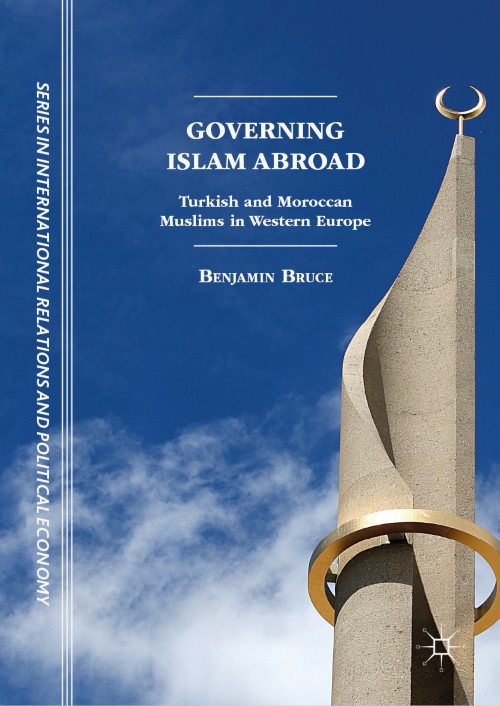
245 10|aGoverning Islam Abroad|h[electronic resource] :|bTurkish and Moroccan Muslims in Western Europe /|cby Benjamin Bruce.
250 |a1st ed. 2019.
264 1|aCham :|bSpringer International Publishing :|bImprint: Palgrave Macmillan,|c2019.
300 |aXVII, 303 p. 8 illus., 7 illus. in color.|bonline resource.
336 |atext|btxt|2rdacontent
337 |acomputer|bc|2rdamedia
338 |aonline resource|bcr|2rdacarrier
347 |atext file|bPDF|2rda
490 1 |aThe Sciences Po Series in International Relations and Political Economy,|x2945-6088
505 0 |a1. Introduction -- 2. The Many Faces of Official Islam in Turkey -- 3. The Makhzen and the Religious Field -- 4. The Development of State Religious Services Abroad -- 5. Creating a National Islam? Partial Governance and Public Policy Instruments -- 6. Exporting Imams -- 7. National Interests in Transnational Muslim Fields -- 8. Conclusion.
520 |aFrom sending imams abroad to financing mosques and Islamic associations, home states play a key role in governing Islam in Western Europe. Drawing on over one hundred interviews and years of fieldwork, this book employs a comparative perspective that analyzes the foreign religious activities of the two home states with the largest diaspora populations in Europe: Turkey and Morocco. The research shows how these states use religion to promote ties with their citizens and their descendants abroad while also seeking to maintain control over the forms of Islam that develop within the diaspora. The author identifies and explains the internal and foreign political interests that have motivated state actors on both sides of the Mediterranean, ultimately arguing that interstate cooperation in religious affairs has and will continue to have a structural influence on the evolution of Islam in Western Europe. Benjamin Bruce is Research Fellow with the Mexican National Council of Science and Technology (Conacyt) at El Colegio de la Frontera Norte (El Colef), Mexico.
650 0|aReligion and politics.
650 0|aEurope|xPolitics and government.
650 0|aIslam.
650 0|aInternational relations.
650 0|aEmigration and immigration.
650 0|aPolitical science.
650 14|aPolitics and Religion.
650 24|aEuropean Politics.
650 24|aIslam.
650 24|aForeign Policy.
650 24|aDiaspora Studies.
650 24|aPolitical Science.
710 2 |aSpringerLink (Online service)
773 0 |tSpringer Nature eBook
776 08|iPrinted edition:|z9783319786636
776 08|iPrinted edition:|z9783319786650
776 08|iPrinted edition:|z9783030087586
830 0|aThe Sciences Po Series in International Relations and Political Economy,|x2945-6088
856 40|uhttps://doi.org/10.1007/978-3-319-78664-3
912 |aZDB-2-POS
912 |aZDB-2-SXPI
950 |aPolitical Science and International Studies (SpringerNature-41174)
950 |aPolitical Science and International Studies (R0) (SpringerNature-43724)