

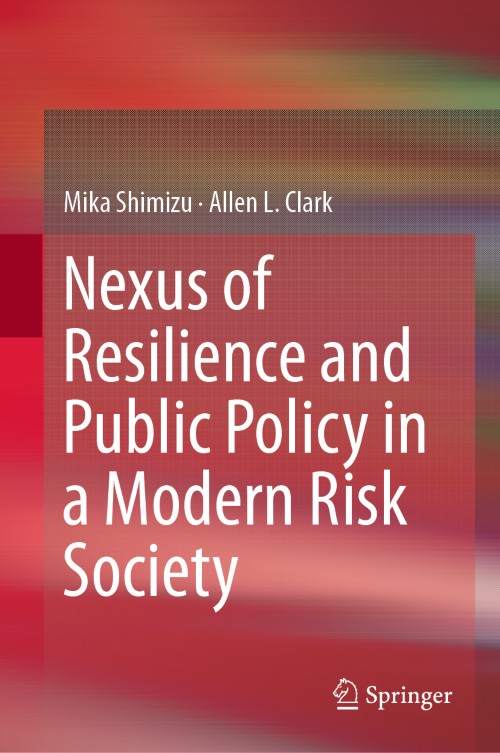
Nexus of Resilience and Public Policy in a Modern Risk Society [electronic resource] / by Mika Shimizu, Allen L. Clark.
Erişim Adresi
ISBN
9789811073625
Dil Kodu
İngilizce
Yer Numarası
DK/17867
Yazar
Basım Bildirimi
1st ed. 2019.
Yayın Bilgisi
Singapore : Springer Nature Singapore : Imprint: Springer, 2019.
Fiziksel Niteleme
XIII, 145 p. 32 illus., 13 illus. in color. online resource.
İçindekiler Notu
1. Introduction -- 2. Nexus of Resilience and Public Policy: Systems Views -- 3. Modern Risk Society: Social Needs for Resilience through Co-Knowledge Production -- 4. Nexus of Resilience and Public Policy: Case of Tohoku Disaster -- 5. Nexus of Resilience and Public Policy: Case of Sandy Hurricane -- 6. Nexus of Resilience and Public Policy: Assessment of Regional Practices in Asia -- 7. Global Co-knowledge Production Based Resilience Practices -- 8. Resilience Assessment Framework -- 9. Policy Implication and Conclusion: Facing Deep Uncertainties. .
Özet, vb.
This is the first book to articulate resilience-based public policy for a constantly changing, complex, and uncertain risk society. Its primary focus is on operationalizing resilience, i.e., on incorporating elements of resilience in public policy in the context of our modern risk society.While there is a wealth of literature on resilience and disaster risk management, there are few publications that focus on the nexus of resilience and public policy, resulting in gaps between various fields and public policy for resilient societies and disaster risk management. In response, this book integrates the latest theoretical insights on public policy and resilience and the latest practical analyses of case studies such as the Tohoku Disaster (Great East Japan Earthquake) in 2011 and Hurricane Sandy on the North American East Coast in 2012 to provide policy tools for future resilient societies and disaster risk management. The recent disaster cases illustrate that our changing, complex and uncertain risk environment requires far more resilience-based public policy through co-production of knowledge than is normally required for conventional disasters. By linking various fields and public policy, the book articulates a resilience-based public policy, i.e., the incorporation of resilience into various entities by designing and implementing “linkages.” These include national-to-local linkages, linkages between different entities such as scientific communities and decision makers, and linkages between financial, human, and information resources. Thus, the nexus of resilience and public policy presented in this book aims at better public policy to face a changing and complex risk society, together with fundamental uncertainties at regional, national, and local levels around the world. .
Konu
Political planning.
Regional economics.
Spatial economics.
Financial risk management.
Social policy.
Operations research.
Security systems.
Public Policy.
Regional and Spatial Economics.
Risk Management.
Social Policy.
Operations Research and Decision Theory.
Security Science and Technology.
Regional economics.
Spatial economics.
Financial risk management.
Social policy.
Operations research.
Security systems.
Public Policy.
Regional and Spatial Economics.
Risk Management.
Social Policy.
Operations Research and Decision Theory.
Security Science and Technology.
Diğer Yazarlar
Kurum Adı
Eseri Alıntıla
Referansları kullanmadan önce gözden geçirmeniz ve varsa gerekli düzeltmeleri yapmanız önerilir.
Dijital Kaynak
MARC Görünümü
LEADER 04454nam a22005775i 4500
001 816654
003 TR_AnAIT
005 20260130194646
007 cr nn 008mamaa
008 190201s2019 si | s |||| 0|eng d
020 |a9789811073625|9978-981-10-7362-5
024 7 |a10.1007/978-981-10-7362-5|2doi
041 |aeng
049 |aTürk Tarih Kurumu Kütüphanesi
050 4|aJF1525.P6
072 7|aJPP|2bicssc
072 7|aPOL028000|2bisacsh
072 7|aJPP|2thema
082 04|a320.6|223
090 |aDK/17867
100 1 |aShimizu, Mika.|eauthor.|4aut|4http://id.loc.gov/vocabulary/relators/aut
245 10|aNexus of Resilience and Public Policy in a Modern Risk Society|h[electronic resource] /|cby Mika Shimizu, Allen L. Clark.
250 |a1st ed. 2019.
264 1|aSingapore :|bSpringer Nature Singapore :|bImprint: Springer,|c2019.
300 |aXIII, 145 p. 32 illus., 13 illus. in color.|bonline resource.
336 |atext|btxt|2rdacontent
337 |acomputer|bc|2rdamedia
338 |aonline resource|bcr|2rdacarrier
347 |atext file|bPDF|2rda
505 0 |a1. Introduction -- 2. Nexus of Resilience and Public Policy: Systems Views -- 3. Modern Risk Society: Social Needs for Resilience through Co-Knowledge Production -- 4. Nexus of Resilience and Public Policy: Case of Tohoku Disaster -- 5. Nexus of Resilience and Public Policy: Case of Sandy Hurricane -- 6. Nexus of Resilience and Public Policy: Assessment of Regional Practices in Asia -- 7. Global Co-knowledge Production Based Resilience Practices -- 8. Resilience Assessment Framework -- 9. Policy Implication and Conclusion: Facing Deep Uncertainties. .
520 |aThis is the first book to articulate resilience-based public policy for a constantly changing, complex, and uncertain risk society. Its primary focus is on operationalizing resilience, i.e., on incorporating elements of resilience in public policy in the context of our modern risk society.While there is a wealth of literature on resilience and disaster risk management, there are few publications that focus on the nexus of resilience and public policy, resulting in gaps between various fields and public policy for resilient societies and disaster risk management. In response, this book integrates the latest theoretical insights on public policy and resilience and the latest practical analyses of case studies such as the Tohoku Disaster (Great East Japan Earthquake) in 2011 and Hurricane Sandy on the North American East Coast in 2012 to provide policy tools for future resilient societies and disaster risk management. The recent disaster cases illustrate that our changing, complex and uncertain risk environment requires far more resilience-based public policy through co-production of knowledge than is normally required for conventional disasters. By linking various fields and public policy, the book articulates a resilience-based public policy, i.e., the incorporation of resilience into various entities by designing and implementing “linkages.” These include national-to-local linkages, linkages between different entities such as scientific communities and decision makers, and linkages between financial, human, and information resources. Thus, the nexus of resilience and public policy presented in this book aims at better public policy to face a changing and complex risk society, together with fundamental uncertainties at regional, national, and local levels around the world. .
650 0|aPolitical planning.
650 0|aRegional economics.
650 0|aSpatial economics.
650 0|aFinancial risk management.
650 0|aSocial policy.
650 0|aOperations research.
650 0|aSecurity systems.
650 14|aPublic Policy.
650 24|aRegional and Spatial Economics.
650 24|aRisk Management.
650 24|aSocial Policy.
650 24|aOperations Research and Decision Theory.
650 24|aSecurity Science and Technology.
700 1 |aL. Clark, Allen.|eauthor.|4aut|4http://id.loc.gov/vocabulary/relators/aut
710 2 |aSpringerLink (Online service)
773 0 |tSpringer Nature eBook
776 08|iPrinted edition:|z9789811073618
776 08|iPrinted edition:|z9789811073632
856 40|uhttps://doi.org/10.1007/978-981-10-7362-5
912 |aZDB-2-POS
912 |aZDB-2-SXPI
950 |aPolitical Science and International Studies (SpringerNature-41174)
950 |aPolitical Science and International Studies (R0) (SpringerNature-43724)
001 816654
003 TR_AnAIT
005 20260130194646
007 cr nn 008mamaa
008 190201s2019 si | s |||| 0|eng d
020 |a9789811073625|9978-981-10-7362-5
024 7 |a10.1007/978-981-10-7362-5|2doi
041 |aeng
049 |aTürk Tarih Kurumu Kütüphanesi
050 4|aJF1525.P6
072 7|aJPP|2bicssc
072 7|aPOL028000|2bisacsh
072 7|aJPP|2thema
082 04|a320.6|223
090 |aDK/17867
100 1 |aShimizu, Mika.|eauthor.|4aut|4http://id.loc.gov/vocabulary/relators/aut
245 10|aNexus of Resilience and Public Policy in a Modern Risk Society|h[electronic resource] /|cby Mika Shimizu, Allen L. Clark.
250 |a1st ed. 2019.
264 1|aSingapore :|bSpringer Nature Singapore :|bImprint: Springer,|c2019.
300 |aXIII, 145 p. 32 illus., 13 illus. in color.|bonline resource.
336 |atext|btxt|2rdacontent
337 |acomputer|bc|2rdamedia
338 |aonline resource|bcr|2rdacarrier
347 |atext file|bPDF|2rda
505 0 |a1. Introduction -- 2. Nexus of Resilience and Public Policy: Systems Views -- 3. Modern Risk Society: Social Needs for Resilience through Co-Knowledge Production -- 4. Nexus of Resilience and Public Policy: Case of Tohoku Disaster -- 5. Nexus of Resilience and Public Policy: Case of Sandy Hurricane -- 6. Nexus of Resilience and Public Policy: Assessment of Regional Practices in Asia -- 7. Global Co-knowledge Production Based Resilience Practices -- 8. Resilience Assessment Framework -- 9. Policy Implication and Conclusion: Facing Deep Uncertainties. .
520 |aThis is the first book to articulate resilience-based public policy for a constantly changing, complex, and uncertain risk society. Its primary focus is on operationalizing resilience, i.e., on incorporating elements of resilience in public policy in the context of our modern risk society.While there is a wealth of literature on resilience and disaster risk management, there are few publications that focus on the nexus of resilience and public policy, resulting in gaps between various fields and public policy for resilient societies and disaster risk management. In response, this book integrates the latest theoretical insights on public policy and resilience and the latest practical analyses of case studies such as the Tohoku Disaster (Great East Japan Earthquake) in 2011 and Hurricane Sandy on the North American East Coast in 2012 to provide policy tools for future resilient societies and disaster risk management. The recent disaster cases illustrate that our changing, complex and uncertain risk environment requires far more resilience-based public policy through co-production of knowledge than is normally required for conventional disasters. By linking various fields and public policy, the book articulates a resilience-based public policy, i.e., the incorporation of resilience into various entities by designing and implementing “linkages.” These include national-to-local linkages, linkages between different entities such as scientific communities and decision makers, and linkages between financial, human, and information resources. Thus, the nexus of resilience and public policy presented in this book aims at better public policy to face a changing and complex risk society, together with fundamental uncertainties at regional, national, and local levels around the world. .
650 0|aPolitical planning.
650 0|aRegional economics.
650 0|aSpatial economics.
650 0|aFinancial risk management.
650 0|aSocial policy.
650 0|aOperations research.
650 0|aSecurity systems.
650 14|aPublic Policy.
650 24|aRegional and Spatial Economics.
650 24|aRisk Management.
650 24|aSocial Policy.
650 24|aOperations Research and Decision Theory.
650 24|aSecurity Science and Technology.
700 1 |aL. Clark, Allen.|eauthor.|4aut|4http://id.loc.gov/vocabulary/relators/aut
710 2 |aSpringerLink (Online service)
773 0 |tSpringer Nature eBook
776 08|iPrinted edition:|z9789811073618
776 08|iPrinted edition:|z9789811073632
856 40|uhttps://doi.org/10.1007/978-981-10-7362-5
912 |aZDB-2-POS
912 |aZDB-2-SXPI
950 |aPolitical Science and International Studies (SpringerNature-41174)
950 |aPolitical Science and International Studies (R0) (SpringerNature-43724)
Materyaller
Depodan talep edilen materyal sadece kütüphane içerisinde kullanılmaktadır.
Materyal dışarıya ödünç verilmemektedir.
Materyal dışarıya ödünç verilmemektedir.
