LEADER 03796nam a22005775i 4500
001 816659
003 TR_AnAIT
005 20260130194638
007 cr nn 008mamaa
008 190408s2019 xxu| s |||| 0|eng d
020 |a9781137548320|9978-1-137-54832-0
024 7 |a10.1057/978-1-137-54832-0|2doi
041 |aeng
049 |aTürk Tarih Kurumu Kütüphanesi
050 4|aBL65.P7
072 7|aHRAM2|2bicssc
072 7|aREL084000|2bisacsh
072 7|aQRAM2|2thema
082 04|a322.1|223
090 |aDK/17872
100 1 |aKhan, M. A. Muqtedar.|eauthor.|4aut|4http://id.loc.gov/vocabulary/relators/aut
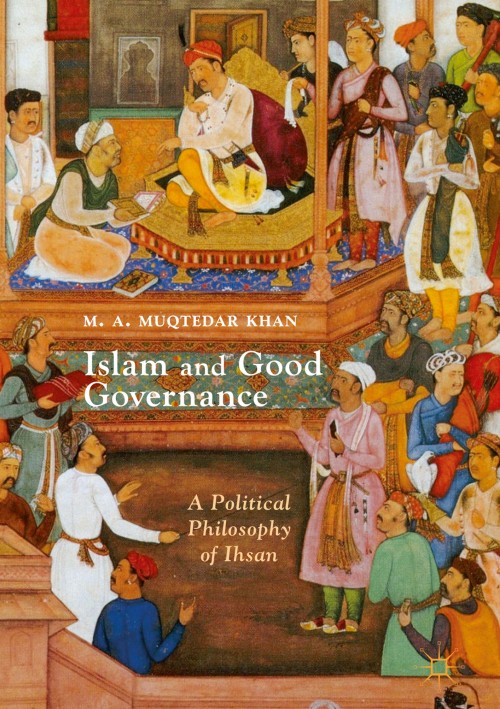
245 10|aIslam and Good Governance|h[electronic resource] :|bA Political Philosophy of Ihsan /|cby M. A. Muqtedar Khan.
250 |a1st ed. 2019.
264 1|aNew York :|bPalgrave Macmillan US :|bImprint: Palgrave Macmillan,|c2019.
300 |aXXI, 278 p. 82 illus.|bonline resource.
336 |atext|btxt|2rdacontent
337 |acomputer|bc|2rdamedia
338 |aonline resource|bcr|2rdacarrier
347 |atext file|bPDF|2rda
505 0 |a1. Chapter 1 Introduction: The Quest for a Political Philosophy of Ihsan -- 2. Chapter 2 Loss of Ihsan -- 3. Chapter 3 Islam as Identity: After a Century of Islamic Revivalism -- 4. Chapter 4 Ihsan: Classical and Contemporary Understanding -- 5. Chapter 5 Unveiling Ihsan: From Cosmic View to Worldview -- 6. Chapter 6 Islamic Political Philosophy: A Critical Genealogy -- 7. Chapter 7 Ihsan and Good Governance -- 8. Chapter 8 Closing Thoughts .
520 |aThis book advances an Islamic political philosophy based on the concept of Ihsan, which means to do beautiful things. The author moves beyond the dominant model of Islamic governance advanced by modern day Islamists. The political philosophy of Ihsan privileges process over structure, deeds over identity, love over law and mercy and forgiveness over retribution. The work invites Muslims to move away from thinking about the form of Islamic government and to strive to create a self-critical society that defends national virtue and generates institutions and practices that provide good governance. M. A. Muqtedar Khan is Professor at the University of Delaware, USA. He is a scholar of Islamic Thought, Governance and International Relations.
532 8 |aAccessibility summary: This PDF was produced prior to the implementation of current accessibility best practices. It supports searchable and selectable text. It may or may not include elements such as described non-text content (images, graphs etc), reflowable text or screen reader compatibility. Users with accessibility needs may experience limitations. Please contact us at accessibilitysupport@springernature.com if you require assistance or an alternative format.
532 8 |aNo reading system accessibility options actively disabled
532 8 |aPublisher contact for further accessibility information: accessibilitysupport@springernature.com
650 0|aReligion and politics.
650 0|aMiddle East|xPolitics and government.
650 0|aPolitical science|xPhilosophy.
650 0|aPolitical science.
650 0|aIslam|xDoctrines.
650 14|aPolitics and Religion.
650 24|aMiddle Eastern Politics.
650 24|aPolitical Philosophy.
650 24|aGovernance and Government.
650 24|aIslamic Theology.
710 2 |aSpringerLink (Online service)
773 0 |tSpringer Nature eBook
776 08|iPrinted edition:|z9781137557186
776 08|iPrinted edition:|z9781349718139
776 08|iPrinted edition:|z9781349718146
856 40|uhttps://doi.org/10.1057/978-1-137-54832-0
912 |aZDB-2-POS
912 |aZDB-2-SXPI
950 |aPolitical Science and International Studies (SpringerNature-41174)
950 |aPolitical Science and International Studies (R0) (SpringerNature-43724)