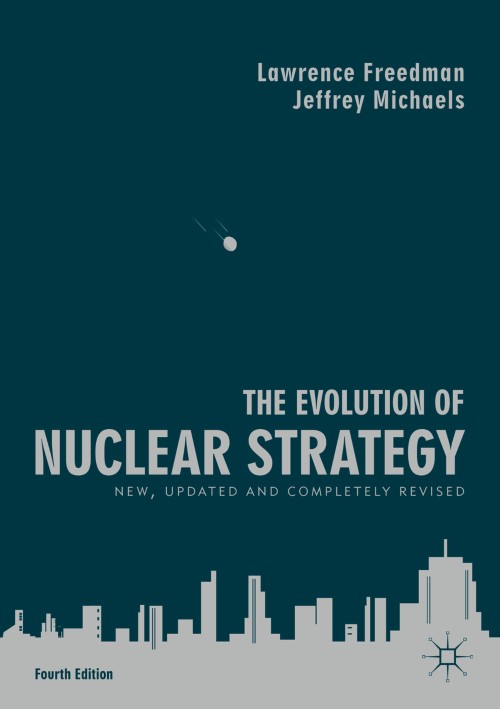
The Evolution of Nuclear Strategy [electronic resource] : New, Updated and Completely Revised / by Lawrence Freedman, Jeffrey Michaels.
Erişim Adresi
ISBN
9781137573506
Dil Kodu
İngilizce
Yer Numarası
DK/17888
Yazar
Basım Bildirimi
4th ed. 2019.
Yayın Bilgisi
London : Palgrave Macmillan UK : Imprint: Palgrave Macmillan, 2019.
Fiziksel Niteleme
XVIII, 786 p. online resource.
İçindekiler Notu
1. The Arrival of the Bomb -- 2. The Strategy of Hiroshima -- 3. Offence and Defence -- 4. Aggression and Retaliation -- 5. Strategy for an Atomic Monopoly -- 6. Strategy for an Atomic Stalemate -- 7. Massive Retaliation -- 8. Limited Objectives -- 9. Limited Means -- 10. The Importance of Being First -- 11. Sputnik and the Soviet Threat -- 12. Soviet Strategy after Stalin -- 13. The Technological Arms Race -- 14. New Sources of Strategy -- 15. The Strategy of Stable Conflict -- 16. Disarmament to Arms Control -- 17. Operational Nuclear Strategy.-18. Khrushchev’s Second-Best Deterrent -- 19. Defending Europe -- 20. No Cities -- 21. Assured Destruction -- 22. Britain’s ‘Independent’ Nuclear Deterrent -- 23. France and the Credibility of Nuclear Guarantees -- 24. A NATO Nuclear Force -- 25. The Unthinkable Weapon -- 26. China's Paper Tiger -- 27. The Soviet Approach to Deterrence -- 28. The McNamara Legacy -- 29. Salt, Parity and the Critique Of Mad -- 30. Actions and Reactions -- 31. Selective Options -- 32. ICBM Vulnerability -- 33. The Rise of Anti-Nuclear Protest -- 34. Strategic Defences -- 35. Soviet Doctrine from Brezhnev to Gorbachev -- 36. The End of the Cold War -- 37. Mutual Assured Safety -- 38. Elimination or Marginalization -- 39. The Second Nuclear Age -- 40. The Nuclear War on Terror -- 41. Proliferation: The Middle East and the Pacific -- 42. The Return of Great Power Politics -- 43. Primacy and Maximum Deterrence -- 44. Can There Be A Nuclear Strategy?.
Özet, vb.
“The Evolution of Nuclear Strategy quickly established itself as a classic when it first appeared in 1981. This edition makes it even better, incorporating as it does new material about the Cold War and up-dating to include subsequent developments. Filled with insights and penetrating analysis, this volume is truly indispensable.” Robert Jervis, Author of How Statesmen Think "Freedman and Michaels have written a thorough and thought-provoking guide to nuclear strategy. The authors analyze the causes of both wise and unwise strategic decisions in the past and thereby shine a bright light on dilemmas we face in our common nuclear future." Scott Sagan, Stanford University, USA “With its comprehensive coverage, clear and direct language, and judicious summaries of a vast literature, this new and wholly revised edition of The Evolution of Nuclear Strategy will be essential reading for any student of nuclear history, strategic studies, or contemporary international relations.” Matthew Jones, London School of Economics and Political Science, UK First published in 1981, Lawrence Freedman's The Evolution of Nuclear Strategy was immediately acclaimed as the standard work on the history of attempts to cope militarily and politically with the terrible destructive power of nuclear weapons. It has now been completely rewritten, drawing on a wide range of new research, and updated to take account of the period following the end of the cold war, and covering all nuclear powers. Lawrence Freedman is Emeritus Professor of War Studies at King’s College London, UK. He was appointed Official Historian of the Falklands Campaign in 1997 and was a member of the official inquiry into Britain and the 2003 Iraq War. His most recent books include Strategy: A History (2015) and The Future of War: A History (2017). Jeffrey Michaels is Senior Lecturer in Defence Studies at King's College London, UK.
Konu
Politics and war.
Political science.
Peace.
Security, International.
International organization.
International relations.
Military and Defence Studies.
Politics and International Studies.
Peace and Conflict Studies.
International Security Studies.
International Organization.
International Relations Theory.
Political science.
Peace.
Security, International.
International organization.
International relations.
Military and Defence Studies.
Politics and International Studies.
Peace and Conflict Studies.
International Security Studies.
International Organization.
International Relations Theory.
Diğer Yazarlar
Kurum Adı

Eseri Alıntıla
Referansları kullanmadan önce gözden geçirmeniz ve varsa gerekli düzeltmeleri yapmanız önerilir.
Dijital Kaynak
MARC Görünümü
LEADER 06216nam a22006135i 4500
001 816675
003 TR_AnAIT
005 20260130194555
007 cr nn 008mamaa
008 190731s2019 xxk| s |||| 0|eng d
020 |a9781137573506|9978-1-137-57350-6
024 7 |a10.1057/978-1-137-57350-6|2doi
041 |aeng
049 |aTürk Tarih Kurumu Kütüphanesi
050 4|aJZ6378-6405
072 7|aJW|2bicssc
072 7|aPOL069000|2bisacsh
072 7|aJW|2thema
082 04|a355|223
090 |aDK/17888
100 1 |aFreedman, Lawrence.|eauthor.|4aut|4http://id.loc.gov/vocabulary/relators/aut
245 14|aThe Evolution of Nuclear Strategy|h[electronic resource] :|bNew, Updated and Completely Revised /|cby Lawrence Freedman, Jeffrey Michaels.
250 |a4th ed. 2019.
264 1|aLondon :|bPalgrave Macmillan UK :|bImprint: Palgrave Macmillan,|c2019.
300 |aXVIII, 786 p.|bonline resource.
336 |atext|btxt|2rdacontent
337 |acomputer|bc|2rdamedia
338 |aonline resource|bcr|2rdacarrier
347 |atext file|bPDF|2rda
505 0 |a1. The Arrival of the Bomb -- 2. The Strategy of Hiroshima -- 3. Offence and Defence -- 4. Aggression and Retaliation -- 5. Strategy for an Atomic Monopoly -- 6. Strategy for an Atomic Stalemate -- 7. Massive Retaliation -- 8. Limited Objectives -- 9. Limited Means -- 10. The Importance of Being First -- 11. Sputnik and the Soviet Threat -- 12. Soviet Strategy after Stalin -- 13. The Technological Arms Race -- 14. New Sources of Strategy -- 15. The Strategy of Stable Conflict -- 16. Disarmament to Arms Control -- 17. Operational Nuclear Strategy.-18. Khrushchev’s Second-Best Deterrent -- 19. Defending Europe -- 20. No Cities -- 21. Assured Destruction -- 22. Britain’s ‘Independent’ Nuclear Deterrent -- 23. France and the Credibility of Nuclear Guarantees -- 24. A NATO Nuclear Force -- 25. The Unthinkable Weapon -- 26. China's Paper Tiger -- 27. The Soviet Approach to Deterrence -- 28. The McNamara Legacy -- 29. Salt, Parity and the Critique Of Mad -- 30. Actions and Reactions -- 31. Selective Options -- 32. ICBM Vulnerability -- 33. The Rise of Anti-Nuclear Protest -- 34. Strategic Defences -- 35. Soviet Doctrine from Brezhnev to Gorbachev -- 36. The End of the Cold War -- 37. Mutual Assured Safety -- 38. Elimination or Marginalization -- 39. The Second Nuclear Age -- 40. The Nuclear War on Terror -- 41. Proliferation: The Middle East and the Pacific -- 42. The Return of Great Power Politics -- 43. Primacy and Maximum Deterrence -- 44. Can There Be A Nuclear Strategy?.
520 |a“The Evolution of Nuclear Strategy quickly established itself as a classic when it first appeared in 1981. This edition makes it even better, incorporating as it does new material about the Cold War and up-dating to include subsequent developments. Filled with insights and penetrating analysis, this volume is truly indispensable.” Robert Jervis, Author of How Statesmen Think "Freedman and Michaels have written a thorough and thought-provoking guide to nuclear strategy. The authors analyze the causes of both wise and unwise strategic decisions in the past and thereby shine a bright light on dilemmas we face in our common nuclear future." Scott Sagan, Stanford University, USA “With its comprehensive coverage, clear and direct language, and judicious summaries of a vast literature, this new and wholly revised edition of The Evolution of Nuclear Strategy will be essential reading for any student of nuclear history, strategic studies, or contemporary international relations.” Matthew Jones, London School of Economics and Political Science, UK First published in 1981, Lawrence Freedman's The Evolution of Nuclear Strategy was immediately acclaimed as the standard work on the history of attempts to cope militarily and politically with the terrible destructive power of nuclear weapons. It has now been completely rewritten, drawing on a wide range of new research, and updated to take account of the period following the end of the cold war, and covering all nuclear powers. Lawrence Freedman is Emeritus Professor of War Studies at King’s College London, UK. He was appointed Official Historian of the Falklands Campaign in 1997 and was a member of the official inquiry into Britain and the 2003 Iraq War. His most recent books include Strategy: A History (2015) and The Future of War: A History (2017). Jeffrey Michaels is Senior Lecturer in Defence Studies at King's College London, UK.
532 8 |aAccessibility summary: This PDF was produced prior to the implementation of current accessibility best practices. It supports searchable and selectable text. It may or may not include elements such as described non-text content (images, graphs etc), reflowable text or screen reader compatibility. Users with accessibility needs may experience limitations. Please contact us at accessibilitysupport@springernature.com if you require assistance or an alternative format.
532 8 |aNo reading system accessibility options actively disabled
532 8 |aPublisher contact for further accessibility information: accessibilitysupport@springernature.com
650 0|aPolitics and war.
650 0|aPolitical science.
650 0|aPeace.
650 0|aSecurity, International.
650 0|aInternational organization.
650 0|aInternational relations.
650 14|aMilitary and Defence Studies.
650 24|aPolitics and International Studies.
650 24|aPeace and Conflict Studies.
650 24|aInternational Security Studies.
650 24|aInternational Organization.
650 24|aInternational Relations Theory.
700 1 |aMichaels, Jeffrey.|eauthor.|4aut|4http://id.loc.gov/vocabulary/relators/aut
710 2 |aSpringerLink (Online service)
773 0 |tSpringer Nature eBook
776 08|iPrinted edition:|z9781137573483
776 08|iPrinted edition:|z9781137573490
776 08|iPrinted edition:|z9781349847624
856 40|uhttps://doi.org/10.1057/978-1-137-57350-6
912 |aZDB-2-POS
912 |aZDB-2-SXPI
950 |aPolitical Science and International Studies (SpringerNature-41174)
950 |aPolitical Science and International Studies (R0) (SpringerNature-43724)
001 816675
003 TR_AnAIT
005 20260130194555
007 cr nn 008mamaa
008 190731s2019 xxk| s |||| 0|eng d
020 |a9781137573506|9978-1-137-57350-6
024 7 |a10.1057/978-1-137-57350-6|2doi
041 |aeng
049 |aTürk Tarih Kurumu Kütüphanesi
050 4|aJZ6378-6405
072 7|aJW|2bicssc
072 7|aPOL069000|2bisacsh
072 7|aJW|2thema
082 04|a355|223
090 |aDK/17888
100 1 |aFreedman, Lawrence.|eauthor.|4aut|4http://id.loc.gov/vocabulary/relators/aut
245 14|aThe Evolution of Nuclear Strategy|h[electronic resource] :|bNew, Updated and Completely Revised /|cby Lawrence Freedman, Jeffrey Michaels.
250 |a4th ed. 2019.
264 1|aLondon :|bPalgrave Macmillan UK :|bImprint: Palgrave Macmillan,|c2019.
300 |aXVIII, 786 p.|bonline resource.
336 |atext|btxt|2rdacontent
337 |acomputer|bc|2rdamedia
338 |aonline resource|bcr|2rdacarrier
347 |atext file|bPDF|2rda
505 0 |a1. The Arrival of the Bomb -- 2. The Strategy of Hiroshima -- 3. Offence and Defence -- 4. Aggression and Retaliation -- 5. Strategy for an Atomic Monopoly -- 6. Strategy for an Atomic Stalemate -- 7. Massive Retaliation -- 8. Limited Objectives -- 9. Limited Means -- 10. The Importance of Being First -- 11. Sputnik and the Soviet Threat -- 12. Soviet Strategy after Stalin -- 13. The Technological Arms Race -- 14. New Sources of Strategy -- 15. The Strategy of Stable Conflict -- 16. Disarmament to Arms Control -- 17. Operational Nuclear Strategy.-18. Khrushchev’s Second-Best Deterrent -- 19. Defending Europe -- 20. No Cities -- 21. Assured Destruction -- 22. Britain’s ‘Independent’ Nuclear Deterrent -- 23. France and the Credibility of Nuclear Guarantees -- 24. A NATO Nuclear Force -- 25. The Unthinkable Weapon -- 26. China's Paper Tiger -- 27. The Soviet Approach to Deterrence -- 28. The McNamara Legacy -- 29. Salt, Parity and the Critique Of Mad -- 30. Actions and Reactions -- 31. Selective Options -- 32. ICBM Vulnerability -- 33. The Rise of Anti-Nuclear Protest -- 34. Strategic Defences -- 35. Soviet Doctrine from Brezhnev to Gorbachev -- 36. The End of the Cold War -- 37. Mutual Assured Safety -- 38. Elimination or Marginalization -- 39. The Second Nuclear Age -- 40. The Nuclear War on Terror -- 41. Proliferation: The Middle East and the Pacific -- 42. The Return of Great Power Politics -- 43. Primacy and Maximum Deterrence -- 44. Can There Be A Nuclear Strategy?.
520 |a“The Evolution of Nuclear Strategy quickly established itself as a classic when it first appeared in 1981. This edition makes it even better, incorporating as it does new material about the Cold War and up-dating to include subsequent developments. Filled with insights and penetrating analysis, this volume is truly indispensable.” Robert Jervis, Author of How Statesmen Think "Freedman and Michaels have written a thorough and thought-provoking guide to nuclear strategy. The authors analyze the causes of both wise and unwise strategic decisions in the past and thereby shine a bright light on dilemmas we face in our common nuclear future." Scott Sagan, Stanford University, USA “With its comprehensive coverage, clear and direct language, and judicious summaries of a vast literature, this new and wholly revised edition of The Evolution of Nuclear Strategy will be essential reading for any student of nuclear history, strategic studies, or contemporary international relations.” Matthew Jones, London School of Economics and Political Science, UK First published in 1981, Lawrence Freedman's The Evolution of Nuclear Strategy was immediately acclaimed as the standard work on the history of attempts to cope militarily and politically with the terrible destructive power of nuclear weapons. It has now been completely rewritten, drawing on a wide range of new research, and updated to take account of the period following the end of the cold war, and covering all nuclear powers. Lawrence Freedman is Emeritus Professor of War Studies at King’s College London, UK. He was appointed Official Historian of the Falklands Campaign in 1997 and was a member of the official inquiry into Britain and the 2003 Iraq War. His most recent books include Strategy: A History (2015) and The Future of War: A History (2017). Jeffrey Michaels is Senior Lecturer in Defence Studies at King's College London, UK.
532 8 |aAccessibility summary: This PDF was produced prior to the implementation of current accessibility best practices. It supports searchable and selectable text. It may or may not include elements such as described non-text content (images, graphs etc), reflowable text or screen reader compatibility. Users with accessibility needs may experience limitations. Please contact us at accessibilitysupport@springernature.com if you require assistance or an alternative format.
532 8 |aNo reading system accessibility options actively disabled
532 8 |aPublisher contact for further accessibility information: accessibilitysupport@springernature.com
650 0|aPolitics and war.
650 0|aPolitical science.
650 0|aPeace.
650 0|aSecurity, International.
650 0|aInternational organization.
650 0|aInternational relations.
650 14|aMilitary and Defence Studies.
650 24|aPolitics and International Studies.
650 24|aPeace and Conflict Studies.
650 24|aInternational Security Studies.
650 24|aInternational Organization.
650 24|aInternational Relations Theory.
700 1 |aMichaels, Jeffrey.|eauthor.|4aut|4http://id.loc.gov/vocabulary/relators/aut
710 2 |aSpringerLink (Online service)
773 0 |tSpringer Nature eBook
776 08|iPrinted edition:|z9781137573483
776 08|iPrinted edition:|z9781137573490
776 08|iPrinted edition:|z9781349847624
856 40|uhttps://doi.org/10.1057/978-1-137-57350-6
912 |aZDB-2-POS
912 |aZDB-2-SXPI
950 |aPolitical Science and International Studies (SpringerNature-41174)
950 |aPolitical Science and International Studies (R0) (SpringerNature-43724)
Materyaller
Depodan talep edilen materyal sadece kütüphane içerisinde kullanılmaktadır.
Materyal dışarıya ödünç verilmemektedir.
