

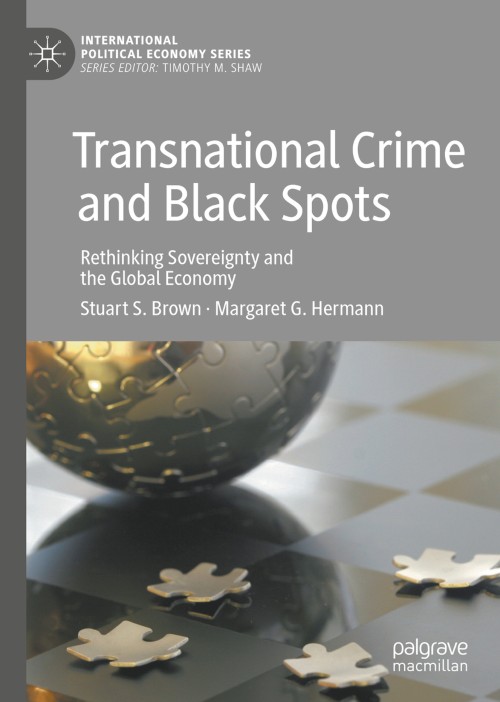
Transnational Crime and Black Spots [electronic resource] : Rethinking Sovereignty and the Global Economy / by Stuart S. Brown, Margaret G. Hermann.
Erişim Adresi
ISBN
9781137496706
Dil Kodu
İngilizce
Yer Numarası
DK/17892
Yazar
Basım Bildirimi
1st ed. 2020.
Yayın Bilgisi
London : Palgrave Macmillan UK : Imprint: Palgrave Macmillan, 2020.
Fiziksel Niteleme
XVI, 250 p. 5 illus. online resource.
Dizi
International Political Economy Series, 2662-2491
İçindekiler Notu
Chapter 1: Introduction: Setting the Stage -- Part I: Theoretical Foundations -- Chapter 2: Geopolitics and Transnational Crime -- Chapter 3: The New Economic Geography and the Illicit Economy -- Part II: Toward Developing a Black Spots Network -- Chapter 4: Activities, Functions, and Linkages -- Chapter 5: Black Spots, Actors, and Governance -- Chapter 6: Methods of Financing the Illicit Economy -- Part III: Extensions and Implications -- Chapter 7: Black Spots in Cyberspace? -- Chapter 8: Discoveries and Challenges.
Özet, vb.
“The strength of this book is that it does not look at a single case or even a few disparate examples of drug, weapon, and human trafficking but looks at many patterns—intra-regionally, cross-nationally, and internationally. It is an innovative addition to the literature on the nature of the safe havens—or ‘black spots’—currently being used for illicit activity. This book will make a clear impact on the scholarship of transnational crime and the geopolitics of the illicit global economy.” —Jeremy Morris, Aarhus University, Denmark Transnational criminal, insurgent, and terrorist organizations seek places that they can govern and operate from with minimum interference from law enforcement. This book examines 80 such safe havens which function outside effective state-based government control and are sustained by illicit economic activities. Brown and Hermann call these geographic locations ‘black spots’ because, like black holes in astronomy that defy the laws of Newtonian physics, they defy the world as defined by the Westphalian state system. The authors map flows of insecurity such as trafficking in drugs, weapons, and people, providing an unusually clear view of the hubs and networks that form as a result. As transnational crime is increasing on the internet, Brown and Hermann also explore if there are places in cyberspace which can be considered black spots. They conclude by elaborating the challenges that black spots pose for law enforcement and both national and international governance.
Konu
International economic relations.
Political science.
Security, International.
Transnational crime.
Organized crime.
International Political Economy’.
Political Science.
International Security Studies.
Transnational Crime.
Organized Crime.
Political science.
Security, International.
Transnational crime.
Organized crime.
International Political Economy’.
Political Science.
International Security Studies.
Transnational Crime.
Organized Crime.
Diğer Yazarlar
Kurum Adı
Eseri Alıntıla
Referansları kullanmadan önce gözden geçirmeniz ve varsa gerekli düzeltmeleri yapmanız önerilir.
Dijital Kaynak
MARC Görünümü
LEADER 04974nam a22006375i 4500
001 816679
003 TR_AnAIT
005 20260130194546
007 cr nn 008mamaa
008 191029s2020 xxk| s |||| 0|eng d
020 |a9781137496706|9978-1-137-49670-6
024 7 |a10.1057/978-1-137-49670-6|2doi
041 |aeng
049 |aTürk Tarih Kurumu Kütüphanesi
050 4|aJZ1252
072 7|aJPS|2bicssc
072 7|aKCP|2bicssc
072 7|aPOL011020|2bisacsh
072 7|aJPS|2thema
072 7|aKCP|2thema
082 04|a327.111|223
090 |aDK/17892
100 1 |aBrown, Stuart S.|eauthor.|4aut|4http://id.loc.gov/vocabulary/relators/aut
245 10|aTransnational Crime and Black Spots|h[electronic resource] :|bRethinking Sovereignty and the Global Economy /|cby Stuart S. Brown, Margaret G. Hermann.
250 |a1st ed. 2020.
264 1|aLondon :|bPalgrave Macmillan UK :|bImprint: Palgrave Macmillan,|c2020.
300 |aXVI, 250 p. 5 illus.|bonline resource.
336 |atext|btxt|2rdacontent
337 |acomputer|bc|2rdamedia
338 |aonline resource|bcr|2rdacarrier
347 |atext file|bPDF|2rda
490 1 |aInternational Political Economy Series,|x2662-2491
505 0 |aChapter 1: Introduction: Setting the Stage -- Part I: Theoretical Foundations -- Chapter 2: Geopolitics and Transnational Crime -- Chapter 3: The New Economic Geography and the Illicit Economy -- Part II: Toward Developing a Black Spots Network -- Chapter 4: Activities, Functions, and Linkages -- Chapter 5: Black Spots, Actors, and Governance -- Chapter 6: Methods of Financing the Illicit Economy -- Part III: Extensions and Implications -- Chapter 7: Black Spots in Cyberspace? -- Chapter 8: Discoveries and Challenges.
520 |a“The strength of this book is that it does not look at a single case or even a few disparate examples of drug, weapon, and human trafficking but looks at many patterns—intra-regionally, cross-nationally, and internationally. It is an innovative addition to the literature on the nature of the safe havens—or ‘black spots’—currently being used for illicit activity. This book will make a clear impact on the scholarship of transnational crime and the geopolitics of the illicit global economy.” —Jeremy Morris, Aarhus University, Denmark Transnational criminal, insurgent, and terrorist organizations seek places that they can govern and operate from with minimum interference from law enforcement. This book examines 80 such safe havens which function outside effective state-based government control and are sustained by illicit economic activities. Brown and Hermann call these geographic locations ‘black spots’ because, like black holes in astronomy that defy the laws of Newtonian physics, they defy the world as defined by the Westphalian state system. The authors map flows of insecurity such as trafficking in drugs, weapons, and people, providing an unusually clear view of the hubs and networks that form as a result. As transnational crime is increasing on the internet, Brown and Hermann also explore if there are places in cyberspace which can be considered black spots. They conclude by elaborating the challenges that black spots pose for law enforcement and both national and international governance.
532 8 |aAccessibility summary: This PDF was produced prior to the implementation of current accessibility best practices. It supports searchable and selectable text. It may or may not include elements such as described non-text content (images, graphs etc), reflowable text or screen reader compatibility. Users with accessibility needs may experience limitations. Please contact us at accessibilitysupport@springernature.com if you require assistance or an alternative format.
532 8 |aNo reading system accessibility options actively disabled
532 8 |aPublisher contact for further accessibility information: accessibilitysupport@springernature.com
650 0|aInternational economic relations.
650 0|aPolitical science.
650 0|aSecurity, International.
650 0|aTransnational crime.
650 0|aOrganized crime.
650 14|aInternational Political Economy’.
650 24|aPolitical Science.
650 24|aInternational Security Studies.
650 24|aTransnational Crime.
650 24|aOrganized Crime.
700 1 |aHermann, Margaret G.|eauthor.|4aut|4http://id.loc.gov/vocabulary/relators/aut
710 2 |aSpringerLink (Online service)
773 0 |tSpringer Nature eBook
776 08|iPrinted edition:|z9781137496690
776 08|iPrinted edition:|z9781349697809
776 08|iPrinted edition:|z9781349697816
830 0|aInternational Political Economy Series,|x2662-2491
856 40|uhttps://doi.org/10.1057/978-1-137-49670-6
912 |aZDB-2-POS
912 |aZDB-2-SXPI
950 |aPolitical Science and International Studies (SpringerNature-41174)
950 |aPolitical Science and International Studies (R0) (SpringerNature-43724)
001 816679
003 TR_AnAIT
005 20260130194546
007 cr nn 008mamaa
008 191029s2020 xxk| s |||| 0|eng d
020 |a9781137496706|9978-1-137-49670-6
024 7 |a10.1057/978-1-137-49670-6|2doi
041 |aeng
049 |aTürk Tarih Kurumu Kütüphanesi
050 4|aJZ1252
072 7|aJPS|2bicssc
072 7|aKCP|2bicssc
072 7|aPOL011020|2bisacsh
072 7|aJPS|2thema
072 7|aKCP|2thema
082 04|a327.111|223
090 |aDK/17892
100 1 |aBrown, Stuart S.|eauthor.|4aut|4http://id.loc.gov/vocabulary/relators/aut
245 10|aTransnational Crime and Black Spots|h[electronic resource] :|bRethinking Sovereignty and the Global Economy /|cby Stuart S. Brown, Margaret G. Hermann.
250 |a1st ed. 2020.
264 1|aLondon :|bPalgrave Macmillan UK :|bImprint: Palgrave Macmillan,|c2020.
300 |aXVI, 250 p. 5 illus.|bonline resource.
336 |atext|btxt|2rdacontent
337 |acomputer|bc|2rdamedia
338 |aonline resource|bcr|2rdacarrier
347 |atext file|bPDF|2rda
490 1 |aInternational Political Economy Series,|x2662-2491
505 0 |aChapter 1: Introduction: Setting the Stage -- Part I: Theoretical Foundations -- Chapter 2: Geopolitics and Transnational Crime -- Chapter 3: The New Economic Geography and the Illicit Economy -- Part II: Toward Developing a Black Spots Network -- Chapter 4: Activities, Functions, and Linkages -- Chapter 5: Black Spots, Actors, and Governance -- Chapter 6: Methods of Financing the Illicit Economy -- Part III: Extensions and Implications -- Chapter 7: Black Spots in Cyberspace? -- Chapter 8: Discoveries and Challenges.
520 |a“The strength of this book is that it does not look at a single case or even a few disparate examples of drug, weapon, and human trafficking but looks at many patterns—intra-regionally, cross-nationally, and internationally. It is an innovative addition to the literature on the nature of the safe havens—or ‘black spots’—currently being used for illicit activity. This book will make a clear impact on the scholarship of transnational crime and the geopolitics of the illicit global economy.” —Jeremy Morris, Aarhus University, Denmark Transnational criminal, insurgent, and terrorist organizations seek places that they can govern and operate from with minimum interference from law enforcement. This book examines 80 such safe havens which function outside effective state-based government control and are sustained by illicit economic activities. Brown and Hermann call these geographic locations ‘black spots’ because, like black holes in astronomy that defy the laws of Newtonian physics, they defy the world as defined by the Westphalian state system. The authors map flows of insecurity such as trafficking in drugs, weapons, and people, providing an unusually clear view of the hubs and networks that form as a result. As transnational crime is increasing on the internet, Brown and Hermann also explore if there are places in cyberspace which can be considered black spots. They conclude by elaborating the challenges that black spots pose for law enforcement and both national and international governance.
532 8 |aAccessibility summary: This PDF was produced prior to the implementation of current accessibility best practices. It supports searchable and selectable text. It may or may not include elements such as described non-text content (images, graphs etc), reflowable text or screen reader compatibility. Users with accessibility needs may experience limitations. Please contact us at accessibilitysupport@springernature.com if you require assistance or an alternative format.
532 8 |aNo reading system accessibility options actively disabled
532 8 |aPublisher contact for further accessibility information: accessibilitysupport@springernature.com
650 0|aInternational economic relations.
650 0|aPolitical science.
650 0|aSecurity, International.
650 0|aTransnational crime.
650 0|aOrganized crime.
650 14|aInternational Political Economy’.
650 24|aPolitical Science.
650 24|aInternational Security Studies.
650 24|aTransnational Crime.
650 24|aOrganized Crime.
700 1 |aHermann, Margaret G.|eauthor.|4aut|4http://id.loc.gov/vocabulary/relators/aut
710 2 |aSpringerLink (Online service)
773 0 |tSpringer Nature eBook
776 08|iPrinted edition:|z9781137496690
776 08|iPrinted edition:|z9781349697809
776 08|iPrinted edition:|z9781349697816
830 0|aInternational Political Economy Series,|x2662-2491
856 40|uhttps://doi.org/10.1057/978-1-137-49670-6
912 |aZDB-2-POS
912 |aZDB-2-SXPI
950 |aPolitical Science and International Studies (SpringerNature-41174)
950 |aPolitical Science and International Studies (R0) (SpringerNature-43724)
Materyaller
Depodan talep edilen materyal sadece kütüphane içerisinde kullanılmaktadır.
Materyal dışarıya ödünç verilmemektedir.
Materyal dışarıya ödünç verilmemektedir.
