LEADER 04064nam a22006015i 4500
001 816712
003 TR_AnAIT
005 20260130194328
007 cr nn 008mamaa
008 210914s2021 sz | s |||| 0|eng d
020 |a9783030821166|9978-3-030-82116-6
024 7 |a10.1007/978-3-030-82116-6|2doi
041 |aeng
049 |aTürk Tarih Kurumu Kütüphanesi
050 4|aJF20-1177
072 7|aJPB|2bicssc
072 7|aPOL009000|2bisacsh
072 7|aJPB|2thema
082 04|a320.3|223
090 |aDK/17925
100 1 |aUmudov, Agshin.|eauthor.|4aut|4http://id.loc.gov/vocabulary/relators/aut
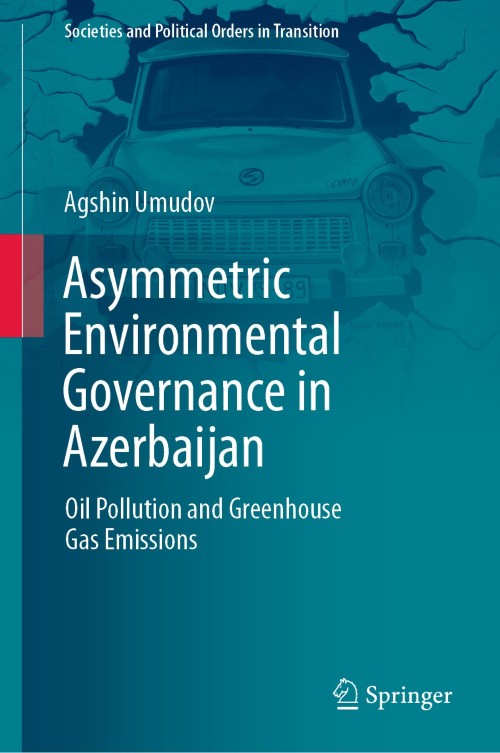
245 10|aAsymmetric Environmental Governance in Azerbaijan|h[electronic resource] :|bOil Pollution and Greenhouse Gas Emissions /|cby Agshin Umudov.
250 |a1st ed. 2021.
264 1|aCham :|bSpringer International Publishing :|bImprint: Springer,|c2021.
300 |aXVII, 208 p. 17 illus., 15 illus. in color.|bonline resource.
336 |atext|btxt|2rdacontent
337 |acomputer|bc|2rdamedia
338 |aonline resource|bcr|2rdacarrier
347 |atext file|bPDF|2rda
490 1 |aSocieties and Political Orders in Transition,|x2511-221X
505 0 |aChapter 1 - Research overview, context and problematization -- Chapter 2 - Overview of environmental governance in Azerbaijan -- Chapter 3 - Oil contamination: policy prioritization and un-politics of pollution? -- Chapter 4 - Corruption and weakened civil society: impact on environmental governance -- Chapter 5 - Explaining path dependent patterns in Azerbaijan’s environmental governance -- Chapter 6 - Reduction of GHG emissions: a comparative success? -- Chapter 7 - International pressure and domestic legitimacy -- Chapter 8 - Discussion on Findings -- Chapter 9 - Conclusion.
520 |aThis book examines why authoritarian governments are willing to address environmental problems that have an international impact, such as CO2 emissions, but are reluctant to address problems that have only a domestic impact. In a case study of Azerbaijani oil politics, it demonstrates how the incumbent Azerbaijani regime has taken important measures trying to address CO2 emissions while ignoring the damage caused by oil pollution on the Caspian coast. The book argues that resource-rich authoritarian governments are eager to join international environmental initiatives to improve their image, but they address domestic environmental issues mainly if they threaten their hold on power. This book is an important contribution to scholarship on environmental governance in the post-Soviet space, an area that is poorly researched. Therefore, it is a must-read for researchers and scholars interested in post-Soviet studies, as well as in the nexusbetween mineral-rich regions and how social policy is created, e.g., environment, education, and healthcare. In addition, this book will be of tremendous importance for policymakers and international organizations as it looks into the motivation of authoritarian states in the post-Soviet space for environmental measures.
650 0|aComparative government.
650 0|aEnergy policy.
650 0|aEnergy and state.
650 0|aEurope|xPolitics and government.
650 0|aPollution.
650 0|aEnvironmental policy.
650 0|aPolitical science.
650 14|aComparative Politics.
650 24|aEnergy Policy, Economics and Management.
650 24|aEuropean Politics.
650 24|aPollution.
650 24|aEnvironmental Policy.
650 24|aGovernance and Government.
710 2 |aSpringerLink (Online service)
773 0 |tSpringer Nature eBook
776 08|iPrinted edition:|z9783030821159
776 08|iPrinted edition:|z9783030821173
776 08|iPrinted edition:|z9783030821180
830 0|aSocieties and Political Orders in Transition,|x2511-221X
856 40|uhttps://doi.org/10.1007/978-3-030-82116-6
912 |aZDB-2-POS
912 |aZDB-2-SXPI
950 |aPolitical Science and International Studies (SpringerNature-41174)
950 |aPolitical Science and International Studies (R0) (SpringerNature-43724)