LEADER 04200nam a22006255i 4500
001 816836
003 TR_AnAIT
005 20260130193324
007 cr nn 008mamaa
008 160907s2016 xxk| s |||| 0|eng d
020 |a9781137572189|9978-1-137-57218-9
024 7 |a10.1057/978-1-137-57218-9|2doi
041 |aeng
049 |aTürk Tarih Kurumu Kütüphanesi
050 4|aJQ1-1852
072 7|aJP|2bicssc
072 7|a1F|2bicssc
072 7|aPOL054000|2bisacsh
072 7|aJP|x1F|2thema
082 04|a320.95|223
090 |aDK/18049
100 1 |aJolliffe, Pia.|eauthor.|4aut|4http://id.loc.gov/vocabulary/relators/aut
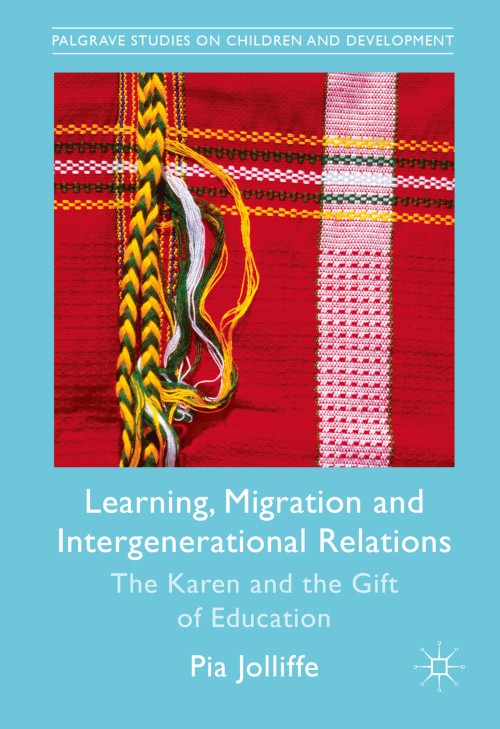
245 10|aLearning, Migration and Intergenerational Relations|h[electronic resource] :|bThe Karen and the Gift of Education /|cby Pia Jolliffe.
250 |a1st ed. 2016.
264 1|aLondon :|bPalgrave Macmillan UK :|bImprint: Palgrave Macmillan,|c2016.
300 |aXVII, 180 p. 10 illus. in color.|bonline resource.
336 |atext|btxt|2rdacontent
337 |acomputer|bc|2rdamedia
338 |aonline resource|bcr|2rdacarrier
347 |atext file|bPDF|2rda
490 1 |aPalgrave Studies on Children and Development,|x2947-5732
520 |aFocusing on the Karen people in Burma, Thailand and the United Kingdom, this book analyses how global, regional and local developments affect patterns of learning. It combines historical and ethnographic research to explore the mutual shaping of intergenerational relations and children’s practical and formal learning within a context of migration and socio-political change. In this endeavour, Pia Jolliffe discusses traditional patterns of socio-cultural learning within Karen communities as well as the role of Christian missionaries in introducing schooling to the Karen in Burma and in Thailand. This is followed by an analysis of children’s migration for education in northern Thailand where state schools often encourage students’ aspirations towards upward social mobility at the same time as schools reproduce social inequality between the rural Karen and urban Thai society. The author draws attention to international humanitarian agencies who deliver education to refugees and migrants at the Thai-Burma border, as well as the role of UK government schools in the process of resettling Karen refugees. In this way, the book analyses the connections between learning, migration and intergenerational relations in households, schools and other institutions at the local, regional and global level.
532 8 |aAccessibility summary: This PDF was produced prior to the implementation of current accessibility best practices. It supports searchable and selectable text. It may or may not include elements such as described non-text content (images, graphs etc), reflowable text or screen reader compatibility. Users with accessibility needs may experience limitations. Please contact us at accessibilitysupport@springernature.com if you require assistance or an alternative format.
532 8 |aNo reading system accessibility options actively disabled
532 8 |aPublisher contact for further accessibility information: accessibilitysupport@springernature.com
650 0|aAsia|xPolitics and government.
650 0|aCommunity development.
650 0|aSocial service.
650 0|aEconomic development.
650 0|aInternational education .
650 0|aComparative education.
650 0|aEducation and state.
650 14|aAsian Politics.
650 24|aSocial Work and Community Development.
650 24|aDevelopment Studies.
650 24|aInternational and Comparative Education.
650 24|aEducational Policy and Politics.
710 2 |aSpringerLink (Online service)
773 0 |tSpringer Nature eBook
776 08|iPrinted edition:|z9781137572172
776 08|iPrinted edition:|z9781349848089
776 08|iPrinted edition:|z9781349848096
830 0|aPalgrave Studies on Children and Development,|x2947-5732
856 40|uhttps://doi.org/10.1057/978-1-137-57218-9
912 |aZDB-2-POS
912 |aZDB-2-SXPI
950 |aPolitical Science and International Studies (SpringerNature-41174)
950 |aPolitical Science and International Studies (R0) (SpringerNature-43724)