LEADER 03837nam a22006135i 4500
001 816841
003 TR_AnAIT
005 20260130193303
007 cr nn 008mamaa
008 161207s2017 xxk| s |||| 0|eng d
020 |a9781137588050|9978-1-137-58805-0
024 7 |a10.1057/978-1-137-58805-0|2doi
041 |aeng
049 |aTürk Tarih Kurumu Kütüphanesi
050 4|aJA1-92
072 7|aJPA|2bicssc
072 7|aPOL000000|2bisacsh
072 7|aJPA|2thema
082 04|a320|223
090 |aDK/18054
100 1 |aPerry, Susan.|eauthor.|4aut|4http://id.loc.gov/vocabulary/relators/aut
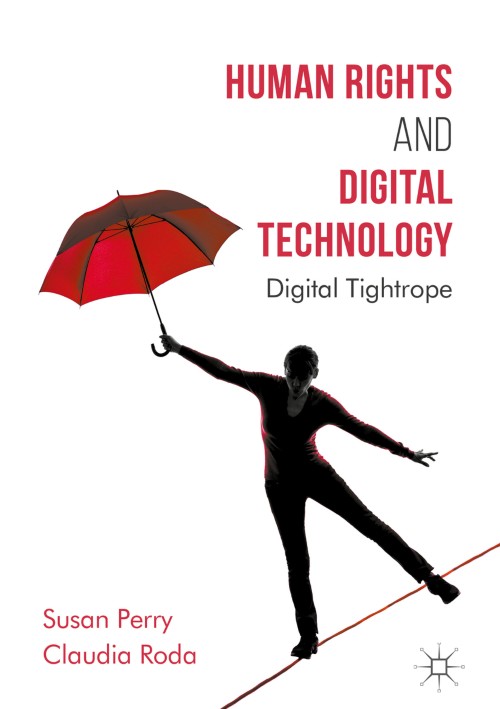
245 10|aHuman Rights and Digital Technology|h[electronic resource] :|bDigital Tightrope /|cby Susan Perry, Claudia Roda.
250 |a1st ed. 2017.
264 1|aLondon :|bPalgrave Macmillan UK :|bImprint: Palgrave Macmillan,|c2017.
300 |aXII, 203 p. 3 illus. in color.|bonline resource.
336 |atext|btxt|2rdacontent
337 |acomputer|bc|2rdamedia
338 |aonline resource|bcr|2rdacarrier
347 |atext file|bPDF|2rda
505 0 |a1. Is Wireless Technology Safe? -- 2. User Privacy in a World of Digital Surveillance -- 3. Online Censorship -- 4. The Intent of Things -- 5. Teaching Human Rights and Digital Technology -- Conclusions.
520 |aAnalysing the convergence of law and regulation with rapidly evolving communications technologies, this interdisciplinary work navigates the intricate balancing act between human rights protection and technological innovation in a digital age, and illuminates the comprehensive potential of human rights to frame our intelligent use of technology. The authors address such pressing questions as how to protect user privacy online, whether digital pollution is a health hazard, who should have control and be responsible for data technologies and how to maintain human autonomy in a world of interconnected objects. By considering specific cases, this book provides an in-depth exploration of the many regulatory and technological choices citizens, states, civil society organizations and the private sector should consider to ensure that digital technology more fully serves human needs.
532 8 |aAccessibility summary: This PDF was produced prior to the implementation of current accessibility best practices. It supports searchable and selectable text. It may or may not include elements such as described non-text content (images, graphs etc), reflowable text or screen reader compatibility. Users with accessibility needs may experience limitations. Please contact us at accessibilitysupport@springernature.com if you require assistance or an alternative format.
532 8 |aNo reading system accessibility options actively disabled
532 8 |aPublisher contact for further accessibility information: accessibilitysupport@springernature.com
650 0|aPolitical science.
650 0|aHuman rights.
650 0|aEducational technology.
650 0|aEconomic development.
650 0|aComputer networks .
650 0|aCommunication.
650 14|aPolitical Science.
650 24|aHuman Rights.
650 24|aDigital Education and Educational Technology.
650 24|aDevelopment Studies.
650 24|aComputer Communication Networks.
650 24|aMedia and Communication.
700 1 |aRoda, Claudia.|eauthor.|4aut|4http://id.loc.gov/vocabulary/relators/aut
710 2 |aSpringerLink (Online service)
773 0 |tSpringer Nature eBook
776 08|iPrinted edition:|z9781137588043
776 08|iPrinted edition:|z9781349932122
776 08|iPrinted edition:|z9781349932139
856 40|uhttps://doi.org/10.1057/978-1-137-58805-0
912 |aZDB-2-POS
912 |aZDB-2-SXPI
950 |aPolitical Science and International Studies (SpringerNature-41174)
950 |aPolitical Science and International Studies (R0) (SpringerNature-43724)