

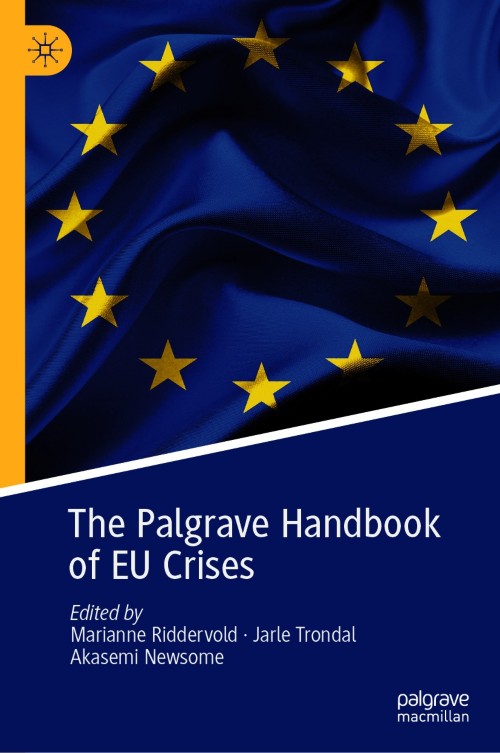
The Palgrave Handbook of EU Crises [electronic resource] / edited by Marianne Riddervold, Jarle Trondal, Akasemi Newsome.
Erişim Adresi
ISBN
9783030517915
Dil Kodu
İngilizce
Yer Numarası
DK/18189
Basım Bildirimi
1st ed. 2021.
Yayın Bilgisi
Cham : Springer International Publishing : Imprint: Palgrave Macmillan, 2021.
Fiziksel Niteleme
XXI, 796 p. 16 illus., 10 illus. in color. online resource.
Dizi
Palgrave Studies in European Union Politics, 2662-5881
İçindekiler Notu
Part I: Introducing the Study of European Union Crises -- 1. European Union Crisis: An Introduction (Marianne Riddervold, Jarle Trondal and Akasemi Newsome) -- Part II: Theoretical Approaches to Crisis -- 2. Theoretical Approaches to Crisis: An Introduction (Marianne Riddervold, Jarle Trondal and Akasemi Newsome) -- 3. Liberal Intergovernmentalism (Frank Schimmelfennig) -- 4. Classical Realism (Alexander Reichwein) -- 5. Neo-realism (Hubert Zimmermann) -- 6. Neofunctionalism (Arne Niemann) -- 7. Institutionalism (Christopher Ansell) -- 8. Organizational Theory (Jarle Trondal) -- 9. Cleavage Theory (Gary Marks, David Attewell, Jan Rovny and Liesbet Hooghe) -- 10. Social constructivism (Mai’a K. Davis Cross) -- 11. Deliberative Theory (Claudia Landwehr) -- Part III: Crisis, Continuity and Change in European Union Institutions -- 12. Crisis, Continuity and Change in European Union Institutions: An Introduction (Jarle Trondal, Marianne Riddervold and Akasemi Newsome) -- 13. The Council (Jeffrey Lewis).-14. The European Parliament (Akasemi Newsome and Matthew Stenberg) -- 15. The Court of Justice of the European Union (Lisa Conant) -- 16. The European Commission (Hussein Kassim and Luc Tholoniat) -- 17. European Union Agencies (Michelle Everson and Ellen Vos) -- 18. The European Central Bank (Ingrid Hjertaker and Bent Sofus Tranøy) -- 19. The European External Action Service (Heidi Maurer) -- Part IV: Policy Areas: Crisis, Continuity and Change -- 20. The Financial Crisis: An Introduction (Akasemi Newsome, Marianne Riddervold and Jarle Trondal) -- 21. The EU's response to the financial crisis (Espen D.H. Olsen and Guri Rosén) -- 22. Failing forward in financial stability regulation (Eirik Tegle Stenstad and Bent Sofus Tranøy) -- 23. The Euro in a Triple Crisis Context and its Impact on the European Union (James A. Caporaso) -- 24. The Migration Crisis: An Introduction (Akasemi Newsome, Marianne Riddervold and Jarle Trondal) -- 25. The EU’s Response to the Migration Crisis: Institutional Turbulence and Policy Disjuncture (Kaija Schilde and Sara Wallace Goodman) -- 26. The Refugee Crisis and the EU Border Security Policies (Ruxandra-Laura Bosilca) -- 27. Moral Leadership or Moral Hazard? Germany’s Response to the Refugee crisis and its Impact on European Solidarity (Beverly Crawford) -- 28. ‘Brexit’: An Introduction (Jarle Trondal, Marianne Riddervold and Akasemi Newsome) -- 29. The EU’s response to Brexit (Benjamin Martill and Tim Oliver) -- 30. The security and defence aspect of Brexit: Altering the third country balance? (Øyvind Svendsen) -- 31. Crisis and The EU Foreign and Security Policy: An Introduction (Marianne Riddervold, Jarle Trondal and Akasemi Newsome) -- 32. The EU’s response to the Ukraine Crisis (Ana E. Juncos and Karolina Pomorska) -- 33. Heading forward in response to crisis: How the Ukraine crisis affected EU maritime foreign and security policy integration (Marianne Riddervold) -- 34. The EU's comprehensive response to out of area crises: Plugging the capability-expectations gap (Pernille Rieker and Steven Blockmans) -- 35. EU-US relations in times of crises (Marianne Riddervold and Akasemi Newsome) -- 36. The Legitimacy crisis: An Introduction (Akasemi Newsome, Marianne Riddervold and Jarle Trondal) -- 37. The EU’s Crisis Response regarding the Democratic and Rule of Law Crisis (Kolja Raube and Francisca Costa Reis) -- 38. Responding to crises – democratic and epistemic worries about expertise (Cathrine Holst and Anders Molander) -- 39. Rebound? The Short and Long-Term Effects of Crises on Public Support and Trust in European Governance (Pieter de Wilde) -- Part V: Commentaries -- 40. A Differentiated European Union (Stefan Gänzle, Benjamin Leruth and Jarle Trondal) -- 41. The European Union, crisis management and international order (Michael Smith) -- 42. Crises and the EU’s response. Increasing the democratic deficit? (Anne Elizabeth Stie) -- 43. The Perfect Storm (Martin Shapiro) -- 44. The COVID-19 pandemic: Failing forward in public health (ScottL. Greer, Anniek de Ruijter and Eleanor Brooks) -- 45 A Series of Unfortunate Events: Crisis Response and the European Union after 2008 (Jeffrey J. Anderson).
Özet, vb.
This handbook comprehensively explores the European Union’s institutional and policy responses to crises across policy domains and institutions – including the Euro crisis, Brexit, the Ukraine crisis, the refugee crisis, as well as the global health crisis resulting from COVID-19. It contributes to our understanding of how crisis affects institutional change and continuity, decision-making behavior and processes, and public policy-making. It offers a systematic discussion of how the existing repertoire of theories understand crisis and how well they capture times of unrest and events of disintegration. More generally, the handbook looks at how public organizations cope with crises, and thus probes how sustainable and resilient public organizations are in times of crisis and unrest. Marianne Riddervold is Professor in Political Science at the Inland Norway University of Applied Sciences and the Norwegian Institute of International Affairs (NUPI), and Senior Fellow at the Institute of European Studies, University of California, Berkeley, USA. Jarle Trondal is Professor of Political Science at the Department of Political Science and Management, University of Agder, and Professor of European Studies at the ARENA Centre for European Studies, University of Oslo, Norway. Akasemi Newsome is Associate Director at the Institute of European Studies and Executive Director at the Peder Sather Center for Advanced Study, University of California, Berkeley, USA, and Senior Fellow at the Inland Norway University of Applied Sciences.
Konu
Europe __ Politics and government.
Political planning.
International relations.
Executive power.
International organization.
European Politics.
Public Policy.
Foreign Policy.
Executive Politics.
International Organization.
Political planning.
International relations.
Executive power.
International organization.
European Politics.
Public Policy.
Foreign Policy.
Executive Politics.
International Organization.
Diğer Yazarlar
Kurum Adı
Eseri Alıntıla
Referansları kullanmadan önce gözden geçirmeniz ve varsa gerekli düzeltmeleri yapmanız önerilir.
Dijital Kaynak
MARC Görünümü
LEADER 08071nam a22006015i 4500
001 816976
003 TR_AnAIT
005 20260130192348
007 cr nn 008mamaa
008 201221s2021 sz | s |||| 0|eng d
020 |a9783030517915|9978-3-030-51791-5
024 7 |a10.1007/978-3-030-51791-5|2doi
041 |aeng
049 |aTürk Tarih Kurumu Kütüphanesi
050 4|aJN1-9692.2
072 7|aJP|2bicssc
072 7|a1D|2bicssc
072 7|aPOL058000|2bisacsh
072 7|aJP|x1D|2thema
082 04|a320.94|223
090 |aDK/18189
245 14|aThe Palgrave Handbook of EU Crises|h[electronic resource] /|cedited by Marianne Riddervold, Jarle Trondal, Akasemi Newsome.
250 |a1st ed. 2021.
264 1|aCham :|bSpringer International Publishing :|bImprint: Palgrave Macmillan,|c2021.
300 |aXXI, 796 p. 16 illus., 10 illus. in color.|bonline resource.
336 |atext|btxt|2rdacontent
337 |acomputer|bc|2rdamedia
338 |aonline resource|bcr|2rdacarrier
347 |atext file|bPDF|2rda
490 1 |aPalgrave Studies in European Union Politics,|x2662-5881
505 0 |aPart I: Introducing the Study of European Union Crises -- 1. European Union Crisis: An Introduction (Marianne Riddervold, Jarle Trondal and Akasemi Newsome) -- Part II: Theoretical Approaches to Crisis -- 2. Theoretical Approaches to Crisis: An Introduction (Marianne Riddervold, Jarle Trondal and Akasemi Newsome) -- 3. Liberal Intergovernmentalism (Frank Schimmelfennig) -- 4. Classical Realism (Alexander Reichwein) -- 5. Neo-realism (Hubert Zimmermann) -- 6. Neofunctionalism (Arne Niemann) -- 7. Institutionalism (Christopher Ansell) -- 8. Organizational Theory (Jarle Trondal) -- 9. Cleavage Theory (Gary Marks, David Attewell, Jan Rovny and Liesbet Hooghe) -- 10. Social constructivism (Mai’a K. Davis Cross) -- 11. Deliberative Theory (Claudia Landwehr) -- Part III: Crisis, Continuity and Change in European Union Institutions -- 12. Crisis, Continuity and Change in European Union Institutions: An Introduction (Jarle Trondal, Marianne Riddervold and Akasemi Newsome) -- 13. The Council (Jeffrey Lewis).-14. The European Parliament (Akasemi Newsome and Matthew Stenberg) -- 15. The Court of Justice of the European Union (Lisa Conant) -- 16. The European Commission (Hussein Kassim and Luc Tholoniat) -- 17. European Union Agencies (Michelle Everson and Ellen Vos) -- 18. The European Central Bank (Ingrid Hjertaker and Bent Sofus Tranøy) -- 19. The European External Action Service (Heidi Maurer) -- Part IV: Policy Areas: Crisis, Continuity and Change -- 20. The Financial Crisis: An Introduction (Akasemi Newsome, Marianne Riddervold and Jarle Trondal) -- 21. The EU's response to the financial crisis (Espen D.H. Olsen and Guri Rosén) -- 22. Failing forward in financial stability regulation (Eirik Tegle Stenstad and Bent Sofus Tranøy) -- 23. The Euro in a Triple Crisis Context and its Impact on the European Union (James A. Caporaso) -- 24. The Migration Crisis: An Introduction (Akasemi Newsome, Marianne Riddervold and Jarle Trondal) -- 25. The EU’s Response to the Migration Crisis: Institutional Turbulence and Policy Disjuncture (Kaija Schilde and Sara Wallace Goodman) -- 26. The Refugee Crisis and the EU Border Security Policies (Ruxandra-Laura Bosilca) -- 27. Moral Leadership or Moral Hazard? Germany’s Response to the Refugee crisis and its Impact on European Solidarity (Beverly Crawford) -- 28. ‘Brexit’: An Introduction (Jarle Trondal, Marianne Riddervold and Akasemi Newsome) -- 29. The EU’s response to Brexit (Benjamin Martill and Tim Oliver) -- 30. The security and defence aspect of Brexit: Altering the third country balance? (Øyvind Svendsen) -- 31. Crisis and The EU Foreign and Security Policy: An Introduction (Marianne Riddervold, Jarle Trondal and Akasemi Newsome) -- 32. The EU’s response to the Ukraine Crisis (Ana E. Juncos and Karolina Pomorska) -- 33. Heading forward in response to crisis: How the Ukraine crisis affected EU maritime foreign and security policy integration (Marianne Riddervold) -- 34. The EU's comprehensive response to out of area crises: Plugging the capability-expectations gap (Pernille Rieker and Steven Blockmans) -- 35. EU-US relations in times of crises (Marianne Riddervold and Akasemi Newsome) -- 36. The Legitimacy crisis: An Introduction (Akasemi Newsome, Marianne Riddervold and Jarle Trondal) -- 37. The EU’s Crisis Response regarding the Democratic and Rule of Law Crisis (Kolja Raube and Francisca Costa Reis) -- 38. Responding to crises – democratic and epistemic worries about expertise (Cathrine Holst and Anders Molander) -- 39. Rebound? The Short and Long-Term Effects of Crises on Public Support and Trust in European Governance (Pieter de Wilde) -- Part V: Commentaries -- 40. A Differentiated European Union (Stefan Gänzle, Benjamin Leruth and Jarle Trondal) -- 41. The European Union, crisis management and international order (Michael Smith) -- 42. Crises and the EU’s response. Increasing the democratic deficit? (Anne Elizabeth Stie) -- 43. The Perfect Storm (Martin Shapiro) -- 44. The COVID-19 pandemic: Failing forward in public health (ScottL. Greer, Anniek de Ruijter and Eleanor Brooks) -- 45 A Series of Unfortunate Events: Crisis Response and the European Union after 2008 (Jeffrey J. Anderson).
520 |aThis handbook comprehensively explores the European Union’s institutional and policy responses to crises across policy domains and institutions – including the Euro crisis, Brexit, the Ukraine crisis, the refugee crisis, as well as the global health crisis resulting from COVID-19. It contributes to our understanding of how crisis affects institutional change and continuity, decision-making behavior and processes, and public policy-making. It offers a systematic discussion of how the existing repertoire of theories understand crisis and how well they capture times of unrest and events of disintegration. More generally, the handbook looks at how public organizations cope with crises, and thus probes how sustainable and resilient public organizations are in times of crisis and unrest. Marianne Riddervold is Professor in Political Science at the Inland Norway University of Applied Sciences and the Norwegian Institute of International Affairs (NUPI), and Senior Fellow at the Institute of European Studies, University of California, Berkeley, USA. Jarle Trondal is Professor of Political Science at the Department of Political Science and Management, University of Agder, and Professor of European Studies at the ARENA Centre for European Studies, University of Oslo, Norway. Akasemi Newsome is Associate Director at the Institute of European Studies and Executive Director at the Peder Sather Center for Advanced Study, University of California, Berkeley, USA, and Senior Fellow at the Inland Norway University of Applied Sciences.
650 0|aEurope|xPolitics and government.
650 0|aPolitical planning.
650 0|aInternational relations.
650 0|aExecutive power.
650 0|aInternational organization.
650 14|aEuropean Politics.
650 24|aPublic Policy.
650 24|aForeign Policy.
650 24|aExecutive Politics.
650 24|aInternational Organization.
700 1 |aRiddervold, Marianne.|eeditor.|4edt|4http://id.loc.gov/vocabulary/relators/edt
700 1 |aTrondal, Jarle.|eeditor.|4edt|4http://id.loc.gov/vocabulary/relators/edt
700 1 |aNewsome, Akasemi.|eeditor.|4edt|4http://id.loc.gov/vocabulary/relators/edt
710 2 |aSpringerLink (Online service)
773 0 |tSpringer Nature eBook
776 08|iPrinted edition:|z9783030517908
776 08|iPrinted edition:|z9783030517922
776 08|iPrinted edition:|z9783030517939
830 0|aPalgrave Studies in European Union Politics,|x2662-5881
856 40|uhttps://doi.org/10.1007/978-3-030-51791-5
912 |aZDB-2-POS
912 |aZDB-2-SXPI
950 |aPolitical Science and International Studies (SpringerNature-41174)
950 |aPolitical Science and International Studies (R0) (SpringerNature-43724)
001 816976
003 TR_AnAIT
005 20260130192348
007 cr nn 008mamaa
008 201221s2021 sz | s |||| 0|eng d
020 |a9783030517915|9978-3-030-51791-5
024 7 |a10.1007/978-3-030-51791-5|2doi
041 |aeng
049 |aTürk Tarih Kurumu Kütüphanesi
050 4|aJN1-9692.2
072 7|aJP|2bicssc
072 7|a1D|2bicssc
072 7|aPOL058000|2bisacsh
072 7|aJP|x1D|2thema
082 04|a320.94|223
090 |aDK/18189
245 14|aThe Palgrave Handbook of EU Crises|h[electronic resource] /|cedited by Marianne Riddervold, Jarle Trondal, Akasemi Newsome.
250 |a1st ed. 2021.
264 1|aCham :|bSpringer International Publishing :|bImprint: Palgrave Macmillan,|c2021.
300 |aXXI, 796 p. 16 illus., 10 illus. in color.|bonline resource.
336 |atext|btxt|2rdacontent
337 |acomputer|bc|2rdamedia
338 |aonline resource|bcr|2rdacarrier
347 |atext file|bPDF|2rda
490 1 |aPalgrave Studies in European Union Politics,|x2662-5881
505 0 |aPart I: Introducing the Study of European Union Crises -- 1. European Union Crisis: An Introduction (Marianne Riddervold, Jarle Trondal and Akasemi Newsome) -- Part II: Theoretical Approaches to Crisis -- 2. Theoretical Approaches to Crisis: An Introduction (Marianne Riddervold, Jarle Trondal and Akasemi Newsome) -- 3. Liberal Intergovernmentalism (Frank Schimmelfennig) -- 4. Classical Realism (Alexander Reichwein) -- 5. Neo-realism (Hubert Zimmermann) -- 6. Neofunctionalism (Arne Niemann) -- 7. Institutionalism (Christopher Ansell) -- 8. Organizational Theory (Jarle Trondal) -- 9. Cleavage Theory (Gary Marks, David Attewell, Jan Rovny and Liesbet Hooghe) -- 10. Social constructivism (Mai’a K. Davis Cross) -- 11. Deliberative Theory (Claudia Landwehr) -- Part III: Crisis, Continuity and Change in European Union Institutions -- 12. Crisis, Continuity and Change in European Union Institutions: An Introduction (Jarle Trondal, Marianne Riddervold and Akasemi Newsome) -- 13. The Council (Jeffrey Lewis).-14. The European Parliament (Akasemi Newsome and Matthew Stenberg) -- 15. The Court of Justice of the European Union (Lisa Conant) -- 16. The European Commission (Hussein Kassim and Luc Tholoniat) -- 17. European Union Agencies (Michelle Everson and Ellen Vos) -- 18. The European Central Bank (Ingrid Hjertaker and Bent Sofus Tranøy) -- 19. The European External Action Service (Heidi Maurer) -- Part IV: Policy Areas: Crisis, Continuity and Change -- 20. The Financial Crisis: An Introduction (Akasemi Newsome, Marianne Riddervold and Jarle Trondal) -- 21. The EU's response to the financial crisis (Espen D.H. Olsen and Guri Rosén) -- 22. Failing forward in financial stability regulation (Eirik Tegle Stenstad and Bent Sofus Tranøy) -- 23. The Euro in a Triple Crisis Context and its Impact on the European Union (James A. Caporaso) -- 24. The Migration Crisis: An Introduction (Akasemi Newsome, Marianne Riddervold and Jarle Trondal) -- 25. The EU’s Response to the Migration Crisis: Institutional Turbulence and Policy Disjuncture (Kaija Schilde and Sara Wallace Goodman) -- 26. The Refugee Crisis and the EU Border Security Policies (Ruxandra-Laura Bosilca) -- 27. Moral Leadership or Moral Hazard? Germany’s Response to the Refugee crisis and its Impact on European Solidarity (Beverly Crawford) -- 28. ‘Brexit’: An Introduction (Jarle Trondal, Marianne Riddervold and Akasemi Newsome) -- 29. The EU’s response to Brexit (Benjamin Martill and Tim Oliver) -- 30. The security and defence aspect of Brexit: Altering the third country balance? (Øyvind Svendsen) -- 31. Crisis and The EU Foreign and Security Policy: An Introduction (Marianne Riddervold, Jarle Trondal and Akasemi Newsome) -- 32. The EU’s response to the Ukraine Crisis (Ana E. Juncos and Karolina Pomorska) -- 33. Heading forward in response to crisis: How the Ukraine crisis affected EU maritime foreign and security policy integration (Marianne Riddervold) -- 34. The EU's comprehensive response to out of area crises: Plugging the capability-expectations gap (Pernille Rieker and Steven Blockmans) -- 35. EU-US relations in times of crises (Marianne Riddervold and Akasemi Newsome) -- 36. The Legitimacy crisis: An Introduction (Akasemi Newsome, Marianne Riddervold and Jarle Trondal) -- 37. The EU’s Crisis Response regarding the Democratic and Rule of Law Crisis (Kolja Raube and Francisca Costa Reis) -- 38. Responding to crises – democratic and epistemic worries about expertise (Cathrine Holst and Anders Molander) -- 39. Rebound? The Short and Long-Term Effects of Crises on Public Support and Trust in European Governance (Pieter de Wilde) -- Part V: Commentaries -- 40. A Differentiated European Union (Stefan Gänzle, Benjamin Leruth and Jarle Trondal) -- 41. The European Union, crisis management and international order (Michael Smith) -- 42. Crises and the EU’s response. Increasing the democratic deficit? (Anne Elizabeth Stie) -- 43. The Perfect Storm (Martin Shapiro) -- 44. The COVID-19 pandemic: Failing forward in public health (ScottL. Greer, Anniek de Ruijter and Eleanor Brooks) -- 45 A Series of Unfortunate Events: Crisis Response and the European Union after 2008 (Jeffrey J. Anderson).
520 |aThis handbook comprehensively explores the European Union’s institutional and policy responses to crises across policy domains and institutions – including the Euro crisis, Brexit, the Ukraine crisis, the refugee crisis, as well as the global health crisis resulting from COVID-19. It contributes to our understanding of how crisis affects institutional change and continuity, decision-making behavior and processes, and public policy-making. It offers a systematic discussion of how the existing repertoire of theories understand crisis and how well they capture times of unrest and events of disintegration. More generally, the handbook looks at how public organizations cope with crises, and thus probes how sustainable and resilient public organizations are in times of crisis and unrest. Marianne Riddervold is Professor in Political Science at the Inland Norway University of Applied Sciences and the Norwegian Institute of International Affairs (NUPI), and Senior Fellow at the Institute of European Studies, University of California, Berkeley, USA. Jarle Trondal is Professor of Political Science at the Department of Political Science and Management, University of Agder, and Professor of European Studies at the ARENA Centre for European Studies, University of Oslo, Norway. Akasemi Newsome is Associate Director at the Institute of European Studies and Executive Director at the Peder Sather Center for Advanced Study, University of California, Berkeley, USA, and Senior Fellow at the Inland Norway University of Applied Sciences.
650 0|aEurope|xPolitics and government.
650 0|aPolitical planning.
650 0|aInternational relations.
650 0|aExecutive power.
650 0|aInternational organization.
650 14|aEuropean Politics.
650 24|aPublic Policy.
650 24|aForeign Policy.
650 24|aExecutive Politics.
650 24|aInternational Organization.
700 1 |aRiddervold, Marianne.|eeditor.|4edt|4http://id.loc.gov/vocabulary/relators/edt
700 1 |aTrondal, Jarle.|eeditor.|4edt|4http://id.loc.gov/vocabulary/relators/edt
700 1 |aNewsome, Akasemi.|eeditor.|4edt|4http://id.loc.gov/vocabulary/relators/edt
710 2 |aSpringerLink (Online service)
773 0 |tSpringer Nature eBook
776 08|iPrinted edition:|z9783030517908
776 08|iPrinted edition:|z9783030517922
776 08|iPrinted edition:|z9783030517939
830 0|aPalgrave Studies in European Union Politics,|x2662-5881
856 40|uhttps://doi.org/10.1007/978-3-030-51791-5
912 |aZDB-2-POS
912 |aZDB-2-SXPI
950 |aPolitical Science and International Studies (SpringerNature-41174)
950 |aPolitical Science and International Studies (R0) (SpringerNature-43724)
Materyaller
Depodan talep edilen materyal sadece kütüphane içerisinde kullanılmaktadır.
Materyal dışarıya ödünç verilmemektedir.
Materyal dışarıya ödünç verilmemektedir.
