

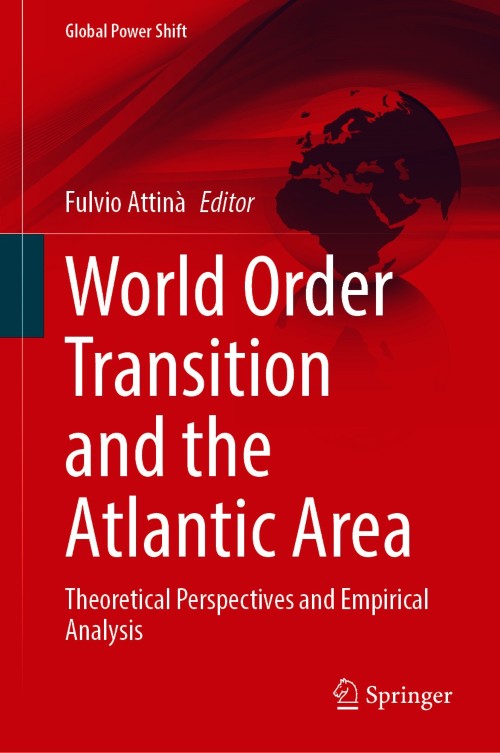
World Order Transition and the Atlantic Area [electronic resource] : Theoretical Perspectives and Empirical Analysis / edited by Fulvio Attinà.
Erişim Adresi
ISBN
9783030630386
Dil Kodu
İngilizce
Yer Numarası
DK/18270
Basım Bildirimi
1st ed. 2021.
Yayın Bilgisi
Cham : Springer International Publishing : Imprint: Springer, 2021.
Fiziksel Niteleme
X, 246 p. 13 illus., 11 illus. in color. online resource.
Dizi
Global Power Shift, 2198-7351
İçindekiler Notu
Introduction -- Part One - World order transition -- The World Order Lifecycle and the Emerging World Power Competition -- Friction, Competition, or Cooperation? Menu of Choice for the United States and China – A Power Transition Perspective - A fresh outlook to order transition and the Transatlantic Partnership: The Complex Adaptive Systems (CAS) perspective -- Part Two - The Atlantic Area -- Donald Trump and NATO: Limitations on the power of an unpredictable president Transcending the Rift? Realism, Transatlantic Relations, and American Grand Strategy -- World Order Transformation and Regional Security: The Transatlantic Adaptation and Change -- Transition and middle power. Turkey’s strategic autonomy on the Atlantic Area border with the Middle East, the Mediterranean and the Horn of Africa From Enemies to Cousins with Undefended Border – A Formation of North American Security Community -- China’s economic presence in the Baltic states and Belarus: economic statecraft amidst the great powers’ competition -- Conclusions.
Özet, vb.
This book examines the current phase of world order transition in the Atlantic area, focusing on Europe and Northern America, Asia, and Africa. In particular, it describes four processes of world order transition, namely the decreasing American leadership, the rising power of China, the receding effectiveness of economy and security world policies, and the continued but inadequate operation of the world policy-making institutions. Part one of the book presents perspectives on world order transition developed by political science schools, i.e. the world hegemony and the power transition school, and by the experts of complexity theory, a newcomer in social sciences. These theories are best suited to explain the order transition and to supply consistent, complementary data and insights on the juncture of the four processes pushing for the creation of the new world order. Part two looks into the impact of order transition on the Atlantic area. The authors focus onthe existing tensions and the potentials for change that affect the long-time relations between the USA, the European countries, and Canada. At the same time, the interference of China into the politics and economy of Europe is analyzed, in particular through a case study of the relations between China and the Baltic states.
Konu
Security, International.
Globalization.
International relations.
Peace.
Regionalism.
International Security Studies.
Globalization.
International Relations Theory.
Peace and Conflict Studies.
Regionalism.
Globalization.
International relations.
Peace.
Regionalism.
International Security Studies.
Globalization.
International Relations Theory.
Peace and Conflict Studies.
Regionalism.
Diğer Yazarlar
Kurum Adı
Eseri Alıntıla
Referansları kullanmadan önce gözden geçirmeniz ve varsa gerekli düzeltmeleri yapmanız önerilir.
Dijital Kaynak
MARC Görünümü
LEADER 04384nam a22005655i 4500
001 817058
003 TR_AnAIT
005 20260130192000
007 cr nn 008mamaa
008 210120s2021 sz | s |||| 0|eng d
020 |a9783030630386|9978-3-030-63038-6
024 7 |a10.1007/978-3-030-63038-6|2doi
041 |aeng
049 |aTürk Tarih Kurumu Kütüphanesi
050 4|aJZ5587-6009
072 7|aJPS|2bicssc
072 7|aPOL012000|2bisacsh
072 7|aJPS|2thema
082 04|a327.116|223
090 |aDK/18270
245 10|aWorld Order Transition and the Atlantic Area|h[electronic resource] :|bTheoretical Perspectives and Empirical Analysis /|cedited by Fulvio Attinà.
250 |a1st ed. 2021.
264 1|aCham :|bSpringer International Publishing :|bImprint: Springer,|c2021.
300 |aX, 246 p. 13 illus., 11 illus. in color.|bonline resource.
336 |atext|btxt|2rdacontent
337 |acomputer|bc|2rdamedia
338 |aonline resource|bcr|2rdacarrier
347 |atext file|bPDF|2rda
490 1 |aGlobal Power Shift,|x2198-7351
505 0 |aIntroduction -- Part One - World order transition -- The World Order Lifecycle and the Emerging World Power Competition -- Friction, Competition, or Cooperation? Menu of Choice for the United States and China – A Power Transition Perspective - A fresh outlook to order transition and the Transatlantic Partnership: The Complex Adaptive Systems (CAS) perspective -- Part Two - The Atlantic Area -- Donald Trump and NATO: Limitations on the power of an unpredictable president Transcending the Rift? Realism, Transatlantic Relations, and American Grand Strategy -- World Order Transformation and Regional Security: The Transatlantic Adaptation and Change -- Transition and middle power. Turkey’s strategic autonomy on the Atlantic Area border with the Middle East, the Mediterranean and the Horn of Africa From Enemies to Cousins with Undefended Border – A Formation of North American Security Community -- China’s economic presence in the Baltic states and Belarus: economic statecraft amidst the great powers’ competition -- Conclusions.
520 |aThis book examines the current phase of world order transition in the Atlantic area, focusing on Europe and Northern America, Asia, and Africa. In particular, it describes four processes of world order transition, namely the decreasing American leadership, the rising power of China, the receding effectiveness of economy and security world policies, and the continued but inadequate operation of the world policy-making institutions. Part one of the book presents perspectives on world order transition developed by political science schools, i.e. the world hegemony and the power transition school, and by the experts of complexity theory, a newcomer in social sciences. These theories are best suited to explain the order transition and to supply consistent, complementary data and insights on the juncture of the four processes pushing for the creation of the new world order. Part two looks into the impact of order transition on the Atlantic area. The authors focus onthe existing tensions and the potentials for change that affect the long-time relations between the USA, the European countries, and Canada. At the same time, the interference of China into the politics and economy of Europe is analyzed, in particular through a case study of the relations between China and the Baltic states.
650 0|aSecurity, International.
650 0|aGlobalization.
650 0|aInternational relations.
650 0|aPeace.
650 0|aRegionalism.
650 14|aInternational Security Studies.
650 24|aGlobalization.
650 24|aInternational Relations Theory.
650 24|aPeace and Conflict Studies.
650 24|aRegionalism.
700 1 |aAttinà, Fulvio.|eeditor.|4edt|4http://id.loc.gov/vocabulary/relators/edt
710 2 |aSpringerLink (Online service)
773 0 |tSpringer Nature eBook
776 08|iPrinted edition:|z9783030630379
776 08|iPrinted edition:|z9783030630393
776 08|iPrinted edition:|z9783030630409
830 0|aGlobal Power Shift,|x2198-7351
856 40|uhttps://doi.org/10.1007/978-3-030-63038-6
912 |aZDB-2-POS
912 |aZDB-2-SXPI
950 |aPolitical Science and International Studies (SpringerNature-41174)
950 |aPolitical Science and International Studies (R0) (SpringerNature-43724)
001 817058
003 TR_AnAIT
005 20260130192000
007 cr nn 008mamaa
008 210120s2021 sz | s |||| 0|eng d
020 |a9783030630386|9978-3-030-63038-6
024 7 |a10.1007/978-3-030-63038-6|2doi
041 |aeng
049 |aTürk Tarih Kurumu Kütüphanesi
050 4|aJZ5587-6009
072 7|aJPS|2bicssc
072 7|aPOL012000|2bisacsh
072 7|aJPS|2thema
082 04|a327.116|223
090 |aDK/18270
245 10|aWorld Order Transition and the Atlantic Area|h[electronic resource] :|bTheoretical Perspectives and Empirical Analysis /|cedited by Fulvio Attinà.
250 |a1st ed. 2021.
264 1|aCham :|bSpringer International Publishing :|bImprint: Springer,|c2021.
300 |aX, 246 p. 13 illus., 11 illus. in color.|bonline resource.
336 |atext|btxt|2rdacontent
337 |acomputer|bc|2rdamedia
338 |aonline resource|bcr|2rdacarrier
347 |atext file|bPDF|2rda
490 1 |aGlobal Power Shift,|x2198-7351
505 0 |aIntroduction -- Part One - World order transition -- The World Order Lifecycle and the Emerging World Power Competition -- Friction, Competition, or Cooperation? Menu of Choice for the United States and China – A Power Transition Perspective - A fresh outlook to order transition and the Transatlantic Partnership: The Complex Adaptive Systems (CAS) perspective -- Part Two - The Atlantic Area -- Donald Trump and NATO: Limitations on the power of an unpredictable president Transcending the Rift? Realism, Transatlantic Relations, and American Grand Strategy -- World Order Transformation and Regional Security: The Transatlantic Adaptation and Change -- Transition and middle power. Turkey’s strategic autonomy on the Atlantic Area border with the Middle East, the Mediterranean and the Horn of Africa From Enemies to Cousins with Undefended Border – A Formation of North American Security Community -- China’s economic presence in the Baltic states and Belarus: economic statecraft amidst the great powers’ competition -- Conclusions.
520 |aThis book examines the current phase of world order transition in the Atlantic area, focusing on Europe and Northern America, Asia, and Africa. In particular, it describes four processes of world order transition, namely the decreasing American leadership, the rising power of China, the receding effectiveness of economy and security world policies, and the continued but inadequate operation of the world policy-making institutions. Part one of the book presents perspectives on world order transition developed by political science schools, i.e. the world hegemony and the power transition school, and by the experts of complexity theory, a newcomer in social sciences. These theories are best suited to explain the order transition and to supply consistent, complementary data and insights on the juncture of the four processes pushing for the creation of the new world order. Part two looks into the impact of order transition on the Atlantic area. The authors focus onthe existing tensions and the potentials for change that affect the long-time relations between the USA, the European countries, and Canada. At the same time, the interference of China into the politics and economy of Europe is analyzed, in particular through a case study of the relations between China and the Baltic states.
650 0|aSecurity, International.
650 0|aGlobalization.
650 0|aInternational relations.
650 0|aPeace.
650 0|aRegionalism.
650 14|aInternational Security Studies.
650 24|aGlobalization.
650 24|aInternational Relations Theory.
650 24|aPeace and Conflict Studies.
650 24|aRegionalism.
700 1 |aAttinà, Fulvio.|eeditor.|4edt|4http://id.loc.gov/vocabulary/relators/edt
710 2 |aSpringerLink (Online service)
773 0 |tSpringer Nature eBook
776 08|iPrinted edition:|z9783030630379
776 08|iPrinted edition:|z9783030630393
776 08|iPrinted edition:|z9783030630409
830 0|aGlobal Power Shift,|x2198-7351
856 40|uhttps://doi.org/10.1007/978-3-030-63038-6
912 |aZDB-2-POS
912 |aZDB-2-SXPI
950 |aPolitical Science and International Studies (SpringerNature-41174)
950 |aPolitical Science and International Studies (R0) (SpringerNature-43724)
Materyaller
Depodan talep edilen materyal sadece kütüphane içerisinde kullanılmaktadır.
Materyal dışarıya ödünç verilmemektedir.
Materyal dışarıya ödünç verilmemektedir.
