

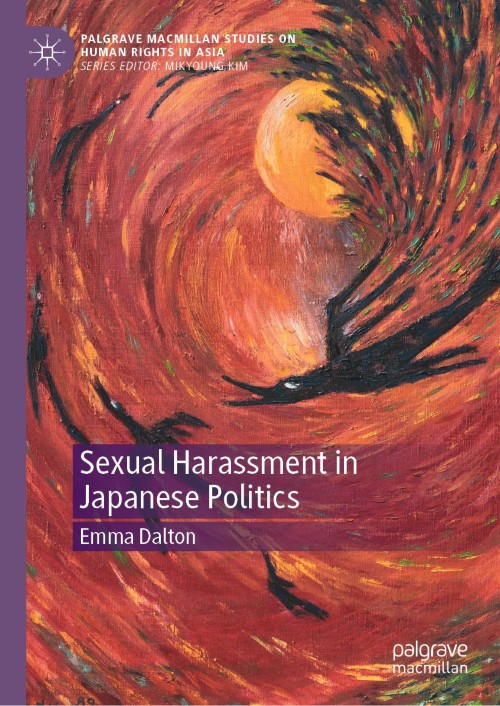
Sexual Harassment in Japanese Politics [electronic resource] / by Emma Dalton.
Erişim Adresi
ISBN
9789811637957
Dil Kodu
İngilizce
Yer Numarası
DK/18316
Yazar
Basım Bildirimi
1st ed. 2021.
Yayın Bilgisi
Singapore : Springer Nature Singapore : Imprint: Palgrave Macmillan, 2021.
Fiziksel Niteleme
VII, 239 p. 1 illus. online resource.
Dizi
Palgrave Macmillan Studies on Human Rights in Asia, 2752-4329
İçindekiler Notu
Introduction: Context and organization of book -- Chapter One: Everything being unequal: Gender and Japanese Politics -- Chapter Two: Sexual harassment as legal and cultural categories -- Chapter Three: Sexual harassment in local level politics -- Chapter Four: Sexual harassment in national level politics -- Chapter Five: The women speaking out -- Conclusion.
Özet, vb.
"The term sekuhara was popularized in Japan around 30 years ago, but sexual harassment in politics is rarely discussed. This is strange given that longtime legal and social efforts for gender equality have been impeded by politics, an arena that most Japanese consider extremely sexist. Dalton’s striking and persuasive work within the framework of Violence against Women in Politics offers us a clear-cut tool to analyze Japanese politics." -- Yayo Okano, Graduate School of Global Studies, Doshisha University, Japan "Sexual Harassment in Japanese Politics is an insightful examination of the legal, social, and ideological forces that have legitimized the sexual harassment of women in Japanese politics. The book makes a major contribution to the understanding of how sexual harassment and violence against women continue to be tolerated in professional arenas in one of the world’s most gender-unequal countries." -- Kumiko Nemoto, School ofBusiness Administration, Senshu University, Japan Sexual harassment in Japanese politics examines a problem that violates women’s human rights and prevents a flourishing democracy. Japan fares badly in international gender equality indices, especially for female political representation. The scarcity of women in politics reflects the status of women and also exacerbates it. Based on interviews with female politicians around the country from all levels of government, this book sheds light on the sexist and sometimes dangerous environments in Japanese legislative assemblies. These environments reflect and recreate broader sexual inequalities in Japanese society and are a hothouse for sexual harassment. Like many places around the world, workplace sexual harassment laws and regulations in Japan often fail to protect women from being harassed. Even more, in the ‘workplace’ of the legislative council, such regulations are typically absent. This book discusses whatthis means for women in politics in the context of a broader culture whereby victims of sexual violence are largely silenced. Emma Dalton is a Japanese lecturer in the School of Global, Urban and Social Studies at RMIT University.
Konu
Identity politics.
Sex.
Law and the social sciences.
Politics and Gender.
Gender Studies.
Socio-Legal Studies.
Sex.
Law and the social sciences.
Politics and Gender.
Gender Studies.
Socio-Legal Studies.
Kurum Adı
Eseri Alıntıla
Referansları kullanmadan önce gözden geçirmeniz ve varsa gerekli düzeltmeleri yapmanız önerilir.
Dijital Kaynak
MARC Görünümü
LEADER 04455nam a22005535i 4500
001 817104
003 TR_AnAIT
005 20260130191733
007 cr nn 008mamaa
008 210924s2021 si | s |||| 0|eng d
020 |a9789811637957|9978-981-16-3795-7
024 7 |a10.1007/978-981-16-3795-7|2doi
041 |aeng
049 |aTürk Tarih Kurumu Kütüphanesi
050 4|aJA76
072 7|aJP|2bicssc
072 7|aJFSJ|2bicssc
072 7|aPOL000000|2bisacsh
072 7|aJP|2thema
072 7|aJBSF|2thema
082 04|a320.562|223
082 04|a323.33|223
090 |aDK/18316
100 1 |aDalton, Emma.|eauthor.|4aut|4http://id.loc.gov/vocabulary/relators/aut
245 10|aSexual Harassment in Japanese Politics|h[electronic resource] /|cby Emma Dalton.
250 |a1st ed. 2021.
264 1|aSingapore :|bSpringer Nature Singapore :|bImprint: Palgrave Macmillan,|c2021.
300 |aVII, 239 p. 1 illus.|bonline resource.
336 |atext|btxt|2rdacontent
337 |acomputer|bc|2rdamedia
338 |aonline resource|bcr|2rdacarrier
347 |atext file|bPDF|2rda
490 1 |aPalgrave Macmillan Studies on Human Rights in Asia,|x2752-4329
505 0 |aIntroduction: Context and organization of book -- Chapter One: Everything being unequal: Gender and Japanese Politics -- Chapter Two: Sexual harassment as legal and cultural categories -- Chapter Three: Sexual harassment in local level politics -- Chapter Four: Sexual harassment in national level politics -- Chapter Five: The women speaking out -- Conclusion.
520 |a"The term sekuhara was popularized in Japan around 30 years ago, but sexual harassment in politics is rarely discussed. This is strange given that longtime legal and social efforts for gender equality have been impeded by politics, an arena that most Japanese consider extremely sexist. Dalton’s striking and persuasive work within the framework of Violence against Women in Politics offers us a clear-cut tool to analyze Japanese politics." -- Yayo Okano, Graduate School of Global Studies, Doshisha University, Japan "Sexual Harassment in Japanese Politics is an insightful examination of the legal, social, and ideological forces that have legitimized the sexual harassment of women in Japanese politics. The book makes a major contribution to the understanding of how sexual harassment and violence against women continue to be tolerated in professional arenas in one of the world’s most gender-unequal countries." -- Kumiko Nemoto, School ofBusiness Administration, Senshu University, Japan Sexual harassment in Japanese politics examines a problem that violates women’s human rights and prevents a flourishing democracy. Japan fares badly in international gender equality indices, especially for female political representation. The scarcity of women in politics reflects the status of women and also exacerbates it. Based on interviews with female politicians around the country from all levels of government, this book sheds light on the sexist and sometimes dangerous environments in Japanese legislative assemblies. These environments reflect and recreate broader sexual inequalities in Japanese society and are a hothouse for sexual harassment. Like many places around the world, workplace sexual harassment laws and regulations in Japan often fail to protect women from being harassed. Even more, in the ‘workplace’ of the legislative council, such regulations are typically absent. This book discusses whatthis means for women in politics in the context of a broader culture whereby victims of sexual violence are largely silenced. Emma Dalton is a Japanese lecturer in the School of Global, Urban and Social Studies at RMIT University.
650 0|aIdentity politics.
650 0|aSex.
650 0|aLaw and the social sciences.
650 14|aPolitics and Gender.
650 24|aGender Studies.
650 24|aSocio-Legal Studies.
710 2 |aSpringerLink (Online service)
773 0 |tSpringer Nature eBook
776 08|iPrinted edition:|z9789811637940
776 08|iPrinted edition:|z9789811637964
776 08|iPrinted edition:|z9789811637971
830 0|aPalgrave Macmillan Studies on Human Rights in Asia,|x2752-4329
856 40|uhttps://doi.org/10.1007/978-981-16-3795-7
912 |aZDB-2-POS
912 |aZDB-2-SXPI
950 |aPolitical Science and International Studies (SpringerNature-41174)
950 |aPolitical Science and International Studies (R0) (SpringerNature-43724)
001 817104
003 TR_AnAIT
005 20260130191733
007 cr nn 008mamaa
008 210924s2021 si | s |||| 0|eng d
020 |a9789811637957|9978-981-16-3795-7
024 7 |a10.1007/978-981-16-3795-7|2doi
041 |aeng
049 |aTürk Tarih Kurumu Kütüphanesi
050 4|aJA76
072 7|aJP|2bicssc
072 7|aJFSJ|2bicssc
072 7|aPOL000000|2bisacsh
072 7|aJP|2thema
072 7|aJBSF|2thema
082 04|a320.562|223
082 04|a323.33|223
090 |aDK/18316
100 1 |aDalton, Emma.|eauthor.|4aut|4http://id.loc.gov/vocabulary/relators/aut
245 10|aSexual Harassment in Japanese Politics|h[electronic resource] /|cby Emma Dalton.
250 |a1st ed. 2021.
264 1|aSingapore :|bSpringer Nature Singapore :|bImprint: Palgrave Macmillan,|c2021.
300 |aVII, 239 p. 1 illus.|bonline resource.
336 |atext|btxt|2rdacontent
337 |acomputer|bc|2rdamedia
338 |aonline resource|bcr|2rdacarrier
347 |atext file|bPDF|2rda
490 1 |aPalgrave Macmillan Studies on Human Rights in Asia,|x2752-4329
505 0 |aIntroduction: Context and organization of book -- Chapter One: Everything being unequal: Gender and Japanese Politics -- Chapter Two: Sexual harassment as legal and cultural categories -- Chapter Three: Sexual harassment in local level politics -- Chapter Four: Sexual harassment in national level politics -- Chapter Five: The women speaking out -- Conclusion.
520 |a"The term sekuhara was popularized in Japan around 30 years ago, but sexual harassment in politics is rarely discussed. This is strange given that longtime legal and social efforts for gender equality have been impeded by politics, an arena that most Japanese consider extremely sexist. Dalton’s striking and persuasive work within the framework of Violence against Women in Politics offers us a clear-cut tool to analyze Japanese politics." -- Yayo Okano, Graduate School of Global Studies, Doshisha University, Japan "Sexual Harassment in Japanese Politics is an insightful examination of the legal, social, and ideological forces that have legitimized the sexual harassment of women in Japanese politics. The book makes a major contribution to the understanding of how sexual harassment and violence against women continue to be tolerated in professional arenas in one of the world’s most gender-unequal countries." -- Kumiko Nemoto, School ofBusiness Administration, Senshu University, Japan Sexual harassment in Japanese politics examines a problem that violates women’s human rights and prevents a flourishing democracy. Japan fares badly in international gender equality indices, especially for female political representation. The scarcity of women in politics reflects the status of women and also exacerbates it. Based on interviews with female politicians around the country from all levels of government, this book sheds light on the sexist and sometimes dangerous environments in Japanese legislative assemblies. These environments reflect and recreate broader sexual inequalities in Japanese society and are a hothouse for sexual harassment. Like many places around the world, workplace sexual harassment laws and regulations in Japan often fail to protect women from being harassed. Even more, in the ‘workplace’ of the legislative council, such regulations are typically absent. This book discusses whatthis means for women in politics in the context of a broader culture whereby victims of sexual violence are largely silenced. Emma Dalton is a Japanese lecturer in the School of Global, Urban and Social Studies at RMIT University.
650 0|aIdentity politics.
650 0|aSex.
650 0|aLaw and the social sciences.
650 14|aPolitics and Gender.
650 24|aGender Studies.
650 24|aSocio-Legal Studies.
710 2 |aSpringerLink (Online service)
773 0 |tSpringer Nature eBook
776 08|iPrinted edition:|z9789811637940
776 08|iPrinted edition:|z9789811637964
776 08|iPrinted edition:|z9789811637971
830 0|aPalgrave Macmillan Studies on Human Rights in Asia,|x2752-4329
856 40|uhttps://doi.org/10.1007/978-981-16-3795-7
912 |aZDB-2-POS
912 |aZDB-2-SXPI
950 |aPolitical Science and International Studies (SpringerNature-41174)
950 |aPolitical Science and International Studies (R0) (SpringerNature-43724)
Materyaller
Depodan talep edilen materyal sadece kütüphane içerisinde kullanılmaktadır.
Materyal dışarıya ödünç verilmemektedir.
Materyal dışarıya ödünç verilmemektedir.
