

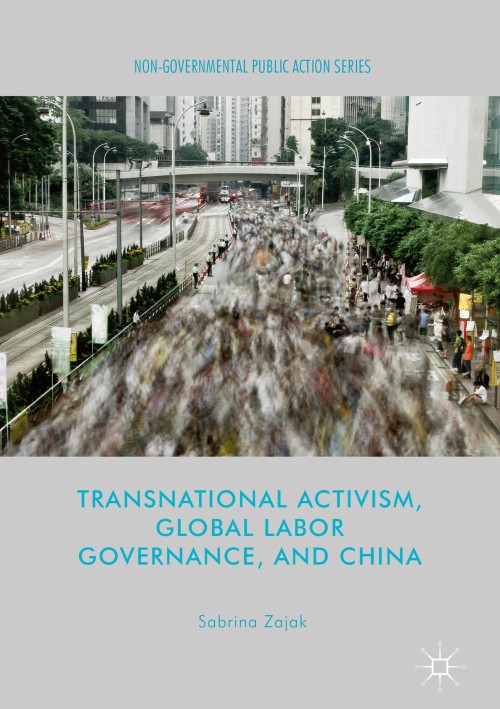
Transnational Activism, Global Labor Governance, and China [electronic resource] / by Sabrina Zajak.
Erişim Adresi
ISBN
9781349950225
Dil Kodu
İngilizce
Yer Numarası
DK/18349
Yazar
Basım Bildirimi
1st ed. 2017.
Yayın Bilgisi
New York : Palgrave Macmillan US : Imprint: Palgrave Macmillan, 2017.
Fiziksel Niteleme
XI, 286 p. 10 illus. online resource.
Dizi
Non-Governmental Public Action, 2946-2924
İçindekiler Notu
1. Introduction: Multilevel labor activism, transnational institutions, and China -- 2. Defining the shadow of the dragon: China’s internal and external strength -- 3. The international-organizational pathway: The case of the ILO -- 4. The bilateral pathway: The European Union and China -- 5. The market pathway -- 6. The civil society pathway -- 7. Conclusion: Labor transnationalism in global markets and plural institutional settings. .
Özet, vb.
This book explores rising labor unrest in China as it integrates into the global political economy. The book highlights the tensions present between China’s efforts to internationalize and accept claims to respect freedom of association rights, and its continuing insistence on a restrictive, and often punitive, approach to worker organizations. The author examines how the global labor movement can support the improvement of working conditions in Chinese factories. The book presents a novel multi-level approach capturing how trade unions and labor rights NGOs have mobilized along different pathways while attempting to influence labor standards in Chinese supply chains since 1989: within the ILO, within the European Union, leveraging global brands or directly supporting domestic labor rights NGOs. Based on extensive fieldwork in Europe, the US and China, the book shows that activists, by operating at multiple scales, were on some occasions able to support improvements over time. It alsoindicates how a politically and economically strong state such as China can affect transnational labor activism, by directly and indirectly undermining the opportunities that organized civil societies have to participate in the evolving global labor governance architecture. .
Konu
Political planning.
China __ History.
Social legislation.
Asia __ Politics and government.
Globalization.
Retail trade.
Public Policy.
History of China.
Labour Law/Social Law.
Asian Politics.
Globalization.
Trade and Retail.
China __ History.
Social legislation.
Asia __ Politics and government.
Globalization.
Retail trade.
Public Policy.
History of China.
Labour Law/Social Law.
Asian Politics.
Globalization.
Trade and Retail.
Kurum Adı
