

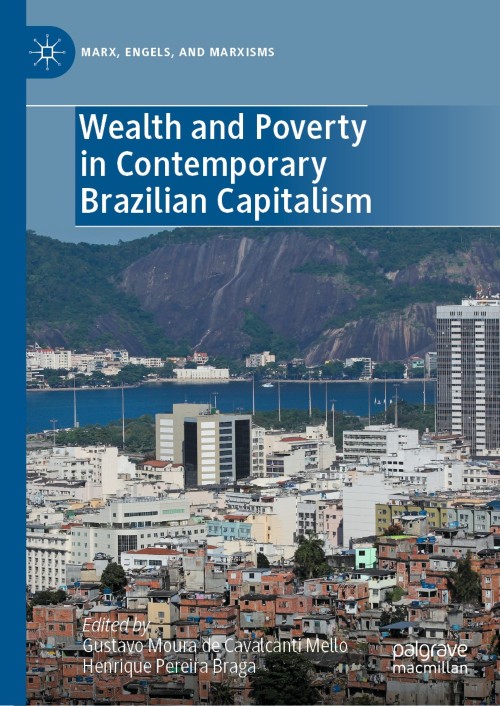
Wealth and Poverty in Contemporary Brazilian Capitalism [electronic resource] / edited by Gustavo Moura de Cavalcanti Mello, Henrique Pereira Braga.
Erişim Adresi
ISBN
9783030822989
Dil Kodu
İngilizce
Yer Numarası
DK/18398
Basım Bildirimi
1st ed. 2022.
Yayın Bilgisi
Cham : Springer International Publishing : Imprint: Palgrave Macmillan, 2022.
Fiziksel Niteleme
XXIX, 225 p. 13 illus., 6 illus. in color. online resource.
Dizi
Marx, Engels, and Marxisms, 2524-7131
İçindekiler Notu
Chapter 1. Introduction -- Chapter 2. In the bowels of capital: on modern barbarism -- Chapter 3. Rethinking wealth and poverty in capitalist society -- Chapter 4. Financialisation, work and gender: violence and barbarism in ultraliberal Brazil -- Chapter 5. Marx and the category of fictitious profits: some notes on the Brazilian economy -- Chapter 6. Dollar hegemony under challenge and the rise of Central Bank Digital Currencies (CBDC): a new form of world money? -- Chapter 7. Brazil amid the structural crisis of capital -- Chapter 8. Final words. .
Özet, vb.
This book analyses contemporary capitalism from Brazil and from the Marxian critique of political economy, particularly; the co-dependency of wealth and poverty and of civilization and barbarism; the current tendency towards capital over-accumulation and the specific form assumed by the capitalist crisis in recent decades; the financialisation process of capital accumulation, its effects on the world of labour; and the place that the state assumes in this broad process. Current trends toward increasing social inequality, impoverishment of large sections of the population, precariousness of labour and rising unemployment, environmental destruction, the spread of austerity policies and the suppression of social policies, the rise of the far right (together with the strengthening of racism, misogyny, xenophobia, political and religious fanaticism and all manner of intolerance, etc.), low economic growth, the primacy of the financial dimension of capital accumulation, all need to be understood in their multiple and complex articulations, as fundamental and inherent elements of contemporary capitalism, associating empirical analysis with conceptual construction. Because they are strictly contradictory processes, a dialectical approach is required that reclaims the Marxian legacy, and aims to contribute to updating it, seeking to bring new and relevant elements to the Marxist debate, based on a specific interpretation of Marx's work, and as an immediate empirical basis the Brazilian reality. Gustavo Moura de Cavalcanti Mello is Professor in the Department of Economics and the Post-Graduate Program in Social Policy at the Federal University of Espírito Santo, Brazil. Henrique Pereira Braga is Professor in the Department of Economics at the Federal University of Espírito Santo, Brazil. .
Konu
Political science.
Economics.
Political sociology.
America __ Politics and government.
International economic relations.
Political Theory.
Political Economy and Economic Systems.
Political Sociology.
American Politics.
International Political Economy’.
Economics.
Political sociology.
America __ Politics and government.
International economic relations.
Political Theory.
Political Economy and Economic Systems.
Political Sociology.
American Politics.
International Political Economy’.
Diğer Yazarlar
Kurum Adı
Eseri Alıntıla
Referansları kullanmadan önce gözden geçirmeniz ve varsa gerekli düzeltmeleri yapmanız önerilir.
Dijital Kaynak
MARC Görünümü
LEADER 04597nam a22005775i 4500
001 817187
003 TR_AnAIT
005 20260130191341
007 cr nn 008mamaa
008 211021s2022 sz | s |||| 0|eng d
020 |a9783030822989|9978-3-030-82298-9
024 7 |a10.1007/978-3-030-82298-9|2doi
041 |aeng
049 |aTürk Tarih Kurumu Kütüphanesi
050 4|aJC11-607
072 7|aJPA|2bicssc
072 7|aPOL010000|2bisacsh
072 7|aJPA|2thema
082 04|a320.01|223
090 |aDK/18398
245 10|aWealth and Poverty in Contemporary Brazilian Capitalism|h[electronic resource] /|cedited by Gustavo Moura de Cavalcanti Mello, Henrique Pereira Braga.
250 |a1st ed. 2022.
264 1|aCham :|bSpringer International Publishing :|bImprint: Palgrave Macmillan,|c2022.
300 |aXXIX, 225 p. 13 illus., 6 illus. in color.|bonline resource.
336 |atext|btxt|2rdacontent
337 |acomputer|bc|2rdamedia
338 |aonline resource|bcr|2rdacarrier
347 |atext file|bPDF|2rda
490 1 |aMarx, Engels, and Marxisms,|x2524-7131
505 0 |aChapter 1. Introduction -- Chapter 2. In the bowels of capital: on modern barbarism -- Chapter 3. Rethinking wealth and poverty in capitalist society -- Chapter 4. Financialisation, work and gender: violence and barbarism in ultraliberal Brazil -- Chapter 5. Marx and the category of fictitious profits: some notes on the Brazilian economy -- Chapter 6. Dollar hegemony under challenge and the rise of Central Bank Digital Currencies (CBDC): a new form of world money? -- Chapter 7. Brazil amid the structural crisis of capital -- Chapter 8. Final words. .
520 |aThis book analyses contemporary capitalism from Brazil and from the Marxian critique of political economy, particularly; the co-dependency of wealth and poverty and of civilization and barbarism; the current tendency towards capital over-accumulation and the specific form assumed by the capitalist crisis in recent decades; the financialisation process of capital accumulation, its effects on the world of labour; and the place that the state assumes in this broad process. Current trends toward increasing social inequality, impoverishment of large sections of the population, precariousness of labour and rising unemployment, environmental destruction, the spread of austerity policies and the suppression of social policies, the rise of the far right (together with the strengthening of racism, misogyny, xenophobia, political and religious fanaticism and all manner of intolerance, etc.), low economic growth, the primacy of the financial dimension of capital accumulation, all need to be understood in their multiple and complex articulations, as fundamental and inherent elements of contemporary capitalism, associating empirical analysis with conceptual construction. Because they are strictly contradictory processes, a dialectical approach is required that reclaims the Marxian legacy, and aims to contribute to updating it, seeking to bring new and relevant elements to the Marxist debate, based on a specific interpretation of Marx's work, and as an immediate empirical basis the Brazilian reality. Gustavo Moura de Cavalcanti Mello is Professor in the Department of Economics and the Post-Graduate Program in Social Policy at the Federal University of Espírito Santo, Brazil. Henrique Pereira Braga is Professor in the Department of Economics at the Federal University of Espírito Santo, Brazil. .
650 0|aPolitical science.
650 0|aEconomics.
650 0|aPolitical sociology.
650 0|aAmerica|xPolitics and government.
650 0|aInternational economic relations.
650 14|aPolitical Theory.
650 24|aPolitical Economy and Economic Systems.
650 24|aPolitical Sociology.
650 24|aAmerican Politics.
650 24|aInternational Political Economy’.
700 1 |aMello, Gustavo Moura de Cavalcanti.|eeditor.|4edt|4http://id.loc.gov/vocabulary/relators/edt
700 1 |aBraga, Henrique Pereira.|eeditor.|4edt|4http://id.loc.gov/vocabulary/relators/edt
710 2 |aSpringerLink (Online service)
773 0 |tSpringer Nature eBook
776 08|iPrinted edition:|z9783030822972
776 08|iPrinted edition:|z9783030822996
776 08|iPrinted edition:|z9783030823009
830 0|aMarx, Engels, and Marxisms,|x2524-7131
856 40|uhttps://doi.org/10.1007/978-3-030-82298-9
912 |aZDB-2-POS
912 |aZDB-2-SXPI
950 |aPolitical Science and International Studies (SpringerNature-41174)
950 |aPolitical Science and International Studies (R0) (SpringerNature-43724)
001 817187
003 TR_AnAIT
005 20260130191341
007 cr nn 008mamaa
008 211021s2022 sz | s |||| 0|eng d
020 |a9783030822989|9978-3-030-82298-9
024 7 |a10.1007/978-3-030-82298-9|2doi
041 |aeng
049 |aTürk Tarih Kurumu Kütüphanesi
050 4|aJC11-607
072 7|aJPA|2bicssc
072 7|aPOL010000|2bisacsh
072 7|aJPA|2thema
082 04|a320.01|223
090 |aDK/18398
245 10|aWealth and Poverty in Contemporary Brazilian Capitalism|h[electronic resource] /|cedited by Gustavo Moura de Cavalcanti Mello, Henrique Pereira Braga.
250 |a1st ed. 2022.
264 1|aCham :|bSpringer International Publishing :|bImprint: Palgrave Macmillan,|c2022.
300 |aXXIX, 225 p. 13 illus., 6 illus. in color.|bonline resource.
336 |atext|btxt|2rdacontent
337 |acomputer|bc|2rdamedia
338 |aonline resource|bcr|2rdacarrier
347 |atext file|bPDF|2rda
490 1 |aMarx, Engels, and Marxisms,|x2524-7131
505 0 |aChapter 1. Introduction -- Chapter 2. In the bowels of capital: on modern barbarism -- Chapter 3. Rethinking wealth and poverty in capitalist society -- Chapter 4. Financialisation, work and gender: violence and barbarism in ultraliberal Brazil -- Chapter 5. Marx and the category of fictitious profits: some notes on the Brazilian economy -- Chapter 6. Dollar hegemony under challenge and the rise of Central Bank Digital Currencies (CBDC): a new form of world money? -- Chapter 7. Brazil amid the structural crisis of capital -- Chapter 8. Final words. .
520 |aThis book analyses contemporary capitalism from Brazil and from the Marxian critique of political economy, particularly; the co-dependency of wealth and poverty and of civilization and barbarism; the current tendency towards capital over-accumulation and the specific form assumed by the capitalist crisis in recent decades; the financialisation process of capital accumulation, its effects on the world of labour; and the place that the state assumes in this broad process. Current trends toward increasing social inequality, impoverishment of large sections of the population, precariousness of labour and rising unemployment, environmental destruction, the spread of austerity policies and the suppression of social policies, the rise of the far right (together with the strengthening of racism, misogyny, xenophobia, political and religious fanaticism and all manner of intolerance, etc.), low economic growth, the primacy of the financial dimension of capital accumulation, all need to be understood in their multiple and complex articulations, as fundamental and inherent elements of contemporary capitalism, associating empirical analysis with conceptual construction. Because they are strictly contradictory processes, a dialectical approach is required that reclaims the Marxian legacy, and aims to contribute to updating it, seeking to bring new and relevant elements to the Marxist debate, based on a specific interpretation of Marx's work, and as an immediate empirical basis the Brazilian reality. Gustavo Moura de Cavalcanti Mello is Professor in the Department of Economics and the Post-Graduate Program in Social Policy at the Federal University of Espírito Santo, Brazil. Henrique Pereira Braga is Professor in the Department of Economics at the Federal University of Espírito Santo, Brazil. .
650 0|aPolitical science.
650 0|aEconomics.
650 0|aPolitical sociology.
650 0|aAmerica|xPolitics and government.
650 0|aInternational economic relations.
650 14|aPolitical Theory.
650 24|aPolitical Economy and Economic Systems.
650 24|aPolitical Sociology.
650 24|aAmerican Politics.
650 24|aInternational Political Economy’.
700 1 |aMello, Gustavo Moura de Cavalcanti.|eeditor.|4edt|4http://id.loc.gov/vocabulary/relators/edt
700 1 |aBraga, Henrique Pereira.|eeditor.|4edt|4http://id.loc.gov/vocabulary/relators/edt
710 2 |aSpringerLink (Online service)
773 0 |tSpringer Nature eBook
776 08|iPrinted edition:|z9783030822972
776 08|iPrinted edition:|z9783030822996
776 08|iPrinted edition:|z9783030823009
830 0|aMarx, Engels, and Marxisms,|x2524-7131
856 40|uhttps://doi.org/10.1007/978-3-030-82298-9
912 |aZDB-2-POS
912 |aZDB-2-SXPI
950 |aPolitical Science and International Studies (SpringerNature-41174)
950 |aPolitical Science and International Studies (R0) (SpringerNature-43724)
Materyaller
Depodan talep edilen materyal sadece kütüphane içerisinde kullanılmaktadır.
Materyal dışarıya ödünç verilmemektedir.
Materyal dışarıya ödünç verilmemektedir.
