

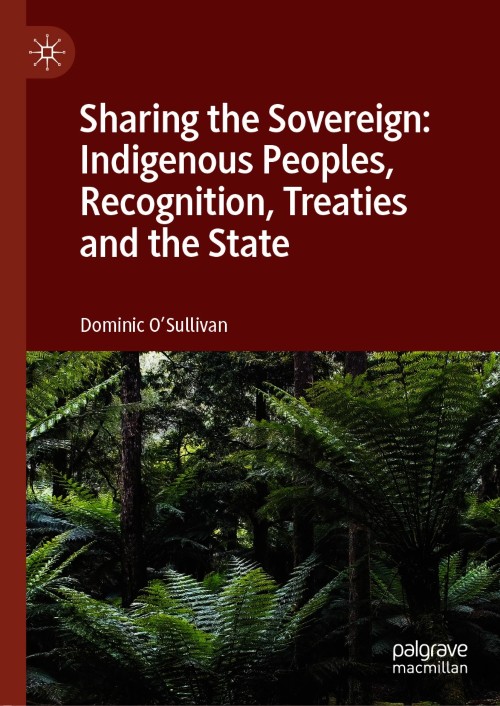
Sharing the Sovereign: Indigenous Peoples, Recognition, Treaties and the State [electronic resource] / by Dominic O'Sullivan.
Erişim Adresi
ISBN
9789813341722
Dil Kodu
İngilizce
Yer Numarası
DK/18488
Yazar
Basım Bildirimi
1st ed. 2021.
Yayın Bilgisi
Singapore : Springer Nature Singapore : Imprint: Palgrave Macmillan, 2021.
Fiziksel Niteleme
XI, 218 p. 1 illus. online resource.
İçindekiler Notu
Chapter 1. Introduction -- Chapter 2. Recognition -- Chapter 3. Recognising Sovereignty and Citizenship -- Chapter 4.Makarrata, Truth and Treaties as Social Contracts -- Chapter 5. The Treaty of Waitangi -- Chapter 6. Recognition, Pluralism and Participation -- Chapter 7. Beyond consultation: participation as influence -- Chapter 8. Power and Presence: indigenising public decision-making. Chapter 9. Conclusion.
Özet, vb.
Dominic O’Sullivan presents an insightful, timely, and compelling argument for the transformative potential of discourses of recognition. This authoritative and thought-provoking book offers a significant contribution to contemporary debates on constitutional recognition, self-determination and the agency of Indigenous peoples. --Tanya Fitzgerald, Professor of Higher Education, The University of Western Australia O’Sullivan’s work is an important text that brings new inter-cultural understandings of how concepts of treaty, recognition and sovereignty connect, on lands commonly known as Australia and New Zealand. His Indigenous scholarship on these important concepts is a valuable contribution to the literature and highly recommended reading. --Dr Jessa Rogers-Metuamate, Department of Indigenous Studies, Macquarie University This book explains how recognition theory contributes to non-colonial and enduring political relationships between Indigenous nations and the state. It refers to Indigenous Australian arguments for a Voice to Parliament and treaties to show what recognition may mean for practical politics and policy-making. It considers critiques of recognition theory by Canadian First Nations’ scholars who make strong arguments for its assimilationist effect, but shows that ultimately, recognition is a theory and practice of transformative potential, requiring fundamentally different ways of thinking about citizenship and sovereignty. This book draws extensively on New Zealand’s Treaty of Waitangi and measures to support Maori political participation, to show what treaties and a Voice to Parliament could mean in practical terms. It responds to liberal democratic objections to show how institutionalised means of indigenous participation may, in fact, make democracy work better. Dominic O’Sullivan is Associate Professor of political science at Charles Sturt University, Australia, and an Adjunct Professor in the Centre for Maori Health Research at Auckland University of Technology, New Zealand. He is from the Te Rarawa and Ngati Kahu iwi of New Zealand, and this is his eighth book. The most recent ‘We Are All Here to Stay’: Sovereignty, Citizenship and the UN Declaration on the Rights of Indigenous Peoples was published in 2020.
Konu
Political science.
Human rights.
Economic development.
Identity politics.
Political Theory.
Politics and Human Rights.
Development Studies.
Governance and Government.
Identity Politics.
Human rights.
Economic development.
Identity politics.
Political Theory.
Politics and Human Rights.
Development Studies.
Governance and Government.
Identity Politics.
Kurum Adı
Eseri Alıntıla
Referansları kullanmadan önce gözden geçirmeniz ve varsa gerekli düzeltmeleri yapmanız önerilir.
Dijital Kaynak
MARC Görünümü
LEADER 04573nam a22005295i 4500
001 817277
003 TR_AnAIT
005 20260130191011
007 cr nn 008mamaa
008 201221s2021 si | s |||| 0|eng d
020 |a9789813341722|9978-981-33-4172-2
024 7 |a10.1007/978-981-33-4172-2|2doi
041 |aeng
049 |aTürk Tarih Kurumu Kütüphanesi
050 4|aJC11-607
072 7|aJPA|2bicssc
072 7|aPOL010000|2bisacsh
072 7|aJPA|2thema
082 04|a320.01|223
090 |aDK/18488
100 1 |aO'Sullivan, Dominic.|eauthor.|4aut|4http://id.loc.gov/vocabulary/relators/aut
245 10|aSharing the Sovereign: Indigenous Peoples, Recognition, Treaties and the State|h[electronic resource] /|cby Dominic O'Sullivan.
250 |a1st ed. 2021.
264 1|aSingapore :|bSpringer Nature Singapore :|bImprint: Palgrave Macmillan,|c2021.
300 |aXI, 218 p. 1 illus.|bonline resource.
336 |atext|btxt|2rdacontent
337 |acomputer|bc|2rdamedia
338 |aonline resource|bcr|2rdacarrier
347 |atext file|bPDF|2rda
505 0 |aChapter 1. Introduction -- Chapter 2. Recognition -- Chapter 3. Recognising Sovereignty and Citizenship -- Chapter 4.Makarrata, Truth and Treaties as Social Contracts -- Chapter 5. The Treaty of Waitangi -- Chapter 6. Recognition, Pluralism and Participation -- Chapter 7. Beyond consultation: participation as influence -- Chapter 8. Power and Presence: indigenising public decision-making. Chapter 9. Conclusion.
520 |aDominic O’Sullivan presents an insightful, timely, and compelling argument for the transformative potential of discourses of recognition. This authoritative and thought-provoking book offers a significant contribution to contemporary debates on constitutional recognition, self-determination and the agency of Indigenous peoples. --Tanya Fitzgerald, Professor of Higher Education, The University of Western Australia O’Sullivan’s work is an important text that brings new inter-cultural understandings of how concepts of treaty, recognition and sovereignty connect, on lands commonly known as Australia and New Zealand. His Indigenous scholarship on these important concepts is a valuable contribution to the literature and highly recommended reading. --Dr Jessa Rogers-Metuamate, Department of Indigenous Studies, Macquarie University This book explains how recognition theory contributes to non-colonial and enduring political relationships between Indigenous nations and the state. It refers to Indigenous Australian arguments for a Voice to Parliament and treaties to show what recognition may mean for practical politics and policy-making. It considers critiques of recognition theory by Canadian First Nations’ scholars who make strong arguments for its assimilationist effect, but shows that ultimately, recognition is a theory and practice of transformative potential, requiring fundamentally different ways of thinking about citizenship and sovereignty. This book draws extensively on New Zealand’s Treaty of Waitangi and measures to support Maori political participation, to show what treaties and a Voice to Parliament could mean in practical terms. It responds to liberal democratic objections to show how institutionalised means of indigenous participation may, in fact, make democracy work better. Dominic O’Sullivan is Associate Professor of political science at Charles Sturt University, Australia, and an Adjunct Professor in the Centre for Maori Health Research at Auckland University of Technology, New Zealand. He is from the Te Rarawa and Ngati Kahu iwi of New Zealand, and this is his eighth book. The most recent ‘We Are All Here to Stay’: Sovereignty, Citizenship and the UN Declaration on the Rights of Indigenous Peoples was published in 2020.
650 0|aPolitical science.
650 0|aHuman rights.
650 0|aEconomic development.
650 0|aIdentity politics.
650 14|aPolitical Theory.
650 24|aPolitics and Human Rights.
650 24|aDevelopment Studies.
650 24|aGovernance and Government.
650 24|aIdentity Politics.
710 2 |aSpringerLink (Online service)
773 0 |tSpringer Nature eBook
776 08|iPrinted edition:|z9789813341715
776 08|iPrinted edition:|z9789813341739
776 08|iPrinted edition:|z9789813341746
856 40|uhttps://doi.org/10.1007/978-981-33-4172-2
912 |aZDB-2-POS
912 |aZDB-2-SXPI
950 |aPolitical Science and International Studies (SpringerNature-41174)
950 |aPolitical Science and International Studies (R0) (SpringerNature-43724)
001 817277
003 TR_AnAIT
005 20260130191011
007 cr nn 008mamaa
008 201221s2021 si | s |||| 0|eng d
020 |a9789813341722|9978-981-33-4172-2
024 7 |a10.1007/978-981-33-4172-2|2doi
041 |aeng
049 |aTürk Tarih Kurumu Kütüphanesi
050 4|aJC11-607
072 7|aJPA|2bicssc
072 7|aPOL010000|2bisacsh
072 7|aJPA|2thema
082 04|a320.01|223
090 |aDK/18488
100 1 |aO'Sullivan, Dominic.|eauthor.|4aut|4http://id.loc.gov/vocabulary/relators/aut
245 10|aSharing the Sovereign: Indigenous Peoples, Recognition, Treaties and the State|h[electronic resource] /|cby Dominic O'Sullivan.
250 |a1st ed. 2021.
264 1|aSingapore :|bSpringer Nature Singapore :|bImprint: Palgrave Macmillan,|c2021.
300 |aXI, 218 p. 1 illus.|bonline resource.
336 |atext|btxt|2rdacontent
337 |acomputer|bc|2rdamedia
338 |aonline resource|bcr|2rdacarrier
347 |atext file|bPDF|2rda
505 0 |aChapter 1. Introduction -- Chapter 2. Recognition -- Chapter 3. Recognising Sovereignty and Citizenship -- Chapter 4.Makarrata, Truth and Treaties as Social Contracts -- Chapter 5. The Treaty of Waitangi -- Chapter 6. Recognition, Pluralism and Participation -- Chapter 7. Beyond consultation: participation as influence -- Chapter 8. Power and Presence: indigenising public decision-making. Chapter 9. Conclusion.
520 |aDominic O’Sullivan presents an insightful, timely, and compelling argument for the transformative potential of discourses of recognition. This authoritative and thought-provoking book offers a significant contribution to contemporary debates on constitutional recognition, self-determination and the agency of Indigenous peoples. --Tanya Fitzgerald, Professor of Higher Education, The University of Western Australia O’Sullivan’s work is an important text that brings new inter-cultural understandings of how concepts of treaty, recognition and sovereignty connect, on lands commonly known as Australia and New Zealand. His Indigenous scholarship on these important concepts is a valuable contribution to the literature and highly recommended reading. --Dr Jessa Rogers-Metuamate, Department of Indigenous Studies, Macquarie University This book explains how recognition theory contributes to non-colonial and enduring political relationships between Indigenous nations and the state. It refers to Indigenous Australian arguments for a Voice to Parliament and treaties to show what recognition may mean for practical politics and policy-making. It considers critiques of recognition theory by Canadian First Nations’ scholars who make strong arguments for its assimilationist effect, but shows that ultimately, recognition is a theory and practice of transformative potential, requiring fundamentally different ways of thinking about citizenship and sovereignty. This book draws extensively on New Zealand’s Treaty of Waitangi and measures to support Maori political participation, to show what treaties and a Voice to Parliament could mean in practical terms. It responds to liberal democratic objections to show how institutionalised means of indigenous participation may, in fact, make democracy work better. Dominic O’Sullivan is Associate Professor of political science at Charles Sturt University, Australia, and an Adjunct Professor in the Centre for Maori Health Research at Auckland University of Technology, New Zealand. He is from the Te Rarawa and Ngati Kahu iwi of New Zealand, and this is his eighth book. The most recent ‘We Are All Here to Stay’: Sovereignty, Citizenship and the UN Declaration on the Rights of Indigenous Peoples was published in 2020.
650 0|aPolitical science.
650 0|aHuman rights.
650 0|aEconomic development.
650 0|aIdentity politics.
650 14|aPolitical Theory.
650 24|aPolitics and Human Rights.
650 24|aDevelopment Studies.
650 24|aGovernance and Government.
650 24|aIdentity Politics.
710 2 |aSpringerLink (Online service)
773 0 |tSpringer Nature eBook
776 08|iPrinted edition:|z9789813341715
776 08|iPrinted edition:|z9789813341739
776 08|iPrinted edition:|z9789813341746
856 40|uhttps://doi.org/10.1007/978-981-33-4172-2
912 |aZDB-2-POS
912 |aZDB-2-SXPI
950 |aPolitical Science and International Studies (SpringerNature-41174)
950 |aPolitical Science and International Studies (R0) (SpringerNature-43724)
Materyaller
Depodan talep edilen materyal sadece kütüphane içerisinde kullanılmaktadır.
Materyal dışarıya ödünç verilmemektedir.
Materyal dışarıya ödünç verilmemektedir.
