

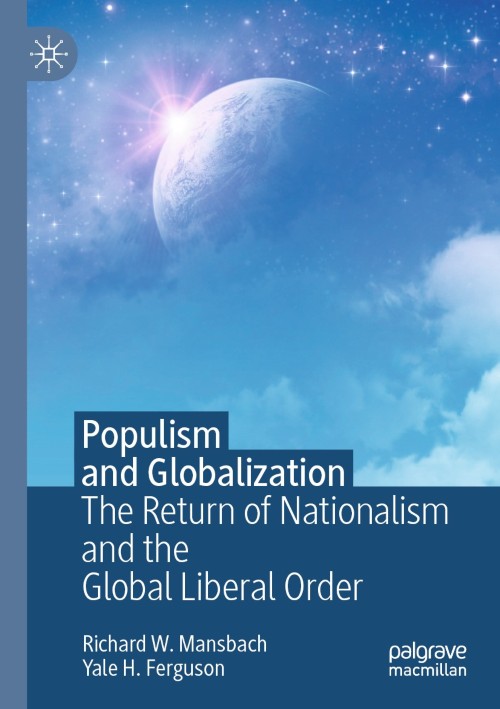
Populism and Globalization [electronic resource] : The Return of Nationalism and the Global Liberal Order / by Richard W. Mansbach, Yale H. Ferguson.
Erişim Adresi
ISBN
9783030720339
Dil Kodu
İngilizce
Yer Numarası
DK/18510
Yazar
Basım Bildirimi
1st ed. 2021.
Yayın Bilgisi
Cham : Springer International Publishing : Imprint: Palgrave Macmillan, 2021.
Fiziksel Niteleme
XIV, 529 p. 1 illus. online resource.
İçindekiler Notu
Part 1 The Sources and Evolution of Nationalist-Populism -- Chapter 1 Globalization and the Global Liberal Order -- Chapter 2 Nationalist-Populism, Its Causes, Content, and Consequences -- Chapter 3 The Return of Geopolitics and Declining U.S. Hegemony -- Part 2 The Spread of Nationalist-Populism -- Chapter 4 The Sources and Spread of Nationalist-Populism: America -- Chapter 5 Great Britain: Brexit, and Nationalist-Populism -- Chapter 6 Europe and the Spread of Nationalist-Populism -- Chapter 7 Nationalist-Populism in the Global South and Middle East -- Part 3 Three Dimensions of Globalization: Present and Future -- Chapter 8 The Political Dimension of Globalization -- Chapter 9 The Economic Dimension of Globalization -- Chapter 10 The Socio-Cultural Dimension of Globalization -- Part 4 Conclusions -- Chapter 11 The Future of Globalization and the Liberal Global Order.
Özet, vb.
This book describes the global spread of nationalist-populism by rightwing and racist political parties; their impact on political, economic, and sociocultural globalization; and the corrosive impact of this ideology on the global liberal order that emerged after World War II under United States leadership. The global liberal order is a system of norms including peace and security, democracy, human rights, free trade, financial stability and support for a broad range of international governmental organizations and treaties fostering interstate and transnational cooperation to advance those norms and resolve collective problems. Examples of these organizations are the United Nations, European Union, NATO, World Health Organization, World Trade Organization, World Bank, International Monetary Fund, and the Paris Climate Accord. Suitable for interested scholars and general readers as well as a classroom text. Yale H. Ferguson is Emeritus Distinguished Professor of Global and International Affairs, Rutgers University. He was Co-Director and remains a Professorial Fellow at the graduate Division of Global Affairs at Rutgers-Newark. He is an elected Member of the European Academy of Arts and Sciences and has been a Visiting Fellow at the University of Cambridge, the Norwegian Nobel Institute, and the University of Padova, as well as Fulbright and Honorary Professor at the University of Salzburg. Richard W. Mansbach is Professor of Political Science at Iowa State University. He formerly served as Chair of the Department of Political Science at Iowa State and at Rutgers University-New Brunswick. He was a Marshall Scholar at Oxford University and three times a Fulbright Professor, in Singapore, Seoul, and Vienna. He and Ferguson both received a Distinguished Scholar Award from the Historical International Relations Section of the International Studies Association in 2017. Ferguson and Mansbach have previously co-authored: Globalization: The Return of Borders to a Borderless World?; A World of Polities: Essays in Global Politics; Remapping Global Politics: History’s Revenge and Future Shock; The Elusive Quest Continues: Theory and Global Politics; Polities: Authority, Identities, and Change; The State, Conceptual Chaos, and the Future of International Relations Theory; The Elusive Quest: Theory and International Politics; and The Web of World Politics: Nonstate Actors in the Global System.
Konu
Globalization.
International relations.
Globalization.
International Relations Theory.
Foreign Policy.
International relations.
Globalization.
International Relations Theory.
Foreign Policy.
Diğer Yazarlar
Kurum Adı
Eseri Alıntıla
Referansları kullanmadan önce gözden geçirmeniz ve varsa gerekli düzeltmeleri yapmanız önerilir.
Dijital Kaynak
MARC Görünümü
LEADER 05109nam a22004815i 4500
001 817299
003 TR_AnAIT
005 20260130190902
007 cr nn 008mamaa
008 210424s2021 sz | s |||| 0|eng d
020 |a9783030720339|9978-3-030-72033-9
024 7 |a10.1007/978-3-030-72033-9|2doi
041 |aeng
049 |aTürk Tarih Kurumu Kütüphanesi
050 4|aJZ1317.5-1324
072 7|aJFFS|2bicssc
072 7|aPOL033000|2bisacsh
072 7|aGTQ|2thema
082 04|a327.1|223
090 |aDK/18510
100 1 |aMansbach, Richard W.|eauthor.|4aut|4http://id.loc.gov/vocabulary/relators/aut
245 10|aPopulism and Globalization|h[electronic resource] :|bThe Return of Nationalism and the Global Liberal Order /|cby Richard W. Mansbach, Yale H. Ferguson.
250 |a1st ed. 2021.
264 1|aCham :|bSpringer International Publishing :|bImprint: Palgrave Macmillan,|c2021.
300 |aXIV, 529 p. 1 illus.|bonline resource.
336 |atext|btxt|2rdacontent
337 |acomputer|bc|2rdamedia
338 |aonline resource|bcr|2rdacarrier
347 |atext file|bPDF|2rda
505 0 |aPart 1 The Sources and Evolution of Nationalist-Populism -- Chapter 1 Globalization and the Global Liberal Order -- Chapter 2 Nationalist-Populism, Its Causes, Content, and Consequences -- Chapter 3 The Return of Geopolitics and Declining U.S. Hegemony -- Part 2 The Spread of Nationalist-Populism -- Chapter 4 The Sources and Spread of Nationalist-Populism: America -- Chapter 5 Great Britain: Brexit, and Nationalist-Populism -- Chapter 6 Europe and the Spread of Nationalist-Populism -- Chapter 7 Nationalist-Populism in the Global South and Middle East -- Part 3 Three Dimensions of Globalization: Present and Future -- Chapter 8 The Political Dimension of Globalization -- Chapter 9 The Economic Dimension of Globalization -- Chapter 10 The Socio-Cultural Dimension of Globalization -- Part 4 Conclusions -- Chapter 11 The Future of Globalization and the Liberal Global Order.
520 |aThis book describes the global spread of nationalist-populism by rightwing and racist political parties; their impact on political, economic, and sociocultural globalization; and the corrosive impact of this ideology on the global liberal order that emerged after World War II under United States leadership. The global liberal order is a system of norms including peace and security, democracy, human rights, free trade, financial stability and support for a broad range of international governmental organizations and treaties fostering interstate and transnational cooperation to advance those norms and resolve collective problems. Examples of these organizations are the United Nations, European Union, NATO, World Health Organization, World Trade Organization, World Bank, International Monetary Fund, and the Paris Climate Accord. Suitable for interested scholars and general readers as well as a classroom text. Yale H. Ferguson is Emeritus Distinguished Professor of Global and International Affairs, Rutgers University. He was Co-Director and remains a Professorial Fellow at the graduate Division of Global Affairs at Rutgers-Newark. He is an elected Member of the European Academy of Arts and Sciences and has been a Visiting Fellow at the University of Cambridge, the Norwegian Nobel Institute, and the University of Padova, as well as Fulbright and Honorary Professor at the University of Salzburg. Richard W. Mansbach is Professor of Political Science at Iowa State University. He formerly served as Chair of the Department of Political Science at Iowa State and at Rutgers University-New Brunswick. He was a Marshall Scholar at Oxford University and three times a Fulbright Professor, in Singapore, Seoul, and Vienna. He and Ferguson both received a Distinguished Scholar Award from the Historical International Relations Section of the International Studies Association in 2017. Ferguson and Mansbach have previously co-authored: Globalization: The Return of Borders to a Borderless World?; A World of Polities: Essays in Global Politics; Remapping Global Politics: History’s Revenge and Future Shock; The Elusive Quest Continues: Theory and Global Politics; Polities: Authority, Identities, and Change; The State, Conceptual Chaos, and the Future of International Relations Theory; The Elusive Quest: Theory and International Politics; and The Web of World Politics: Nonstate Actors in the Global System.
650 0|aGlobalization.
650 0|aInternational relations.
650 14|aGlobalization.
650 24|aInternational Relations Theory.
650 24|aForeign Policy.
700 1 |aFerguson, Yale H.|eauthor.|4aut|4http://id.loc.gov/vocabulary/relators/aut
710 2 |aSpringerLink (Online service)
773 0 |tSpringer Nature eBook
776 08|iPrinted edition:|z9783030720322
776 08|iPrinted edition:|z9783030720346
856 40|uhttps://doi.org/10.1007/978-3-030-72033-9
912 |aZDB-2-POS
912 |aZDB-2-SXPI
950 |aPolitical Science and International Studies (SpringerNature-41174)
950 |aPolitical Science and International Studies (R0) (SpringerNature-43724)
001 817299
003 TR_AnAIT
005 20260130190902
007 cr nn 008mamaa
008 210424s2021 sz | s |||| 0|eng d
020 |a9783030720339|9978-3-030-72033-9
024 7 |a10.1007/978-3-030-72033-9|2doi
041 |aeng
049 |aTürk Tarih Kurumu Kütüphanesi
050 4|aJZ1317.5-1324
072 7|aJFFS|2bicssc
072 7|aPOL033000|2bisacsh
072 7|aGTQ|2thema
082 04|a327.1|223
090 |aDK/18510
100 1 |aMansbach, Richard W.|eauthor.|4aut|4http://id.loc.gov/vocabulary/relators/aut
245 10|aPopulism and Globalization|h[electronic resource] :|bThe Return of Nationalism and the Global Liberal Order /|cby Richard W. Mansbach, Yale H. Ferguson.
250 |a1st ed. 2021.
264 1|aCham :|bSpringer International Publishing :|bImprint: Palgrave Macmillan,|c2021.
300 |aXIV, 529 p. 1 illus.|bonline resource.
336 |atext|btxt|2rdacontent
337 |acomputer|bc|2rdamedia
338 |aonline resource|bcr|2rdacarrier
347 |atext file|bPDF|2rda
505 0 |aPart 1 The Sources and Evolution of Nationalist-Populism -- Chapter 1 Globalization and the Global Liberal Order -- Chapter 2 Nationalist-Populism, Its Causes, Content, and Consequences -- Chapter 3 The Return of Geopolitics and Declining U.S. Hegemony -- Part 2 The Spread of Nationalist-Populism -- Chapter 4 The Sources and Spread of Nationalist-Populism: America -- Chapter 5 Great Britain: Brexit, and Nationalist-Populism -- Chapter 6 Europe and the Spread of Nationalist-Populism -- Chapter 7 Nationalist-Populism in the Global South and Middle East -- Part 3 Three Dimensions of Globalization: Present and Future -- Chapter 8 The Political Dimension of Globalization -- Chapter 9 The Economic Dimension of Globalization -- Chapter 10 The Socio-Cultural Dimension of Globalization -- Part 4 Conclusions -- Chapter 11 The Future of Globalization and the Liberal Global Order.
520 |aThis book describes the global spread of nationalist-populism by rightwing and racist political parties; their impact on political, economic, and sociocultural globalization; and the corrosive impact of this ideology on the global liberal order that emerged after World War II under United States leadership. The global liberal order is a system of norms including peace and security, democracy, human rights, free trade, financial stability and support for a broad range of international governmental organizations and treaties fostering interstate and transnational cooperation to advance those norms and resolve collective problems. Examples of these organizations are the United Nations, European Union, NATO, World Health Organization, World Trade Organization, World Bank, International Monetary Fund, and the Paris Climate Accord. Suitable for interested scholars and general readers as well as a classroom text. Yale H. Ferguson is Emeritus Distinguished Professor of Global and International Affairs, Rutgers University. He was Co-Director and remains a Professorial Fellow at the graduate Division of Global Affairs at Rutgers-Newark. He is an elected Member of the European Academy of Arts and Sciences and has been a Visiting Fellow at the University of Cambridge, the Norwegian Nobel Institute, and the University of Padova, as well as Fulbright and Honorary Professor at the University of Salzburg. Richard W. Mansbach is Professor of Political Science at Iowa State University. He formerly served as Chair of the Department of Political Science at Iowa State and at Rutgers University-New Brunswick. He was a Marshall Scholar at Oxford University and three times a Fulbright Professor, in Singapore, Seoul, and Vienna. He and Ferguson both received a Distinguished Scholar Award from the Historical International Relations Section of the International Studies Association in 2017. Ferguson and Mansbach have previously co-authored: Globalization: The Return of Borders to a Borderless World?; A World of Polities: Essays in Global Politics; Remapping Global Politics: History’s Revenge and Future Shock; The Elusive Quest Continues: Theory and Global Politics; Polities: Authority, Identities, and Change; The State, Conceptual Chaos, and the Future of International Relations Theory; The Elusive Quest: Theory and International Politics; and The Web of World Politics: Nonstate Actors in the Global System.
650 0|aGlobalization.
650 0|aInternational relations.
650 14|aGlobalization.
650 24|aInternational Relations Theory.
650 24|aForeign Policy.
700 1 |aFerguson, Yale H.|eauthor.|4aut|4http://id.loc.gov/vocabulary/relators/aut
710 2 |aSpringerLink (Online service)
773 0 |tSpringer Nature eBook
776 08|iPrinted edition:|z9783030720322
776 08|iPrinted edition:|z9783030720346
856 40|uhttps://doi.org/10.1007/978-3-030-72033-9
912 |aZDB-2-POS
912 |aZDB-2-SXPI
950 |aPolitical Science and International Studies (SpringerNature-41174)
950 |aPolitical Science and International Studies (R0) (SpringerNature-43724)
Materyaller
Depodan talep edilen materyal sadece kütüphane içerisinde kullanılmaktadır.
Materyal dışarıya ödünç verilmemektedir.
Materyal dışarıya ödünç verilmemektedir.
