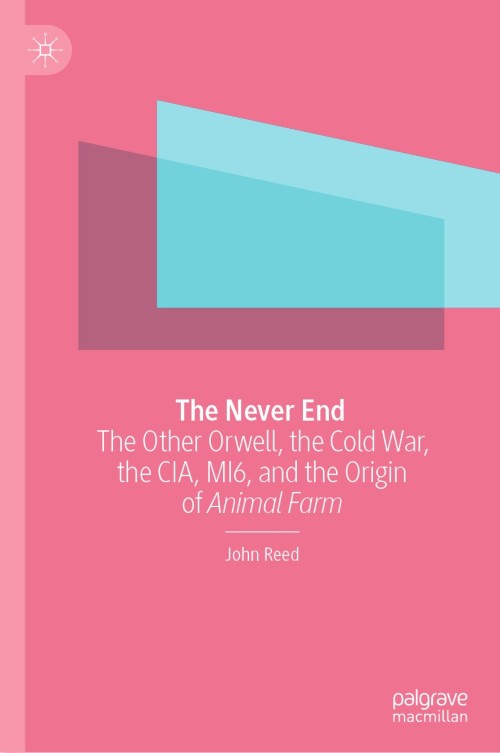
The Never End [electronic resource] : The Other Orwell, the Cold War, the CIA, MI6, and the Origin of Animal Farm / by John Reed.
Erişim Adresi
ISBN
9789819907656
Dil Kodu
İngilizce
Yer Numarası
DK/18539
Yazar
Basım Bildirimi
1st ed. 2023.
Yayın Bilgisi
Singapore : Springer Nature Singapore : Imprint: Palgrave Macmillan, 2023.
Fiziksel Niteleme
XI, 188 p. 44 illus. online resource.
İçindekiler Notu
Chapter 1. Animal Farm Timeline -- Chapter 2. The Origin of Animal Farm -- Chapter 3. Animal Riot -- Chapter 4. George Orwell's 'The Freedom of the Press' -- Chapter 5. Solaris: Orwell, Hitchens, the Forever Cold War, and now China -- Chapter 6. Orwell's Angels (Army) -- Chapter 7. Bunt by Wladyslaw Stanislaw Reymont -- Chapter 8. A Few Names to be remembered with George Orwell.
Özet, vb.
“Free the piggies!” —The New York Press “Reed has captured the state of the farm today.” —The Fort Myers News-Press “A dizzying feat of writing and scholarship.” —Lynne Tillman “One plays this terrifying guessing game of animal a clef: which animal am I? Which animal is my neighbor?” —Jonathan Ames This book is the first and definitive reassessment of George Orwell, twenty-first century, written by an author at the nexus of Orwell's controversial literary, political and historical legacies. In The Never End, rabble-rouser, dogged investigator, and consummate literary stylist John Reed collects two decades of subject-Orwell findings published in Pank, Guernica, Literary Hub, The Brooklyn Rail, The Rumpus, The New York Press, The Believer, Harper’s Magazine and The Paris Review. Reed’s treatment of Orwell is corrective and peerlessly contemporary; he views Orwell in a twenty-first century global context, considering Orwell’s collaboration with Cold War intelligence operations—US and UK—with unfaltering objectivity. It’s hard to imagine that Orwell—in our own moment of global doublethink—wouldn’t have wanted his devotion to contrariety applied to the literary legacy he left behind. Animal Farm, based on a previously unknown Russian short story? Animal Farm, deployed by the CIA, MI6 and the Congress for Cultural Freedom? Orwell, turning over blacklists in a McCarthy-esque act of betrayal? The Cold War? Does it last forever? Russia, the “Axis of Evil,” and now China? But. Orwell. Course syllabi. Literary laurels. Snitch. Why do we keep coming back? For the wrong reasons? Or because we know Old Benjamin would want us to know the truth? John Reed, associate professor and the current director of the MFA in Creative Writing at The NewSchool University, is the author of numerous works, including Snowball's Chance, the unauthorized companion to Animal Farm. He’s contributed to, among other venues: Slate, The Paris Review, The Times Literary Supplement, The Wall Street Journal, Vice, Rolling Stone, The New York Times, and Harper’s Magazine. He holds an MFA in Creative Writing from Columbia University.
Konu
Political science.
Culture __ Study and teaching.
Communication in politics.
Political Theory.
Cultural Studies.
Political Communication.
Culture __ Study and teaching.
Communication in politics.
Political Theory.
Cultural Studies.
Political Communication.
Kurum Adı

Eseri Alıntıla
Referansları kullanmadan önce gözden geçirmeniz ve varsa gerekli düzeltmeleri yapmanız önerilir.
Dijital Kaynak
MARC Görünümü
LEADER 05563nam a22006135i 4500
001 817328
003 TR_AnAIT
005 20260130190706
007 cr nn 008mamaa
008 230727s2023 si | s |||| 0|eng d
020 |a9789819907656|9978-981-99-0765-6
024 7 |a10.1007/978-981-99-0765-6|2doi
041 |aeng
049 |aTürk Tarih Kurumu Kütüphanesi
050 4|aJC11-607
072 7|aJPA|2bicssc
072 7|aPOL010000|2bisacsh
072 7|aJPA|2thema
082 04|a320.01|223
090 |aDK/18539
100 1 |aReed, John.|eauthor.|4aut|4http://id.loc.gov/vocabulary/relators/aut
245 14|aThe Never End|h[electronic resource] :|bThe Other Orwell, the Cold War, the CIA, MI6, and the Origin of Animal Farm /|cby John Reed.
250 |a1st ed. 2023.
264 1|aSingapore :|bSpringer Nature Singapore :|bImprint: Palgrave Macmillan,|c2023.
300 |aXI, 188 p. 44 illus.|bonline resource.
336 |atext|btxt|2rdacontent
337 |acomputer|bc|2rdamedia
338 |aonline resource|bcr|2rdacarrier
341 0 |bTable of contents navigation|2onix
341 0 |bSingle logical reading order|2onix
341 0 |bShort alternative textual descriptions|2onix
341 0 |bUse of color is not sole means of conveying information|2onix
341 0 |bUse of high contrast between text and background color|2onix
341 0 |bNext / Previous structural navigation|2onix
341 0 |bAll non-decorative content supports reading without sight|2onix
347 |atext file|bPDF|2rda
505 0 |aChapter 1. Animal Farm Timeline -- Chapter 2. The Origin of Animal Farm -- Chapter 3. Animal Riot -- Chapter 4. George Orwell's 'The Freedom of the Press' -- Chapter 5. Solaris: Orwell, Hitchens, the Forever Cold War, and now China -- Chapter 6. Orwell's Angels (Army) -- Chapter 7. Bunt by Wladyslaw Stanislaw Reymont -- Chapter 8. A Few Names to be remembered with George Orwell.
520 |a“Free the piggies!” —The New York Press “Reed has captured the state of the farm today.” —The Fort Myers News-Press “A dizzying feat of writing and scholarship.” —Lynne Tillman “One plays this terrifying guessing game of animal a clef: which animal am I? Which animal is my neighbor?” —Jonathan Ames This book is the first and definitive reassessment of George Orwell, twenty-first century, written by an author at the nexus of Orwell's controversial literary, political and historical legacies. In The Never End, rabble-rouser, dogged investigator, and consummate literary stylist John Reed collects two decades of subject-Orwell findings published in Pank, Guernica, Literary Hub, The Brooklyn Rail, The Rumpus, The New York Press, The Believer, Harper’s Magazine and The Paris Review. Reed’s treatment of Orwell is corrective and peerlessly contemporary; he views Orwell in a twenty-first century global context, considering Orwell’s collaboration with Cold War intelligence operations—US and UK—with unfaltering objectivity. It’s hard to imagine that Orwell—in our own moment of global doublethink—wouldn’t have wanted his devotion to contrariety applied to the literary legacy he left behind. Animal Farm, based on a previously unknown Russian short story? Animal Farm, deployed by the CIA, MI6 and the Congress for Cultural Freedom? Orwell, turning over blacklists in a McCarthy-esque act of betrayal? The Cold War? Does it last forever? Russia, the “Axis of Evil,” and now China? But. Orwell. Course syllabi. Literary laurels. Snitch. Why do we keep coming back? For the wrong reasons? Or because we know Old Benjamin would want us to know the truth? John Reed, associate professor and the current director of the MFA in Creative Writing at The NewSchool University, is the author of numerous works, including Snowball's Chance, the unauthorized companion to Animal Farm. He’s contributed to, among other venues: Slate, The Paris Review, The Times Literary Supplement, The Wall Street Journal, Vice, Rolling Stone, The New York Times, and Harper’s Magazine. He holds an MFA in Creative Writing from Columbia University.
532 8 |aAccessibility summary: This PDF does not fully comply with PDF/UA standards, but does feature limited screen reader support, described non-text content (images, graphs), bookmarks for easy navigation and searchable, selectable text. Users of assistive technologies may experience difficulty navigating or interpreting content in this document. We recognize the importance of accessibility, and we welcome queries about accessibility for any of our products. If you have a question or an access need, please get in touch with us at accessibilitysupport@springernature.com.
532 8 |aNo reading system accessibility options actively disabled
532 8 |aPublisher contact for further accessibility information: accessibilitysupport@springernature.com
650 0|aPolitical science.
650 0|aCulture|xStudy and teaching.
650 0|aCommunication in politics.
650 14|aPolitical Theory.
650 24|aCultural Studies.
650 24|aPolitical Communication.
710 2 |aSpringerLink (Online service)
773 0 |tSpringer Nature eBook
776 08|iPrinted edition:|z9789819907649
776 08|iPrinted edition:|z9789819907663
776 08|iPrinted edition:|z9789819907670
856 40|uhttps://doi.org/10.1007/978-981-99-0765-6
912 |aZDB-2-POS
912 |aZDB-2-SXPI
950 |aPolitical Science and International Studies (SpringerNature-41174)
950 |aPolitical Science and International Studies (R0) (SpringerNature-43724)
001 817328
003 TR_AnAIT
005 20260130190706
007 cr nn 008mamaa
008 230727s2023 si | s |||| 0|eng d
020 |a9789819907656|9978-981-99-0765-6
024 7 |a10.1007/978-981-99-0765-6|2doi
041 |aeng
049 |aTürk Tarih Kurumu Kütüphanesi
050 4|aJC11-607
072 7|aJPA|2bicssc
072 7|aPOL010000|2bisacsh
072 7|aJPA|2thema
082 04|a320.01|223
090 |aDK/18539
100 1 |aReed, John.|eauthor.|4aut|4http://id.loc.gov/vocabulary/relators/aut
245 14|aThe Never End|h[electronic resource] :|bThe Other Orwell, the Cold War, the CIA, MI6, and the Origin of Animal Farm /|cby John Reed.
250 |a1st ed. 2023.
264 1|aSingapore :|bSpringer Nature Singapore :|bImprint: Palgrave Macmillan,|c2023.
300 |aXI, 188 p. 44 illus.|bonline resource.
336 |atext|btxt|2rdacontent
337 |acomputer|bc|2rdamedia
338 |aonline resource|bcr|2rdacarrier
341 0 |bTable of contents navigation|2onix
341 0 |bSingle logical reading order|2onix
341 0 |bShort alternative textual descriptions|2onix
341 0 |bUse of color is not sole means of conveying information|2onix
341 0 |bUse of high contrast between text and background color|2onix
341 0 |bNext / Previous structural navigation|2onix
341 0 |bAll non-decorative content supports reading without sight|2onix
347 |atext file|bPDF|2rda
505 0 |aChapter 1. Animal Farm Timeline -- Chapter 2. The Origin of Animal Farm -- Chapter 3. Animal Riot -- Chapter 4. George Orwell's 'The Freedom of the Press' -- Chapter 5. Solaris: Orwell, Hitchens, the Forever Cold War, and now China -- Chapter 6. Orwell's Angels (Army) -- Chapter 7. Bunt by Wladyslaw Stanislaw Reymont -- Chapter 8. A Few Names to be remembered with George Orwell.
520 |a“Free the piggies!” —The New York Press “Reed has captured the state of the farm today.” —The Fort Myers News-Press “A dizzying feat of writing and scholarship.” —Lynne Tillman “One plays this terrifying guessing game of animal a clef: which animal am I? Which animal is my neighbor?” —Jonathan Ames This book is the first and definitive reassessment of George Orwell, twenty-first century, written by an author at the nexus of Orwell's controversial literary, political and historical legacies. In The Never End, rabble-rouser, dogged investigator, and consummate literary stylist John Reed collects two decades of subject-Orwell findings published in Pank, Guernica, Literary Hub, The Brooklyn Rail, The Rumpus, The New York Press, The Believer, Harper’s Magazine and The Paris Review. Reed’s treatment of Orwell is corrective and peerlessly contemporary; he views Orwell in a twenty-first century global context, considering Orwell’s collaboration with Cold War intelligence operations—US and UK—with unfaltering objectivity. It’s hard to imagine that Orwell—in our own moment of global doublethink—wouldn’t have wanted his devotion to contrariety applied to the literary legacy he left behind. Animal Farm, based on a previously unknown Russian short story? Animal Farm, deployed by the CIA, MI6 and the Congress for Cultural Freedom? Orwell, turning over blacklists in a McCarthy-esque act of betrayal? The Cold War? Does it last forever? Russia, the “Axis of Evil,” and now China? But. Orwell. Course syllabi. Literary laurels. Snitch. Why do we keep coming back? For the wrong reasons? Or because we know Old Benjamin would want us to know the truth? John Reed, associate professor and the current director of the MFA in Creative Writing at The NewSchool University, is the author of numerous works, including Snowball's Chance, the unauthorized companion to Animal Farm. He’s contributed to, among other venues: Slate, The Paris Review, The Times Literary Supplement, The Wall Street Journal, Vice, Rolling Stone, The New York Times, and Harper’s Magazine. He holds an MFA in Creative Writing from Columbia University.
532 8 |aAccessibility summary: This PDF does not fully comply with PDF/UA standards, but does feature limited screen reader support, described non-text content (images, graphs), bookmarks for easy navigation and searchable, selectable text. Users of assistive technologies may experience difficulty navigating or interpreting content in this document. We recognize the importance of accessibility, and we welcome queries about accessibility for any of our products. If you have a question or an access need, please get in touch with us at accessibilitysupport@springernature.com.
532 8 |aNo reading system accessibility options actively disabled
532 8 |aPublisher contact for further accessibility information: accessibilitysupport@springernature.com
650 0|aPolitical science.
650 0|aCulture|xStudy and teaching.
650 0|aCommunication in politics.
650 14|aPolitical Theory.
650 24|aCultural Studies.
650 24|aPolitical Communication.
710 2 |aSpringerLink (Online service)
773 0 |tSpringer Nature eBook
776 08|iPrinted edition:|z9789819907649
776 08|iPrinted edition:|z9789819907663
776 08|iPrinted edition:|z9789819907670
856 40|uhttps://doi.org/10.1007/978-981-99-0765-6
912 |aZDB-2-POS
912 |aZDB-2-SXPI
950 |aPolitical Science and International Studies (SpringerNature-41174)
950 |aPolitical Science and International Studies (R0) (SpringerNature-43724)
Materyaller
Depodan talep edilen materyal sadece kütüphane içerisinde kullanılmaktadır.
Materyal dışarıya ödünç verilmemektedir.
