LEADER 03896nam a22005055i 4500
001 817342
003 TR_AnAIT
005 20260130190611
007 cr nn 008mamaa
008 180517s2019 sz | s |||| 0|eng d
020 |a9783319768311|9978-3-319-76831-1
024 7 |a10.1007/978-3-319-76831-1|2doi
041 |aeng
049 |aTürk Tarih Kurumu Kütüphanesi
050 4|aJC11-607
072 7|aJPA|2bicssc
072 7|aPOL010000|2bisacsh
072 7|aJPA|2thema
082 04|a320.01|223
090 |aDK/18553
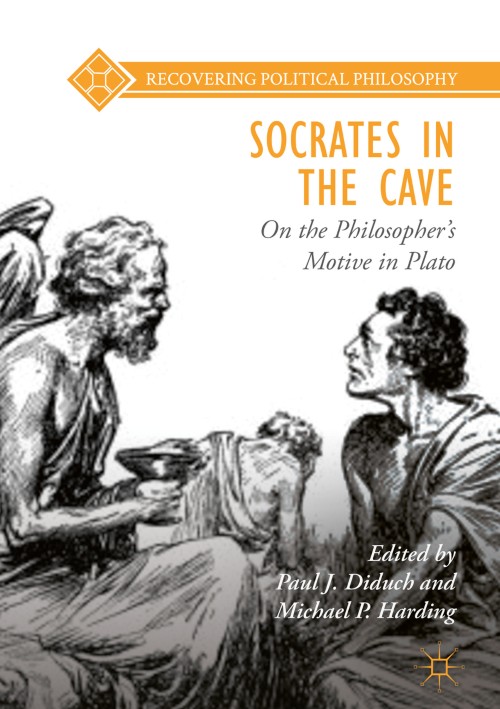
245 10|aSocrates in the Cave|h[electronic resource] :|bOn the Philosopher’s Motive in Plato /|cedited by Paul J. Diduch, Michael P. Harding.
250 |a1st ed. 2019.
264 1|aCham :|bSpringer International Publishing :|bImprint: Palgrave Macmillan,|c2019.
300 |aXIV, 347 p.|bonline resource.
336 |atext|btxt|2rdacontent
337 |acomputer|bc|2rdamedia
338 |aonline resource|bcr|2rdacarrier
347 |atext file|bPDF|2rda
490 1 |aRecovering Political Philosophy,|x2524-7174
505 0 |a1. Editors' Introduction -- 2. The Strange Conversation of Plato’s Minos -- 3. Platonic Beginnings -- 4. A Look at Socrates’ Motives in the Laches -- 5. Socrates’ Self-Knowledge -- 6. Socrates’ Exhortation to Follow the Logos -- 7. Philosophy, Eros, and the Socratic Turn -- 8. Free to Care: Socrates’ Political Engagement -- 10. Socrates: Sisyphean or Overflowing? -- 11. Socrates’ Motives and Human Wisdom in Plato’s Theages -- 12. Plato’s Euthyphro on Divine and Human Wisdom -- 13. On the Question of Socratic Benevolence -- 14. Philanthropy in the Action of the Euthyphro, Apology, and Crito -- 15. Philosophic Care in the Life of Plato’s Socrates -- 16. Plato’s Sons and the Library of Magnesia.
520 |aThis book addresses the problem of fully explaining Socrates’ motives for philosophic interlocution in Plato’s dialogues. Why, for instance, does Socrates talk to many philosophically immature and seemingly incapable interlocutors? Are his motives in these cases moral, prudential, erotic, pedagogic, or intellectual? In any one case, can Socrates’ reasons for engaging an unlikely interlocutor be explained fully on the grounds of intellectual self-interest (i.e., the promise of advancing his own wisdom)? Or does his activity, including his self-presentation and staging of his death, require additional motives for adequate explanation? Finally, how, if at all, does our conception of Socrates’ motives help illuminate our understanding of the life of reason as Plato presents it? By inviting a multitude of authors to contribute their thoughts on these question—all of whom share a commitment to close reading, but by no means agree on the meaning of Plato’s dialogues—this book provides the reader with an excellent map of the terrain of these problems and aims to help the student of Plato clarify the tensions involved, showing especially how each major stance on Socrates entails problematic assumptions that prompt further critical reflection.
650 0|aPolitical science.
650 0|aPolitical science|xPhilosophy.
650 14|aPolitical Theory.
650 24|aPolitical Philosophy.
700 1 |aDiduch, Paul J.|eeditor.|4edt|4http://id.loc.gov/vocabulary/relators/edt
700 1 |aHarding, Michael P.|eeditor.|4edt|4http://id.loc.gov/vocabulary/relators/edt
710 2 |aSpringerLink (Online service)
773 0 |tSpringer Nature eBook
776 08|iPrinted edition:|z9783319768304
776 08|iPrinted edition:|z9783319768328
776 08|iPrinted edition:|z9783030083021
830 0|aRecovering Political Philosophy,|x2524-7174
856 40|uhttps://doi.org/10.1007/978-3-319-76831-1
912 |aZDB-2-POS
912 |aZDB-2-SXPI
950 |aPolitical Science and International Studies (SpringerNature-41174)
950 |aPolitical Science and International Studies (R0) (SpringerNature-43724)