

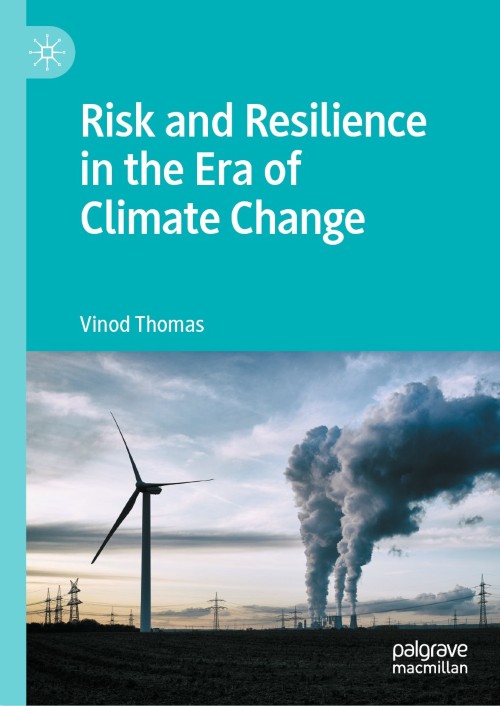
Risk and Resilience in the Era of Climate Change [electronic resource] / by Vinod Thomas.
Erişim Adresi
ISBN
9789811986215
Dil Kodu
İngilizce
Yer Numarası
DK/18624
Yazar
Basım Bildirimi
1st ed. 2023.
Yayın Bilgisi
Singapore : Springer Nature Singapore : Imprint: Palgrave Macmillan, 2023.
Fiziksel Niteleme
XXXI, 201 p. 21 illus., 18 illus. in color. online resource.
İçindekiler Notu
Chapter 1: Opening Summary -- Part I: Risk and Resilence -- Chapter 2: Troubled Times -- Chapter 3: Understanding Risk -- Chaper 4: Resilence That Shapes Risk -- Chapter 5: New Highs in Risk and Resilence -- Part II: the Climate Catastrophe -- Chapter 6: Intractability of Climate Change -- Chapter 7: A Persistently False Dichotomy -- Chapter 8: Integrating Resilence in Policy -- Chapter 9: Transformative Change.
Özet, vb.
This book presents essential insights on the interaction between rising risks and raising the bar for resilience during the climate crisis. Its timeliness lies in applying important findings on risk and resilience to runaway climate change. When risk and resilience are brought together in the context of climate catastrophes, three key messages emerge. The first is that accounting for the root causes of these calamities, and not just their symptoms, is essential to slowing the spike in these events. It is therefore vital to link carbon emissions from human activity to the sharp rise in climate disasters globally. The second is that growth economics and policy must factor in the failure of governments and businesses to tackle spillover harm from economic activities, as seen dramatically with global warming. With climate risks rising, this calls for a fundamental revision in the teaching and practice of business and economics. And third, prevention must become a far bigger part of resilience building, with greater preparedness for more intense destruction built into interventions. This emphasis on prevention deems disaster recovery as not just returning to how things were but building back better. Vinod Thomas, Visiting Professor at Lee Kuan Yew School of Public Policy, National University of Singapore, was Senior Vice President, Independent Evaluation, at the World Bank, and Director General of Independent Evaluation at the Asian Development Bank. He has authored 17 books, including Climate Change and Natural Disasters (2017).
Konu
Economic development.
Bioclimatology.
Climatology.
Sustainability.
Development Studies.
Climate Change Ecology.
Climate Sciences.
Sustainability.
Bioclimatology.
Climatology.
Sustainability.
Development Studies.
Climate Change Ecology.
Climate Sciences.
Sustainability.
Kurum Adı
Eseri Alıntıla
Referansları kullanmadan önce gözden geçirmeniz ve varsa gerekli düzeltmeleri yapmanız önerilir.
Dijital Kaynak
MARC Görünümü
LEADER 04996nam a22006375i 4500
001 817413
003 TR_AnAIT
005 20260130190224
007 cr nn 008mamaa
008 230314s2023 si | s |||| 0|eng d
020 |a9789811986215|9978-981-19-8621-5
024 7 |a10.1007/978-981-19-8621-5|2doi
041 |aeng
049 |aTürk Tarih Kurumu Kütüphanesi
050 4|aHD72-88
072 7|aGTF|2bicssc
072 7|aSOC042000|2bisacsh
072 7|aGTP|2thema
082 04|a338.9|223
090 |aDK/18624
100 1 |aThomas, Vinod.|eauthor.|4aut|4http://id.loc.gov/vocabulary/relators/aut
245 10|aRisk and Resilience in the Era of Climate Change|h[electronic resource] /|cby Vinod Thomas.
250 |a1st ed. 2023.
264 1|aSingapore :|bSpringer Nature Singapore :|bImprint: Palgrave Macmillan,|c2023.
300 |aXXXI, 201 p. 21 illus., 18 illus. in color.|bonline resource.
336 |atext|btxt|2rdacontent
337 |acomputer|bc|2rdamedia
338 |aonline resource|bcr|2rdacarrier
341 0 |bTable of contents navigation|2onix
341 0 |bSingle logical reading order|2onix
341 0 |bShort alternative textual descriptions|2onix
341 0 |bUse of color is not sole means of conveying information|2onix
341 0 |bUse of high contrast between text and background color|2onix
341 0 |bNext / Previous structural navigation|2onix
341 0 |bAll non-decorative content supports reading without sight|2onix
347 |atext file|bPDF|2rda
505 0 |aChapter 1: Opening Summary -- Part I: Risk and Resilence -- Chapter 2: Troubled Times -- Chapter 3: Understanding Risk -- Chaper 4: Resilence That Shapes Risk -- Chapter 5: New Highs in Risk and Resilence -- Part II: the Climate Catastrophe -- Chapter 6: Intractability of Climate Change -- Chapter 7: A Persistently False Dichotomy -- Chapter 8: Integrating Resilence in Policy -- Chapter 9: Transformative Change.
520 |aThis book presents essential insights on the interaction between rising risks and raising the bar for resilience during the climate crisis. Its timeliness lies in applying important findings on risk and resilience to runaway climate change. When risk and resilience are brought together in the context of climate catastrophes, three key messages emerge. The first is that accounting for the root causes of these calamities, and not just their symptoms, is essential to slowing the spike in these events. It is therefore vital to link carbon emissions from human activity to the sharp rise in climate disasters globally. The second is that growth economics and policy must factor in the failure of governments and businesses to tackle spillover harm from economic activities, as seen dramatically with global warming. With climate risks rising, this calls for a fundamental revision in the teaching and practice of business and economics. And third, prevention must become a far bigger part of resilience building, with greater preparedness for more intense destruction built into interventions. This emphasis on prevention deems disaster recovery as not just returning to how things were but building back better. Vinod Thomas, Visiting Professor at Lee Kuan Yew School of Public Policy, National University of Singapore, was Senior Vice President, Independent Evaluation, at the World Bank, and Director General of Independent Evaluation at the Asian Development Bank. He has authored 17 books, including Climate Change and Natural Disasters (2017).
532 8 |aAccessibility summary: This PDF does not fully comply with PDF/UA standards, but does feature limited screen reader support, described non-text content (images, graphs), bookmarks for easy navigation and searchable, selectable text. Users of assistive technologies may experience difficulty navigating or interpreting content in this document. We recognize the importance of accessibility, and we welcome queries about accessibility for any of our products. If you have a question or an access need, please get in touch with us at accessibilitysupport@springernature.com.
532 8 |aNo reading system accessibility options actively disabled
532 8 |aPublisher contact for further accessibility information: accessibilitysupport@springernature.com
650 0|aEconomic development.
650 0|aBioclimatology.
650 0|aClimatology.
650 0|aSustainability.
650 14|aDevelopment Studies.
650 24|aClimate Change Ecology.
650 24|aClimate Sciences.
650 24|aSustainability.
710 2 |aSpringerLink (Online service)
773 0 |tSpringer Nature eBook
776 08|iPrinted edition:|z9789811986208
776 08|iPrinted edition:|z9789811986222
776 08|iPrinted edition:|z9789811986239
856 40|uhttps://doi.org/10.1007/978-981-19-8621-5
912 |aZDB-2-POS
912 |aZDB-2-SXPI
950 |aPolitical Science and International Studies (SpringerNature-41174)
950 |aPolitical Science and International Studies (R0) (SpringerNature-43724)
001 817413
003 TR_AnAIT
005 20260130190224
007 cr nn 008mamaa
008 230314s2023 si | s |||| 0|eng d
020 |a9789811986215|9978-981-19-8621-5
024 7 |a10.1007/978-981-19-8621-5|2doi
041 |aeng
049 |aTürk Tarih Kurumu Kütüphanesi
050 4|aHD72-88
072 7|aGTF|2bicssc
072 7|aSOC042000|2bisacsh
072 7|aGTP|2thema
082 04|a338.9|223
090 |aDK/18624
100 1 |aThomas, Vinod.|eauthor.|4aut|4http://id.loc.gov/vocabulary/relators/aut
245 10|aRisk and Resilience in the Era of Climate Change|h[electronic resource] /|cby Vinod Thomas.
250 |a1st ed. 2023.
264 1|aSingapore :|bSpringer Nature Singapore :|bImprint: Palgrave Macmillan,|c2023.
300 |aXXXI, 201 p. 21 illus., 18 illus. in color.|bonline resource.
336 |atext|btxt|2rdacontent
337 |acomputer|bc|2rdamedia
338 |aonline resource|bcr|2rdacarrier
341 0 |bTable of contents navigation|2onix
341 0 |bSingle logical reading order|2onix
341 0 |bShort alternative textual descriptions|2onix
341 0 |bUse of color is not sole means of conveying information|2onix
341 0 |bUse of high contrast between text and background color|2onix
341 0 |bNext / Previous structural navigation|2onix
341 0 |bAll non-decorative content supports reading without sight|2onix
347 |atext file|bPDF|2rda
505 0 |aChapter 1: Opening Summary -- Part I: Risk and Resilence -- Chapter 2: Troubled Times -- Chapter 3: Understanding Risk -- Chaper 4: Resilence That Shapes Risk -- Chapter 5: New Highs in Risk and Resilence -- Part II: the Climate Catastrophe -- Chapter 6: Intractability of Climate Change -- Chapter 7: A Persistently False Dichotomy -- Chapter 8: Integrating Resilence in Policy -- Chapter 9: Transformative Change.
520 |aThis book presents essential insights on the interaction between rising risks and raising the bar for resilience during the climate crisis. Its timeliness lies in applying important findings on risk and resilience to runaway climate change. When risk and resilience are brought together in the context of climate catastrophes, three key messages emerge. The first is that accounting for the root causes of these calamities, and not just their symptoms, is essential to slowing the spike in these events. It is therefore vital to link carbon emissions from human activity to the sharp rise in climate disasters globally. The second is that growth economics and policy must factor in the failure of governments and businesses to tackle spillover harm from economic activities, as seen dramatically with global warming. With climate risks rising, this calls for a fundamental revision in the teaching and practice of business and economics. And third, prevention must become a far bigger part of resilience building, with greater preparedness for more intense destruction built into interventions. This emphasis on prevention deems disaster recovery as not just returning to how things were but building back better. Vinod Thomas, Visiting Professor at Lee Kuan Yew School of Public Policy, National University of Singapore, was Senior Vice President, Independent Evaluation, at the World Bank, and Director General of Independent Evaluation at the Asian Development Bank. He has authored 17 books, including Climate Change and Natural Disasters (2017).
532 8 |aAccessibility summary: This PDF does not fully comply with PDF/UA standards, but does feature limited screen reader support, described non-text content (images, graphs), bookmarks for easy navigation and searchable, selectable text. Users of assistive technologies may experience difficulty navigating or interpreting content in this document. We recognize the importance of accessibility, and we welcome queries about accessibility for any of our products. If you have a question or an access need, please get in touch with us at accessibilitysupport@springernature.com.
532 8 |aNo reading system accessibility options actively disabled
532 8 |aPublisher contact for further accessibility information: accessibilitysupport@springernature.com
650 0|aEconomic development.
650 0|aBioclimatology.
650 0|aClimatology.
650 0|aSustainability.
650 14|aDevelopment Studies.
650 24|aClimate Change Ecology.
650 24|aClimate Sciences.
650 24|aSustainability.
710 2 |aSpringerLink (Online service)
773 0 |tSpringer Nature eBook
776 08|iPrinted edition:|z9789811986208
776 08|iPrinted edition:|z9789811986222
776 08|iPrinted edition:|z9789811986239
856 40|uhttps://doi.org/10.1007/978-981-19-8621-5
912 |aZDB-2-POS
912 |aZDB-2-SXPI
950 |aPolitical Science and International Studies (SpringerNature-41174)
950 |aPolitical Science and International Studies (R0) (SpringerNature-43724)
Materyaller
Depodan talep edilen materyal sadece kütüphane içerisinde kullanılmaktadır.
Materyal dışarıya ödünç verilmemektedir.
Materyal dışarıya ödünç verilmemektedir.
