

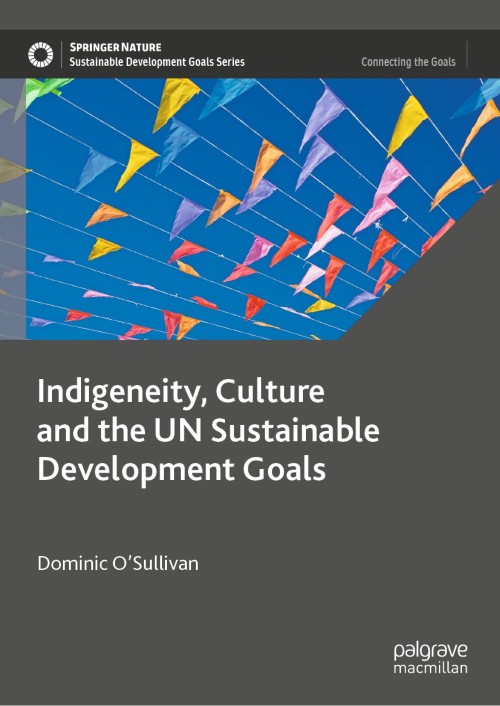
Indigeneity, Culture and the UN Sustainable Development Goals [electronic resource] / by Dominic O’Sullivan.
Erişim Adresi
ISBN
9789819905812
Dil Kodu
İngilizce
Yer Numarası
DK/18825
Yazar
Basım Bildirimi
1st ed. 2023.
Yayın Bilgisi
Singapore : Springer Nature Singapore : Imprint: Palgrave Macmillan, 2023.
Fiziksel Niteleme
XIV, 277 p. 1 illus. online resource.
Dizi
Sustainable Development Goals Series, 2523-3092
İçindekiler Notu
Chapter 1: Introduction -- Chapter 2: Leaving Nobody Behind: policy integration policy reform -- Chapter 3: Indigenous Peoples: policy, culture, and the goals -- Chapter 4: Freedom and Culture: beyond egalitarian justice -- Chapter 5: The Just State -- Chapter 6: Participation and Presence -- Chapter 7: National Values, the Goals, and the Right to Self-determination -- Chapter 8: Self-Determination, Participation, and Leadership -- Chapter 9: Quality Education -- Chapter 10: Economic Growth -- Chapter 11: Data Sovereignty – what is measured and why? -- Chapter 12: Conclusion.
Özet, vb.
“A robust, well-theorised, and incisive critique that exposes the inattention of the Sustainable Development Goals (SDGs) to the histories, legacies, voices, aspirations, and authority of Indigenous peoples. A timely contribution to contemporary debates on nationhood, sovereignty, Indigenous recognition, and social justice.” ---Professor Tanya Fitzgerald, The University of Western Australia, Australia “Asserting that Indigenous self-determination is ‘colonialism’s antithesis’, O’Sullivan navigates the interconnected relationships between culture, self-determination, and sustainable development, affirming that continued policy failure in indigenous affairs is not inevitable.” ---Dr Jessa Rogers, Queensland University of Technology, Australia "A leader in indigenous political theory, O'Sullivan produces a series of arguments that wrench the UN's Sustainable Development Goals from their non-indigenous biases, in order to preserve the hope that they might serve the whole of humanity. A formidable work of indigenous political theory from one of this emerging discipline's foremost scholars." ---Dr Lindsey MacDonald, University of Canterbury, New Zealand This is the first scholarly book to examine the UN Sustainable Development Goals from an indigenous perspective. It refers to the UN Declaration on the Rights of Indigenous Peoples and domestic instruments such as New Zealand’s Tiriti o Waitangi to suggest how the goals could be revised to support self-determination as a more far-reaching and ambitious project than the goals currently imagine. The book draws on Australian, Canadian, and New Zealand experiences to analyse the goals’ policy relevance to wealthy states and indigenous rights in established liberal democracies. Dominic O’Sullivan is Professor of Political Science at Charles Sturt University, Adjunct Professor at the Auckland University of Technology and Academic Associate at the University of Auckland. He is from the Te Rarawa and Ngati Kahu iwi of New Zealand, and this is his ninth book. The most recent, Sharing the Sovereign: Indigenous Peoples, Recognition, Treaties and the State was published by Palgrave in 2021.
Konu
Human rights.
Political science.
Social policy.
Politics and Human Rights.
Political Theory.
Social Policy.
Human Rights.
Political science.
Social policy.
Politics and Human Rights.
Political Theory.
Social Policy.
Human Rights.
Kurum Adı
Eseri Alıntıla
Referansları kullanmadan önce gözden geçirmeniz ve varsa gerekli düzeltmeleri yapmanız önerilir.
Dijital Kaynak
MARC Görünümü
LEADER 05788nam a22006375i 4500
001 817614
003 TR_AnAIT
005 20260130185130
007 cr nn 008mamaa
008 230413s2023 si | s |||| 0|eng d
020 |a9789819905812|9978-981-99-0581-2
024 7 |a10.1007/978-981-99-0581-2|2doi
041 |aeng
049 |aTürk Tarih Kurumu Kütüphanesi
050 4|aJC571-628
072 7|aJPVH|2bicssc
072 7|aPOL035010|2bisacsh
072 7|aJPVH|2thema
082 04|a323|223
090 |aDK/18825
100 1 |aO’Sullivan, Dominic.|eauthor.|4aut|4http://id.loc.gov/vocabulary/relators/aut
245 10|aIndigeneity, Culture and the UN Sustainable Development Goals|h[electronic resource] /|cby Dominic O’Sullivan.
250 |a1st ed. 2023.
264 1|aSingapore :|bSpringer Nature Singapore :|bImprint: Palgrave Macmillan,|c2023.
300 |aXIV, 277 p. 1 illus.|bonline resource.
336 |atext|btxt|2rdacontent
337 |acomputer|bc|2rdamedia
338 |aonline resource|bcr|2rdacarrier
341 0 |bTable of contents navigation|2onix
341 0 |bSingle logical reading order|2onix
341 0 |bUse of color is not sole means of conveying information|2onix
341 0 |bUse of high contrast between text and background color|2onix
341 0 |bNext / Previous structural navigation|2onix
341 0 |bAll non-decorative content supports reading without sight|2onix
347 |atext file|bPDF|2rda
490 1 |aSustainable Development Goals Series,|x2523-3092
505 0 |aChapter 1: Introduction -- Chapter 2: Leaving Nobody Behind: policy integration policy reform -- Chapter 3: Indigenous Peoples: policy, culture, and the goals -- Chapter 4: Freedom and Culture: beyond egalitarian justice -- Chapter 5: The Just State -- Chapter 6: Participation and Presence -- Chapter 7: National Values, the Goals, and the Right to Self-determination -- Chapter 8: Self-Determination, Participation, and Leadership -- Chapter 9: Quality Education -- Chapter 10: Economic Growth -- Chapter 11: Data Sovereignty – what is measured and why? -- Chapter 12: Conclusion.
520 |a“A robust, well-theorised, and incisive critique that exposes the inattention of the Sustainable Development Goals (SDGs) to the histories, legacies, voices, aspirations, and authority of Indigenous peoples. A timely contribution to contemporary debates on nationhood, sovereignty, Indigenous recognition, and social justice.” ---Professor Tanya Fitzgerald, The University of Western Australia, Australia “Asserting that Indigenous self-determination is ‘colonialism’s antithesis’, O’Sullivan navigates the interconnected relationships between culture, self-determination, and sustainable development, affirming that continued policy failure in indigenous affairs is not inevitable.” ---Dr Jessa Rogers, Queensland University of Technology, Australia "A leader in indigenous political theory, O'Sullivan produces a series of arguments that wrench the UN's Sustainable Development Goals from their non-indigenous biases, in order to preserve the hope that they might serve the whole of humanity. A formidable work of indigenous political theory from one of this emerging discipline's foremost scholars." ---Dr Lindsey MacDonald, University of Canterbury, New Zealand This is the first scholarly book to examine the UN Sustainable Development Goals from an indigenous perspective. It refers to the UN Declaration on the Rights of Indigenous Peoples and domestic instruments such as New Zealand’s Tiriti o Waitangi to suggest how the goals could be revised to support self-determination as a more far-reaching and ambitious project than the goals currently imagine. The book draws on Australian, Canadian, and New Zealand experiences to analyse the goals’ policy relevance to wealthy states and indigenous rights in established liberal democracies. Dominic O’Sullivan is Professor of Political Science at Charles Sturt University, Adjunct Professor at the Auckland University of Technology and Academic Associate at the University of Auckland. He is from the Te Rarawa and Ngati Kahu iwi of New Zealand, and this is his ninth book. The most recent, Sharing the Sovereign: Indigenous Peoples, Recognition, Treaties and the State was published by Palgrave in 2021.
532 8 |aAccessibility summary: This PDF does not fully comply with PDF/UA standards, but does feature limited screen reader support, bookmarks for easy navigation and searchable, selectable text. Users of assistive technologies may experience difficulty navigating or interpreting content in this document. We recognize the importance of accessibility, and we welcome queries about accessibility for any of our products. If you have a question or an access need, please get in touch with us at accessibilitysupport@springernature.com.
532 8 |aNo reading system accessibility options actively disabled
532 8 |aPublisher contact for further accessibility information: accessibilitysupport@springernature.com
650 0|aHuman rights.
650 0|aPolitical science.
650 0|aSocial policy.
650 14|aPolitics and Human Rights.
650 24|aPolitical Theory.
650 24|aSocial Policy.
650 24|aHuman Rights.
710 2 |aSpringerLink (Online service)
773 0 |tSpringer Nature eBook
776 08|iPrinted edition:|z9789819905805
776 08|iPrinted edition:|z9789819905829
776 08|iPrinted edition:|z9789819905836
830 0|aSustainable Development Goals Series,|x2523-3092
856 40|uhttps://doi.org/10.1007/978-981-99-0581-2
912 |aZDB-2-POS
912 |aZDB-2-SXPI
950 |aPolitical Science and International Studies (SpringerNature-41174)
950 |aPolitical Science and International Studies (R0) (SpringerNature-43724)
001 817614
003 TR_AnAIT
005 20260130185130
007 cr nn 008mamaa
008 230413s2023 si | s |||| 0|eng d
020 |a9789819905812|9978-981-99-0581-2
024 7 |a10.1007/978-981-99-0581-2|2doi
041 |aeng
049 |aTürk Tarih Kurumu Kütüphanesi
050 4|aJC571-628
072 7|aJPVH|2bicssc
072 7|aPOL035010|2bisacsh
072 7|aJPVH|2thema
082 04|a323|223
090 |aDK/18825
100 1 |aO’Sullivan, Dominic.|eauthor.|4aut|4http://id.loc.gov/vocabulary/relators/aut
245 10|aIndigeneity, Culture and the UN Sustainable Development Goals|h[electronic resource] /|cby Dominic O’Sullivan.
250 |a1st ed. 2023.
264 1|aSingapore :|bSpringer Nature Singapore :|bImprint: Palgrave Macmillan,|c2023.
300 |aXIV, 277 p. 1 illus.|bonline resource.
336 |atext|btxt|2rdacontent
337 |acomputer|bc|2rdamedia
338 |aonline resource|bcr|2rdacarrier
341 0 |bTable of contents navigation|2onix
341 0 |bSingle logical reading order|2onix
341 0 |bUse of color is not sole means of conveying information|2onix
341 0 |bUse of high contrast between text and background color|2onix
341 0 |bNext / Previous structural navigation|2onix
341 0 |bAll non-decorative content supports reading without sight|2onix
347 |atext file|bPDF|2rda
490 1 |aSustainable Development Goals Series,|x2523-3092
505 0 |aChapter 1: Introduction -- Chapter 2: Leaving Nobody Behind: policy integration policy reform -- Chapter 3: Indigenous Peoples: policy, culture, and the goals -- Chapter 4: Freedom and Culture: beyond egalitarian justice -- Chapter 5: The Just State -- Chapter 6: Participation and Presence -- Chapter 7: National Values, the Goals, and the Right to Self-determination -- Chapter 8: Self-Determination, Participation, and Leadership -- Chapter 9: Quality Education -- Chapter 10: Economic Growth -- Chapter 11: Data Sovereignty – what is measured and why? -- Chapter 12: Conclusion.
520 |a“A robust, well-theorised, and incisive critique that exposes the inattention of the Sustainable Development Goals (SDGs) to the histories, legacies, voices, aspirations, and authority of Indigenous peoples. A timely contribution to contemporary debates on nationhood, sovereignty, Indigenous recognition, and social justice.” ---Professor Tanya Fitzgerald, The University of Western Australia, Australia “Asserting that Indigenous self-determination is ‘colonialism’s antithesis’, O’Sullivan navigates the interconnected relationships between culture, self-determination, and sustainable development, affirming that continued policy failure in indigenous affairs is not inevitable.” ---Dr Jessa Rogers, Queensland University of Technology, Australia "A leader in indigenous political theory, O'Sullivan produces a series of arguments that wrench the UN's Sustainable Development Goals from their non-indigenous biases, in order to preserve the hope that they might serve the whole of humanity. A formidable work of indigenous political theory from one of this emerging discipline's foremost scholars." ---Dr Lindsey MacDonald, University of Canterbury, New Zealand This is the first scholarly book to examine the UN Sustainable Development Goals from an indigenous perspective. It refers to the UN Declaration on the Rights of Indigenous Peoples and domestic instruments such as New Zealand’s Tiriti o Waitangi to suggest how the goals could be revised to support self-determination as a more far-reaching and ambitious project than the goals currently imagine. The book draws on Australian, Canadian, and New Zealand experiences to analyse the goals’ policy relevance to wealthy states and indigenous rights in established liberal democracies. Dominic O’Sullivan is Professor of Political Science at Charles Sturt University, Adjunct Professor at the Auckland University of Technology and Academic Associate at the University of Auckland. He is from the Te Rarawa and Ngati Kahu iwi of New Zealand, and this is his ninth book. The most recent, Sharing the Sovereign: Indigenous Peoples, Recognition, Treaties and the State was published by Palgrave in 2021.
532 8 |aAccessibility summary: This PDF does not fully comply with PDF/UA standards, but does feature limited screen reader support, bookmarks for easy navigation and searchable, selectable text. Users of assistive technologies may experience difficulty navigating or interpreting content in this document. We recognize the importance of accessibility, and we welcome queries about accessibility for any of our products. If you have a question or an access need, please get in touch with us at accessibilitysupport@springernature.com.
532 8 |aNo reading system accessibility options actively disabled
532 8 |aPublisher contact for further accessibility information: accessibilitysupport@springernature.com
650 0|aHuman rights.
650 0|aPolitical science.
650 0|aSocial policy.
650 14|aPolitics and Human Rights.
650 24|aPolitical Theory.
650 24|aSocial Policy.
650 24|aHuman Rights.
710 2 |aSpringerLink (Online service)
773 0 |tSpringer Nature eBook
776 08|iPrinted edition:|z9789819905805
776 08|iPrinted edition:|z9789819905829
776 08|iPrinted edition:|z9789819905836
830 0|aSustainable Development Goals Series,|x2523-3092
856 40|uhttps://doi.org/10.1007/978-981-99-0581-2
912 |aZDB-2-POS
912 |aZDB-2-SXPI
950 |aPolitical Science and International Studies (SpringerNature-41174)
950 |aPolitical Science and International Studies (R0) (SpringerNature-43724)
Materyaller
Depodan talep edilen materyal sadece kütüphane içerisinde kullanılmaktadır.
Materyal dışarıya ödünç verilmemektedir.
Materyal dışarıya ödünç verilmemektedir.
