LEADER 03086nam a22005415i 4500
001 817636
003 TR_AnAIT
005 20260130185034
007 cr nn 008mamaa
008 170912s2018 sz | s |||| 0|eng d
020 |a9783319602790|9978-3-319-60279-0
024 7 |a10.1007/978-3-319-60279-0|2doi
041 |aeng
049 |aTürk Tarih Kurumu Kütüphanesi
050 4|aJA76
072 7|aJP|2bicssc
072 7|aJFSJ|2bicssc
072 7|aPOL000000|2bisacsh
072 7|aJP|2thema
072 7|aJBSF|2thema
082 04|a320.562|223
082 04|a323.33|223
090 |aDK/18847
100 1 |aJohnson, Janet Elise.|eauthor.|4aut|4http://id.loc.gov/vocabulary/relators/aut
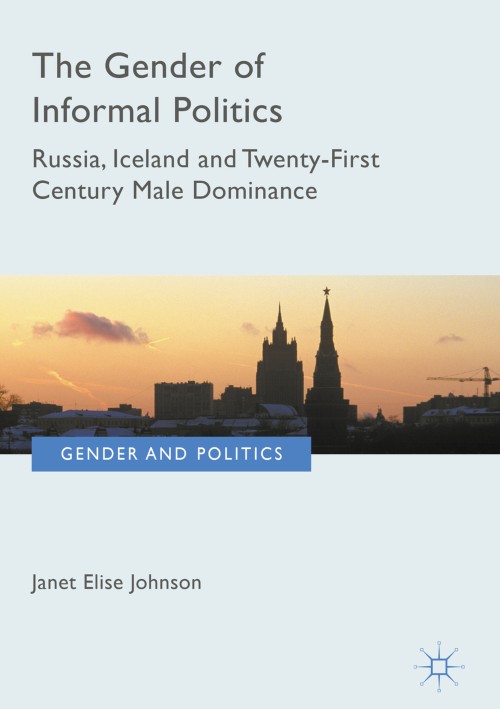
245 14|aThe Gender of Informal Politics|h[electronic resource] :|bRussia, Iceland and Twenty-First Century Male Dominance /|cby Janet Elise Johnson.
250 |a1st ed. 2018.
264 1|aCham :|bSpringer International Publishing :|bImprint: Palgrave Macmillan,|c2018.
300 |aXV, 195 p. 11 illus.|bonline resource.
336 |atext|btxt|2rdacontent
337 |acomputer|bc|2rdamedia
338 |aonline resource|bcr|2rdacarrier
347 |atext file|bPDF|2rda
490 1 |aGender and Politics,|x2662-5822
520 |aThis book argues that the primary political obstacle holding women back in the twenty-first century is a bait and switch promising but simultaneously undercutting gender equality. Through a comparison of Russia and Iceland, the book shows how this revised form of male dominance came about, how it constrains feminisms, and how activists are beginning to fight back. It argues that while feminist movements have made it harder for most countries to maintain formal rules discriminating against women, economic liberalization strengthened male-dominated elites in informal institutions. These elites offer women prominent roles as policymakers and in non-governmental organizations, but then box them in with little room to represent women’s interests. Activists’ attempts to shame countries for ignoring problems such as violence against women result in new laws, but, lacking the necessary funding and enforcement, violence and inequality intensify. Explaining this paradox is the principal focusfor social scientists, policymakers, and activists concerned with gender equality, women's social inclusion, and human rights. .
650 0|aIdentity politics.
650 0|aEurope|xPolitics and government.
650 0|aComparative government.
650 14|aPolitics and Gender.
650 24|aEuropean Politics.
650 24|aComparative Politics.
710 2 |aSpringerLink (Online service)
773 0 |tSpringer Nature eBook
776 08|iPrinted edition:|z9783319602783
776 08|iPrinted edition:|z9783319602806
776 08|iPrinted edition:|z9783319868240
830 0|aGender and Politics,|x2662-5822
856 40|uhttps://doi.org/10.1007/978-3-319-60279-0
912 |aZDB-2-POS
912 |aZDB-2-SXPI
950 |aPolitical Science and International Studies (SpringerNature-41174)
950 |aPolitical Science and International Studies (R0) (SpringerNature-43724)