

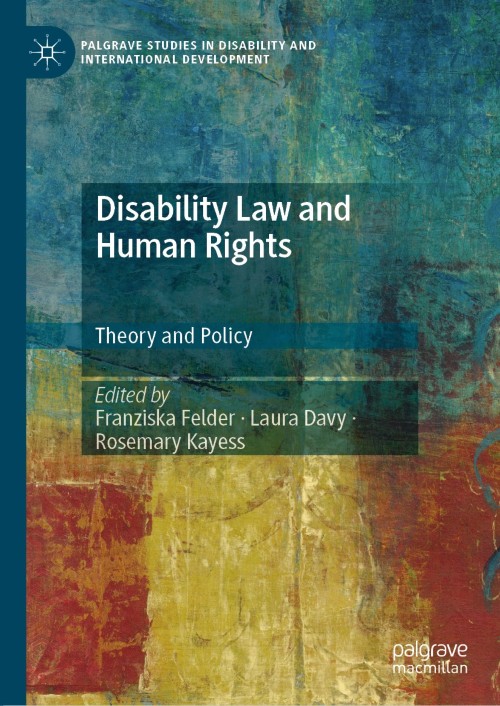
Disability Law and Human Rights [electronic resource] : Theory and Policy / edited by Franziska Felder, Laura Davy, Rosemary Kayess.
Erişim Adresi
ISBN
9783030865450
Dil Kodu
İngilizce
Yer Numarası
DK/18880
Basım Bildirimi
1st ed. 2022.
Yayın Bilgisi
Cham : Springer International Publishing : Imprint: Palgrave Macmillan, 2022.
Fiziksel Niteleme
X, 268 p. 1 illus. online resource.
Dizi
Palgrave Studies in Disability and International Development, 2945-6622
İçindekiler Notu
Chapter 1: Introduction -- Chapter 2: Towards Inclusive Equality: Ten Years of the Human Rights Model of Disability in the Work of the UN Committee on the Rights of Persons with Disabilities -- Chapter 3: What Does the CRPD Tell Us about Being Human? -- Chapter 4: Rights, Justice and Flourishing: The Uses and Limitations of Human Rights -- Chapter 5: Disability and the Dilemma of Difference -- Chapter 6: Forms of Equality, Faces of Discrimination: CRPD Article 5, Article 12, and the Disability’s Difference Debate -- Chapter 7: The right to autonomy and the conditions that secure it: the relationship between the CRPD and market-based policy reform -- Chapter 8: At the Intersection of Childhood and Disability: Improving Human Rights Protection for Disabled Children -- Chapter 9: The Convention on the Rights of Persons with Disabilities and Mental Health: the Problems, Dilemmas and Untapped Potential -- Chapter 10: Disability and Forced Migration: Critical Connections and the Global South Debate -- Chapter 11: Intersections in Human Rights and Public Policy for Indigenous People with Disability -- Chapter 12: Examining Australia’s Performance in Realising CRPD Obligations in Health Through the Lens of COVID-19.
Özet, vb.
This book, exploring the theoretical and practical implications of the United Nations Convention on the Rights of Persons with Disabilities (CRPD), brings together an international and interdisciplinary group of leading researchers in the areas of philosophy of disability, disability law, and disability policy. It addresses both the philosophical foundations of the CRPD as well as complex contemporary legal and policy debates. With a comprehensive introduction outlining key milestones in the development and implementation of the CRPD, the book addresses the most fundamental questions the CRPD raises for the way we think about human rights, law, and disability, and how we operationalize rights in the legal and policy domains. The contributors traverse themes of personhood, equality, capacity, and intersectionality, explore the dilemmas involved in translating these concepts in practice, and reflect on the promises and limitations of the human rights project. Franziska Felder is Professor of Inclusive Education and Disability Research at the University of Vienna (Austria). Her work concentrates on justice in education, with a special focus on inclusive education and disability. She is, together with Jerome E. Bickenbach and Barbara Schmitz, Editor of the Cambridge University Press’s volume Disability and the Good Human Life (2014). Laura Davy is a Research Fellow at the Australia and New Zealand School of Government and the Crawford School of Public Policy at the Australian National University. She is a political theorist and social policy researcher with a longstanding interest in disability studies and the philosophy of human rights. Rosemary Kayess is Chair of the United Nations Committee on the Rights of Persons with Disabilities (CRPD) and Senior Lecturer in the Faculty of Law at the University of New South Wales. She was a designated expert on the Australian Government delegation to the United Nations negotiations for the CRPD and has held ministerial advisory roles with the Australian Government on a range of issues.
Konu
Economic development.
Development Studies.
Development Studies.
Diğer Yazarlar
Kurum Adı
Eseri Alıntıla
Referansları kullanmadan önce gözden geçirmeniz ve varsa gerekli düzeltmeleri yapmanız önerilir.
Dijital Kaynak
MARC Görünümü
LEADER 05270nam a22004935i 4500
001 817669
003 TR_AnAIT
005 20260130184923
007 cr nn 008mamaa
008 220117s2022 sz | s |||| 0|eng d
020 |a9783030865450|9978-3-030-86545-0
024 7 |a10.1007/978-3-030-86545-0|2doi
041 |aeng
049 |aTürk Tarih Kurumu Kütüphanesi
050 4|aHD72-88
072 7|aGTF|2bicssc
072 7|aSOC042000|2bisacsh
072 7|aGTP|2thema
082 04|a338.9|223
090 |aDK/18880
245 10|aDisability Law and Human Rights|h[electronic resource] :|bTheory and Policy /|cedited by Franziska Felder, Laura Davy, Rosemary Kayess.
250 |a1st ed. 2022.
264 1|aCham :|bSpringer International Publishing :|bImprint: Palgrave Macmillan,|c2022.
300 |aX, 268 p. 1 illus.|bonline resource.
336 |atext|btxt|2rdacontent
337 |acomputer|bc|2rdamedia
338 |aonline resource|bcr|2rdacarrier
347 |atext file|bPDF|2rda
490 1 |aPalgrave Studies in Disability and International Development,|x2945-6622
505 0 |aChapter 1: Introduction -- Chapter 2: Towards Inclusive Equality: Ten Years of the Human Rights Model of Disability in the Work of the UN Committee on the Rights of Persons with Disabilities -- Chapter 3: What Does the CRPD Tell Us about Being Human? -- Chapter 4: Rights, Justice and Flourishing: The Uses and Limitations of Human Rights -- Chapter 5: Disability and the Dilemma of Difference -- Chapter 6: Forms of Equality, Faces of Discrimination: CRPD Article 5, Article 12, and the Disability’s Difference Debate -- Chapter 7: The right to autonomy and the conditions that secure it: the relationship between the CRPD and market-based policy reform -- Chapter 8: At the Intersection of Childhood and Disability: Improving Human Rights Protection for Disabled Children -- Chapter 9: The Convention on the Rights of Persons with Disabilities and Mental Health: the Problems, Dilemmas and Untapped Potential -- Chapter 10: Disability and Forced Migration: Critical Connections and the Global South Debate -- Chapter 11: Intersections in Human Rights and Public Policy for Indigenous People with Disability -- Chapter 12: Examining Australia’s Performance in Realising CRPD Obligations in Health Through the Lens of COVID-19.
520 |aThis book, exploring the theoretical and practical implications of the United Nations Convention on the Rights of Persons with Disabilities (CRPD), brings together an international and interdisciplinary group of leading researchers in the areas of philosophy of disability, disability law, and disability policy. It addresses both the philosophical foundations of the CRPD as well as complex contemporary legal and policy debates. With a comprehensive introduction outlining key milestones in the development and implementation of the CRPD, the book addresses the most fundamental questions the CRPD raises for the way we think about human rights, law, and disability, and how we operationalize rights in the legal and policy domains. The contributors traverse themes of personhood, equality, capacity, and intersectionality, explore the dilemmas involved in translating these concepts in practice, and reflect on the promises and limitations of the human rights project. Franziska Felder is Professor of Inclusive Education and Disability Research at the University of Vienna (Austria). Her work concentrates on justice in education, with a special focus on inclusive education and disability. She is, together with Jerome E. Bickenbach and Barbara Schmitz, Editor of the Cambridge University Press’s volume Disability and the Good Human Life (2014). Laura Davy is a Research Fellow at the Australia and New Zealand School of Government and the Crawford School of Public Policy at the Australian National University. She is a political theorist and social policy researcher with a longstanding interest in disability studies and the philosophy of human rights. Rosemary Kayess is Chair of the United Nations Committee on the Rights of Persons with Disabilities (CRPD) and Senior Lecturer in the Faculty of Law at the University of New South Wales. She was a designated expert on the Australian Government delegation to the United Nations negotiations for the CRPD and has held ministerial advisory roles with the Australian Government on a range of issues.
650 0|aEconomic development.
650 14|aDevelopment Studies.
700 1 |aFelder, Franziska.|eeditor.|4edt|4http://id.loc.gov/vocabulary/relators/edt
700 1 |aDavy, Laura.|eeditor.|4edt|4http://id.loc.gov/vocabulary/relators/edt
700 1 |aKayess, Rosemary.|eeditor.|4edt|4http://id.loc.gov/vocabulary/relators/edt
710 2 |aSpringerLink (Online service)
773 0 |tSpringer Nature eBook
776 08|iPrinted edition:|z9783030865443
776 08|iPrinted edition:|z9783030865467
776 08|iPrinted edition:|z9783030865474
830 0|aPalgrave Studies in Disability and International Development,|x2945-6622
856 40|uhttps://doi.org/10.1007/978-3-030-86545-0
912 |aZDB-2-POS
912 |aZDB-2-SXPI
950 |aPolitical Science and International Studies (SpringerNature-41174)
950 |aPolitical Science and International Studies (R0) (SpringerNature-43724)
001 817669
003 TR_AnAIT
005 20260130184923
007 cr nn 008mamaa
008 220117s2022 sz | s |||| 0|eng d
020 |a9783030865450|9978-3-030-86545-0
024 7 |a10.1007/978-3-030-86545-0|2doi
041 |aeng
049 |aTürk Tarih Kurumu Kütüphanesi
050 4|aHD72-88
072 7|aGTF|2bicssc
072 7|aSOC042000|2bisacsh
072 7|aGTP|2thema
082 04|a338.9|223
090 |aDK/18880
245 10|aDisability Law and Human Rights|h[electronic resource] :|bTheory and Policy /|cedited by Franziska Felder, Laura Davy, Rosemary Kayess.
250 |a1st ed. 2022.
264 1|aCham :|bSpringer International Publishing :|bImprint: Palgrave Macmillan,|c2022.
300 |aX, 268 p. 1 illus.|bonline resource.
336 |atext|btxt|2rdacontent
337 |acomputer|bc|2rdamedia
338 |aonline resource|bcr|2rdacarrier
347 |atext file|bPDF|2rda
490 1 |aPalgrave Studies in Disability and International Development,|x2945-6622
505 0 |aChapter 1: Introduction -- Chapter 2: Towards Inclusive Equality: Ten Years of the Human Rights Model of Disability in the Work of the UN Committee on the Rights of Persons with Disabilities -- Chapter 3: What Does the CRPD Tell Us about Being Human? -- Chapter 4: Rights, Justice and Flourishing: The Uses and Limitations of Human Rights -- Chapter 5: Disability and the Dilemma of Difference -- Chapter 6: Forms of Equality, Faces of Discrimination: CRPD Article 5, Article 12, and the Disability’s Difference Debate -- Chapter 7: The right to autonomy and the conditions that secure it: the relationship between the CRPD and market-based policy reform -- Chapter 8: At the Intersection of Childhood and Disability: Improving Human Rights Protection for Disabled Children -- Chapter 9: The Convention on the Rights of Persons with Disabilities and Mental Health: the Problems, Dilemmas and Untapped Potential -- Chapter 10: Disability and Forced Migration: Critical Connections and the Global South Debate -- Chapter 11: Intersections in Human Rights and Public Policy for Indigenous People with Disability -- Chapter 12: Examining Australia’s Performance in Realising CRPD Obligations in Health Through the Lens of COVID-19.
520 |aThis book, exploring the theoretical and practical implications of the United Nations Convention on the Rights of Persons with Disabilities (CRPD), brings together an international and interdisciplinary group of leading researchers in the areas of philosophy of disability, disability law, and disability policy. It addresses both the philosophical foundations of the CRPD as well as complex contemporary legal and policy debates. With a comprehensive introduction outlining key milestones in the development and implementation of the CRPD, the book addresses the most fundamental questions the CRPD raises for the way we think about human rights, law, and disability, and how we operationalize rights in the legal and policy domains. The contributors traverse themes of personhood, equality, capacity, and intersectionality, explore the dilemmas involved in translating these concepts in practice, and reflect on the promises and limitations of the human rights project. Franziska Felder is Professor of Inclusive Education and Disability Research at the University of Vienna (Austria). Her work concentrates on justice in education, with a special focus on inclusive education and disability. She is, together with Jerome E. Bickenbach and Barbara Schmitz, Editor of the Cambridge University Press’s volume Disability and the Good Human Life (2014). Laura Davy is a Research Fellow at the Australia and New Zealand School of Government and the Crawford School of Public Policy at the Australian National University. She is a political theorist and social policy researcher with a longstanding interest in disability studies and the philosophy of human rights. Rosemary Kayess is Chair of the United Nations Committee on the Rights of Persons with Disabilities (CRPD) and Senior Lecturer in the Faculty of Law at the University of New South Wales. She was a designated expert on the Australian Government delegation to the United Nations negotiations for the CRPD and has held ministerial advisory roles with the Australian Government on a range of issues.
650 0|aEconomic development.
650 14|aDevelopment Studies.
700 1 |aFelder, Franziska.|eeditor.|4edt|4http://id.loc.gov/vocabulary/relators/edt
700 1 |aDavy, Laura.|eeditor.|4edt|4http://id.loc.gov/vocabulary/relators/edt
700 1 |aKayess, Rosemary.|eeditor.|4edt|4http://id.loc.gov/vocabulary/relators/edt
710 2 |aSpringerLink (Online service)
773 0 |tSpringer Nature eBook
776 08|iPrinted edition:|z9783030865443
776 08|iPrinted edition:|z9783030865467
776 08|iPrinted edition:|z9783030865474
830 0|aPalgrave Studies in Disability and International Development,|x2945-6622
856 40|uhttps://doi.org/10.1007/978-3-030-86545-0
912 |aZDB-2-POS
912 |aZDB-2-SXPI
950 |aPolitical Science and International Studies (SpringerNature-41174)
950 |aPolitical Science and International Studies (R0) (SpringerNature-43724)
Materyaller
Depodan talep edilen materyal sadece kütüphane içerisinde kullanılmaktadır.
Materyal dışarıya ödünç verilmemektedir.
Materyal dışarıya ödünç verilmemektedir.
