

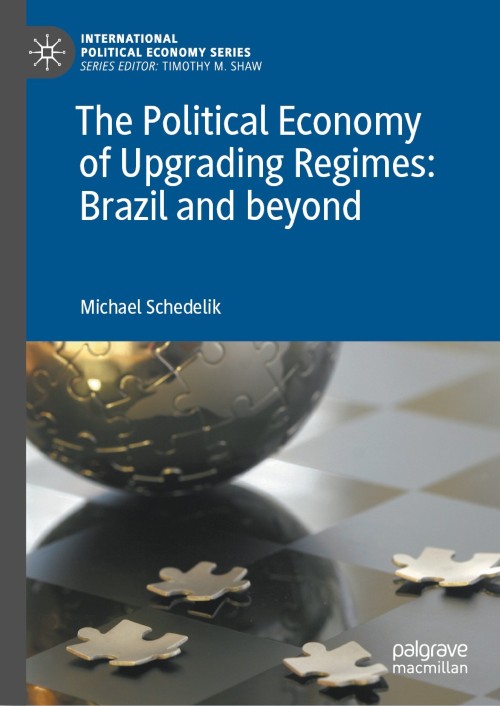
The Political Economy of Upgrading Regimes: Brazil and beyond [electronic resource] / by Michael Schedelik.
Erişim Adresi
ISBN
9783031340024
Dil Kodu
İngilizce
Yer Numarası
DK/18924
Yazar
Basım Bildirimi
1st ed. 2023.
Yayın Bilgisi
Cham : Springer Nature Switzerland : Imprint: Palgrave Macmillan, 2023.
Fiziksel Niteleme
XXIII, 286 p. 48 illus., 1 illus. in color. online resource.
Dizi
International Political Economy Series, 2662-2491
İçindekiler Notu
Part I. Theory and Frames -- 1 The Quest for Technological Upgrading in Emerging Economies -- 2 Theoretical Framework: The Political Economy of Upgrading Regimes -- Part II. Technological Upgrading in Brazil: Achievements and Challenges -- 3 Evidence on Innovation Capacity Building -- 4 Political Coordination and Socio-economic Coalitions -- 5 Research & Development and Competition Policy -- 6 Finance -- 7 Education, Training, and Labor -- 8 International Integration -- 9 Macroeconomic Management and Domestic Demand -- Part III. Comparative Perspectives -- 10 Complementarities and Comparisons -- 11 Conclusions.
Özet, vb.
In his wonderfully researched and tightly argued book, Michael Schedelik explains why the Brazilian development strategy of significantly raising the level of technological development in order to be less dependent on raw material exports was not successful. A must-read for students of innovation processes in emerging economies for many years to come. Andreas Nölke, Professor of Political Science, Goethe University Frankfurt Innovation in Brazil has been a topic of extensive research, but rarely before Michael Schedelik’s book has it been done as comprehensively with such a wealth of empirical evidence. Ben Ross Schneider, Ford International Professor of Political Science and Director of the MIT-Brazil Program, Massachusetts Institute of Technology This is a path breaking contribution to the study of comparative political economy of development in emerging economies. It is a provocative must read for those who strive to avoid simplistic structural and facile political explanations of upgrading development. Antonio José Junqueira Botelho, Professor of Comparative Political Economy, IUPERJ Universidade Candido Mendes, Rio de Janeiro Today’s middle-income countries tend to be locked in a middle-income trap, unable to transition to higher income levels due to rising costs and declining competitiveness. While there is a broad consensus that upgrading these economies towards innovation-led growth is imperative, countless institutional and political economy obstacles remain. This book brings together analytical perspectives from comparative political economy, innovation studies, and development economics for the study of technological upgrading. Its distinctive contribution is the development of an innovative theoretical framework, named upgrading regimes, combining and extending the comparative capitalism and innovation system perspectives. It explores the usefulness of this approach by providing an indepth assessment of the political economy of upgrading in Brazil under the Workers’ Party governments. As the politics of technological upgrading will be one of the crucial research areas in the years to come, this book promises to become a key reference point in this debate. Michael Schedelik is Lecturer and Research Associate at the Institute of Political Science at Goethe University Frankfurt. His research focuses on the politics of growth and innovation in developing and emerging economies.
Konu
International economic relations.
International relations.
International Political Economy’.
International Relations Theory.
International relations.
International Political Economy’.
International Relations Theory.
Kurum Adı
Eseri Alıntıla
Referansları kullanmadan önce gözden geçirmeniz ve varsa gerekli düzeltmeleri yapmanız önerilir.
Dijital Kaynak
MARC Görünümü
LEADER 06212nam a22006375i 4500
001 817713
003 TR_AnAIT
005 20260130184721
007 cr nn 008mamaa
008 230620s2023 sz | s |||| 0|eng d
020 |a9783031340024|9978-3-031-34002-4
024 7 |a10.1007/978-3-031-34002-4|2doi
041 |aeng
049 |aTürk Tarih Kurumu Kütüphanesi
050 4|aJZ1252
072 7|aJPS|2bicssc
072 7|aKCP|2bicssc
072 7|aPOL011020|2bisacsh
072 7|aJPS|2thema
072 7|aKCP|2thema
082 04|a327.111|223
090 |aDK/18924
100 1 |aSchedelik, Michael.|eauthor.|4aut|4http://id.loc.gov/vocabulary/relators/aut
245 14|aThe Political Economy of Upgrading Regimes: Brazil and beyond|h[electronic resource] /|cby Michael Schedelik.
250 |a1st ed. 2023.
264 1|aCham :|bSpringer Nature Switzerland :|bImprint: Palgrave Macmillan,|c2023.
300 |aXXIII, 286 p. 48 illus., 1 illus. in color.|bonline resource.
336 |atext|btxt|2rdacontent
337 |acomputer|bc|2rdamedia
338 |aonline resource|bcr|2rdacarrier
341 0 |bTable of contents navigation|2onix
341 0 |bSingle logical reading order|2onix
341 0 |bShort alternative textual descriptions|2onix
341 0 |bUse of color is not sole means of conveying information|2onix
341 0 |bUse of high contrast between text and background color|2onix
341 0 |bNext / Previous structural navigation|2onix
341 0 |bAll non-decorative content supports reading without sight|2onix
347 |atext file|bPDF|2rda
490 1 |aInternational Political Economy Series,|x2662-2491
505 0 |aPart I. Theory and Frames -- 1 The Quest for Technological Upgrading in Emerging Economies -- 2 Theoretical Framework: The Political Economy of Upgrading Regimes -- Part II. Technological Upgrading in Brazil: Achievements and Challenges -- 3 Evidence on Innovation Capacity Building -- 4 Political Coordination and Socio-economic Coalitions -- 5 Research & Development and Competition Policy -- 6 Finance -- 7 Education, Training, and Labor -- 8 International Integration -- 9 Macroeconomic Management and Domestic Demand -- Part III. Comparative Perspectives -- 10 Complementarities and Comparisons -- 11 Conclusions.
520 |aIn his wonderfully researched and tightly argued book, Michael Schedelik explains why the Brazilian development strategy of significantly raising the level of technological development in order to be less dependent on raw material exports was not successful. A must-read for students of innovation processes in emerging economies for many years to come. Andreas Nölke, Professor of Political Science, Goethe University Frankfurt Innovation in Brazil has been a topic of extensive research, but rarely before Michael Schedelik’s book has it been done as comprehensively with such a wealth of empirical evidence. Ben Ross Schneider, Ford International Professor of Political Science and Director of the MIT-Brazil Program, Massachusetts Institute of Technology This is a path breaking contribution to the study of comparative political economy of development in emerging economies. It is a provocative must read for those who strive to avoid simplistic structural and facile political explanations of upgrading development. Antonio José Junqueira Botelho, Professor of Comparative Political Economy, IUPERJ Universidade Candido Mendes, Rio de Janeiro Today’s middle-income countries tend to be locked in a middle-income trap, unable to transition to higher income levels due to rising costs and declining competitiveness. While there is a broad consensus that upgrading these economies towards innovation-led growth is imperative, countless institutional and political economy obstacles remain. This book brings together analytical perspectives from comparative political economy, innovation studies, and development economics for the study of technological upgrading. Its distinctive contribution is the development of an innovative theoretical framework, named upgrading regimes, combining and extending the comparative capitalism and innovation system perspectives. It explores the usefulness of this approach by providing an indepth assessment of the political economy of upgrading in Brazil under the Workers’ Party governments. As the politics of technological upgrading will be one of the crucial research areas in the years to come, this book promises to become a key reference point in this debate. Michael Schedelik is Lecturer and Research Associate at the Institute of Political Science at Goethe University Frankfurt. His research focuses on the politics of growth and innovation in developing and emerging economies.
532 8 |aAccessibility summary: This PDF does not fully comply with PDF/UA standards, but does feature limited screen reader support, described non-text content (images, graphs), bookmarks for easy navigation and searchable, selectable text. Users of assistive technologies may experience difficulty navigating or interpreting content in this document. We recognize the importance of accessibility, and we welcome queries about accessibility for any of our products. If you have a question or an access need, please get in touch with us at accessibilitysupport@springernature.com.
532 8 |aNo reading system accessibility options actively disabled
532 8 |aPublisher contact for further accessibility information: accessibilitysupport@springernature.com
650 0|aInternational economic relations.
650 0|aInternational relations.
650 14|aInternational Political Economy’.
650 24|aInternational Relations Theory.
710 2 |aSpringerLink (Online service)
773 0 |tSpringer Nature eBook
776 08|iPrinted edition:|z9783031340017
776 08|iPrinted edition:|z9783031340031
776 08|iPrinted edition:|z9783031340048
830 0|aInternational Political Economy Series,|x2662-2491
856 40|uhttps://doi.org/10.1007/978-3-031-34002-4
912 |aZDB-2-POS
912 |aZDB-2-SXPI
950 |aPolitical Science and International Studies (SpringerNature-41174)
950 |aPolitical Science and International Studies (R0) (SpringerNature-43724)
001 817713
003 TR_AnAIT
005 20260130184721
007 cr nn 008mamaa
008 230620s2023 sz | s |||| 0|eng d
020 |a9783031340024|9978-3-031-34002-4
024 7 |a10.1007/978-3-031-34002-4|2doi
041 |aeng
049 |aTürk Tarih Kurumu Kütüphanesi
050 4|aJZ1252
072 7|aJPS|2bicssc
072 7|aKCP|2bicssc
072 7|aPOL011020|2bisacsh
072 7|aJPS|2thema
072 7|aKCP|2thema
082 04|a327.111|223
090 |aDK/18924
100 1 |aSchedelik, Michael.|eauthor.|4aut|4http://id.loc.gov/vocabulary/relators/aut
245 14|aThe Political Economy of Upgrading Regimes: Brazil and beyond|h[electronic resource] /|cby Michael Schedelik.
250 |a1st ed. 2023.
264 1|aCham :|bSpringer Nature Switzerland :|bImprint: Palgrave Macmillan,|c2023.
300 |aXXIII, 286 p. 48 illus., 1 illus. in color.|bonline resource.
336 |atext|btxt|2rdacontent
337 |acomputer|bc|2rdamedia
338 |aonline resource|bcr|2rdacarrier
341 0 |bTable of contents navigation|2onix
341 0 |bSingle logical reading order|2onix
341 0 |bShort alternative textual descriptions|2onix
341 0 |bUse of color is not sole means of conveying information|2onix
341 0 |bUse of high contrast between text and background color|2onix
341 0 |bNext / Previous structural navigation|2onix
341 0 |bAll non-decorative content supports reading without sight|2onix
347 |atext file|bPDF|2rda
490 1 |aInternational Political Economy Series,|x2662-2491
505 0 |aPart I. Theory and Frames -- 1 The Quest for Technological Upgrading in Emerging Economies -- 2 Theoretical Framework: The Political Economy of Upgrading Regimes -- Part II. Technological Upgrading in Brazil: Achievements and Challenges -- 3 Evidence on Innovation Capacity Building -- 4 Political Coordination and Socio-economic Coalitions -- 5 Research & Development and Competition Policy -- 6 Finance -- 7 Education, Training, and Labor -- 8 International Integration -- 9 Macroeconomic Management and Domestic Demand -- Part III. Comparative Perspectives -- 10 Complementarities and Comparisons -- 11 Conclusions.
520 |aIn his wonderfully researched and tightly argued book, Michael Schedelik explains why the Brazilian development strategy of significantly raising the level of technological development in order to be less dependent on raw material exports was not successful. A must-read for students of innovation processes in emerging economies for many years to come. Andreas Nölke, Professor of Political Science, Goethe University Frankfurt Innovation in Brazil has been a topic of extensive research, but rarely before Michael Schedelik’s book has it been done as comprehensively with such a wealth of empirical evidence. Ben Ross Schneider, Ford International Professor of Political Science and Director of the MIT-Brazil Program, Massachusetts Institute of Technology This is a path breaking contribution to the study of comparative political economy of development in emerging economies. It is a provocative must read for those who strive to avoid simplistic structural and facile political explanations of upgrading development. Antonio José Junqueira Botelho, Professor of Comparative Political Economy, IUPERJ Universidade Candido Mendes, Rio de Janeiro Today’s middle-income countries tend to be locked in a middle-income trap, unable to transition to higher income levels due to rising costs and declining competitiveness. While there is a broad consensus that upgrading these economies towards innovation-led growth is imperative, countless institutional and political economy obstacles remain. This book brings together analytical perspectives from comparative political economy, innovation studies, and development economics for the study of technological upgrading. Its distinctive contribution is the development of an innovative theoretical framework, named upgrading regimes, combining and extending the comparative capitalism and innovation system perspectives. It explores the usefulness of this approach by providing an indepth assessment of the political economy of upgrading in Brazil under the Workers’ Party governments. As the politics of technological upgrading will be one of the crucial research areas in the years to come, this book promises to become a key reference point in this debate. Michael Schedelik is Lecturer and Research Associate at the Institute of Political Science at Goethe University Frankfurt. His research focuses on the politics of growth and innovation in developing and emerging economies.
532 8 |aAccessibility summary: This PDF does not fully comply with PDF/UA standards, but does feature limited screen reader support, described non-text content (images, graphs), bookmarks for easy navigation and searchable, selectable text. Users of assistive technologies may experience difficulty navigating or interpreting content in this document. We recognize the importance of accessibility, and we welcome queries about accessibility for any of our products. If you have a question or an access need, please get in touch with us at accessibilitysupport@springernature.com.
532 8 |aNo reading system accessibility options actively disabled
532 8 |aPublisher contact for further accessibility information: accessibilitysupport@springernature.com
650 0|aInternational economic relations.
650 0|aInternational relations.
650 14|aInternational Political Economy’.
650 24|aInternational Relations Theory.
710 2 |aSpringerLink (Online service)
773 0 |tSpringer Nature eBook
776 08|iPrinted edition:|z9783031340017
776 08|iPrinted edition:|z9783031340031
776 08|iPrinted edition:|z9783031340048
830 0|aInternational Political Economy Series,|x2662-2491
856 40|uhttps://doi.org/10.1007/978-3-031-34002-4
912 |aZDB-2-POS
912 |aZDB-2-SXPI
950 |aPolitical Science and International Studies (SpringerNature-41174)
950 |aPolitical Science and International Studies (R0) (SpringerNature-43724)
Materyaller
Depodan talep edilen materyal sadece kütüphane içerisinde kullanılmaktadır.
Materyal dışarıya ödünç verilmemektedir.
Materyal dışarıya ödünç verilmemektedir.
