LEADER 04253nam a22005895i 4500
001 817732
003 TR_AnAIT
005 20260130184626
007 cr nn 008mamaa
008 170203s2017 xxk| s |||| 0|eng d
020 |a9781137396174|9978-1-137-39617-4
024 7 |a10.1057/978-1-137-39617-4|2doi
041 |aeng
049 |aTürk Tarih Kurumu Kütüphanesi
050 4|aJF1525.P6
072 7|aJPP|2bicssc
072 7|aPOL028000|2bisacsh
072 7|aJPP|2thema
082 04|a320.6|223
090 |aDK/18943
100 1 |aHerrschel, Tassilo.|eauthor.|4aut|4http://id.loc.gov/vocabulary/relators/aut
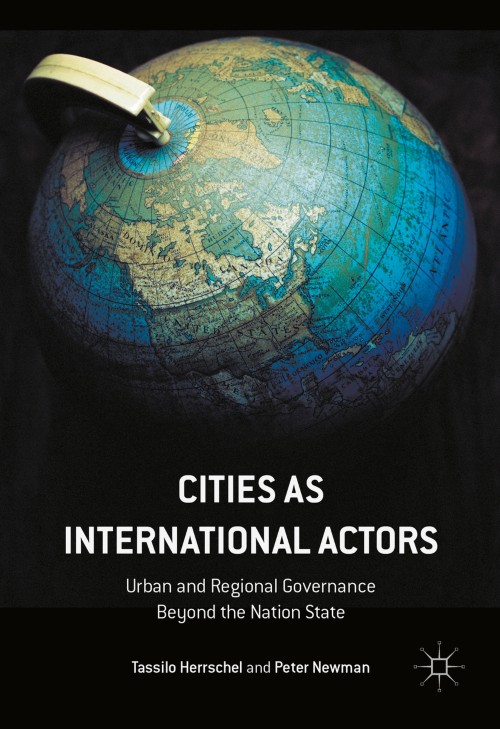
245 10|aCities as International Actors|h[electronic resource] :|bUrban and Regional Governance Beyond the Nation State /|cby Tassilo Herrschel, Peter Newman.
250 |a1st ed. 2017.
264 1|aLondon :|bPalgrave Macmillan UK :|bImprint: Palgrave Macmillan,|c2017.
300 |aXIII, 260 p. 18 illus., 1 illus. in color.|bonline resource.
336 |atext|btxt|2rdacontent
337 |acomputer|bc|2rdamedia
338 |aonline resource|bcr|2rdacarrier
347 |atext file|bPDF|2rda
505 0 |aChapter 1. Cities Joining States as International Actors -- Chapter 2. Cities in the Global Area - From Connectors to Actors. The Questions of Space and Territory -- Chapter 3. Cities and the Changing Nature of International Governance -- Chapter 4. Expansion and Activities of Networks of Sub-National Governments -- Chapter 5. Individual Initiatives by Cities in Europe -- Chapter 6. Cities and Internationality in North America and Beyond -- Chapter 7. Conclusions.
520 |aThis book explores the growing role of cities and regions as sub-national actors in shaping global governance. Far from being merely carried along by global forces, cities have become active players in making and maintaining the networks and connections that give shape to contemporary globalization. Exploring examples from Europe, North America and beyond, the authors reconcile the two separate, yet complimentary, theoretical and analytical lenses adopted by Urban Studies and International Relations, as they address the nature of ‘cities’ and ‘internationality’. The authors challenge academic debate that is reluctant to cross disciplinary boundaries and thus offer more relevant answers to the new phenomenon of international city action, and how it weakens the traditional prerogative of the state as primary actor in the international realm. Conclusions focus on how this new internationality opens opportunities for cities and regions but also contains potential pitfalls that can constrain policy options and challenge the legitimacy of policy making at all scales.
532 8 |aAccessibility summary: This PDF was produced prior to the implementation of current accessibility best practices. It supports searchable and selectable text. It may or may not include elements such as described non-text content (images, graphs etc), reflowable text or screen reader compatibility. Users with accessibility needs may experience limitations. Please contact us at accessibilitysupport@springernature.com if you require assistance or an alternative format.
532 8 |aNo reading system accessibility options actively disabled
532 8 |aPublisher contact for further accessibility information: accessibilitysupport@springernature.com
650 0|aPolitical planning.
650 0|aSociology, Urban.
650 0|aInternational organization.
650 0|aGlobalization.
650 0|aPolitical sociology.
650 14|aPublic Policy.
650 24|aUrban Sociology.
650 24|aInternational Organization.
650 24|aGlobalization.
650 24|aPolitical Sociology.
700 1 |aNewman, Peter.|eauthor.|4aut|4http://id.loc.gov/vocabulary/relators/aut
710 2 |aSpringerLink (Online service)
773 0 |tSpringer Nature eBook
776 08|iPrinted edition:|z9781137396167
776 08|iPrinted edition:|z9781349679447
776 08|iPrinted edition:|z9781349679454
856 40|uhttps://doi.org/10.1057/978-1-137-39617-4
912 |aZDB-2-POS
912 |aZDB-2-SXPI
950 |aPolitical Science and International Studies (SpringerNature-41174)
950 |aPolitical Science and International Studies (R0) (SpringerNature-43724)