

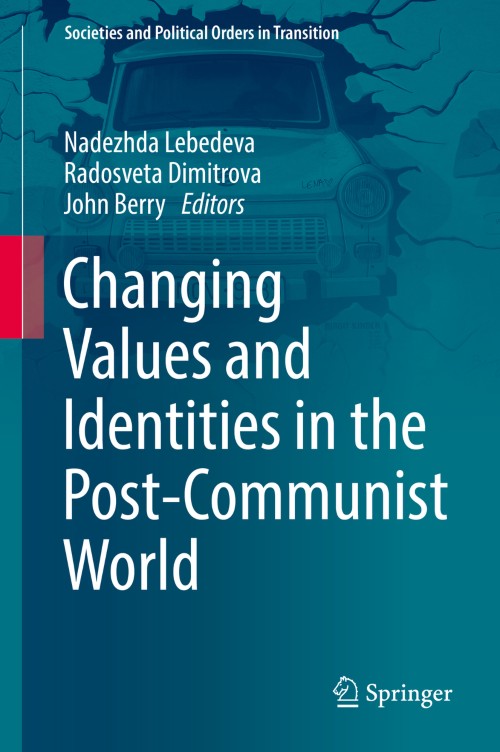
Changing Values and Identities in the Post-Communist World [electronic resource] / edited by Nadezhda Lebedeva, Radosveta Dimitrova, John Berry.
Erişim Adresi
ISBN
9783319726168
Dil Kodu
İngilizce
Yer Numarası
DK/19004
Basım Bildirimi
1st ed. 2018.
Yayın Bilgisi
Cham : Springer International Publishing : Imprint: Springer, 2018.
Fiziksel Niteleme
X, 434 p. 18 illus., 1 illus. in color. online resource.
Dizi
Societies and Political Orders in Transition, 2511-221X
İçindekiler Notu
Introduction -- Democratic Values in the Post-Communist Region: The Incidence of Traditionalists, Skeptics, Democrats, and Radicals -- Emancipative Values in a Post-Communist Society – The Case of Serbia -- Changes in Value Structure among the Estonian Majority and the Russian-speaking Minority in Post-socialist Estonia -- Intergenerational Value Differences in Latvia and Azerbaijan -- The Values and Social Identity of Russian Muslims -- Intergenerational Transmission of Values in Urban and Rural Areas of Russia: the Role of Perceived Psychological Closeness -- Parenting Values and Practices across Post-Communist Societies in Youth Identity Formation: A literature Review -- Values of Ethnic Russian Minority Members in North Caucasus Republics of the Russian Federation: An Inter- and Intragenerational Comparison -- Values and Religious Identity of Russian Students from Different Religions -- Value Similarity with Mothers and Peers, and Family Climate as Predictors of Well-Being of Russian Youth in Latvia -- Generational Belonging and Historical Ruptures: Continuity and Discontinuity of Values and Attitudes in Post-Communist Romania -- Multiple Social Identities in Relation to Self-Esteem of Adolescents in Post-Communist Albania, Bulgaria, Czech Republic, Kosovo and Romania -- Probing the relationship between group identities of Russians and Ossetians in the Republic of North Ossetia-Alania: Intergenerational analysis -- Ethnic Identity and Cultural Value Orientations of Moldavian Youth in Transitional Society -- The Influence of Identity Styles on Adolescents Psychological Problems in Post- Communist AlbaniaThe Influence of Identity Styles on Adolescents Psychological Problems in Post- Communist Albania -- The Kaleidoscope of Language, Ethnicity, and Identity in Uzbekistan -- The Role of Social Disidentification in Acculturation Preferences of Ethnic Majority and Minority Members in Kabardino-Balkar Republic -- The Great Escape: Linking Youth Identity Development to Growing Up in Post-communist Romania -- Negotiating Identity and Belonging after Regime Change: Hungarian Society and Roma in Post-Communist Hungary -- Cultural Identification among Immigrants from the Former USSR: Insights from Comparative Research with Five Groups in Germany and Israel -- Value changes in adolescents' anticipation of possible career selves in Slovenia and Serbia Identity and Work Ethic of Peasants in the Context of the Post-Soviet Socio-Economic Transformation -- Conclusion.
Özet, vb.
This book offers a comparative analysis of value and identity changes in several post-Soviet countries. In light of the tremendous economic, social and political changes in former communist states, the authors compare the values, attitudes and identities of different generations and cultural groups. Based on extensive empirical data, using quantitative and qualitative methods to study complex social identities, this book examines how intergenerational value and identity changes are linked to socio-economic and political development. Topics include the rise of nationalist sentiments, identity formation of ethnic and religious groups and minorities, youth identity formation and intergenerational value conflicts. .
Konu
Economic development.
Ethnopsychology.
Culture __ Study and teaching.
Ethnology __ Europe.
Culture.
Personality.
Difference (Psychology).
Russia __ History.
Europe, Eastern __ History.
Soviet Union __ History.
Development Studies.
Cross-Cultural Psychology.
Cultural Studies.
European Culture.
Personality and Differential Psychology.
Russian, Soviet, and East European History.
Ethnopsychology.
Culture __ Study and teaching.
Ethnology __ Europe.
Culture.
Personality.
Difference (Psychology).
Russia __ History.
Europe, Eastern __ History.
Soviet Union __ History.
Development Studies.
Cross-Cultural Psychology.
Cultural Studies.
European Culture.
Personality and Differential Psychology.
Russian, Soviet, and East European History.
Diğer Yazarlar
Kurum Adı
Eseri Alıntıla
Referansları kullanmadan önce gözden geçirmeniz ve varsa gerekli düzeltmeleri yapmanız önerilir.
Dijital Kaynak
MARC Görünümü
LEADER 05746nam a22006615i 4500
001 817794
003 TR_AnAIT
005 20260130184201
007 cr nn 008mamaa
008 180404s2018 sz | s |||| 0|eng d
020 |a9783319726168|9978-3-319-72616-8
024 7 |a10.1007/978-3-319-72616-8|2doi
041 |aeng
049 |aTürk Tarih Kurumu Kütüphanesi
050 4|aHD72-88
072 7|aGTF|2bicssc
072 7|aSOC042000|2bisacsh
072 7|aGTP|2thema
082 04|a338.9|223
090 |aDK/19004
245 10|aChanging Values and Identities in the Post-Communist World|h[electronic resource] /|cedited by Nadezhda Lebedeva, Radosveta Dimitrova, John Berry.
250 |a1st ed. 2018.
264 1|aCham :|bSpringer International Publishing :|bImprint: Springer,|c2018.
300 |aX, 434 p. 18 illus., 1 illus. in color.|bonline resource.
336 |atext|btxt|2rdacontent
337 |acomputer|bc|2rdamedia
338 |aonline resource|bcr|2rdacarrier
347 |atext file|bPDF|2rda
490 1 |aSocieties and Political Orders in Transition,|x2511-221X
505 0 |aIntroduction -- Democratic Values in the Post-Communist Region: The Incidence of Traditionalists, Skeptics, Democrats, and Radicals -- Emancipative Values in a Post-Communist Society – The Case of Serbia -- Changes in Value Structure among the Estonian Majority and the Russian-speaking Minority in Post-socialist Estonia -- Intergenerational Value Differences in Latvia and Azerbaijan -- The Values and Social Identity of Russian Muslims -- Intergenerational Transmission of Values in Urban and Rural Areas of Russia: the Role of Perceived Psychological Closeness -- Parenting Values and Practices across Post-Communist Societies in Youth Identity Formation: A literature Review -- Values of Ethnic Russian Minority Members in North Caucasus Republics of the Russian Federation: An Inter- and Intragenerational Comparison -- Values and Religious Identity of Russian Students from Different Religions -- Value Similarity with Mothers and Peers, and Family Climate as Predictors of Well-Being of Russian Youth in Latvia -- Generational Belonging and Historical Ruptures: Continuity and Discontinuity of Values and Attitudes in Post-Communist Romania -- Multiple Social Identities in Relation to Self-Esteem of Adolescents in Post-Communist Albania, Bulgaria, Czech Republic, Kosovo and Romania -- Probing the relationship between group identities of Russians and Ossetians in the Republic of North Ossetia-Alania: Intergenerational analysis -- Ethnic Identity and Cultural Value Orientations of Moldavian Youth in Transitional Society -- The Influence of Identity Styles on Adolescents Psychological Problems in Post- Communist AlbaniaThe Influence of Identity Styles on Adolescents Psychological Problems in Post- Communist Albania -- The Kaleidoscope of Language, Ethnicity, and Identity in Uzbekistan -- The Role of Social Disidentification in Acculturation Preferences of Ethnic Majority and Minority Members in Kabardino-Balkar Republic -- The Great Escape: Linking Youth Identity Development to Growing Up in Post-communist Romania -- Negotiating Identity and Belonging after Regime Change: Hungarian Society and Roma in Post-Communist Hungary -- Cultural Identification among Immigrants from the Former USSR: Insights from Comparative Research with Five Groups in Germany and Israel -- Value changes in adolescents' anticipation of possible career selves in Slovenia and Serbia Identity and Work Ethic of Peasants in the Context of the Post-Soviet Socio-Economic Transformation -- Conclusion.
520 |aThis book offers a comparative analysis of value and identity changes in several post-Soviet countries. In light of the tremendous economic, social and political changes in former communist states, the authors compare the values, attitudes and identities of different generations and cultural groups. Based on extensive empirical data, using quantitative and qualitative methods to study complex social identities, this book examines how intergenerational value and identity changes are linked to socio-economic and political development. Topics include the rise of nationalist sentiments, identity formation of ethnic and religious groups and minorities, youth identity formation and intergenerational value conflicts. .
650 0|aEconomic development.
650 0|aEthnopsychology.
650 0|aCulture|xStudy and teaching.
650 0|aEthnology|xEurope.
650 0|aCulture.
650 0|aPersonality.
650 0|aDifference (Psychology).
650 0|aRussia|xHistory.
650 0|aEurope, Eastern|xHistory.
650 0|aSoviet Union|xHistory.
650 14|aDevelopment Studies.
650 24|aCross-Cultural Psychology.
650 24|aCultural Studies.
650 24|aEuropean Culture.
650 24|aPersonality and Differential Psychology.
650 24|aRussian, Soviet, and East European History.
700 1 |aLebedeva, Nadezhda.|eeditor.|4edt|4http://id.loc.gov/vocabulary/relators/edt
700 1 |aDimitrova, Radosveta.|eeditor.|4edt|4http://id.loc.gov/vocabulary/relators/edt
700 1 |aBerry, John.|eeditor.|4edt|4http://id.loc.gov/vocabulary/relators/edt
710 2 |aSpringerLink (Online service)
773 0 |tSpringer Nature eBook
776 08|iPrinted edition:|z9783319726151
776 08|iPrinted edition:|z9783319726175
776 08|iPrinted edition:|z9783030102364
830 0|aSocieties and Political Orders in Transition,|x2511-221X
856 40|uhttps://doi.org/10.1007/978-3-319-72616-8
912 |aZDB-2-POS
912 |aZDB-2-SXPI
950 |aPolitical Science and International Studies (SpringerNature-41174)
950 |aPolitical Science and International Studies (R0) (SpringerNature-43724)
001 817794
003 TR_AnAIT
005 20260130184201
007 cr nn 008mamaa
008 180404s2018 sz | s |||| 0|eng d
020 |a9783319726168|9978-3-319-72616-8
024 7 |a10.1007/978-3-319-72616-8|2doi
041 |aeng
049 |aTürk Tarih Kurumu Kütüphanesi
050 4|aHD72-88
072 7|aGTF|2bicssc
072 7|aSOC042000|2bisacsh
072 7|aGTP|2thema
082 04|a338.9|223
090 |aDK/19004
245 10|aChanging Values and Identities in the Post-Communist World|h[electronic resource] /|cedited by Nadezhda Lebedeva, Radosveta Dimitrova, John Berry.
250 |a1st ed. 2018.
264 1|aCham :|bSpringer International Publishing :|bImprint: Springer,|c2018.
300 |aX, 434 p. 18 illus., 1 illus. in color.|bonline resource.
336 |atext|btxt|2rdacontent
337 |acomputer|bc|2rdamedia
338 |aonline resource|bcr|2rdacarrier
347 |atext file|bPDF|2rda
490 1 |aSocieties and Political Orders in Transition,|x2511-221X
505 0 |aIntroduction -- Democratic Values in the Post-Communist Region: The Incidence of Traditionalists, Skeptics, Democrats, and Radicals -- Emancipative Values in a Post-Communist Society – The Case of Serbia -- Changes in Value Structure among the Estonian Majority and the Russian-speaking Minority in Post-socialist Estonia -- Intergenerational Value Differences in Latvia and Azerbaijan -- The Values and Social Identity of Russian Muslims -- Intergenerational Transmission of Values in Urban and Rural Areas of Russia: the Role of Perceived Psychological Closeness -- Parenting Values and Practices across Post-Communist Societies in Youth Identity Formation: A literature Review -- Values of Ethnic Russian Minority Members in North Caucasus Republics of the Russian Federation: An Inter- and Intragenerational Comparison -- Values and Religious Identity of Russian Students from Different Religions -- Value Similarity with Mothers and Peers, and Family Climate as Predictors of Well-Being of Russian Youth in Latvia -- Generational Belonging and Historical Ruptures: Continuity and Discontinuity of Values and Attitudes in Post-Communist Romania -- Multiple Social Identities in Relation to Self-Esteem of Adolescents in Post-Communist Albania, Bulgaria, Czech Republic, Kosovo and Romania -- Probing the relationship between group identities of Russians and Ossetians in the Republic of North Ossetia-Alania: Intergenerational analysis -- Ethnic Identity and Cultural Value Orientations of Moldavian Youth in Transitional Society -- The Influence of Identity Styles on Adolescents Psychological Problems in Post- Communist AlbaniaThe Influence of Identity Styles on Adolescents Psychological Problems in Post- Communist Albania -- The Kaleidoscope of Language, Ethnicity, and Identity in Uzbekistan -- The Role of Social Disidentification in Acculturation Preferences of Ethnic Majority and Minority Members in Kabardino-Balkar Republic -- The Great Escape: Linking Youth Identity Development to Growing Up in Post-communist Romania -- Negotiating Identity and Belonging after Regime Change: Hungarian Society and Roma in Post-Communist Hungary -- Cultural Identification among Immigrants from the Former USSR: Insights from Comparative Research with Five Groups in Germany and Israel -- Value changes in adolescents' anticipation of possible career selves in Slovenia and Serbia Identity and Work Ethic of Peasants in the Context of the Post-Soviet Socio-Economic Transformation -- Conclusion.
520 |aThis book offers a comparative analysis of value and identity changes in several post-Soviet countries. In light of the tremendous economic, social and political changes in former communist states, the authors compare the values, attitudes and identities of different generations and cultural groups. Based on extensive empirical data, using quantitative and qualitative methods to study complex social identities, this book examines how intergenerational value and identity changes are linked to socio-economic and political development. Topics include the rise of nationalist sentiments, identity formation of ethnic and religious groups and minorities, youth identity formation and intergenerational value conflicts. .
650 0|aEconomic development.
650 0|aEthnopsychology.
650 0|aCulture|xStudy and teaching.
650 0|aEthnology|xEurope.
650 0|aCulture.
650 0|aPersonality.
650 0|aDifference (Psychology).
650 0|aRussia|xHistory.
650 0|aEurope, Eastern|xHistory.
650 0|aSoviet Union|xHistory.
650 14|aDevelopment Studies.
650 24|aCross-Cultural Psychology.
650 24|aCultural Studies.
650 24|aEuropean Culture.
650 24|aPersonality and Differential Psychology.
650 24|aRussian, Soviet, and East European History.
700 1 |aLebedeva, Nadezhda.|eeditor.|4edt|4http://id.loc.gov/vocabulary/relators/edt
700 1 |aDimitrova, Radosveta.|eeditor.|4edt|4http://id.loc.gov/vocabulary/relators/edt
700 1 |aBerry, John.|eeditor.|4edt|4http://id.loc.gov/vocabulary/relators/edt
710 2 |aSpringerLink (Online service)
773 0 |tSpringer Nature eBook
776 08|iPrinted edition:|z9783319726151
776 08|iPrinted edition:|z9783319726175
776 08|iPrinted edition:|z9783030102364
830 0|aSocieties and Political Orders in Transition,|x2511-221X
856 40|uhttps://doi.org/10.1007/978-3-319-72616-8
912 |aZDB-2-POS
912 |aZDB-2-SXPI
950 |aPolitical Science and International Studies (SpringerNature-41174)
950 |aPolitical Science and International Studies (R0) (SpringerNature-43724)
Materyaller
Depodan talep edilen materyal sadece kütüphane içerisinde kullanılmaktadır.
Materyal dışarıya ödünç verilmemektedir.
Materyal dışarıya ödünç verilmemektedir.
