LEADER 03813nam a22005535i 4500
001 817809
003 TR_AnAIT
005 20260130184113
007 cr nn 008mamaa
008 180712s2019 sz | s |||| 0|eng d
020 |a9783319631660|9978-3-319-63166-0
024 7 |a10.1007/978-3-319-63166-0|2doi
041 |aeng
049 |aTürk Tarih Kurumu Kütüphanesi
050 4|aJZ5587-6009
072 7|aJPS|2bicssc
072 7|aPOL012000|2bisacsh
072 7|aJPS|2thema
082 04|a327.116|223
090 |aDK/19019
100 1 |aBeevers, Michael D.|eauthor.|4aut|4http://id.loc.gov/vocabulary/relators/aut
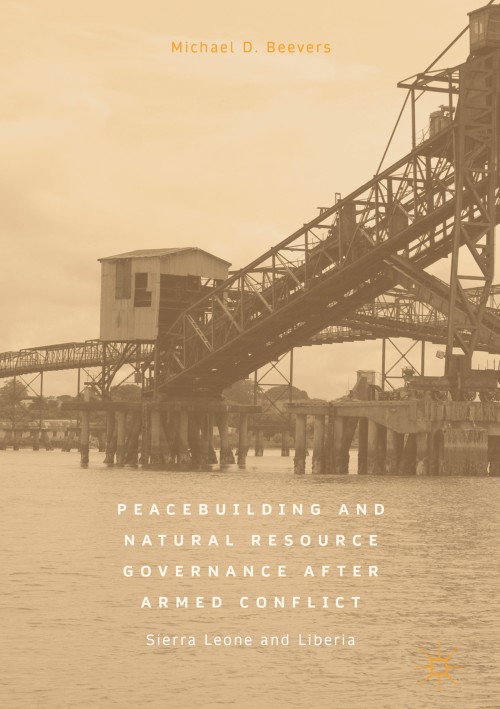
245 10|aPeacebuilding and Natural Resource Governance After Armed Conflict|h[electronic resource] :|bSierra Leone and Liberia /|cby Michael D. Beevers.
250 |a1st ed. 2019.
264 1|aCham :|bSpringer International Publishing :|bImprint: Palgrave Macmillan,|c2019.
300 |aXIII, 225 p. 2 illus. in color.|bonline resource.
336 |atext|btxt|2rdacontent
337 |acomputer|bc|2rdamedia
338 |aonline resource|bcr|2rdacarrier
347 |atext file|bPDF|2rda
505 0 |a1. Introduction -- 2. International Peacebuilding: Origins, Development and Strategies -- 3. Natural Resources, Armed Conflict and Peacebuilding -- 4. From Settlement and State Consolidation to Civil War and “Conflict Timber” -- 5. International Intervention and Post-Conflict Forest Governance -- 6. Colonialization and One-Party Rule to Civil War and “Conflict Diamonds” -- 7. International Intervention to Govern Diamonds and Minerals -- 8. The Limits of Securing and Marketizing Natural Resources and a Way Forward.
520 |aThis book argues that a set of persuasive narratives about the links between natural resource, armed conflict and peacebuilding have strongly influenced the natural resource interventions pursued by international peacebuilders. The author shows how international peacebuilders active in Liberia and Sierra Leone pursued a collective strategy to transform “conflict resources” into “peace resources” vis-à-vis a policy agenda that promoted “securitization” and “marketization” of natural resources. However, the exclusive focus on securitization and marketization have been counterproductive for peacebuilding since these interventions render invisible issues connected to land ownership, environmental protection and sustainable livelihoods and mirror pre-war governing arrangements in which corruption, exclusion and exploitation took root. Natural resource governance and peacebuilding must go beyond narrow debates about securitization and marketization, and instead be a catalyst for trust–building and cooperation that has a local focus, and pursues an inclusive agenda that not only serves the cause of peace, but the cause of people. Michael D. Beevers is Assistant Professor of Environmental and International Studies at Dickinson College, USA.
650 0|aSecurity, International.
650 0|aPeace.
650 0|aAfrica|xPolitics and government.
650 0|aEnergy policy.
650 0|aEnergy and state.
650 0|aEnvironmental policy.
650 14|aInternational Security Studies.
650 24|aPeace and Conflict Studies.
650 24|aAfrican Politics.
650 24|aEnergy Policy, Economics and Management.
650 24|aEnvironmental Policy.
710 2 |aSpringerLink (Online service)
773 0 |tSpringer Nature eBook
776 08|iPrinted edition:|z9783319631653
776 08|iPrinted edition:|z9783319631677
776 08|iPrinted edition:|z9783030096861
856 40|uhttps://doi.org/10.1007/978-3-319-63166-0
912 |aZDB-2-POS
912 |aZDB-2-SXPI
950 |aPolitical Science and International Studies (SpringerNature-41174)
950 |aPolitical Science and International Studies (R0) (SpringerNature-43724)