LEADER 04152nam a22006015i 4500
001 817830
003 TR_AnAIT
005 20260130183908
007 cr nn 008mamaa
008 161005s2016 xxu| s |||| 0|eng d
020 |a9781137587756|9978-1-137-58775-6
024 7 |a10.1057/978-1-137-58775-6|2doi
041 |aeng
049 |aTürk Tarih Kurumu Kütüphanesi
050 4|aJZ2-6530
072 7|aJPS|2bicssc
072 7|aPOL011000|2bisacsh
072 7|aJPS|2thema
082 04|a327|223
090 |aDK/19040
100 1 |aDabashi, Hamid.|eauthor.|4aut|4http://id.loc.gov/vocabulary/relators/aut
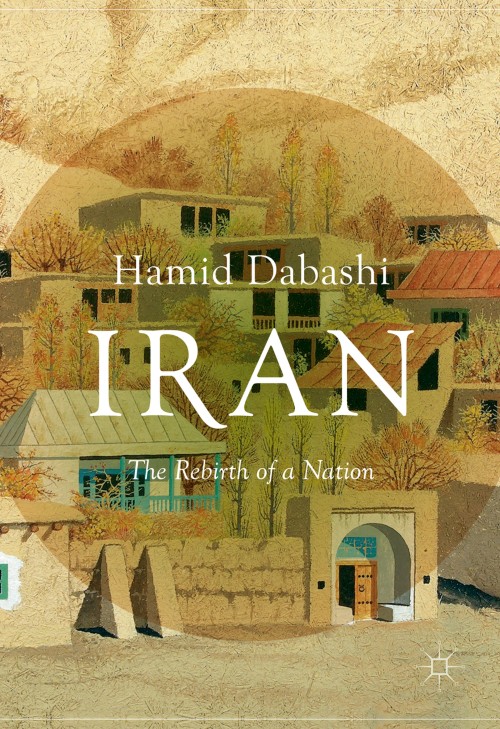
245 10|aIran|h[electronic resource] :|bThe Rebirth of a Nation /|cby Hamid Dabashi.
250 |a1st ed. 2016.
264 1|aNew York :|bPalgrave Macmillan US :|bImprint: Palgrave Macmillan,|c2016.
300 |aXIII, 345 p. 14 illus.|bonline resource.
336 |atext|btxt|2rdacontent
337 |acomputer|bc|2rdamedia
338 |aonline resource|bcr|2rdacarrier
347 |atext file|bPDF|2rda
505 0 |aIntroduction: The Rebirth of a Nation -- Chapter 1 Persian Empire? -- Chapter 2 A Civil Rights Movement -- Chapter 3 A Metamorphic Movement -- Chapter 4 An Aesthetic Reason -- Chapter 5 Shi-ism at Large -- Chapter 6 Invisible Signs -- Chapter 7 A Transnational Public Sphere -- Chapter 8 Cosmopolitan Worldliness -- Chapter 9 Fragmented Signs -- Chapter 10 The End of the West -- Chapter 11 Damnatio Memoriae -- Chapter 12 Mythmaker, Mythmaker, Make Me a Myth -- Conclusion: What Time Is It?.
520 |aIn this unprecedented book, Hamid Dabashi provides a provocative account of Iran in its current resurrection as a mighty regional power. Through a careful study of contemporary Iranian history in its political, literary, and artistic dimensions, Dabashi decouples the idea of Iran from its colonial linkage to the cliché notion of “the nation-state,” and then demonstrates how an “aesthetic intuition of transcendence” has enabled it to be re-conceived as a powerful nation. This rebirth has allowed for repressed political and cultural forces to surface, redefining the nation’s future beyond its fictive postcolonial borders and autonomous from the state apparatus that wishes but fails to rule it. Iran’s sovereignty, Dabashi argues, is inaugurated through an active and open-ended self-awareness of the nation’s history and recent political and aesthetic instantiations, as it has been sustained by successive waves of revolutionary prose, poetry, and visual and performing arts performed categorically against the censorial will of the state.
532 8 |aAccessibility summary: This PDF was produced prior to the implementation of current accessibility best practices. It supports searchable and selectable text. It may or may not include elements such as described non-text content (images, graphs etc), reflowable text or screen reader compatibility. Users with accessibility needs may experience limitations. Please contact us at accessibilitysupport@springernature.com if you require assistance or an alternative format.
532 8 |aNo reading system accessibility options actively disabled
532 8 |aPublisher contact for further accessibility information: accessibilitysupport@springernature.com
650 0|aInternational relations.
650 0|aMiddle East|xPolitics and government.
650 0|aPolitics and war.
650 0|aDiplomacy.
650 0|aGlobalization.
650 0|aPolitical science.
650 14|aInternational Relations.
650 24|aMiddle Eastern Politics.
650 24|aMilitary and Defence Studies.
650 24|aDiplomacy.
650 24|aGlobalization.
650 24|aPolitical Science.
710 2 |aSpringerLink (Online service)
773 0 |tSpringer Nature eBook
776 08|iPrinted edition:|z9781137592408
776 08|iPrinted edition:|z9781349998098
776 08|iPrinted edition:|z9781349952304
856 40|uhttps://doi.org/10.1057/978-1-137-58775-6
912 |aZDB-2-POS
912 |aZDB-2-SXPI
950 |aPolitical Science and International Studies (SpringerNature-41174)
950 |aPolitical Science and International Studies (R0) (SpringerNature-43724)